Self-growth
 Apps & Digital Tools
 Business & Career
 Success
 Growth Tools
 Psychology
 Communication
 Relationships

Morgan Housel closes the loop on his own advice with a morbid exercise he borrowed from the Warren Buffett school of thought: write the obituary you want first, then live up to it.
He told Fortune that doing this shows you quickly what you would not care about, such as your salary, the size of your house, how often you bought a new car, or where you vacationed. That one exercise is the best way into any The Art of Spending Money review.
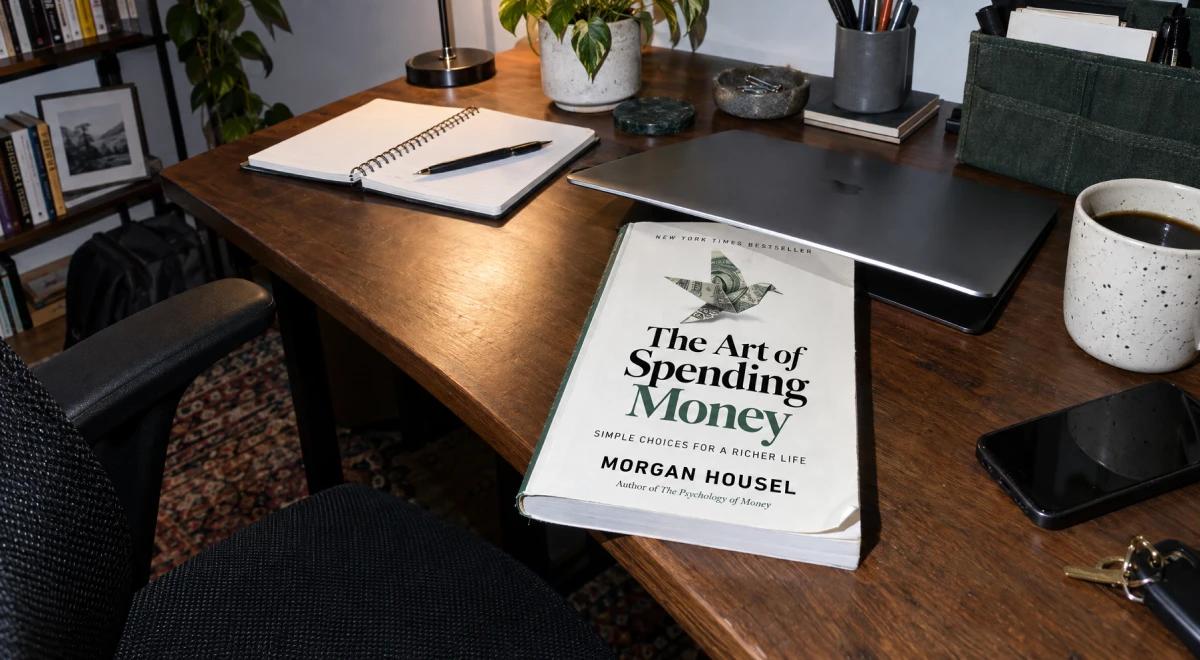
Published in October 2025 by Portfolio, 'The Art of Spending Money: Simple Choices for a Richer Life' is the highly anticipated follow-up from bestselling author Morgan Housel. The Art of Spending Money book shifts the focus from how to acquire wealth to how to deploy it effectively for a happier life.
Housel argues that while many understand how to earn, very few understand the psychology of spending money. This The Art of Spending Money book review covers the core lessons of Housel's latest work, testing which ideas hold up in everyday life and identifying where the advice runs slightly thin for practical readers.
📘 Looking for smart ways to save a coin? Get Headway and access themed summaries on money and growth.

Quick summary: The Art of Spending Money in brief
Housel argues that most people spend badly in two opposite ways.
Some chase things that impress others and leave them cold.
Others save endlessly and never spend on what would improve life.
The book offers no budgets, hacks, or one-size-fits-all rules.
Best for readers who want self-awareness, not a spreadsheet.
Morgan Housel and The Art of Spending Money
Morgan Housel's work has already helped millions rethink how money shapes their long-term financial security. His previous focus was heavily rooted in earning, saving, and investing to build wealth.
Now, he tackles the other half of the equation: spending. According to the publisher, most people do not know how to spend money, and this book is ultimately about understanding your relationship with it.
The core claim of 'The Art of Spending Money' is that peace of mind is the most valuable return on any investment. Housel emphasizes that expectations matter far more than absolute income.
Doing well with money works best when paired with deep self-awareness rather than rigid spreadsheets. This is not a guide about getting rich; it is an exploration of getting the most out of what you already have.
The book argues that spending money on simple choices dictates whether your wealth buys you freedom or simply traps you in a cycle of chasing more money.
If you want to understand why people crave constant consumption, the Dopamine Nation review explains the exact neurological loops that drive the desire to buy things we do not actually need.
Future regret and the reverse obituary test
To frame his philosophy on a richer life, Housel uses the reverse obituary. When you write the obituary, you want to behave accordingly. This exercise brutally exposes the gap between what society values and what actually matters to a person.
When people reflect on a good life, their salary, house size, and car upgrades rarely make the list. What matters are immediate family, deep friendships, raising good kids, and the freedom to spend your time how you choose.
Housel frames spending as a tool for minimizing future regret. Many people work long hours, sacrificing their relationships and health, only to hoard savings they are too terrified to use.
Saving is framed as a means to spend well, not a goal on its own. Hoarding money for its own sake is another trap. When you save endlessly, you deny yourself the ability to exchange that stored energy for joy, connection, or independence. You must realize that the ultimate utility of a savings account is the power it gives you to dictate your own future.
For readers trying to shift from a scarcity mindset to an intentional one, reading an Atomic Habits review can help map out the daily behavioral changes needed to align your spending with your values. Do you want to build a better relationship with your finances without reading 300-page textbooks?
📘 Try the Headway app to absorb actionable 15-minute summaries of the world's best financial psychology books.

Want the key lessons, not the book?
Headway condenses money lessons into 15-minute summaries.
Read money summariesSimple choices: Understanding status and envy
One of the sharpest lessons in the book addresses how we view others. The text points out a common psychological flaw: people confuse admiration with envy, comfort with excess, and utility with status.
When someone drives past in a nice car or wears expensive clothes and designer shoes, we rarely admire the person driving or wearing them. Instead, we imagine ourselves in that position, assuming others would admire us.
Spending to impress others rarely lasts because there is always someone further ahead. If your goal is to showcase status, the cost of that game rises infinitely. Housel suggests that a better measure of wealth is spending aligned with your identity and values, such as generosity, creativity, or connection.
You buy the car because you love driving, not to signal your net worth to the world at a stoplight. He also frequently notes the role of circumstance and luck in how money turns out, reminding readers that wealth is not always a sign of superior intellect or hard work.
When we constantly view the highlight reels of others, we fuel a toxic comparison cycle. If you struggle with this, reading a Stolen Focus review highlights how modern media feeds are designed to hijack your attention and amplify feelings of inadequacy and envy.
The Art of Spending Money vs. The Psychology of Money
Because 'The Psychology of Money' was a massive global hit, comparing the two works is inevitable. While both tackle the mental models behind personal finance, they answer fundamentally different questions.
| Feature | 'The Psychology of Money' | 'The Art of Spending Money' |
|---|---|---|
Main question | How do behavior and luck shape wealth? | How should money be spent to get the most from life? |
Style | Short stories on behavior | Short stories on wants, envy, and regret |
Practical advice | Moderate | Deliberately light, no budgets or hacks |
Best for | Understanding why people make money mistakes | Understanding what spending is for |
Some reader reviews note that the new book feels less actionable than the first, while others praise it as a highly necessary companion piece.
If you enjoy breaking down tactical maneuvers and strategic leverage, you might find Housel's approach slightly philosophical. Exploring The Art of War review offers a much more rigid look at resource deployment, contrasting sharply with Housel's fluid, emotion-based framework.
What the book does well, and where it falls short
The greatest strength of the art of spending money lies in its accessibility. Housel uses readable short chapters with stories that make each idea easy to hold. He successfully provides a useful reframe: spending is a skill and a source of regret or joy, not only a leak to fix.
He is refreshingly honest about the fact that no single answer fits everyone. The perfect lifestyle for one person might be an absolute nightmare for another.
However, the book does have weak spots. It is deliberately light on actionable steps, which is a stated choice by the author, but still frustrates some readers looking for explicit guidance.
He does not provide budgets or spreadsheets. Furthermore, several ideas repeat across chapters, making a few sections feel slightly repetitive. Finally, readers who want math, tax, or investing details will not find them here. This is a book about feelings and choices, not asset allocation.
📘 Stop letting financial anxiety dictate your life. Download Headway to access bite-sized insights from top authors on behavioral economics and personal freedom.
Who should read The Art of Spending Money book?
Deciding whether this is your next great read depends heavily on your current financial habits. The book is best for habitual savers who feel guilty about spending, and for people whose spending is driven entirely by status.
If you have built a solid investment portfolio but still feel a lingering sense of anxiety every time you pay for a vacation or a dinner out, Housel's words will help you unpack that fear. It helps you realize that the point of money is to eventually use it.
Conversely, it is less useful for readers who need a debt plan or a concrete budget template. If you are actively struggling to pay rent or manage credit card interest, the philosophical musings on wealth utility will not solve your immediate problems.
It reads exceptionally well alongside the first book, though it completely stands on its own. For those navigating modern professional environments, expanding your knowledge base through a Co-Intelligence review can help you pair financial emotional intelligence with practical workplace adaptability.



Become more knowledgeable on spending with Headway!
Morgan Housel's exploration of spending forces readers to look deeply at why they chase things that ultimately do not matter. Building a happier life requires you to strip away the expectations of others and focus purely on what brings you and your family genuine peace of mind.
Headway offers a comprehensive 15-minute summary of 'The Art of Spending Money,' allowing you to absorb Housel's foundational concepts regarding luck, risk, and compound interest. You can also explore dozens of titles on habit formation, behavioral psychology, and the nature of human desire.
📘 Instead of spending long hours trying to decipher thick financial textbooks, try the Headway app today to turn your daily commute into a masterclass on living well.
FAQs about The Art of Spending Money
What is The Art of Spending Money about?
'The Art of Spending Money' explores the psychological and emotional mechanics of how we use our wealth. Rather than focusing on how to earn or save, Morgan Housel explains how to spend money intentionally to maximize joy, minimize future regret, and build a richer life aligned with your actual values.
Who wrote The Art of Spending Money, and when was it published?
The book was written by bestselling author Morgan Housel, who is widely known for his previous massive success, 'The Psychology of Money'. This highly anticipated follow-up was officially published by Portfolio (Penguin Random House) in October 2025.
Is The Art of Spending Money worth reading after The Psychology of Money?
Yes, it functions as an excellent companion piece. While the first book explains why people make bad decisions when acquiring and saving wealth, this new volume addresses the completely different psychological hurdles people face when it is finally time to spend their accumulated assets.
Does The Art of Spending Money give budgeting advice?
No, it does not. Housel deliberately avoids giving specific financial advice, so the book offers no budgets, hacks, tax strategies, or one-size-fits-all rules. It is entirely focused on self-awareness, identity, and the philosophy of money rather than mathematical spreadsheets.
What is the reverse obituary exercise in the book?
The reverse obituary is a morbid but highly effective psychological exercise borrowed from the Warren Buffett school of thought. It asks you to write the obituary you want first, then behave accordingly. This helps you quickly identify that things like salary, house size, and status symbols rarely matter at the end of life.
What does Housel mean by confusing admiration with envy?
Housel argues that when we see someone with expensive clothes or a nice car, we rarely admire the actual person. Instead, we imagine ourselves owning those items, assuming others would admire us. We confuse our envy of the object with genuine admiration for the owner, fueling endless, hollow consumption.
What do critics say about The Art of Spending Money?
Critics and everyday readers generally praise the warm, readable short stories and the sharp reframing of spending as an emotional skill. However, some critics note that the book feels light on actionable steps, repeats several core ideas across chapters, and lacks the concrete utility found in traditional finance books.