Self-growth
 Business & Career
 Success
 Communication
 Healing
 Relationships
 Psychology
 Happiness
You wake up. Before your eyes are fully open, your phone is already in your hand. Between emails, news alerts, and someone's hot take on LinkedIn, it all hits you at once. And by the time your coffee is ready, you already feel behind. Does this sound familiar?
That's exactly why morning reading is worth trying. It's a small shift that changes the whole tone of your day. Instead of jumping straight into the noise, you give yourself a few quiet minutes with a book or audio summary. Now, your mind gets to ease in, not crash-land.
Morning reading is the practice of spending dedicated time with books — or quality audio content — before email, social media, and to-do lists pull your attention.
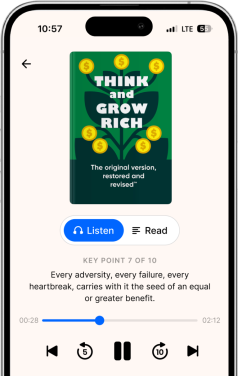
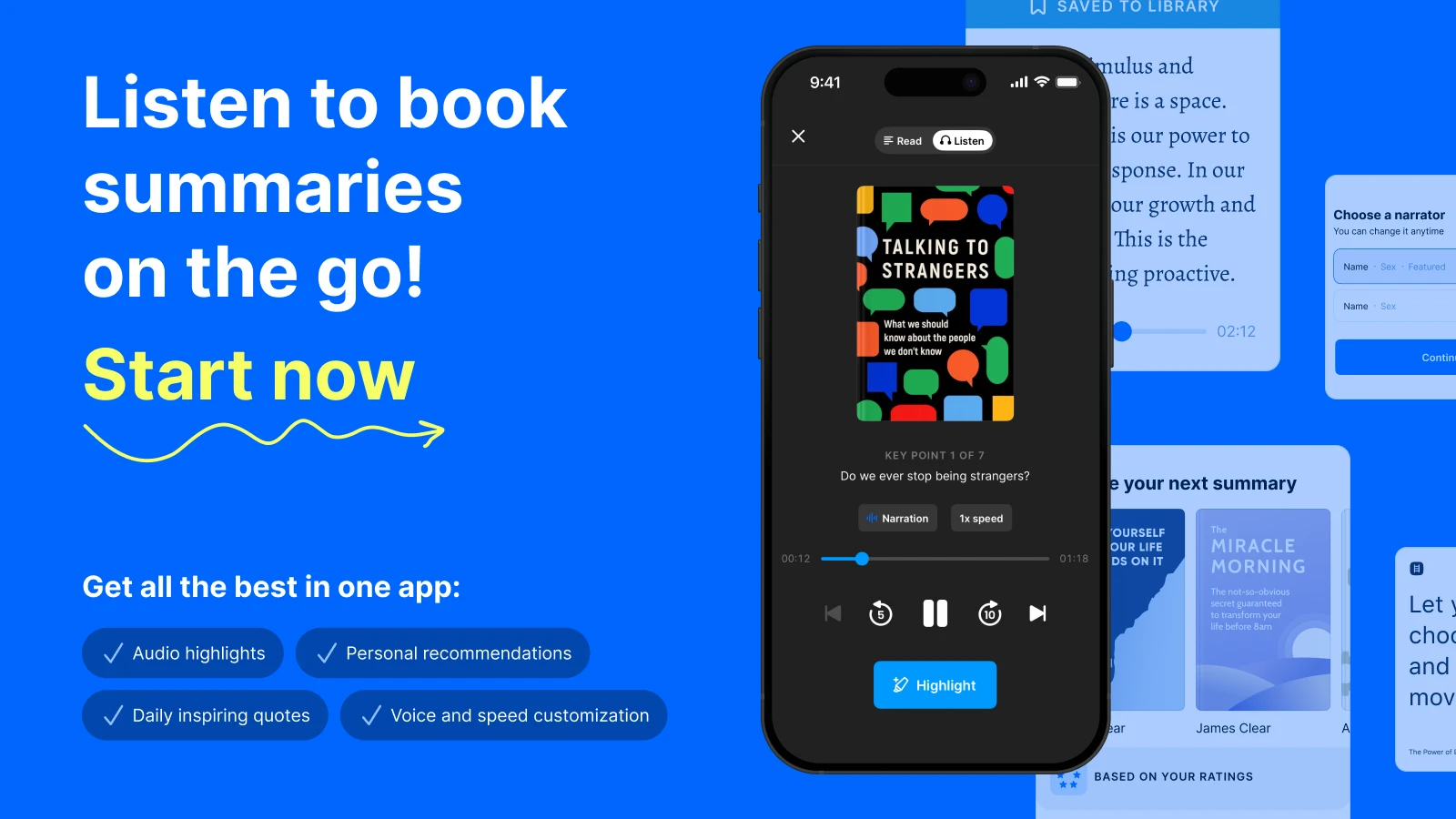
If you enjoy reading books but need quick, actionable insights before work, the Headway app offers audio summaries of top nonfiction books on morning habits, journaling, self-care, and productivity. It's perfect for readers, entrepreneurs, and anyone who wants bite-sized growth every day.
Quick summary: What is morning reading, and why does it help?
Morning reading means setting aside intentional time — even 10 to 15 minutes — to read or listen to something worthwhile before the day starts. Here's why it works:
It protects your attention: You start the day on your own terms, not someone else's.
It builds a reading habit: Daily readings add up fast. That's over 20 books a year from just 15 minutes a day.
It improves your mood: Research shows reading reduces stress by up to 68%, according to a University of Sussex study.
It sharpens your thinking: Your brain is most alert after sleep, so morning is prime time for learning.
It beats social media scrolling: Starting with a book instead of Instagram means your first mental input is something you actually chose.
Why morning reading works (the science behind it)
Here's something worth knowing: your brain is in a different state right after you wake up. Cortisol, the hormone that keeps you alert, peaks in the first hour of the morning. That's called the cortisol awakening response, and it's basically your brain's natural "go time."
When you use that window for reading, you're feeding your mind when it's most ready to absorb. Information processed in the morning tends to stick better because your working memory hasn't yet been filled with decisions, conversations, and distractions.
Compare that to scrolling social media first thing. That quick dopamine hit from likes and notifications actually blunts your focus for the next few hours. The morning reading habit does the opposite — it eases your nervous system into the day while giving you something meaningful to think about.
'Stolen focus' by Johann Hari makes this point in a way that's hard to forget. Hari spent years researching why it's gotten so hard to concentrate. And he concluded that the problem isn't us — it's the design of the apps that compete for our attention. Choosing to read a book is one of the simplest ways to reclaim that attention.
The benefits of morning reading
Not convinced yet? Let's get specific. Here's what a regular morning reading routine actually does for you.
1. Boosts focus for the entire day
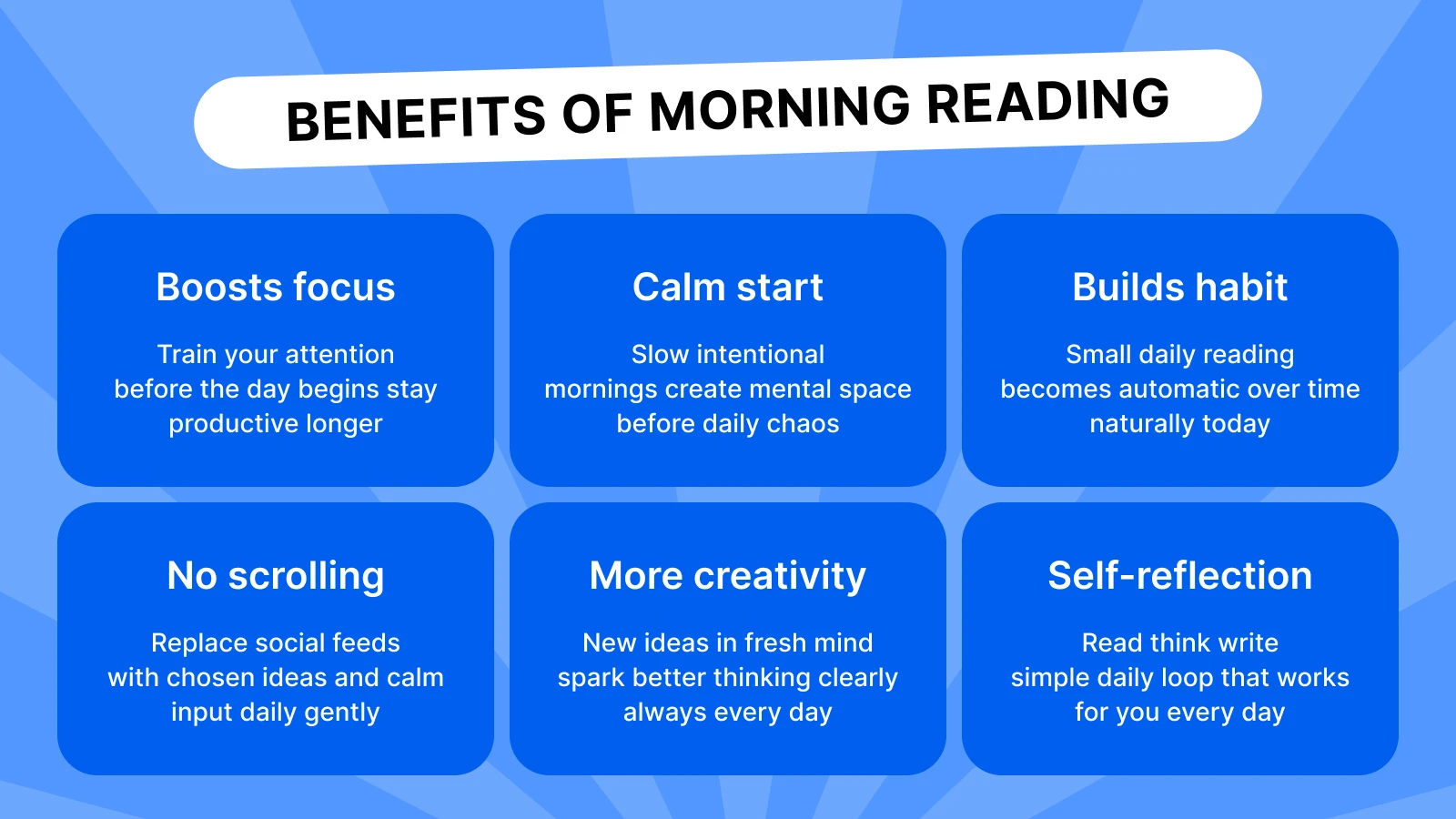
When you start your morning with focused reading, you're essentially training your attention span before the day begins. Think of it like a warm-up before a workout. People who read in the morning often report that they can stay on task longer during the workday and feel less scattered by 3 pm.
2. Sets a calm, intentional tone
A slow, intentional start changes how you move through the rest of the day. That's why slow mornings have become such a popular concept. Whether you're in New York, rushing to catch the subway, or working remotely in your pajamas, those first 15 minutes can act like a buffer between sleep and chaos.
3. Builds a real learning habit
James Clear makes this beautifully clear in 'Atomic Habits' which is available as a Headway summary. Small habits, done daily at the same time, become nearly automatic. Attaching reading to your morning routine anchors it to an existing habit (like making coffee) so it stops feeling like something you have to remember.
4. Replaces mindless scrolling
The first thing you reach for in the morning shapes your whole mood. Starting with social media means your first emotions of the day come from other people's highlight reels or outrage bait. Starting with a book (even a 15-minute audio summary on Spotify or Headway) means your first thoughts are ones you actually chose.
5. Powers creativity and clearer thinking
Reading exposes you to other people's ideas, frameworks, and stories. That input gets your own mind going. Many entrepreneurs and writers say their best ideas come in the morning, partly because that's when they read.
6. Supports journaling and self-reflection
Morning reading pairs especially well with journaling. You read something, it sparks a thought, and you write it down. That simple loop (read, reflect, write) is one of the most powerful self-care practices you can build into your morning. It doesn't need to take long. Even five minutes of writing after ten minutes of reading makes a difference.


Top 15 book and audio ideas to kickstart your morning
The best morning reads are the ones you actually want to open. Here's a mix of categories to match different moods and goals.
For productivity and focus
'Atomic Habits' by James Clear: The go-to book on building systems that stick. Headway's 15-minute audio summary is perfect for a morning commute.
'Stolen Focus' by Johann Hari: Read this if you've been feeling scattered. It explains why concentration is hard and what to do about it.
'Deep Work' by Cal Newport: Solid for entrepreneurs and remote workers who want to do more meaningful work in less time.
For self-growth and wellness
'The Miracle Morning' by Hal Elrod: Elrod built a whole system around mornings after surviving a near-fatal car accident. His SAVERS routine (Silence, Affirmations, Visualization, Exercise, Reading, Scribing) is practical and worth trying.
'The Last Law of Attraction Book You'll Ever Need to Read': Good for setting the right mindset before the day begins.
'Think Again' by Adam Grant: Trains you to question assumptions; a genuinely useful skill for both work and life.
For reflection and meaning
'Tiny beautiful things' by Cheryl Strayed: A collection of honest, human advice from the Dear Sugar column. Reading a few pages in the morning leaves you feeling grounded.
Daily devotional reading: Whether it's scripture, a page from 'The Daily Stoic' by Ryan Holiday, or a short devotional, these work well as a reflective start to the day.
'Man's Search for Meaning' by Viktor Frankl: Heavy but grounding. Even a few pages in the morning shifts your perspective on whatever stress you're carrying.
For entrepreneurs and career growth
'Good to Great' by Jim Collins: Research-backed and full of real case studies. Great for founders and people building startups.
'The 5 AM Club' by Robin Sharma: Learn how early mornings can change your output. Headway has a great blog post on this, too.
'Leaders Eat Last' by Simon Sinek: For anyone who leads a team or wants to.
For audiobook listeners
If sitting down with a book isn't realistic, audiobooks and audio summaries count just as much. You can listen on Spotify, Amazon Audible, or Headway while making breakfast, walking the dog, or sitting on the morning commute. The point is putting good ideas into your head before the day fills up with other people's priorities.
How to build a morning reading ritual (step by step)
A morning reading routine doesn't need to be complicated. The simpler it is, the more likely it is to stick. Here's how to read more books without overhauling your entire schedule.
Step 1: Start small — really small
Five minutes count. Seriously. If you try to start with a 45-minute reading block, you'll give it up by Thursday. Start with just one chapter or one Headway summary. That's enough to build the habit.
Step 2: Attach it to something you already do
James Clear calls this "habit stacking." Link reading to an existing morning habit, like your coffee. The rule is simple: when coffee starts brewing, you open your book or app. Reading time is now also coffee time.
Step 3: Choose what you'll read the night before
Decision fatigue is real. If you have to think about what to read when you're half-asleep, you'll probably just grab your phone. Leave your Kindle, book, or app already open to the right page. Remove the friction.
Step 4: Keep your phone out of reach for the first 20 minutes
This one is the hardest part for most people. So, what's the fix? Charge your phone in another room. Buy an actual alarm clock. Put the screen face down across the room. Whatever works best for you.
Step 5: Mix your formats
Some mornings, you want a physical book. Other mornings, you want to listen while you get dressed. That's fine; both work. Whether it's a Kindle, a paperback, an audiobook on Spotify or Amazon, or a 15-minute summary on Headway, use what fits the day. Flexibility is what keeps this a new habit in the long term.
Example morning reading routine
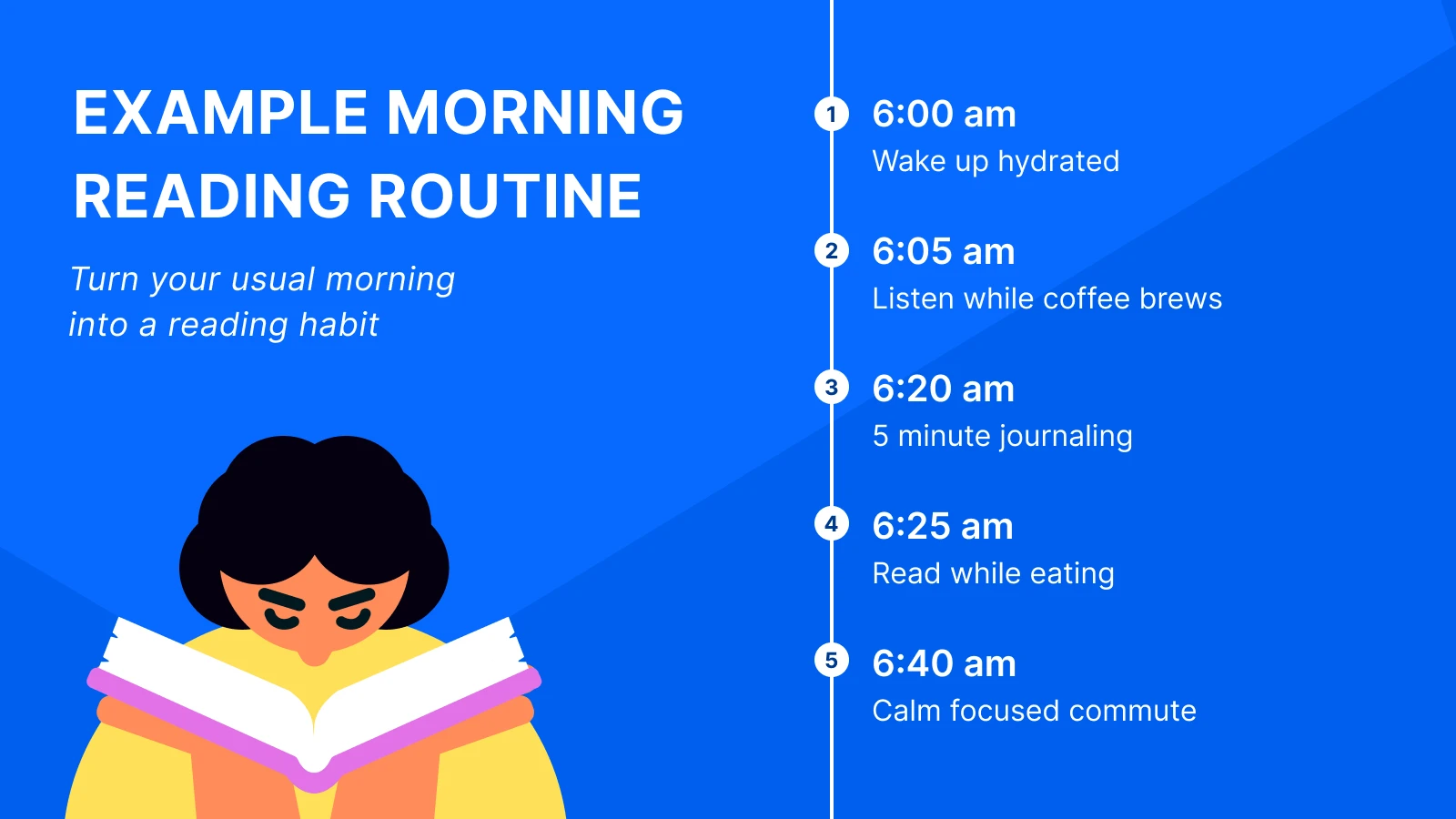
Here's what a realistic reading morning could look like, even on a busy day:
6:00 am — Wake up, drink a glass of water.
6:05 am — Open Headway, listen to a 15-minute self-help summary while coffee brews.
6:20 am — Five minutes of journaling (what stood out, one thing to try today).
6:25 am — Read a few pages of your current Kindle book while eating breakfast.
6:40 am — Head into the morning commute feeling like a person, not a notification.
That's 40 minutes, and most of it overlaps with things you'd do anyway. Check out more ideas in the morning routine blog for extra inspiration.
Why micro-learning through Headway amplifies morning reading
Want to know one of the most common reasons that people skip reading in the morning? "I don't have time." A full chapter of a nonfiction book can take 20–30 minutes. That's a lot when you're also trying to shower, eat, and find your keys. So, that's where Headway fits in naturally.
Headway offers 15-minute audio summaries of bestselling nonfiction books, from self-help and wellness to business and entrepreneurship. You get the key ideas, the frameworks, and the practical takeaways without needing a two-hour reading block.
That's called micro-learning, the practice of absorbing valuable knowledge in small, consistent doses. And it works. Research on spaced repetition shows that people who learn in short bursts retain more than people who study in marathon sessions.
You'll pick up knowledge that would take hours of reading to find, condensed into your existing schedule. Millions of people already use it this way. Here's a real take on how Headway changed someone's reading habits after just two months.
📘 Want to try it? Download Headway and listen to your first summary tomorrow morning.
FAQs about Morning reading
What's the best time for morning reading?
Anytime before your workday starts, ideally within the first hour of waking. That's when your cortisol is naturally high, and your focus hasn't been used up yet. Even 6:30 am counts if that's when you usually wake up.
How long should my session be?
Honestly? Whatever you'll actually do. Ten minutes every day beats a 45-minute session every Tuesday. If you're just starting, aim for 10–15 minutes. You can always go longer once the reading habit feels natural.
Can audiobooks or summaries count as morning reading?
Absolutely. The goal is to get quality ideas into your brain before the day takes over. Whether that's a physical book, a Kindle, an audiobook on Amazon or Spotify, or a summary on Headway, it all counts. Pick the format that fits your morning.
What should I do when I have barely any time in the morning?
Go micro. Open Headway and listen to a 15-minute summary while you make breakfast. Swap the morning scroll for a podcast episode on reading and self-growth. Even five minutes of journaling after listening to something counts as a meaningful morning reading practice.
How do I stick with it long-term?
The trick is making it stupid-easy to start. Keep your book on your nightstand, your app already open, your Kindle charged. Attach reading to a habit you already have. And remember: you don't need to read every morning forever. You just need to make it easy enough to return to after you miss a day.