Self-growth
 Business & Career
 Success
 Communication
 Healing
 Relationships
 Psychology
 Happiness
"I was spending my time chasing growth in every direction... deeply committed to evolving both personally and professionally, but I often found myself scattered, pulled in multiple directions."
Melissa Sierra, an EVP, tried to become productive with big changes right away, but one day she realized: microhabits often outshine the more conventional ones. For her, actions like enjoying a glass of water before her morning coffee or taking three deep breaths before tackling her notifications can completely transform her daily routine.
Don't confuse microhabits with New Year's resolutions, as those usually fizzle out by February. Microhabits stick around because they don't rely solely on willpower. People who have experience with burnout, ADHD, and hectic schedules have discovered that these small habits can lead to amazing results.
The power of microhabits creates lasting change through small habits done daily.
Read real examples, learn why tiny actions work, and find out how to build new habits that fit your daily routine without adding stress. Headway, a microlearning app, turns learning into a microhabit — 15-minute summaries fit between your morning coffee and workday, replacing social media or podcast time.
📘 Download Headway and make personal growth automatic with microhabits!
Quick answer: What are microhabits, and how can they benefit you?
Microhabits add to routines you already have and can be completed in two minutes or less:
Add to your morning: Drink water before your morning coffee, do five push-ups after brushing your teeth, or write tomorrow's most important task at the end of the day.
Mental health check-ins: Take three deep breaths before checking your notifications, go for a quick walk during your workday, or track one thing in a habit tracker before bed for wellness.
Move your body: Do ten squats while your coffee brews, stretch for two minutes after sitting for a while, and take the stairs for daily exercise instead of the elevator.
Five surprising ways busy professionals — Jessica, Herbert, Melissa, and Jason — use microhabits
1. Replacing social media with learning
Jessica, a remote professional, changed the way she has her coffee in the morning:
"Before discovering Headway, I would usually scroll through social media or watch TV during my coffee time. Switching to focused reading turned that moment into something more rewarding."
She implements tiny habits in her daily life, such as reading for 15 minutes, followed by practicing Spanish. This way, Jessica builds consistency and doesn't burn out on the second day of her new lifestyle.
2. Fitting learning into work transitions
Jason uses microhabits in his routine between projects, and you can really see the magic of them in his everyday life. He picks up new knowledge while enjoying breakfast, takes a quick moment to reset between calls, and uses Headway to shift his mental focus. This strategy keeps him engaged and also helps him steer clear of burnout, as these new habits blend effortlessly into his workday.
3. Building consistency without pressure
Can you believe that Herbert, a seasoned leader, only missed reading for two days in an entire year? You might wonder how he managed that, and the secret lies in the small habits he formed. By consistently repeating these tiny actions every day, he set his future self up for success without relying on willpower.
4. Improving team communication
Melissa, an EVP, noticed changes that lasted:
"I find I am more mindful of how I communicate, both in written form and orally."
What she did was create small habits around her routines that eventually helped her improve her communication skills. Now, Mellissa feels more confident and claims that even her relationships have grown deeper.
5. Using environmental cues
Professionals skip habit trackers; they prefer:
A glass of water on the nightstand
Podcast queued for daily exercise walks
Gym clothes laid out the night before for push-ups the next day
These cues automatically trigger wellness and well-being.
📘 Get Headway and read during morning coffee!
Why microhabits work — the science explained
1) Your brain doesn't like big changes
Neuroscientist research shows that our brains see big goals and resolutions as problems; only 10% of people actually end up doing what they intended. Starting a full daily exercise routine triggers resistance. Doing five push-ups after you brush your teeth doesn't register as a threat.
BJ Fogg, who famously created the Tiny Habits method, found that our behavior needs three things: motivation, ability, and a prompt. Microhabits work because they require almost zero motivation and ability.
James Clear writes in 'Atomic Habits':
"Habits are the compound interest of self-improvement."
One glass of water before your morning coffee looks pointless. But think about it this way: when you drink that water every day for a year, it means you drank 365 glasses, meaning you're hydrated without thinking about it.
2) Habit loops make microhabits automatic
Your brain runs on loops: cue, routine, and reward. You pour your morning coffee (cue), drink water first (routine), and feel better (reward). After two weeks, your brain now expects water before coffee. The microhabit becomes part of your daily routine without needing willpower or a habit tracker for you to keep track.
People dealing with burnout need this because big goals sap your energy. ADHD brains respond especially well to microhabits because they align with how those brains process tasks. These small, concrete, and immediate check-ins help to see whether the action worked.
3) Compounding happens slowly
Taking three deep breaths before checking your notifications reduces stress for a while. But if you do that daily for months, you will rewire how your nervous system handles your workday. And then, your future self benefits from having better mental health and well-being through the tiny actions your present self barely notices.
Each time you repeat a microhabit, your brain strengthens the pathway for that behavior. After enough repetitions, that action becomes the default. You stop deciding whether to do push-ups after brushing — you just do them. Small habits build lasting change through repetition, not through motivation that disappears by the end of the day.
Motivation comes and goes, and willpower runs out, but microhabits skip both. Writing tomorrow's most important task takes 30 seconds. You don't need to feel motivated for 30 seconds.
Do enough of these acts, and you get positive change through your consistency. Personal growth comes from repeating tiny wins, not through grinding toward huge goals that lead to burnout the next day.
📘 Try Headway for building new habits without burnout!

How to build microhabits that stick — step-by-step guide (2026)
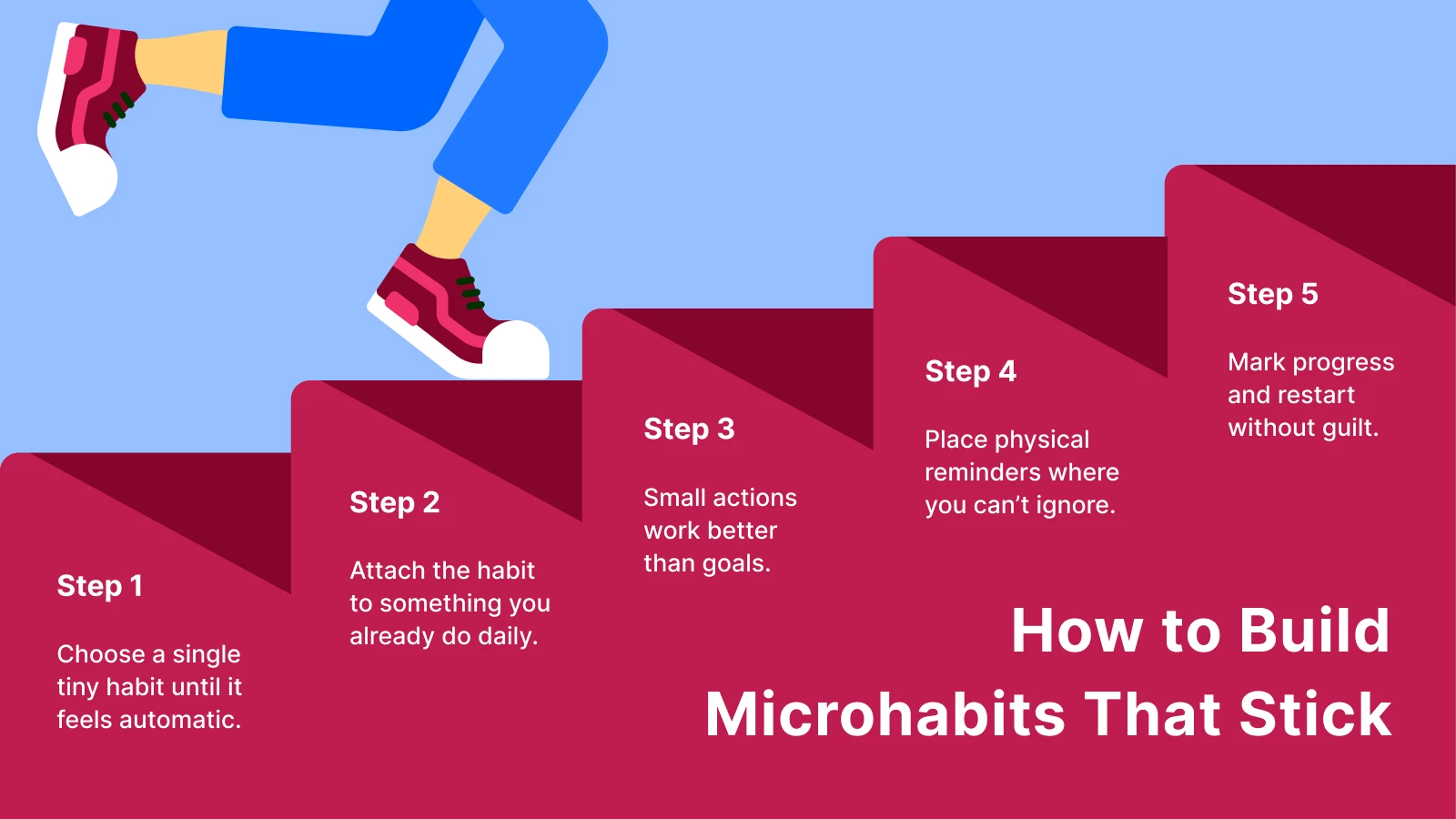
Step 1: Start with one
Pick one microhabit for your morning routine or evening routine. Some examples are:
A glass of water before your morning coffee.
Five push-ups after brushing your teeth.
Writing one thing on tomorrow's to-do list before bed.
Don't start three new habits at once — your brain resists that. Do one until it feels automatic, then add the next.
Step 2: Attach it to what you already do
You already pour your morning coffee, check your notifications, and start your workday. Use those as anchors:
After pouring your coffee → drink water
After first checking your phone → take three deep breaths
Before opening your laptop → write down your most important task
The thing you already do becomes the trigger; that's why you won't need a habit tracker or reminders.
Step 3: Keep it tiny
Start with two push-ups, not twenty. Have one to-do list item for the next day, instead of a full plan. And the simple act of walking to get water counts as movement — you don't need to do a full exercise session.
The power of microhabits is repetition, not size.
People managing ADHD respond well to this because tiny actions don't feel overwhelming. Your future self gets more from small habits done daily than big goals that cause burnout and get dropped.
Step 4: Make it visible
Put a glass of water on your nightstand for your morning hydration or running shoes by the door for walks. Journal on your pillow for your end-of-the-day reflections, and have a book next to your morning coffee mug. When you see the mug, you're reminded, so you ignore your phone notifications more naturally, unlike physical objects that are harder to ignore.
Step 5: Track simply
An X on a calendar works the same as a note in your day-to-day planner. Missed a day? Start over on the next day without guilt because perfectionism ruins habits, and only consistency builds them.
The benefits of microhabits for busy professionals
1. Mental health improves naturally without scheduling
Take three deep breaths before opening notifications. Go for a two-minute walk between calls. Have a quick check-in with yourself at the end of the day about what went well. Mental health and wellness get better when you add these to what already happens in your workday.
2. Burnout stops building up
Burnout comes from going nonstop without any breaks during your workday. Sitting for two hours straight can build pressure until you're exhausted. Stretch for thirty seconds after you've been at your desk for a while. Drink water to stay hydrated when switching between tasks. Look away from your screen every hour. These small pauses keep exhaustion from piling up on your future self instead of letting it build until you crash.
3. You'll actually do the small stuff
Trying to force yourself to exercise for an hour a day when you're exhausted doesn't work. Doing ten push-ups right after you brush your teeth? That you'll actually do. Small habits repeated every single day produce big results over months because you keep doing them instead of quitting ambitious plans that sound good but fall apart after two weeks.
4. Bad habits get replaced without fighting them
Listen to a podcast during your morning coffee instead of scrolling through social media. Learn something during your commute instead of repeatedly checking your notifications. New habits take over when they're easier and fit the same time slot.
5. Everything compounds
Write tomorrow's most important task at the end of the day. The next day starts clear instead of figuring out what matters. Add microhabits for hydration, focus, and mental check-ins. Your daily routine creates positive, lasting change without feeling like self-improvement homework.
📘 Try Headway for small habits that improve your future self!
Five common pitfalls and how to overcome them
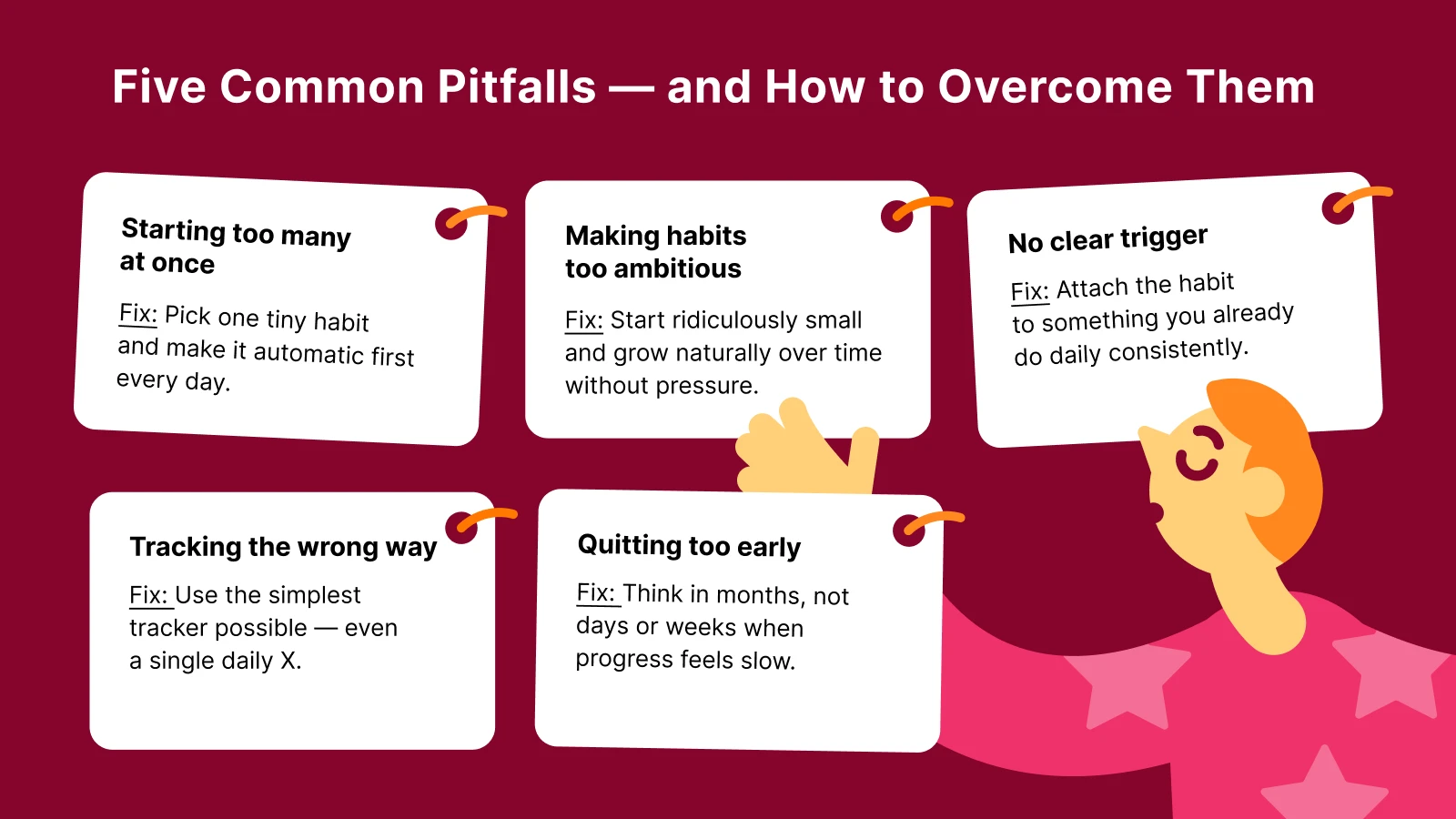
#1 — Starting too many at once
You decide to fix your mental health, start doing daily exercise, drink more water, and build a perfect morning routine. By week two, you're doing none of it.
➡️ Fix: Pick one action. For example, if drinking water before your morning coffee is automatic, then add five push-ups. That's also an automatic habit? Now practice writing tomorrow's most important task on your to-do list at the end of the day. Three tiny actions that last outweigh seven that don't.
#2 — Making them too ambitious
"I'll do 30 push-ups every morning" requires willpower. By the next day, you're skipping it.
➡️ Fix: Start with two push-ups. After a month, turn those two into five without forcing it. Small habits flourish when they become part of your daily routine.
#3 — Nothing triggers them
"I'll take deep breaths to improve my wellness today" stays on your mental to-do list forever because there's no specific moment attached to it.
➡️ Fix: After you check your notifications the first time → take three deep breaths. Before your workday starts → drink water to stay hydrated, use what already happens.
#4 — Tracking wrong
Complicated habit trackers feel like work. But no tracking means you forget you're even trying anything.
➡️ Fix: Just draw an X on paper whenever you perform the habit. It's as simple as that. Even if you missed a day, that's okay — just mark the next day. Perfectionism causes burnout.
#5 — Quitting too early
It's easy to get discouraged when you don't see life-changing results, and it's already day five of your microhabits journey.
➡️ Fix: Understand that tiny actions compound slowly. Check in after three months, instead of week one. Personal growth and lasting change through small habits takes longer than you'd expect, but they work better than New Year's resolutions that never materialize.
Turn learning into a microhabit with Headway!
Microhabits don't require willpower; they create positive change through repetition. Your future self gets better well-being from small habits done daily than from New Year's resolutions that you quit the next day. Professionals with packed workdays or ADHD find new habits that fit their morning routine without adding pressure.
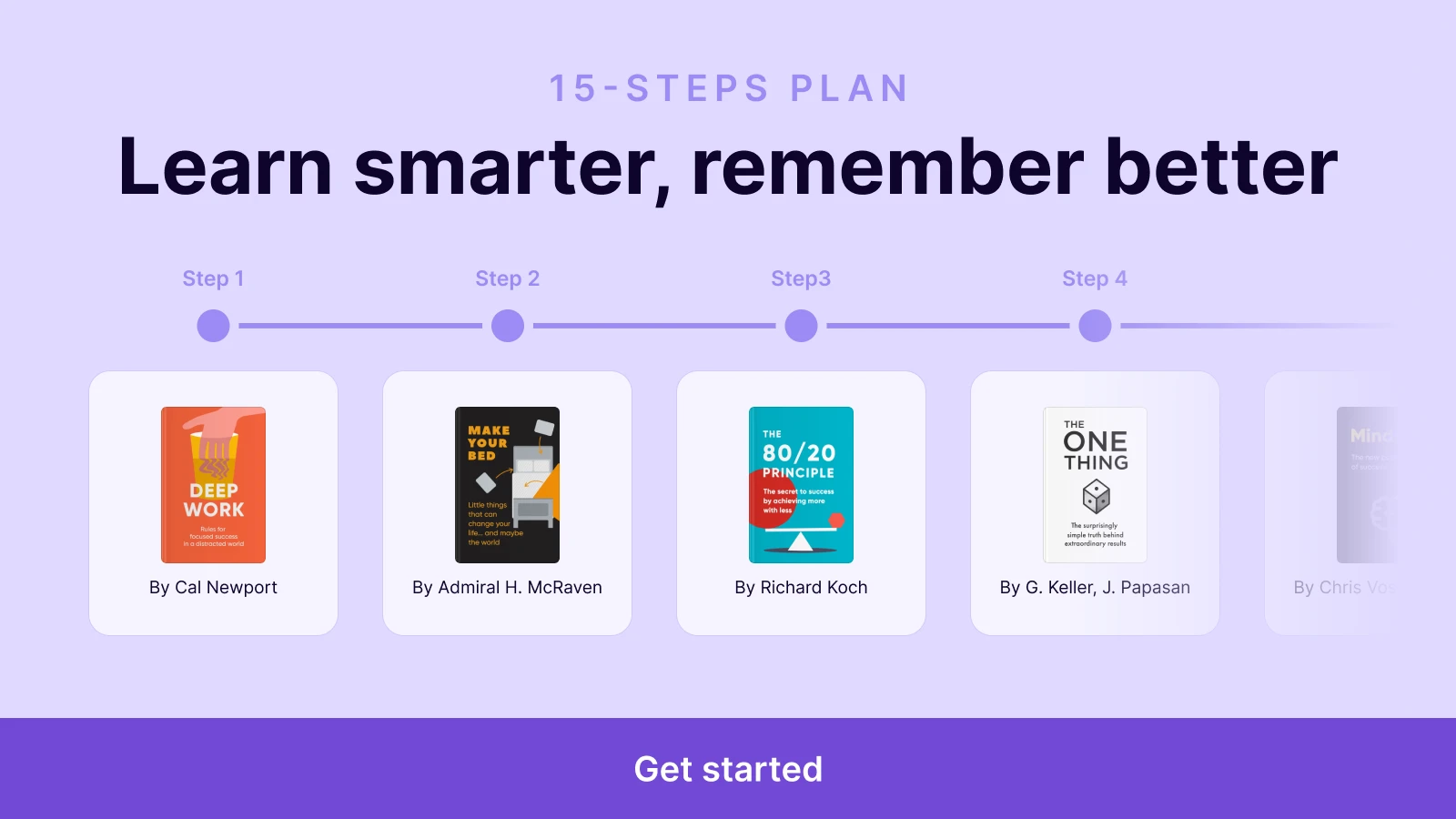
Want to know what Jessica, Herbert, Melissa, and Jason did differently? They chose a microlearning approach with Headway. Our app has growth plans and 15-minute summaries on building lasting change, daily exercise, hydration, and mental health.
📘 Download Headway and start one tiny habit today!
Frequently asked questions about microhabits
What is an example of a microhabit?
A microhabit is drinking a glass of water right after you wake up or flossing just one tooth at the sink. You could read one page while your morning coffee cools or put your gym clothes by your bed before you sleep, so they're there the next day. Opening your habit tracker and marking an X takes ten seconds. These all fit into gaps already in your daily routine.
What are microhabits for mental health?
Taking three deep breaths when you sit down at your desk helps your mental health more than you'd think. Writing what went okay at the end of the day instead of what went wrong shifts how you see your workday. Walking for two minutes between meetings prevents burnout. Stretching after an hour at your computer promotes your wellness by keeping tension from building up in your body.
How do microhabits differ from ordinary habits?
Microhabits take under two minutes, while regular habits need carved-out time and motivation that disappears when you're tired. Committing to an hour of daily exercise falls apart after a few days. Doing ten push-ups after you brush your teeth just happens because brushing already happens, and ten push-ups take twenty seconds instead of an hour you don't have.
How can I build microhabits and stick to them?
Pick one microhabit and attach it to something you already do, like drinking water after waking up or doing push-ups after brushing your teeth. Start smaller than feels useful because doing it matters more than size. Track your progress with an X on paper instead of apps. Your future self gets results from repeating tiny actions daily, not from impressive goals that fail quickly.