Self-growth
 Apps & Digital Tools
 Business & Career
 Success
 Growth Tools
 Psychology
 Communication
 Relationships

Recent studies show that we need more focus on word-level details to succeed. And, honestly, we all often fly through pages without getting the full meaning. This is why intensive reading is a great tool for anyone who wants to grow their mind.
You might feel like there are too many books and too little time to read them. This makes it hard to find what truly matters for your self-growth. Michael Hyatt and Edward de Bono offer ways to quickly pick the best ideas. You can use microlearning lessons to get these tips in minutes.
Headway is a smart way to get these self-growth hacks every day. It offers summaries of the best nonfiction books to help you reach your goals.
Download Headway right now and start your journey toward a better mindset and greater success!
Quick answer: What is intensive reading?
Intensive reading is a way to examine a short text with close attention to detail. It's about reading for total comprehension rather than just speed. This method helps you find specific information and understand how words work together. Here is a quick summary of how to improve your reading skills:
Improve focus through hyperfocus techniques.
Use deep work to avoid all distractions.
Practice active engagement for better reading comprehension.
Use Headway to see which books are worth a full read.
Read on to see the full list of ways to change your habits!
📘 Gain focused knowledge skills with Headway!
The science behind learning faster: Cognitive hacks for maximum retention
Your brain needs to pay attention to store new facts. If you just look at words without focus, you won't remember them later. Chris Bailey talks about this in his book 'Hyperfocus.' He says we should limit our focus to one task at a time.
To improve your memory, you must engage with the text. This is a big part of academic reading: finding collocations. These are groups of words that often go together. Finding them helps you build better writing skills and stronger reading fluency.
You can use these steps to keep more info in your head:
Choose a quiet space for your reading.
Look for words you don't know yet.
Ask yourself questions about the meaning.
These reading strategies help your brain turn word recognition into true knowledge. When you focus, you can use critical thinking to judge the ideas. Check out this guide on how to retain what you read for more tips.
📘 Improve your brain power with Headway!
How to structure your reading sessions: From distraction to deep focus
Cal Newport says that focus is a competitive advantage today. His book 'Deep Work' explains how to work without any interruptions. For your reading habits, this means putting your phone away. You can't read a real book well if you're checking social media every few minutes.
Try to block out time just for reading. You can start with 25 minutes of focus and then take a 5-minute break. This keeps your mind fresh. It's much better than a long session where you lose track of the words.
Here are some micro-actions to help you stay focused:
Turn off all your notifications.
Set a timer for your session.
Keep a pen near you to mark key points.
These simple steps will help you reach your reading goals faster. You'll find that your comprehension grows when you give the text your full attention.
📘 Stop distractions and focus with Headway!
Building your daily intensive reading routine: Top five expert-backed tips
Consistency is what leads to success. Michael Hyatt's book 'Free to Focus' says we should focus on the work that gives the most value. For your mind, that means picking the best books to read. Jake Knapp and John Zeratsky, in 'Make Time,' also suggest choosing one "Highlight" every day.
To make this a habit, follow these five tips:
Pick one high-value summary every day on Headway.
Set a fixed window for reading, like during breakfast.
Use summaries to see if you want to read the full book later.
Take notes to help with summarising what you learned.
Reflect on your knowledge every week to keep it in your mind.
Edward de Bono suggests using 'Lateral Thinking' to look at ideas from new angles. The book makes your reading sessions much more useful. If you ever want to share your own journey, check out how to write a book about your life.
📘 Build a strong daily routine with Headway!
Choosing the right material: How to know what's worth reading
Not every text needs your full attention. Sometimes you just need to use skimming to find the main idea. Other times, you use scanning to find a date or a name. However, for true growth, you need to use intensive reading. It's different from extensive reading, where you read many books just for fun.
If you're into language learning, you might use graded readers. These are books made for your specific level. They are great for teachers in the TEFL field, too. But if you want to succeed in business or life, you need the core ideas from top experts.
Headway helps you prioritize your time. You can view summaries from these top topics:
Productivity and Time Management.
Psychology and Mindset.
Health and Wellness.
By reading a summary first, you save time. You won't waste hours on a book that doesn't help you. If you want to know more about picking books, see how to read a book correctly.
📘 Find books that matter with Headway!
Common mistakes in intensive reading: What slows your knowledge gain
Many people make simple errors that stop them from learning well. One big mistake is multitasking. You can't listen to a podcast and do intensive reading at the same time. Your brain will skip over the details.
Here are the top mistakes to avoid:
Trying to do too many things at once.
Not checking if you truly comprehend the text.
Reading too much without taking time to reflect.
Forgetting to use the new ideas in your real life.
If you skip these checks, you won't grow. You should also try to write a book summary for yourself. It forces you to find the most important points.
📘 Avoid common mistakes and learn better with Headway!



Measuring progress and building habit consistency
How do you know if you're getting better? You should track your progress. Headway has great features to help you see how many summaries you have finished.
You can use habit stacking from the book 'Make Time.' It means you add your new reading habit to something you already do. For example, read for 10 minutes right after you brush your teeth. It makes the habit stick.
Think about how many books you can read in a year. Don't focus on a huge number. Focus on the quality of what you read. If you use intensive reading on just one summary a day, you will gain more than reading ten books without focus.
📘 Track your success today with Headway!

One insight a day. That's where it starts.
Headway delivers key ideas from the world's best books — in the time you already have.
Start todayMake every minute count with Headway book summaries
Using intensive reading with Headway is a smart way to gain knowledge. You get the best ideas from experts without wasting any time. The app helps you build a better version of yourself every day.
Try reading one summary daily before you check your full books. It helps you pre-screen what is worth your time. You'll find that your focus and memory improve very fast.
📘 Start your smart learning with Headway!
Grow your mind every day with Headway book summaries
We have looked at how intensive reading can change your life. By focusing on the details and using active focus, you can retain much more knowledge. Remember that focus, memory, and reflection are the keys to true self-growth. Headway is here to help you make this a part of your daily life.
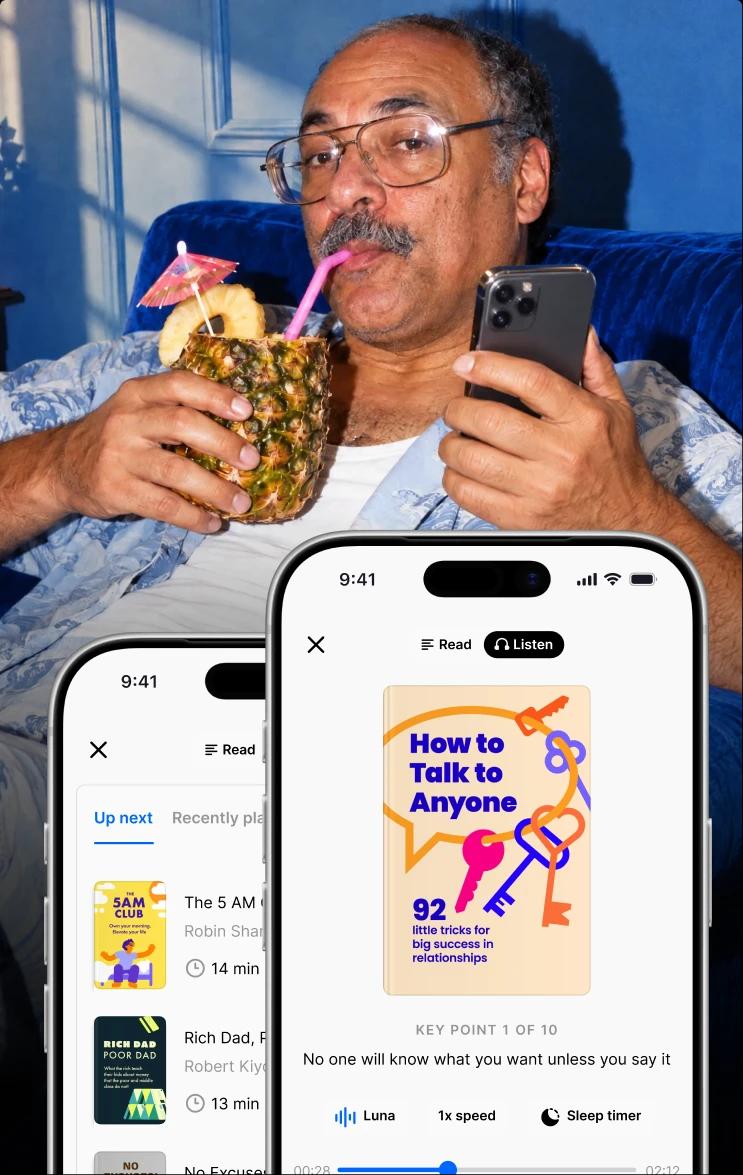
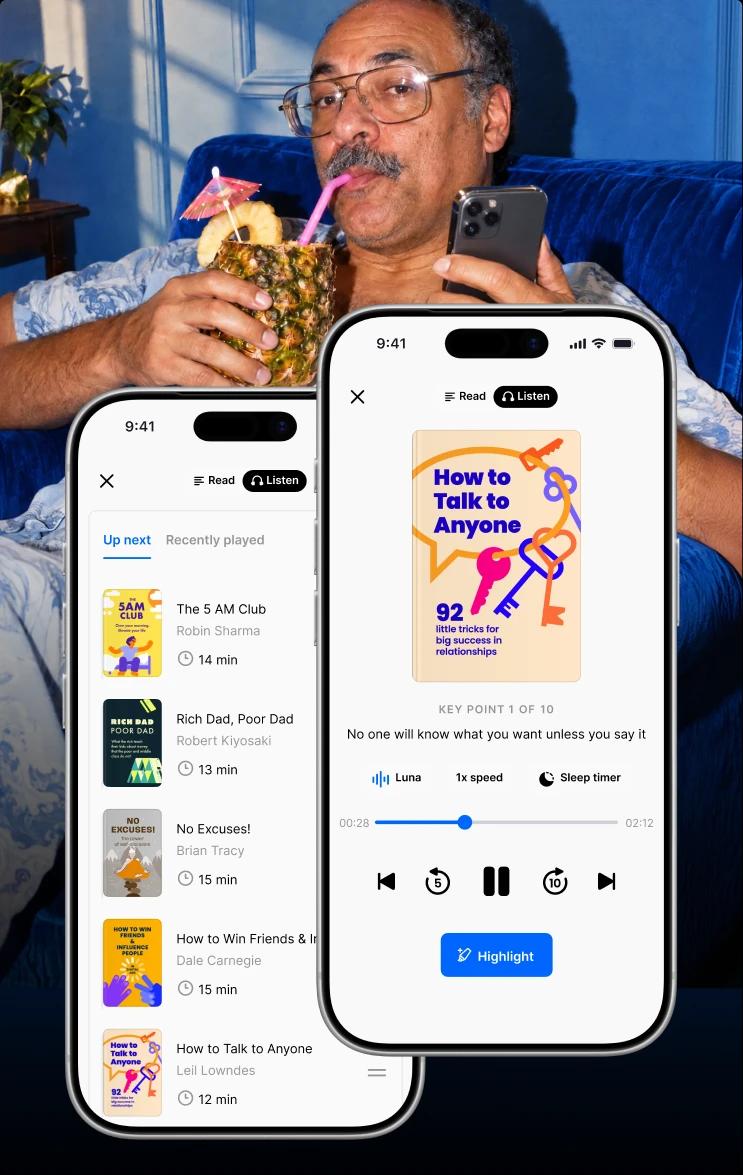
The Headway app gives you access to the world's best ideas in just 15 minutes. It's built for busy people who want to succeed. You can listen to audio versions or read text summaries. With features like progress tracking and quizzes, you can ensure that your comprehension is always at its best. It's the perfect tool for your journey to a better mindset.
To reach your full potential and achieve your goals, you should start now. Don't wait for "someday" to start your growth. Every minute you spend on the app is a step toward your success.
Download the Headway app today and see how easy it is to grow your knowledge!
FAQs about intensive reading
What is intensive reading, and why is it important?
It's a way to read a text with total focus to get every detail and meaning. It's important because it improves your comprehension and memory. Most people read too fast and forget everything. This method helps you truly study the material. It builds your critical thinking and helps you find specific information for your work or studies.
How long should an intensive reading session be?
A good session should last around 25 to 30 minutes. Your brain can only stay in deep focus for a short time. After this, you should take a five-minute break. It keeps your mind fresh and ready for more. If you try to read for hours without a break, your retention will drop fast. Consistency every day is the real key.
Can summaries replace full books?
Summaries are a great tool for quickly grasping the main ideas. They don't replace the experience of a full book, yet they help you decide which ones are worth your time. You can get the core insights in 15 minutes.
Which books improve focus and cognitive skills fastest?
Books like Deep Work by Cal Newport and 'Hyperfocus' by Chris Bailey are the best for this. They offer practical tips to stop distractions and increase focus. 'Make Time' by Jake Knapp is also great for daily routines. You can find summaries of all these books on Headway. They give you the strategies you need to strengthen your mind and achieve more.
How does Headway help with intensive reading?
Headway provides bite-sized summaries that are perfect for focused reading sessions. You can practice your comprehension on a short text with high-value ideas. The app also has quizzes to check what you remember. It tracks your progress to keep you motivated. It's a structured way to build a daily habit of growth without feeling overwhelmed by long books.
Can intensive reading improve memory retention?
Yes, it's one of the best ways to remember what you read. By focusing on word recognition and collocations, you engage your brain more. Active reading strategies, like asking questions and taking notes, store info in your long-term memory. When you reflect on what you have learned, you strengthen those mental links.