Self-growth
 Apps & Digital Tools
 Business & Career
 Success
 Growth Tools
 Psychology
 Communication
 Relationships


The commute used to end the workday. Now the office is 12 steps from the couch, and the mental shift that once happened on a train or in a car never gets its cue. That gap between leaving work and feeling off work is where remote work burnout takes root. It usually shows up first as a simple inability to switch off — so the real question is how to stop thinking about work once the day is done.
If your head is still at your desk hours after you've left it, you're not lazy or ungrateful for the flexibility. Your brain is doing exactly what brains do with unfinished business. The better news: switching off is a skill — it takes practice, but the ability comes back. A personalized plan from Headway can give your off hours a stronger default.
📘 Create your plan here in 5 minutes.

Quick answer: Why remote work burnout keeps your brain on after hours
Remote work burnout comes from blurred boundaries and constant connectivity, not weak willpower.
Your mind keeps looping on unfinished tasks — a quirk called the Zeigarnik effect.
The real fix is psychological detachment: being mentally off, not just away from the desk.
Shutdown rituals, a dedicated workspace, and protected off hours do most of the work.
If low mood and exhaustion drag on for weeks, it may be more than burnout and worth a professional's time.
Keep reading for the seven habits that help your mind clock out when you do.
The signs of remote work burnout that creep up on you
Remote work burnout rarely announces itself. It builds in the background, which is why people miss the early signs of burnout from working remotely until they're waist-deep in it. A few patterns to watch for:
| Warning sign | How it shows up when you work from home |
|---|---|
Always-on checking | You open Slack or email the moment you wake up — before coffee, before anything. |
No clear off switch | Evenings and weekends blur into "kind of working," and you can't name the last time you were fully off. |
A shorter fuse | Small requests feel huge, and you're short with people you like. |
Sleep-proof tiredness | You're tired in a way sleep won't fix — a flat, foggy emotional exhaustion, with work worries looping once your head hits the pillow. |
Vanishing downtime | Hobbies have quietly dropped off the calendar, yet you couldn't say where the time went. |
These symptoms of remote worker burnout overlap with general burnout symptoms, so it pays to know the fuller picture. Not sure where you land? A quick burnout test gives you a gut check in two minutes.
Why working from home makes it so hard to stop thinking about work
A few forces pile up when the office and the living room are the same four walls.
First, the brain hates an open loop. Psychologists call it the Zeigarnik effect: the brain holds unfinished tasks in active memory and keeps tapping your shoulder until they're done or written down. A full inbox at 6 p.m. is a stack of open loops your mind refuses to file.
Then there's the boundary problem. With no commute, no "leaving," and no door to close, the signal that work has ended never fires. Layer on constant connectivity, a standing pressure to prove you're available, and a low-grade fear of missing something, and off hours stop feeling off.
On top of that, remote work can get lonely. Back-to-back video calls bring Zoom fatigue and a low-grade digital fatigue, minus the hallway chatter that used to break up a day. That lack of social interaction makes work-related stress harder to shake, and it spills into the personal life and relationships that usually recharge you. Together, they drive the slow slide into mental exhaustion, the heart of burnout from working remotely, and a real strain on the mental health of remote workers.
Psychological detachment: The mental separation that turns work off
Researchers who study recovery have a name for what you're missing: psychological detachment, the sense of being mentally unplugged from work during your own time. It's not the same as being away from your desk. You can sit on the couch, phone in hand, body home but mind still in the morning standup. That's physical absence without mental separation, and it does almost nothing to restore you — or to let you be fully present with the people you're with.
Being out of the office isn't the same as being off.
Detachment gives your brain the space to drop out of problem-solving mode long enough to refill. Without it, persistent work-related thoughts keep your stress response simmering all evening, which is how one rough week hardens into chronic workplace stress — the kind that can weaken your immune system over time. Everything below points at the same goal: helping your mind leave work when your workday does.
How to stop thinking about work after hours
You won't think your way out of overthinking. These seven habits hand your brain the cues it's been missing so it can power down on schedule.
1. Build a shutdown ritual: Write tomorrow's to-do list
Spend the last ten minutes of work writing tomorrow's to-do list, then say out loud that you're done. Repeated daily, this small routine tells your brain the open loops are handled — the direct counter to the Zeigarnik effect.
2. Give work its own room
A dedicated workspace you can walk away from beats working from bed. Closing the laptop or leaving the room becomes the "off" switch a commute used to flip, and it anchors setting boundaries when working remotely.
3. Fake a commute to leave work behind
Bookend the day with a ten-minute walk around the block. A short audio summary or a playlist in your ears creates a clean line between "on" and "off."
4. Park your work worries on purpose
Keep a notebook for the work thoughts that surface at night. Writing "follow up with Sam" and shutting the cover is permission to handle it tomorrow, not at 11 p.m. — and it gives the evening your full attention instead of half of it.
5. Move your body: Physical activity clears a racing mind
Regular exercise — a run, a lift, or a long stretch — burns off the stress chemicals that keep your mind racing and reduces work-related rumination. Even 30 minutes of aerobic exercise improves sleep quality, and joining a sports team distracts from work thoughts while getting you around other people. It's one of the simplest stress-management techniques and a reliable way to reduce stress.
6. Guard your off hours from work-related stress
Setting clear work hours signals the end of the workday, so mute notifications once they're over and pull work email off your personal phone if you can. You can't control the workload, but you can control when it reaches you, which keeps work from bleeding into the night.
7. Wind down without the feed
Trade the bedtime scroll for something that lets your mind settle: journaling, a few minutes of mindfulness or meditation, or a chapter of a book to relax. An absorbing hobby works too — it crowds out intrusive work thoughts, and hobbies tend to lift mood and self-esteem. Either way, stepping off the feed protects your sleep, and one reader described how replacing scrolling with daily learning did more for his evenings than another hour of headlines ever had.
📘 If you want a little structure while these habits take hold, Headway's plan can queue up the right ideas for you. Start with one idea on Headway.

How to recover from remote work burnout — and prevent the next one
Already past the daily-overwhelm stage? The habits above still apply, but recovery takes longer. A real burnout recovery plan means protected rest, a lighter load where you can get one, and support from friends and loved ones. Talk to your manager about handing work off, and be clear with colleagues about your work hours — that kind of communication lessens the anxiety of feeling always on.
Prevention is the same work done sooner: solid burnout prevention strategies break the cycle and protect your off hours and work-life balance before your body forces the issue. That is really how to avoid burnout while working from home.
Burnout isn't only a remote-work problem, either. It hits students facing college burnout and former overachievers running into gifted kid burnout, the same pattern in a different setting. To see how far yours has gone, the 12 stages of burnout lay it out stage by stage.
A quick note on remote work burnout recovery. If low mood, exhaustion, and dread hang on for weeks, or you've stopped functioning day to day, that can look more like depression than burnout. That's the point to see a doctor or start therapy, and there's no prize for waiting until you can't function.

Fill your off hours with something that gives back — with Headway
Easing remote work burnout gets simpler when your downtime hands you something to engage with instead of pulling you toward your inbox. Headway is made for those in-between minutes. Answer a few questions about what's draining you, and it builds a plan around that.
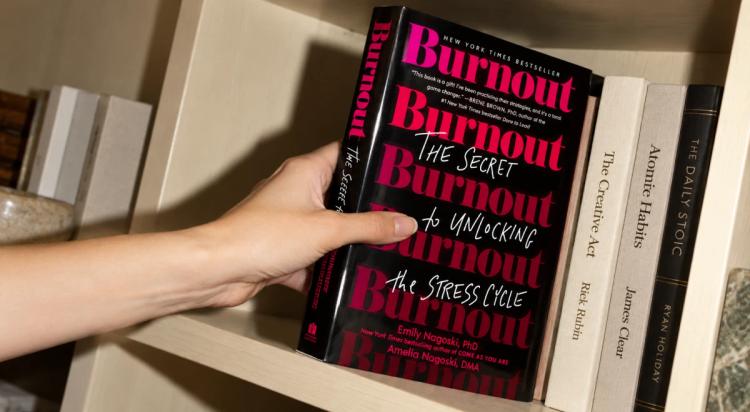
The plan draws on 2,500+ book summaries you can read or listen to in about 15 minutes, including stress and boundary titles like 'Burnout' by Emily and Amelia Nagoski. Play one on your commute, on a walk, or over coffee before the house wakes up.
The topics land right on how to stop thinking about work: setting boundaries, managing work-related anxiety, focus, and winding down. Short on time? The Shorts tab turns big ideas into quick, scrollable lessons for the gaps in a busy day.
People tend to use it in exactly those cracks. One developer, triathlete, and parent of three fits summaries into training. A manager traded reactive days for strategic ones in 20 minutes a day. Others simply checked what shifted over two months or folded it into a daily routine.
📘 With more than 55 million downloads, it's a low-stakes way to give your downtime back to you. Find your focus with Headway today.
A few questions that come up a lot about remote work burnout:
Frequently asked questions on remote work burnout
Remote work burnout vs regular stress — what's the difference?
Everyday work stress rises and falls with specific pressures, like a deadline or a messy week, and settles once they pass. Remote work burnout is what's left when that stress never switches off. It's chronic rather than situational, and it wears down your energy, motivation, and sense of accomplishment over weeks or months. When rest stops refilling you, you've likely moved from stress into burnout.
Why can't I stop thinking about work at night?
At night there's nothing left to crowd out the day's loose ends, so unfinished tasks resurface — the Zeigarnik effect in action. Your brain keeps the loop open until it trusts the task is handled. Close it before bed: write tomorrow's to-do list, park stray work worries in a notebook, and give your mind a calmer input than one more scroll.
Is it normal to constantly think about work when you work from home?
Early on, yes. When the office and the living room share four walls, your brain never gets the old signal that the day is over, so thinking about work spills into the evening. It turns into a problem when you can't leave work behind for weeks at a stretch and rest stops refilling you. That's the line between a demanding season and remote work burnout.
How long does recovery from remote work burnout take?
There's no fixed timeline. Mild cases can ease within a few weeks of protected rest and firmer boundaries, while deeper burnout that built over months can take months to unwind. Recovery speeds up when you reduce the load that caused it rather than just resting around it. Expect progress in uneven steps rather than a straight line, and go easy on yourself.
Can you fix remote work burnout without quitting your job?
Usually, yes. Most people recover by changing how they work rather than where they work, through firmer boundaries, protected personal time, a lighter load where possible, and real detachment in the evenings. Quitting removes one stressor but rarely fixes the habits behind the burnout, which tend to follow you into the next role. Start with the daily changes first.
When should you get professional help for work-related burnout?
Reach out if the exhaustion and low mood last for weeks, or if your sleep is consistently wrecked. The same goes if you're leaning harder on alcohol or food to cope, or if work dread is bleeding into the rest of your life. A doctor or therapist can rule out depression or anxiety and build you a plan.