Self-growth
 Business & Career
 Success
 Communication
 Healing
 Relationships
 Psychology
 Happiness
Does the thought of telling a coworker they missed the mark make your palms sweat? It's a feeling almost everyone shares. Most of us would rather sit through a root canal than deliver critical feedback. We worry about hurting feelings, damaging relationships, or — worst of all — causing a defensive blow-up that ruins the office vibe for a month.
But avoiding the conversation doesn't help anyone either. In fact, it hurts your team members more than it helps them. Without honest feedback, people stay stuck in the same ruts, making the same mistakes, and wondering why they aren't getting promoted. Learning how to give constructive feedback is the single most important communication skill you can master to build trust and drive professional growth.
In this guide, we're going to strip away the corporate speak and get into the nitty-gritty of giving constructive feedback that actually sticks. Drawing on insights from leadership bibles like 'Radical Candor' and 'Crucial Conversations' — both of which you can devour in 15 minutes on the Headway app — you'll learn how to turn a scary talk into a positive outcome.
Quick answer: How to give constructive feedback effectively
Focus on facts: Use the SBI Model (Situation-Behavior-Impact) to keep your points objective and avoid personal attacks.
Prioritize timeliness: Deliver feedback as soon as possible — waiting until next week makes the lesson less relevant.
Build psychological safety: Create an environment where receiving feedback feels like a tool for growth, not a critique.
Encourage dialogue: Turn the feedback session into a two-way street by asking the other person for their perspective on the situation.
End with a clear next step: Always close with specific steps for improvement to ensure a positive change in future performance.
What is constructive feedback?
Constructive feedback is a communication tool that provides specific, practical information to help someone improve their performance or behavior. Unlike a complaint or negative feedback, it focuses on future growth rather than past blame. It's the process of offering feedback that is supportive, clear, and aimed at a specific result.
The goal of giving constructive feedback is to create a positive change while maintaining a healthy, professional relationship. When done right, it feels like a collaborative session where both parties are working toward the same goal: better results and a stronger work ethic. It's a core component of employee performance management and personal development.
Unlock your daily growth superpower
Transform your routine to fuel continuous learning and effortless improvement.
Let's startThe psychology of why we avoid feedback
Before we get into the "how," we have to understand why "giving constructive feedback" feels so heavy. Human brains are wired to perceive social rejection as a physical threat. When you prepare to deliver critical feedback, your amygdala — the brain's "fear center" — kicks into high gear. You anticipate the other person's defensiveness, and your body reacts with a stress response.
The person receiving feedback is also under stress. If they feel attacked, their brain releases cortisol, which effectively shuts down the prefrontal cortex — the part of the brain responsible for logic and problem-solving. That's why people "blank out" or get angry during performance reviews. Your job as a leader is to lower the stress levels for both of you so the information can actually land.
How to give constructive feedback: The five golden rules
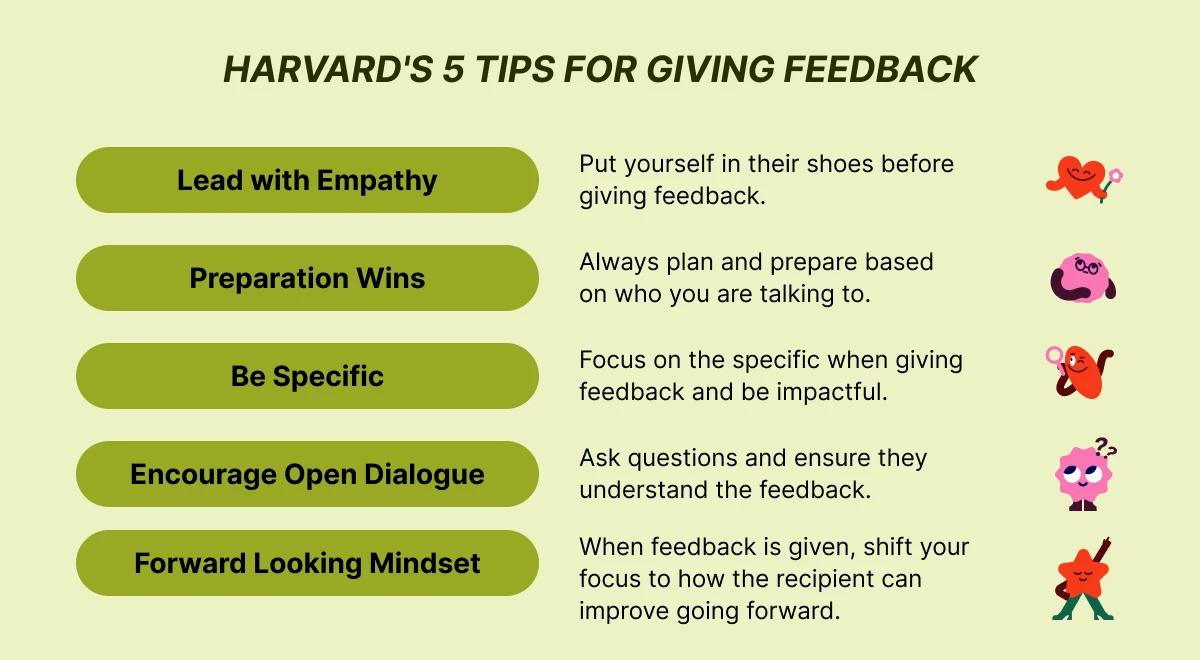
Before you even open your mouth, you need a plan. Walking into a feedback session without a strategy is a recipe for a defensive disaster. Follow these rules to ensure your message is heard and leads to a positive outcome.
1. Be specific and use specific examples
Vague feedback is useless and frustrating. Saying "You need to be more professional" means nothing to the person hearing it. Instead, provide specific feedback about a single event. For example, "During our team meetings this morning, you interrupted Sarah three times while she was presenting the budget." That gives the person a clear target for improvement next time. Specific examples remove the guessing game from the conversation.
2. Focus on behavior, not personality
The moment you attack someone's character, they stop listening and start defending. Never say "You're lazy" or "You aren't a team player." Instead, focus on the deliverables and the work ethic demonstrated. Say, "I noticed the report was submitted two hours after the deadline, which delayed the client's review." That keeps the focus on the job and the impact on the team, not the person's character.
3. Choose the right time and place
Timing is everything for a productive work environment. Deliver feedback while the event is fresh, but not while emotions are still running hot. A face-to-face one-on-one is almost always better than a public call-out. Offering feedback in a group setting destroys psychological safety and breeds resentment. And don't wait for the formal performance review session to bring up a problem from three months ago. If it happened yesterday, talk about it today.
Master constructive communication and get practical insights.
4. Make it a two-way street
An effective feedback conversation isn't a monologue; it's an open dialogue. After you deliver your points, ask, "What is your perspective on this?" That allows honest feedback from their side and might reveal obstacles you didn't know existed, like a lack of time management tools or unclear instructions for the deliverables. When they feel heard, they're much more likely to accept the feedback and commit to a positive change.
5. Follow up and follow through
Don't just drop a heavy message and walk away. A key part of professional development is the follow-up. Check in a week later to see how things are going. Acknowledge the hard work they've put into making a change. That shows you care about their career development, not just the mistake they made. It reinforces the idea that feedback is about growth, not just pointing out errors.
📘 Master constructive feedback with Headway.



Three frameworks for giving effective feedback
If you're feeling nervous, using a framework can act like a script. It keeps you on track so you don't ramble or lose your nerve during the feedback session.
The SBI Model (Situation-Behavior-Impact)
This model is the standard approach for giving constructive feedback at work. It's objective, factual, and hard to argue with.
Situation: Define when and where it happened. "During the client presentation yesterday..."
Behavior: Describe exactly what happened without using "labels." "...you didn't mention the new pricing structure we agreed on last week."
Impact: Explain the result of that behavior. "This caused the client to be confused about the final quote, which slowed down the closing process for the entire team."
The FEED Model
The FEED model works well for offering feedback to direct reports who need a clear path forward for their professional growth.
Fact: What exactly happened? Ground this in data.
Emotion: How did it affect the team's morale or the project's outcome?
Encouragement: Remind them of their strengths and why you believe they can improve.
Direction: What should they do differently next time to ensure a positive outcome?
Radical Candor approach
In her book 'Radical Candor,' Kim Scott argues that the best feedback comes from a place of deep caring. If you don't care about the person, your feedback feels like "Obnoxious Aggression." If you care but don't challenge them, that's "Ruinous Empathy."
The sweet spot is challenging them directly because you want them to succeed. The Headway app has a summary of this book if you want to work through the ideas today. It's particularly useful for anyone learning to give constructive feedback as a manager.
➡️ What is Headway, and how exactly can it help me?
How to give constructive feedback in specific scenarios
Different roles require different approaches. Here are the trickiest feedback conversations you'll face at work and how to handle each one.
How to give constructive feedback to employees
When giving constructive feedback to employees, remember you're their coach, not their judge. Start by highlighting their hard work and recent successes to build trust. Then move into the specific area for improvement. Use your one-on-one time to go deeper into their employee performance and ask how you can support their growth. If you're learning how to give constructive feedback to an employee for the first time, keep it short and focus on one specific behavior rather than a laundry list of complaints.
How to give constructive feedback to manager
Learning how to give constructive feedback to a manager, sometimes called "managing up," is a high-level skill that requires real emotional intelligence. The key is to frame it around team goals and your own productivity. Instead of "Your micromanaging is annoying," try "I feel I could manage my time better if I had more autonomy over the daily deliverables. Could we try a weekly check-in instead of daily ones?" That shows you're focused on problem-solving and efficiency.
How to give constructive feedback to your boss
Similar to managing up, when you give constructive feedback to your boss, focus on the "why." How does their behavior affect the team's ability to hit targets? Come prepared with specific examples. If they interrupt you in meetings, explain that it makes it difficult to deliver the full information the team needs. Framing it as a professional issue rather than a personal one keeps the conversation productive.
How to give constructive feedback to peers
Peers can be the hardest because there's no hierarchy to fall back on. Use "I" statements to avoid sounding accusatory. Instead of "You're always late with your parts of the project," try "I struggle to finish my tasks on time when I receive the data on Friday afternoon. Could we move the handoff to Thursday?" That keeps the focus on your needs and the project's success.
How to give constructive feedback to your team
When delivering feedback to a group, focus on collective outcomes rather than individual blame. Use team meetings to celebrate wins and discuss lessons learned from recent projects. That encourages an open dialogue where everyone feels responsible for the positive outcome. Make sure you also offer feedback in one-on-one sessions on individual-specific issues to maintain psychological safety and build trust.

Deliver impactful feedback using these science-backed ideas.
Examples of constructive feedback for common work issues
Sometimes you just need a script to get started. Here are some examples of constructive feedback you can adapt for your next conversation.
| The problem | How to give constructive feedback (the script) |
|---|---|
Consistent tardiness | "I've noticed you've arrived 15 minutes late to our team meetings twice last week. This means we have to recap for you, which delays the whole team. How can we ensure you're ready to start at 9:00 AM next time?" |
Negative attitude | "In our last three brainstorming sessions, I noticed you've been very critical of new ideas without offering alternatives. That's starting to close down the open dialogue in the room. I'd love to hear your problem-solving ideas alongside your critiques." |
Low-quality work | "When I reviewed the deliverables this morning, I found several typos and data errors. That affects how our team's work ethic is perceived by the director. Let's look at your review process together to see where we can tighten things up." |
Communication gaps | "I didn't receive an update on the project status yesterday as we agreed. That makes it hard for me to manage the client's expectations. What's the best way for us to communicate these updates going forward?" |
Missed deadlines | "The report for the marketing team was due on Tuesday, but I received it on Thursday. That meant the team couldn't launch the campaign on time. What obstacles did you run into, and how can we avoid this happening next time?" |
Building a culture of feedback and psychological safety
The best leaders don't just "deliver feedback," they build a culture where feedback is a constant, low-stakes flow of information. That's built on the foundation of psychological safety. According to Amy Edmondson in 'The Fearless Organization,' psychological safety is the belief that you won't be punished or humiliated for speaking up with ideas, questions, concerns, or mistakes.
When a team has high psychological safety, giving constructive feedback becomes much easier because people don't view it as a threat to their job security. They see it as a teammate helping them stay on track. You can foster this culture by doing three things consistently:
Admit your own mistakes: When you mess up, say it out loud. That gives others permission to be imperfect.
Ask for feedback first: Regularly ask your direct reports, "What's one thing I could do to make your job easier?" That shows you value their honest feedback.
Reward candor: When someone gives you difficult feedback, thank them for it, even if it's hard to hear.
📘 Build psychological safety habits with Headway.
The other side: Receiving feedback with grace
Mastering how to give constructive feedback is only half the battle. You also need to be world-class at receiving it. Most of us get defensive the moment we hear anything that sounds like a critique. To counteract this, use the "listen and clarify" technique.
When someone gives you feedback, don't interrupt. Listen to their specific examples. Once they finish, summarize what you heard: "So, what I'm hearing is that my emails are sometimes too brief and can come across as dismissive. Is that right?" That clarifies the message and shows the other person you're taking their feedback seriously.
From feedback to growth: How Headway makes it easy
Giving and receiving feedback requires a high level of emotional intelligence. You have to be able to regulate your own nerves and read the other person's body language. It's not a skill you're born with; it's a muscle you build through consistent practice and learning.
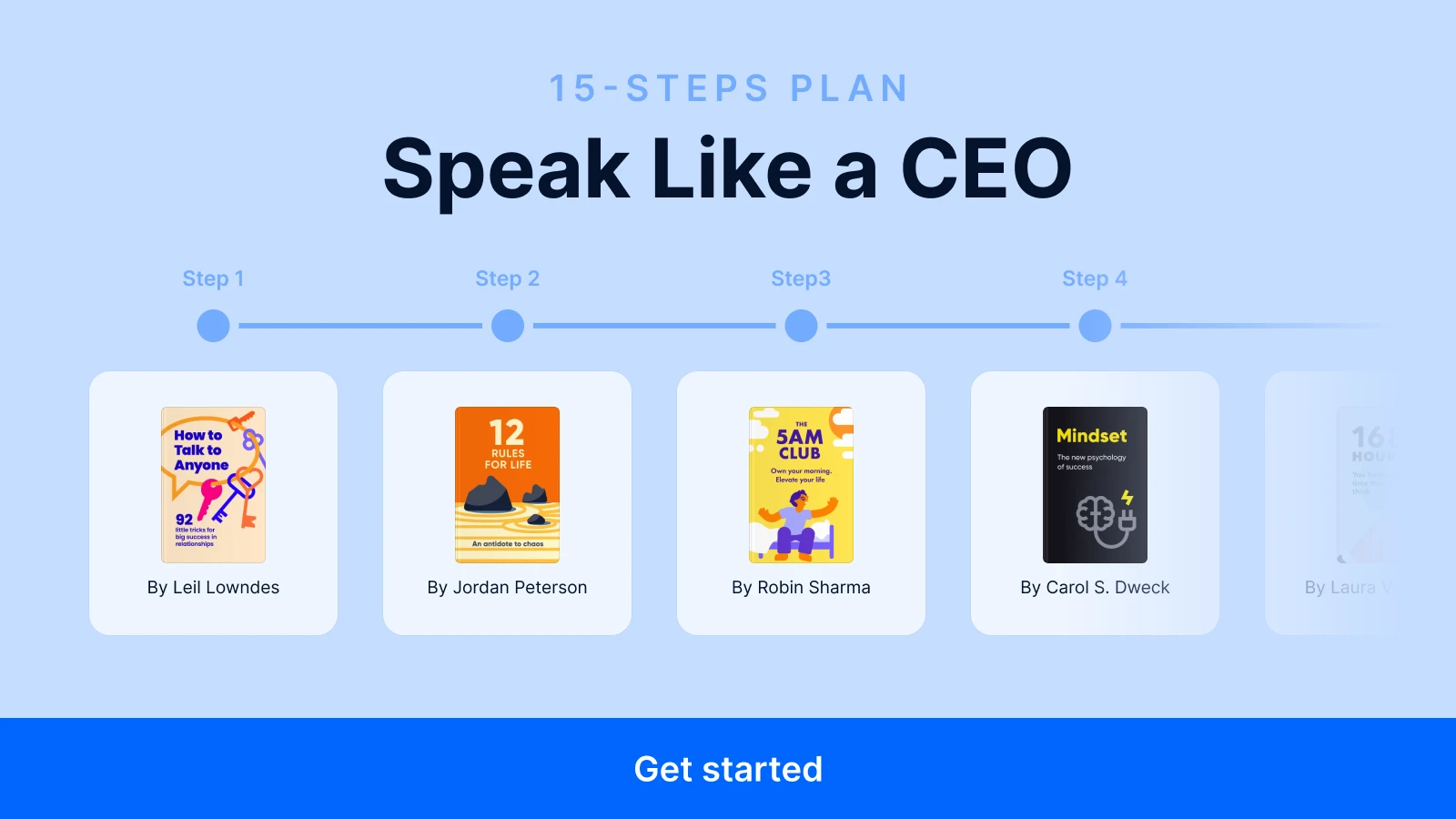
The Headway app can help you build that muscle in just a few minutes a day. Instead of scrolling through social media, you can listen to the key ideas from books that will genuinely sharpen your communication skills:
'Radical Candor' by Kim Scott: Learn how to be honest and direct without losing your humanity. Particularly useful for anyone figuring out how to give constructive feedback as a manager.
'Crucial Conversations' by Kerry Patterson, Joseph Grenny, Ron McMillan, and Al Switzler: Master the tools for talking when stakes are high, and emotions are higher. An invaluable read for handling a tense feedback conversation.
'Thanks for the Feedback' by Douglas Stone and Sheila Heen: Learn the science of receiving feedback well. Understanding this side of the equation is often what separates people who grow quickly from those who plateau.
'Nonviolent Communication' by Marshall Rosenberg: Learn how to speak in a way that leads to connection rather than defensiveness in the work environment, even when you're delivering critical feedback.
'Emotional Intelligence' by Daniel Goleman: Understand the "why" behind your reactions and how to stay calm under pressure. A foundational read for anyone in a leadership role.
With a personalized growth plan on Headway, you can target "Leadership," "Communication," or "Productivity" to get a daily dose of ideas that make you the kind of leader people actually want to work for.
📘 Improve emotional intelligence daily with Headway.
Frequently asked questions on how to give constructive feedback
How to give constructive feedback in a performance review?
Don't "surprise" the employee with new information during performance reviews. Effective feedback should happen year-round, so the formal review is just a summary of previous conversations. Focus on the big picture of their career development and professional growth. Use specific examples from the entire year to build trust and show you've been paying attention to their hard work and progress.
What is the difference between positive feedback and constructive criticism?
Positive feedback reinforces good habits by highlighting what is working. Constructive criticism identifies areas where a person is falling short and offers a path to improvement. Both are necessary for a healthy team. Without positive reinforcement, people feel undervalued; without constructive feedback, they stop growing and their employee performance plateaus. Balancing both leads to a better work environment.
How to give constructive feedback to your team?
To deliver feedback to a group, focus on collective outcomes rather than individual blame. Use team meetings to celebrate wins and discuss "lessons learned" from recent projects. This approach encourages an open dialogue where everyone feels responsible for the positive outcome. Ensure you also offer feedback in one-on-one sessions on individual-specific issues to maintain psychological safety and build trust.
How to give constructive feedback to your team?
When you give feedback to the entire group, frame it as a "retrospective." Ask questions like, "What could we do better next time?" This way invites team members to participate in the problem-solving process. It transforms the feedback session from a top-down lecture into a collaborative effort to build a better work environment and improve overall team communication skills.
What is the best way to deliver feedback to an employee?
The best way to deliver feedback is face-to-face and privately. This method minimizes the risk that the employee will feel shamed or attacked. Start the feedback conversation by stating your positive intent: "I'm sharing this because I want to see you succeed in this new role." Being honest and direct while remaining empathetic is the key to ensuring the feedback leads to positive change.
How to give constructive feedback to peers examples?
If a peer is missing deadlines, you might say: "I've noticed the last few deliverables arrived after the cutoff. That makes it hard for me to finish my part without rushing at the last minute. Could we check in mid-week to see if you need help getting things over the finish line?" It's helpful, collaborative, and focused on the shared goal.
How to give constructive design feedback?
When providing design feedback, avoid subjective phrases like "I don't like this." Instead, tie it back to the project's goals. "The current font choice makes the text hard to read on mobile devices, which might affect our conversion rate. Could we explore a more robust option that aligns better with our professional growth and user accessibility standards?" This phrasing makes the critique objective.
How to give constructive feedback on writing?
Focus on clarity and the reader's experience. Instead of saying "This is bad," try "The second paragraph has several complex sentences that might be hard to follow. Could we break them into smaller chunks?" That provides a clear, actionable path for the writer to follow to achieve better results next time.
How to give constructive feedback to students?
Students need to know exactly where they are on the learning curve. Use "The Sandwich Method" carefully by starting with what they did well, pointing out the specific area for improvement, and ending with a reminder of their potential. For example, "Your research is excellent, but your citations are inconsistent. If you fix the formatting, this will be a top-tier paper that reflects your hard work."
How to give constructive feedback to parents?
When talking to parents about their child's progress, always lead with empathy and shared goals. Use phrases like, "We both want to see [Name] succeed." Focus on specific observations: "I've noticed [Name] struggles with time management during quiet study periods. Let's discuss some strategies we can use both at school and at home to help them stay focused and succeed."