Self-growth
 Apps & Digital Tools
 Business & Career
 Success
 Growth Tools
 Psychology
 Communication
 Relationships

Almost everyone has felt that white-hot flash of frustration over a misunderstood text or a sink full of dishes. While anger is a primal signal, letting it become your main way of communicating will eventually erode the foundation of your partnership. Luckily, managing these reactions is a practical skill you can develop, rather than a fixed part of your personality.
Since finding time for deep psychological research is difficult between work and family, Headway offers 15-minute summaries of the world's best self-growth books to help you start unlearning explosive habits today.
By understanding the science behind your triggers, you can replace a short temper with intentional responses. Instead of spending weeks reading a dense textbook, you can listen to or read key ideas from expert researchers like John Gottman wherever you are.
This guide moves beyond surface-level advice to uncover the psychology of controlling anger in a relationship. We'll look at neuroscience-backed hacks, the renowned Gottman method, and actionable strategies that turn high-stakes moments into opportunities for connection.
📘 Create a personalized reading list on Headway now to improve calm communication.

Tired of arguments that pull you apart?
Master the art of staying calm together. Read the best relationship advice in 15 minutes.
Fix your communicationQuick answer: How to control anger in a relationship?
If you're in the middle of a heated moment and need an immediate "how to control your anger in a relationship" protocol, follow these five steps:
The six-second rule: When triggered, wait exactly six seconds before speaking. This time gives your prefrontal cortex time to "reboot" after an emotional hijack.
Physical distance: If your heart rate exceeds 100 BPM, call a "timeout" and leave the room for at least 20 minutes to allow cortisol levels to drop.
Identify the primary emotion: Anger is often a "secondary" emotion. Ask yourself if you're actually feeling hurt, ignored, or afraid.
Avoid "you" language: Shift from "you always..." to "I feel..." statements to reduce defensiveness in the other person.
Use micro-learning: Open the Headway app during your timeout to listen to a 15-minute summary of a relationship book. It redirects your brain from "attack mode" to "growth mode."
Applying these steps can help you move from a reactive state to an intentional problem-solving state.
The psychology of anger: Why we "lose it" with the people we love
Understanding how to control anger in a relationship, psychology starts with a trip into your brain. When you're in a conflict, your brain's alarm system, the amygdala, can perceive a partner's criticism or cold shoulder as a literal threat to your survival. This shift is called an "amygdala hijack."
During a hijack, your logical brain (the prefrontal cortex) essentially goes offline. You lose access to your problem-solving skills and empathy. That's why you say things you don't mean; your brain thinks it's fighting for its life. Recognizing that your anger is often a biological defense mechanism is the first step toward taking control of the reaction.
Learning to control anger and frustration in a relationship means stopping to view your partner as the enemy and starting to see the "cycle" as the real opponent. When you understand the "why" behind your outbursts, you can begin to implement healthy ways to express yourself without causing damage.
Step 1: Recognize your early warning system
To master controlling anger in a relationship, you have to catch the spark before it becomes a wildfire. By the time you're shouting, it's usually too late for logic to prevail. You need to identify the physical signs of anger issues as soon as they appear.
Common physical indicators include:
A sudden spike in blood pressure or a pounding heart
Shallow breathing or holding your breath
A clench of your fists or jaw
A "hot" sensation in your face or chest
When you notice these signs, your priority is to interrupt the pattern. If you catch the fire when it's just a spark, you can use a deep breath technique to signal to your nervous system that you are safe. This approach prevents the "angry response" from becoming a full-blown outburst.
📘 Master emotional self-awareness with Headway.
Tuning into your body
Most of us ignore our bodies until they are screaming at us. To master controlling your anger in a relationship, you must become an expert on your own internal weather. Next time you feel a minor annoyance, stop and scan your body.
Where is the tension? Is your stomach in knots? By labeling these sensations, you activate the cognitive part of your brain, which helps lower the intensity of the emotion. This habit is a cornerstone of long-term mental health and well-being.
Step 2: Disrupt the motor response (The hands-down technique)
Most people focus on their thoughts when trying to learn how to control anger outbursts in a relationship, but your body often leads the way. There's a motor-interrupt technique that can change your brain chemistry in seconds.
When we get angry, our bodies naturally adopt a "ready to fight" posture — tensed shoulders, hunched forward, hands flailing wildly. To disrupt this, try the "Hands-Down" technique:
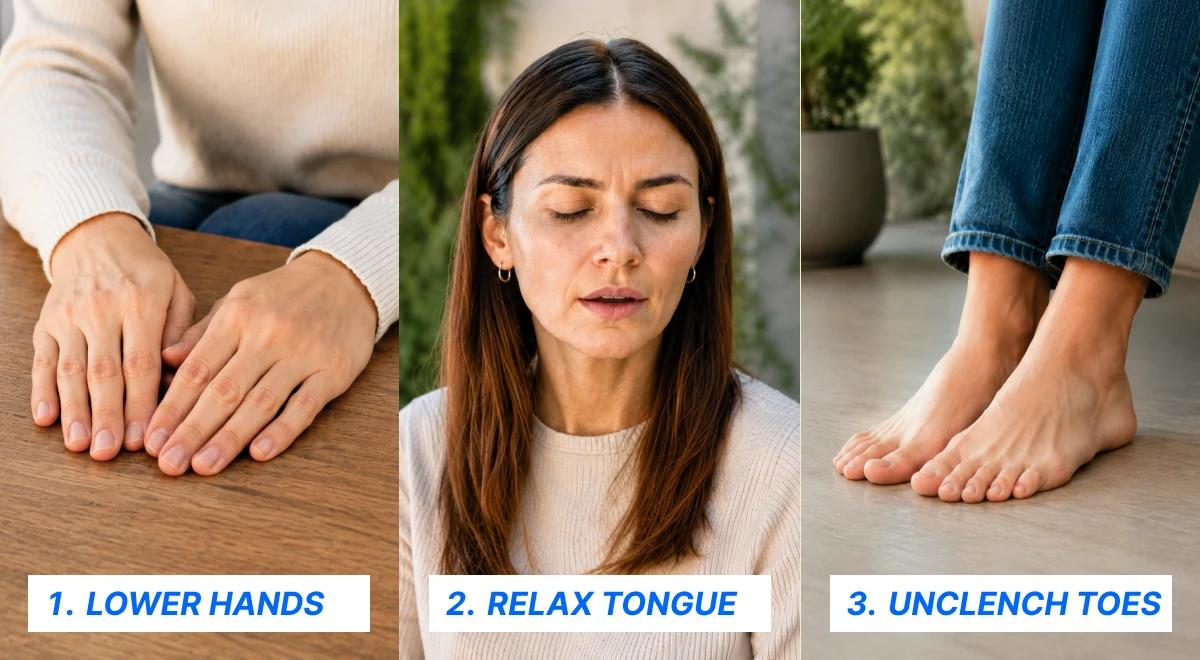
Lower your hands to your sides or place them flat on a table.
Consciously relax your tongue from the roof of your mouth.
Unclench your toes.
By forcing your body into a relaxed state, you send a "safety" signal back to your brain. It's much harder for the brain to maintain a high-intensity, angry persona when the body refuses to meet the physical demands of rage. This tactic is a subtle but powerful way to maintain your well-being in the heat of a moment.
The science of physical calm
When you relax your physical form, your brain receives feedback that the "danger" has passed. It isn't just a distraction; it's a biological override. You can't be in full fight-or-flight mode if your muscles are loose.
This technique is particularly useful for those dealing with a short temper. It gives you something active to do that doesn't involve hurting the other person or escalating the conflict. It's a "reset button" for your nervous system.
Step 3: Replace the argument with a "growth timeout"
When you feel yourself spiraling, you need a timeout. But a traditional timeout often fails because we spend that time rehearsing our next argument in our heads. This way keeps the anger problems simmering.
The Headway app can be a lifesaver here. Instead of fuming in another room, use that 20-minute break to listen to a summary of a book like 'The Dance of Anger' by Harriet Lerner or 'Nonviolent Communication' by Marshall Rosenberg.
By engaging with professional advice during your "cool down" period, you're:
Redirecting your focus: You move from ruminating on your partner's faults to focusing on your own personal growth.
Lowering the temperature: Learning new concepts naturally activates the logical parts of your brain, helping you move out of the emotional hijack.
Finding solutions: You'll often find a specific phrase or perspective in a Headway summary that offers a better path forward than the argument you were just having.
Creating a personalized reading list on Headway focused on "Mental Health" and "Relationships" ensures the right tools are always a tap away as you navigate how to manage anger in a relationship.
📘 Turn conflict into growth with Headway.
Why 20 minutes is the magic number
Physiologically, it takes about 20 minutes for the adrenaline and cortisol in your system to be metabolized. If you try to talk before those 20 minutes are up, you're essentially trying to have a rational conversation while "drunk" on stress hormones.
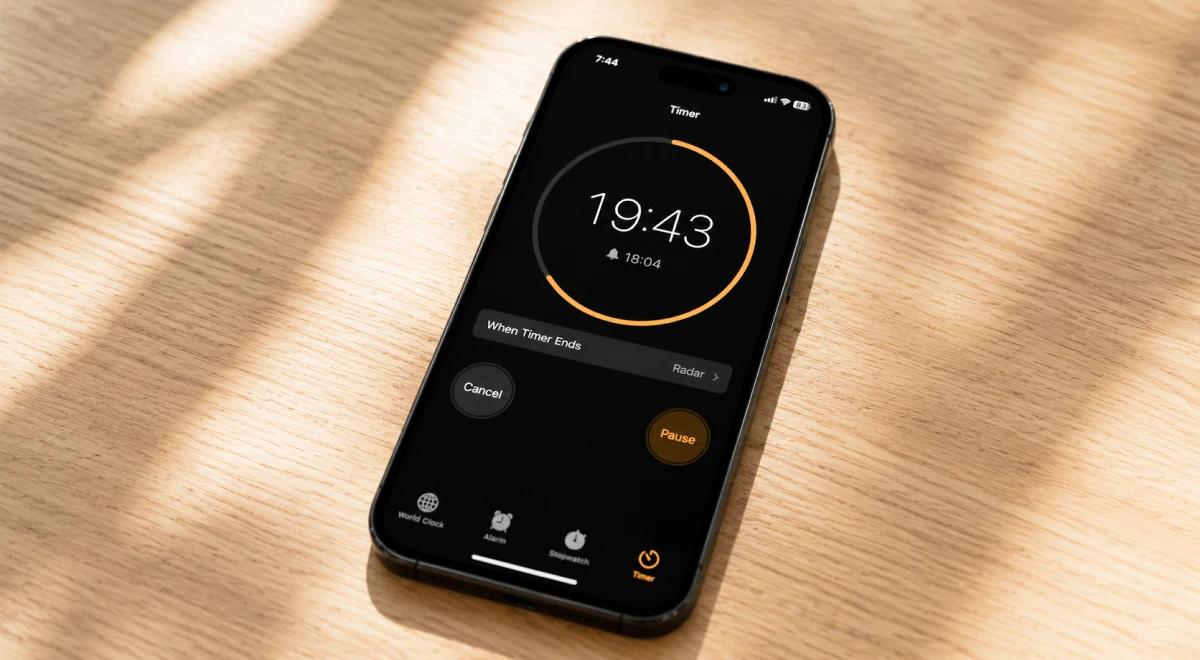
During this time, avoid doing things that keep the anger high, like venting to a family member or replaying the argument. Use this period for emotional distancing. Listening to an audio summary on Headway is perfect because it requires enough focus to break the anger loop without being taxing.
Step 4: Mastering "I" statements and setting boundaries
Once you've calmed down, you still need to address the issue. Learning how to control your anger in a relationship doesn't mean "stuffing" your feelings down. After all, that'll only lead to passive-aggressive behavior later.
The key is to express anger through "I" statements. Instead of saying, "You never listen to me," which triggers defensiveness in the other person, try saying, "I feel unheard and frustrated when we don't finish our conversations."
This shift is crucial for healthy emotion regulation. It focuses on your internal experience rather than the other person's perceived flaws. Additionally, setting boundaries is vital. If you know that a certain topic (like finances or family members) always triggers a short temper, agree to discuss it only at specific times when you both feel calm and well-rested.
The power of vulnerability
True strength in a relationship is the ability to be vulnerable. Anger is often a "hard" shell that protects a "soft" center of fear or hurt. When you use "I" statements, you are dropping the shell.
This technique invites your partner to come closer rather than pull away. It turns a potential explosion into a conversation about needs. And that's how you build a healthy emotional culture in your home, where everyone feels safe to speak their truth.



Step 5: The repair conversation (The Gottman Method)
Dr. John Gottman suggests that the "repair" is more important than the argument itself. Even if you've had an angry response, you can still save the day with a "Repair Attempt."
A repair attempt is any statement or action, silly or serious, that prevents negativity from escalating out of control. It could be a joke, a touch on the arm, or a simple "I’m sorry, I’m getting too worked up. Can we start over?"
Validation is essential here. Even if you don't agree with your partner's point of view, acknowledging their feelings ("I can see why that made you feel frustrated") can immediately de-escalate their anger. It shows that you value the relationship more than being "right."
Learning from the masters
Gottman's research found that "Master" couples repair early and often. They don't let the sun go down on their wrath, but they also don't force a resolution before they are ready. They respect the "cool off" period.
You can learn these techniques in minutes on the Headway app by listening to the summary of 'The Seven Principles for Making Marriage Work.' It provides a roadmap for navigating these high-stakes moments without losing your cool or your connection.
How to handle anger issues in a long-term relationship
If you find yourself constantly asking how to control your anger in a relationship, it might be time to look at the bigger picture. Frequent outbursts are often a sign of underlying stress, a past traumatic event, or even burnout.
Managing anger long-term involves:
Regular exercise: A brisk walk or a gym session helps burn off excess adrenaline and keeps your baseline stress levels lower.
Emotional distancing: Learning to observe your thoughts without immediately reacting to them.
Anger management classes: Sometimes, we need a structured environment to learn new coping mechanisms.
Professional help: If your anger leads to physical harm or persistent verbal abuse, seeking a therapist is a necessary step for your partner's safety and your own mental health.
Remember, the goal isn't to feel angry. The goal is to learn how to control anger and frustration in a relationship book-style — with wisdom, patience, and the right tools at your disposal.
The role of self-care
You can't be a calm partner if you're running on empty. Taking care of yourself is a prerequisite for a healthy relationship. That means getting enough sleep, eating well, and finding time for your own interests.
When your "cup is full," you have a much higher threshold for frustration. You're less likely to snap at a family member or get caught in a cycle of defensiveness. Think of self-care as your primary anger management technique.

What do calm couples do differently?
Discover how the best relationship experts handle high-stakes moments in short, daily reads.
See the secretsThe Headway companion: Your pocket coach for emotional intelligence
If you're serious about how to control anger issues in a relationship, consistency is key. You can't just read one article and be "cured." It takes daily reminders and constant learning to rewire your brain.
The Headway app simplifies this by turning massive amounts of psychological research into 15-minute summaries. Whether you're commuting or taking a break from a difficult conversation, you can devour insights from the world's best experts on:
Building a resilient mindset.
Mastering the art of vulnerability.
Letting go of past resentment.
Improving communication with a loved one.
By making self-growth a daily habit, you build a "buffer" of emotional intelligence. This approach makes you less likely to be triggered by the small things and more able to handle the big things with grace.
Beyond book summaries
Headway offers more than just text and audio. You can use the "Interactive Shorts" to play through real-life conflict scenarios and see how different choices lead to different outcomes. It's a safe space to practice your new skills.
Plus, with daily reminders and progress tracking, you stay motivated to keep growing. You can even save key insights as highlights and revisit them later using spaced repetition. It ensures the advice actually sticks when you need it most.
📘 Build healthier communication habits with Headway.
Frequently asked questions on how to control anger issues in a relationship
How to control my anger in a relationship when I feel triggered?
The fastest way to control your anger when triggered is to implement the "Timeout" rule immediately. As soon as you feel the physical signs, like a racing heart or clenched jaw, tell your partner, "I’m feeling too angry to be productive right now. I need 20 minutes to cool off." During this time, don't ruminate on the fight. Instead, focus on your breathing or listen to a growth-oriented audio summary on Headway to reset your brain.
What are common anger triggers in relationships?
Common triggers include feeling dismissed, a lack of appreciation, or feeling like your boundaries aren't being respected. Sometimes, anger is a reaction to "perceived" threats, such as thinking a partner is being passive-aggressive when they are just tired. Identifying these triggers through journaling or reading summaries on "Self-Awareness" can help you anticipate the "angry response" before it happens, giving you the chance to choose a different path.
What should I do if I am asking how to control my anger in a relationship?
If you find yourself repeatedly asking how to control your anger in a relationship, start by practicing the six-second rule and the "Hands-Down" technique. These physical interrupts stop the adrenaline surge before it takes over your speech. Long-term, using an app like Headway to listen to relationship experts for 15 minutes a day builds the emotional intelligence needed to express needs clearly without resorting to explosive outbursts or defensive behavior.
How to control my anger issues in a relationship if they feel overwhelming?
Dealing with controlling anger issues requires identifying the root cause, such as high stress or a past traumatic event. When feelings become overwhelming, prioritize a 20-minute physical timeout. Use this space for a brisk walk or deep breaths to metabolize stress hormones. If outbursts persist despite your efforts, consider professional help or anger management classes to gain specialized cognitive tools for sustainable well-being and problem-solving.
Can reading books help with controlling anger in a relationship?
Absolutely. Books by experts like John Gottman or Harriet Lerner provide the "blueprints" for emotional intelligence that most of us weren't taught in school. However, most people don't have time to read dozens of 300-page books. Headway solves this by giving you the "snappy" summaries of these bestsellers, allowing you to learn the most effective anger management techniques in just a few minutes a day. It's like having a therapist's greatest hits in your pocket.
When should I seek professional help for my anger?
You should seek professional help if your anger feels out of control, leads to property damage, or involves any form of physical or emotional abuse. If your partner is afraid of your outbursts or if you find yourself feeling intense guilt after every conversation, a mental health professional can help you uncover the root causes, such as a past traumatic event, and provide specialized tools that go beyond self-help. You can find a local counselor by looking up a phone number for local mental health services.
How to control anger outbursts in a relationship?
Start with the "6-second rule," wait before responding when triggered. If your heart rate exceeds 100 BPM, take a 20-minute timeout to let cortisol drop. Use the "Hands-Down" technique to interrupt the motor response, then practice "I" statements when addressing the issue. Consistency with these physical and cognitive tools rewires your brain's default reaction.
What are the best tips on how to control anger in a relationship?
The most effective tips combine body awareness with intentional communication. Recognize early warning signs, such as jaw clenching or shallow breathing. Disrupt the physical response before it escalates. During your cool-off period, use Headway to redirect your mind toward growth rather than rumination. Finally, master repair conversations by validating your partner's feelings, even if you disagree.
How does psychology explain how to control anger in a relationship?
Psychology shows that anger often stems from an "amygdala hijack," such as when your brain perceives criticism as a survival threat, shutting down your prefrontal cortex. Understanding this biological mechanism helps you view the conflict cycle, not your partner, as the opponent. Recognizing anger as a secondary emotion masking hurt or fear shifts your response from reactive blame to vulnerable problem-solving.
Can a book really help with how to control anger in a relationship?
Absolutely. Books by Gottman or Harriet Lerner provide evidence-based frameworks that most people weren't taught. The challenge is time; few can read 300 pages during a conflict. Headway solves this by distilling expert insights into 15-minute summaries you can access during your timeout. These summaries give you immediate, actionable tools to turn high-stakes moments into opportunities for connection.