Self-growth
 Business & Career
 Success
 Communication
 Healing
 Relationships
 Psychology
 Happiness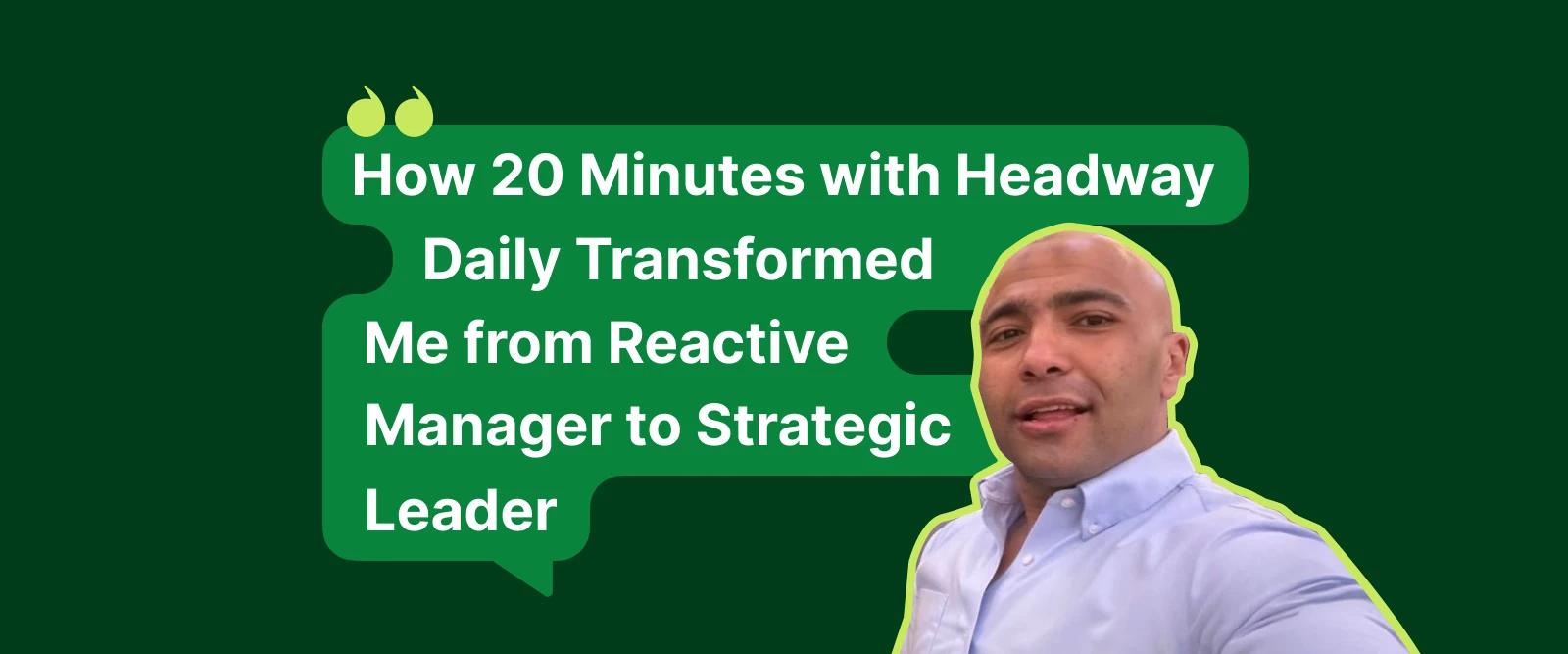
I work as a cost control manager in fast-paced project settings. My job is to manage budgets, control deviations, keep finances on track, and make sure everyone stays aligned. Every day brings urgent decisions, competing priorities, and steady pressure to deliver.
But this isn't unique to my job. If you're responsible for results under pressure, you know what I mean. The stakes are high, the pace never slows down, and it's hard to find time to think ahead.
That was my daily reality until I tried the Headway app. A simple 20-minute habit changed everything for me.
The reactive leadership pattern: How I was trapped in firefighting mode
Before building this daily learning habit, my reactive patterns showed up mainly under pressure.
In cost control and project work, I was always putting out fires, responding right away to issues, emails, and requests without stopping to see the bigger picture. My decisions were usually correct, but they were short-term and driven by urgency rather than strategy.
It was exhausting. Every day felt like an endless loop of handling emergencies and never really getting ahead. I was doing my job well, but I wasn't truly leading.
Your situation might look different. Maybe you're fixing product bugs instead of budget issues, or handling client escalations instead of emails. Maybe you're buried in sprint planning instead of cost reports. The details change, but the pattern is the same: it's reactive, urgent, exhausting, and can't last forever.
The stress of having too many priorities at once created mental overload. I made decisions reactively instead of planning. Without time to reflect, I couldn't connect daily actions to long-term goals. Decision fatigue made me focus only on short-term objectives.
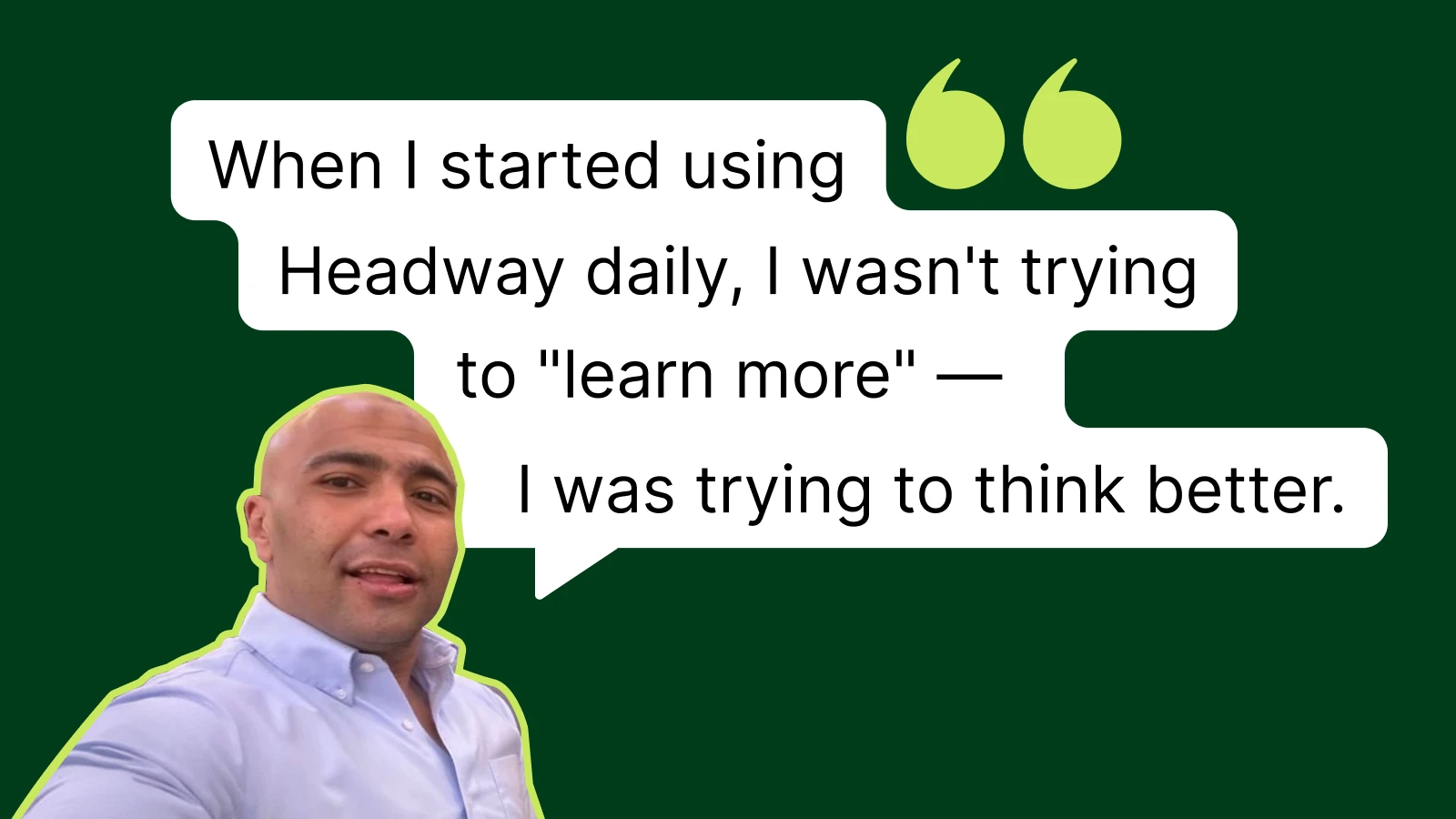
When I started using Headway every day, my goal was to think better, not just to learn more. My main problem was mental overload, essentially too many priorities, too much noise, and not enough time to reflect and connect my actions to long-term goals.
I needed a system that wouldn't add to my workload but would fundamentally change how I approached it. I needed space to breathe, to reflect, to see patterns instead of just problems. I didn't need more information. I needed better frameworks to process the details that were already overwhelming me.
How to build strategic thinking: My 20-minute daily Headway routine
My routine is simple and consistent:
Early morning, before work distractions
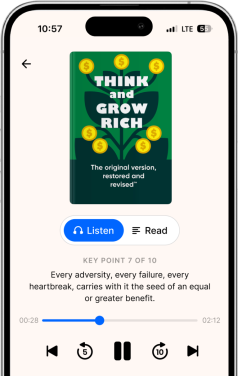
Spend 20 minutes with Headway
One key idea, fully absorbed — not rushed
A quick mental note: How does this apply today?
Those 20 minutes set the tone for the entire day. I start with clarity, not urgency.
I want clarity and to be prepared for whatever this day throws at me. I treat learning like cost control: with structure and discipline. You monitor daily, you build habits, and you create systems. Learning works the same way.
Whatever you do, the principle holds.


The breakthrough moment: When strategic pausing changed everything
I realized things had truly changed when I felt a fundamental shift in how I worked.
A clear turning point was during a high-pressure cost deviation discussion.
I almost reacted defensively, but I paused — something I hadn't done before. Instead of answering right away, I reframed the issue, asked better questions, and focused the discussion on root causes and future solutions. That pause changed everything.
That moment proved it.
Your moment might be different. Maybe it's a tense client call where you reframe instead of defend. Perhaps it's a product decision: ask the right questions instead of rushing to build.
Maybe it's a team conflict, where you address the root cause rather than just the symptom. But the pattern is the same: you pause, catch yourself, and respond with strategy rather than react impulsively.
From reactive decision-making to strategic leadership with the Headway app
Previously, unexpected problems meant instant reaction.
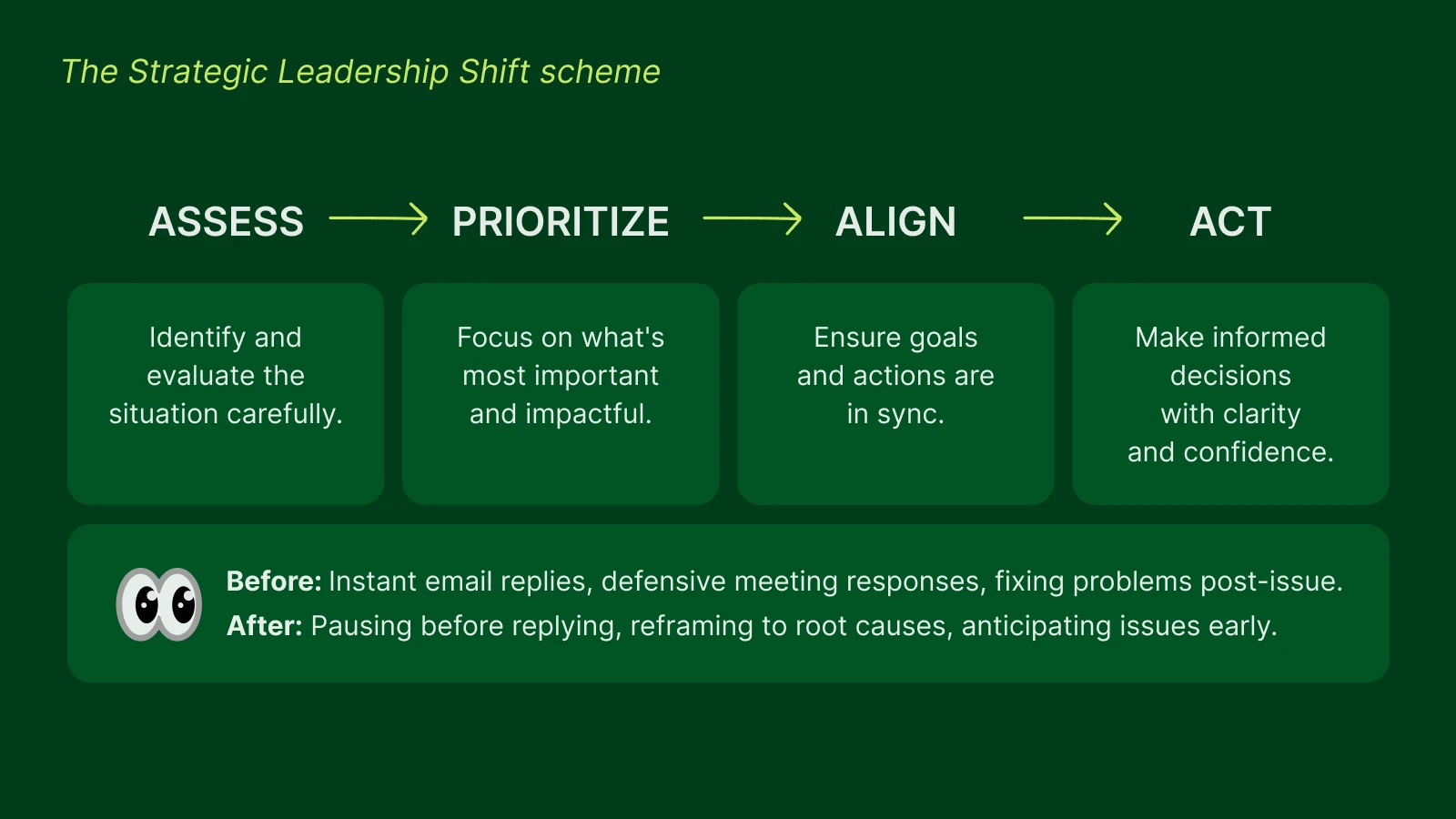
Now, they trigger a process: assess → prioritize → align → act. The pressure is still there, but my response is deliberate, calmer, and more strategic.
Before: Immediate email responses, defensive reactions in meetings, and correcting problems after they occur.
After: Strategic pauses before responding, reframing discussions toward root causes, and anticipating issues through leading indicators.
Being strategic (versus reactive) in leadership, to me, means anticipating rather than correcting.
Just like cost control, strategy is about early signals, trend recognition, and disciplined decision-making. For example, instead of reacting to budget overruns, I now focus more on leading indicators and preventive actions — a mindset reinforced daily through structured learning.
This shift changed everything. Decisions moved from rushing to resolution toward framing problems strategically. Team management shifted from giving instructions to asking guiding questions that build ownership.
Problem-solving evolved from firefighting symptoms to addressing root causes. Communication transformed from scattered urgency to clear, structured discussions.
Real leadership transformation: When my team noticed the change
The internal shift was one thing. But the real validation came when others noticed.
Recently, a leadership insight I consumed that same week influenced how I handled a team alignment issue. Instead of giving instructions, I asked guiding questions, and the team arrived at the solution on their own. The result was stronger ownership and faster execution.
And yes, feedback followed.
Colleagues and leadership noticed clearer communication, more structured discussions, and a calmer approach under pressure. One comment that stayed with me was: "You don't rush decisions anymore — you frame them."
That single observation validated everything. I hadn't just changed my habits — I'd changed my identity as a leader.
What almost stopped this habit (and why I never skip it now)
I'd love to say this habit was easy to maintain. It wasn't.
What almost derailed the habit was workload, ironically, the same excuse most professionals use.
There were mornings when jumping straight into emails felt urgent, when 20 minutes seemed like a luxury I couldn't afford. The firefighting mode tried to pull me back in. The pressure to be "productive" immediately was real.
What keeps me coming back is realizing that 20 minutes of thinking saves hours of rework.
Every time I skip it, I feel the difference. I'm more reactive, more scattered, and less effective. The ROI is undeniable. Those 20 minutes aren't time away from work; they're the most productive investment I make all day.
My message to every manager who is still firefighting
If another cost control manager or project leader told me, "I'm constantly firefighting, I don't have time for this," my answer would be simple:
That's exactly why you need it.
Every strategy is built through disciplined habits inside chaos.
And you surely need better thinking in the hours you have and better frameworks to process the information already overwhelming you.
Twenty minutes. One key idea. Applied consistently.
That's what I call leadership.
Editor's note: Get Headway to help you lead, not just survive
This transformation from reactive firefighting to strategic leadership is replicable. The exact routine shared in this story — 20 minutes, early morning, one key insight with Headway — works because it creates mental infrastructure before the day's chaos begins.
If you're a high-pressure professional managing budgets, projects, operations, or teams and you're tired of surviving instead of leading, this approach can work for you too. The pattern is universal: structured daily learning builds the frameworks you need to pause, assess, and respond strategically rather than react instinctively.
Download Headway and discover what happens when you start your day with clarity instead of urgency. Tomorrow morning, you have 20 minutes. The question is: will you use them to react to emails, or to build the strategic thinking that transforms how you lead?
The real transformation is about thinking better. And it starts with 20 minutes tomorrow morning!