Self-growth
 Apps & Digital Tools
 Business & Career
 Success
 Growth Tools
 Psychology
 Communication
 Relationships


It's 11 p.m., your laptop is closed, and your brain is still answering emails, which is exactly when burnout journal prompts help most. The World Health Organization describes burnout as the result of workplace stress that was never successfully managed, and it puts exhaustion first on its list of warning signs. A page of honest answers is a cheap way to spot it early.
The prompts below are grouped by theme, and the last section pulls journal exercises from Headway book summaries by Emily and Amelia Nagoski, Brené Brown, and Oliver Burkeman, among others.
If you'd rather hear those ideas than read them, download Headway and listen to a summary in about 15 minutes.
Disclaimer: This article is educational. If you have symptoms of burnout, please consult a specialist. Headway is a microlearning and daily growth app, not a diagnostic or medical tool, and results vary from person to person.

Quick summary: Five things to know before you try burnout journal prompts
Short on energy? Here's the short version.
Burnout journal prompts turn vague exhaustion into specific questions you can answer in writing.
Ten to 15 minutes and one or two prompts per sitting is enough.
Match the prompt to your state: drained, overloaded, resentful, guilty, or numb.
Patterns in your triggers show you where boundaries belong.
Headway summaries add ideas to try on the page, but symptoms need a specialist.
Keep reading for the full guide, prompts included.
How to use journal prompts for burnout: Find your best fit
Using journal prompts for burnout works best when the routine is small enough to survive a bad week. Start by matching the prompt to your mood.
Choose your starting point based on how you feel today.
| How you feel | Start with | Time |
|---|---|---|
Wiped out, can't think | Exhaustion prompts | 5 minutes |
Brain is loud, tasks pile up | Overwhelm prompts | 10 minutes |
Resentful at work | Work burnout and boundary prompts | 10–15 minutes |
Guilty when you stop | Rest guilt prompts | 10 minutes |
Flat and detached | Reconnecting prompts and letters | 15 minutes |
Then follow these five steps:
Pick a quiet slot and set a timer for 10–15 minutes.
Choose one or two prompts, not ten.
Write without editing, because spelling and grammar don't count.
Circle one word or pattern that repeats.
Reread your entries once a week.
Here's the sweet spot: long enough to get past your first, surface answers, and short enough that journaling doesn't turn into one more task. For most people, that lands between 10 and 15 minutes. If you're wiped out, five minutes still counts, and you can do it even in a rough week. Continue for two weeks before you judge how it's going.
Pen or app? Paper feels slower, and plenty of people like that. An app travels with you and stays searchable. Pick whichever one you'll actually open.
Journal prompts for exhaustion: Name how tired you are
Tired and empty feel alike at 9 p.m., but they're different problems. Sleep fixes tiredness. Empty hangs around after a full night and a long weekend. Identifying signs of exhaustion can help you intervene early in burnout, and these journal prompts for exhaustion help you tell the two apart.
If your tiredness is mostly emotional, journal prompts for emotional exhaustion work the same way. Our guide to mental exhaustion goes further on the difference. Expect your answers to split into body tiredness and mind tiredness. You'll discover which one shouts louder.
How does your body feel when you wake up, and how does it feel on a day off?
When did sleep last fix your tiredness?
What have you stopped doing because you have no energy left?
Where does exhaustion show up first for you: your body, your mood, or your patience?
How big is the gap between a good day and your typical day?
If a friend described your week to you, what would you tell them?
Don't fix anything yet. Just notice which prompt made you pause, and come back to it tomorrow.
📘 Try a relaxing music session after you write on Headway!
Burnout reflection questions that trace your triggers to their source
Burnout reflection questions, and other questions to ask yourself about burnout, turn "I'm busy" into "this one thing keeps draining me." The first is a schedule. The second is a trigger, and triggers can change.
Using targeted questions can trace the root causes of burnout symptoms. Finding patterns in burnout triggers helps establish necessary boundaries. If you're not sure what counts as a symptom, our guide to the symptoms of burnout lists the common ones.
When did you first notice the shift in how you feel about work?
Which meeting, task, or person comes up most when you feel drained?
What expectation, yours or someone else's, are you trying to meet?
What changed in the last six months?
What do you say yes to out of habit?
What would you drop first if nobody judged you?
Circle any answer that shows up twice. Your habits can contribute to burnout, and that's useful news, because you can build a plan around them.
Journal prompts for overwhelm: Empty the mental clutter before you organize it
A brain dump is a place to put things down, and the to-do list comes later. Journal prompts for overwhelm and journal prompts for stress start there, because a plan built on a foggy head tends to collapse by Wednesday. Overcoming burnout requires unpacking mental clutter and processing the exhaustion underneath it.
Here's what a brain-dump entry might look like: "Reply to Dana. Budget deck. Dentist. Worried the Q4 launch slips. Mom's birthday gift. Why is Priya cc'd on everything?" Messy is fine.
Write down every open loop in your head for five minutes without stopping.
Mark each item as urgent, yours, or someone else's.
Which worry keeps repeating?
What are you carrying for someone else?
What would "done for today" look like?
Stress-relief journal prompts like these shrink the pile on paper first, making the real one easier to face.
📘 Sort your reading list into 15-minute summaries on Headway!
Journal prompts for energy: Run an energy audit on your week
Energy-focused journal prompts start with an energy audit, treating your week like a budget. An energy audit identifies what depletes and restores personal energy. List your week's main activities, mark each as draining, restoring, or neutral, then note how you felt afterward.
Energy audit template
| Activity | Drains, restores, or neutral | Energy after (1–5) | What I'd change |
|---|---|---|---|
Weekly planning call | Drains | 2 | Cut it to 25 minutes with a written agenda |
Lunch walk | Restores | 4 | Protect it on meeting-heavy days |
Inbox after 7 p.m. | Drains | 1 | Close email at 6:30 |
Call with a friend | Restores | 5 | Schedule one every week |
Which activity costs the most energy for the least return?
Which restorer did you skip this week, and why?
Who leaves you with more energy than they take?
What drains you that you could shorten?
Which restorer can you protect tomorrow?
Run the audit again in two weeks and compare your 1–5 scores. A rising number on a restorer is worth celebrating.
Journal prompts for work burnout: Sort out workload and ask for support
Journal prompts for work burnout start with a gap: the job you were hired to do versus the job you're doing now. Spotting the signs of burnout at work is the first step. These prompts help with the next ones.
Workplace burnout journal prompts tend to uncover the same problem, too many tasks that belong to someone else. Career burnout journal prompts go one level up and ask if the role still fits. In this case, success at work means a workload you can sustain.
What would a sustainable week hold in hours, tasks, and meetings?
Which of your tasks belong to someone else?
What would you ask your manager for if the answer could be yes?
Who at work could take one thing off your plate?
What did you stop enjoying, and when did that start?
Do you need rest, a change in the role, or both?
A short, specific ask sounds like this: "I'm covering both the client reports and the onboarding docs. Can we move the onboarding docs to Sam through the end of the quarter?" Write yours in the journal first, then trim it to two sentences.
Boundary journal prompts: Practice saying no before you say it out loud
A boundary is easier to say once you've written it down. Journal prompts for setting boundaries give you a safe place to rehearse, and journal prompts for saying no work the same way. Changing one habit at a time is the usual advice in our guide on how to prevent burnout.
Three habits tend to blur limits: overworking, perfectionism, and people-pleasing. Each one feels virtuous until it costs you a weekend. The prompts below double as journal prompts for overworking, journal prompts for perfectionism, and journal prompts for people-pleasing.
Which boundaries slipped this year?
What do you tell yourself right before you say yes?
What would "good enough" look like for one task this week?
Who benefits when you never say no?
What exact words could you use for a first no?
What do you fear will happen if you stop over-delivering?
A first no can be short: "I can't take that on this week, but I can look at it Monday."
📘 Pick a boundaries summary to write about on Headway!
Journal prompts for guilt about resting: Question the rule that rest must be earned
You know the voice that says you haven't done enough to sit down yet. Journal prompts for guilt about resting, and journal prompts for productivity guilt in general, put that voice on paper where you can argue with it.
Try a small reframe. "I'm being lazy" becomes "my body is asking for what it needs." Cognitive reframing helps challenge unhelpful thought patterns associated with burnout. These journal prompts for rest apply the same move to the rules you picked up along the way.
Where did you learn that rest is a reward?
What would you call resting in a friend?
What kind of rest feels allowed to you?
What do you do instead of resting?
What would you do with one guilt-free hour?
Start with a small block. Fifteen minutes with your phone in another room counts, and it's a good way to slow down without a big plan.
Journal prompts for reconnecting with yourself: Find out who shows up when work stops
Burnout often erases the person behind the job title. Journal prompts for reconnecting with yourself can bring back the parts that got squeezed out, and finding yourself again can start small. They also help you stay in touch with your values, making prompts about purpose and life balance easier to answer.
Specific values sound like "time outdoors" or "making things by hand." "Balance" is too fuzzy to act on.
What did you love at age 12 that you dropped?
What would you do on a day with no obligations?
Which of your values have you been ignoring?
What would a meaningful week contain?
What's one small thing you can do this weekend that's only for you?
📘 Start a daily streak that's only for you on Headway!

Too drained to even write it down?
Headway shares ideas in text and audio, whichever feels lighter.
Explore listen modesLetter writing for burnout: Three letters to write when prompts feel flat
Sometimes a question is too small, and a letter is the right size. Letter writing gives the unsaid a place to go, which can help your mental health on days when prompts feel flat. Unsent letters stay private by design.
A letter to your burnout: what has it taken, and what is it trying to tell you?
An unsent letter to the person or situation that pushed you past your limit.
A letter from your recovered self, six months from now, to you today.
Keep these letters or tear them up. The writing is what matters.
Recovery journal prompts: Small, sustainable changes that stop burnout from returning
Recovering from burnout takes small, sustainable lifestyle changes. Recovery journal prompts and burnout recovery journal prompts help you pick those changes one at a time. Journal prompts for burnout recovery work best when each change is tiny, and journaling prompts for burnout keep the list honest.
If you're recovering while still working, our guide on how to recover from burnout while still working covers the practical side. Journal prompts for work-life balance belong here too, and the list below includes one. Explore the prompts in any order.
What one change fits into this week without a fight?
What's one early warning sign for you: sleep, mood, or patience?
What does work-life balance mean for you right now?
Who can you ask to check on you?
What will you protect even when things get busy?
Reread your answers once a week, because that's the habit that keeps this list honest. Celebrate the small wins too, like the evening you closed your laptop on time.
📘 Get a personalized growth plan for steadier habits on Headway!
Healing journal prompts from Headway book summaries: Ideas worth taking to the page
Few of us have time to read every great book on stress, rest, and time. Headway book summaries offer a shortcut: you get the key ideas in about 15 minutes, in text or audio, then decide which titles deserve a full read.
Not sure which book to pick up next? Preview the summary first. With quick formats and progress tracking, the app works like a nonfiction curator in your pocket. None of this treats burnout. These healing journal prompts simply give each idea a place to land on the page.
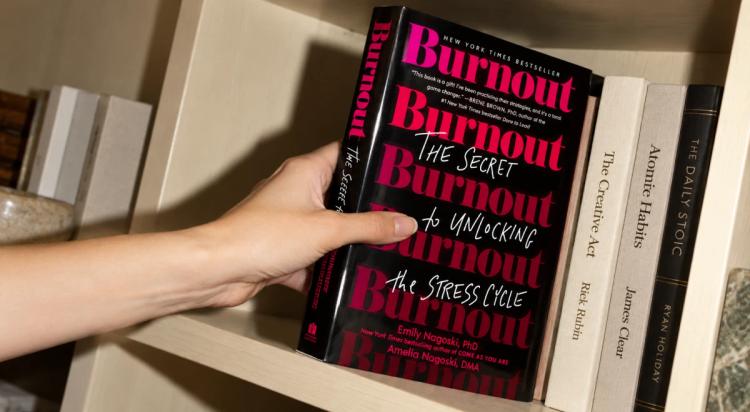
1. 'Burnout' by Emily Nagoski and Amelia Nagoski: Finish the stress cycle
The Nagoskis separate stress from its source, so you can address one without solving the other. Your body also needs to complete the stress response.
Journal exercise: Write what is stressing you, then name one physical action that would tell your body the cycle is done.
2. 'Rest' by Alex Soojung-Kim Pang: Treat rest as a skill
Pang argues that deliberate rest supports good work and takes practice.
Journal exercise: Design one rest block this week and write what you'll protect it from.
3. 'Essentialism' by Greg McKeown: Say no to the almost-right yes
McKeown argues for pursuing less, but better.
Journal exercise: List your commitments and mark the ones that earn a clear yes. Then write the first no.
4. 'The Gifts of Imperfection' by Brené Brown: Replace perfect with enough
Brown, Ph.D., writes that your worth doesn't come from your output.
Journal exercise: Finish this sentence: "If I let this be good enough, I would..."
5. 'Four Thousand Weeks' by Oliver Burkeman: Accept that the to-do list never ends
Burkeman's point is that you won't finish everything, so you get to choose what to leave undone.
Journal exercise: Write what you're choosing not to do this month and what that frees up.
What burnout journal prompts are and why they work better than a blank page
Burnout journal prompts work because they remove the hardest part of journaling, which is starting. A blank page asks you to know what's wrong. A prompt asks one small question, and your tired brain only has to answer it.
Journaling helps identify energy drains and recovery patterns. Writing about burnout can improve mood and sleep. Baikie and Wilhelm's review of two decades of expressive writing studies links brief writing about stressful events to better physical and psychological health, with stronger evidence for physical outcomes than emotional ones.
Journaling can reduce psychological distress and burnout symptoms, though it has limits, and knowing them up front saves frustration. In a randomized study of 66 full-time workers, three days of 20-minute positive writing sessions lowered state anxiety and improved some aspects of job satisfaction.
Burnout scores didn't change. That's why journaling works best alongside real changes in workload and rest.
It also helps to know what you're writing about. The WHO describes burnout through three parts:
Feelings of energy depletion or exhaustion.
Growing mental distance from your job, or feelings of negativity and cynicism about it.
Reduced professional efficacy.
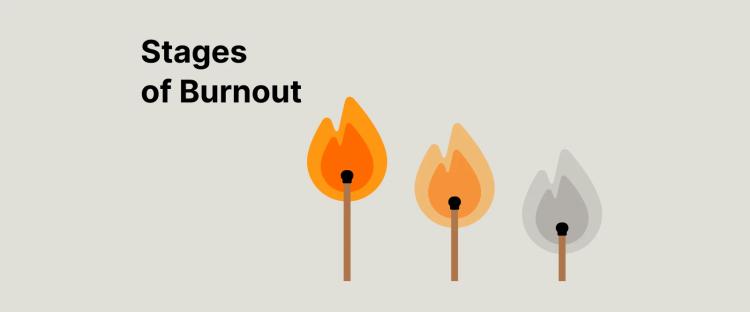
Burnout builds over time, and our guide to the 12 stages of burnout shows how it creeps in. Journaling is one of several techniques that support your mental health day to day. It doesn't replace care from a specialist.
📘 Get expert ideas to write about on Headway!
When burnout journal prompts are not enough: Talk to a specialist
According to the WHO, burnout is an occupational phenomenon rather than a medical condition, but its symptoms can overlap with depression and anxiety. A journal can support you. It can't diagnose you.
If you have symptoms of burnout, consult a specialist. Headway is a microlearning and daily growth app, and it's not a diagnostic tool. Reach out for help if any of these sound familiar:
Your symptoms last for weeks despite rest.
Your daily functioning is affected.
Your sleep or appetite changes sharply.
You have thoughts of harming yourself, in which case contact local emergency services or a crisis line right away, such as 988 in the US.


Why Headway works as a companion to your journal
A journal gives you the questions. Headway gives you ideas to bring to them.
Audio and text summaries, so you can read at your desk or listen on a walk.
Personalized growth plans that start from a short quiz about your goals and challenges.
Spaced repetition cards and highlights that bring key insights back before they fade.
Offline mode for flights, commutes, and spots with weak signal.
Apple CarPlay and Android Auto support for hands-free listening on the drive.
Daily streaks that reward a few minutes of consistency, since one session can take as little as 3 minutes.

Turn ten minutes of writing into a daily reset with the Headway app
Burnout journal prompts give you a way in when you're too tired to come up with questions yourself. Pick one, set a timer, find your sweet spot, and reread your entries on the weekend. Patterns like repeat triggers and energy drains tell you where to adjust first, and Headway can add ideas worth journaling about.
The Headway app turns whole books into 15-minute summaries you can read or listen to, so a busy day still has room for one good idea. Personalized recommendations point you to topics that match your goals, and daily streaks and highlights keep the habit going without pressure.
Download the Headway app, pick a summary on rest or boundaries, and write one prompt's worth of thoughts tonight. Ten minutes is plenty.
FAQs about burnout journal prompts
What should I write in a burnout journal?
Start with one of three moves: answer a single prompt, write a five-minute brain dump, or draft a letter. Prompts for feeling burned out work well because they hand you the question. Burnout recovery questions, like "What drains me most?" and "What would I drop first?", keep entries short and honest. Spelling doesn't matter.
How often should I journal when I'm burned out?
Aim for 10–15 minutes at a time and pick consistency over length. A short session on most days beats one long session once a month. One or two prompts per sitting is plenty, and five minutes counts on your worst days. Reread your entries weekly so patterns have room to show up.
How do I know if I'm burned out or just tired?
Tiredness improves after rest. Burnout, as the WHO describes it, combines exhaustion, mental distance from your job, and reduced effectiveness, and it sticks around after a good weekend. If a long break barely changes how you feel, write down what you notice and bring it to a doctor or mental health professional.
Can journaling replace therapy for burnout?
No. Journaling can complement care, but it can't diagnose anything or replace a therapist, doctor, or counselor. It's a free, private way to notice patterns and prepare for appointments. If symptoms last for weeks, affect your daily functioning, or include thoughts of self-harm, talk to a specialist or call a crisis line such as 988 in the US.
What if journaling makes me feel worse?
Heavy feelings can happen, especially late at night or after a rough week. Shorten the session, stop the timer early, or switch to a lighter prompt about something that restores your energy. If the heavy feelings keep coming back, share them with a mental health professional instead of pushing through alone.
Is it better to journal in the morning or at night?
Pick the slot you'll keep. Evenings suit people who want to park the day's worries before bed. Mornings suit people who want a calm start. If late-night writing stirs you up, move it earlier. Testing both for a week shows which one sticks, and you can change your mind later without losing anything.
How long does it take for journaling to help with burnout?
Nobody can promise a timeline. In one three-day study, writing lowered anxiety but didn't change burnout scores, so lasting change usually needs adjustments to workload and rest as well. Some sessions feel useful right away, while recovery takes longer and varies from person to person. Track your patterns weekly and keep your expectations small.
Should I share my burnout journal with anyone?
You don't have to. A journal works best when you can write freely, so keep it private by default. If you're seeing a therapist or doctor, bring a summary of repeating patterns, like your top triggers and energy drains, instead of full entries. For work conversations, share only the specific ask you drafted.