Self-growth
 Apps & Digital Tools
 Business & Career
 Success
 Growth Tools
 Psychology
 Communication
 Relationships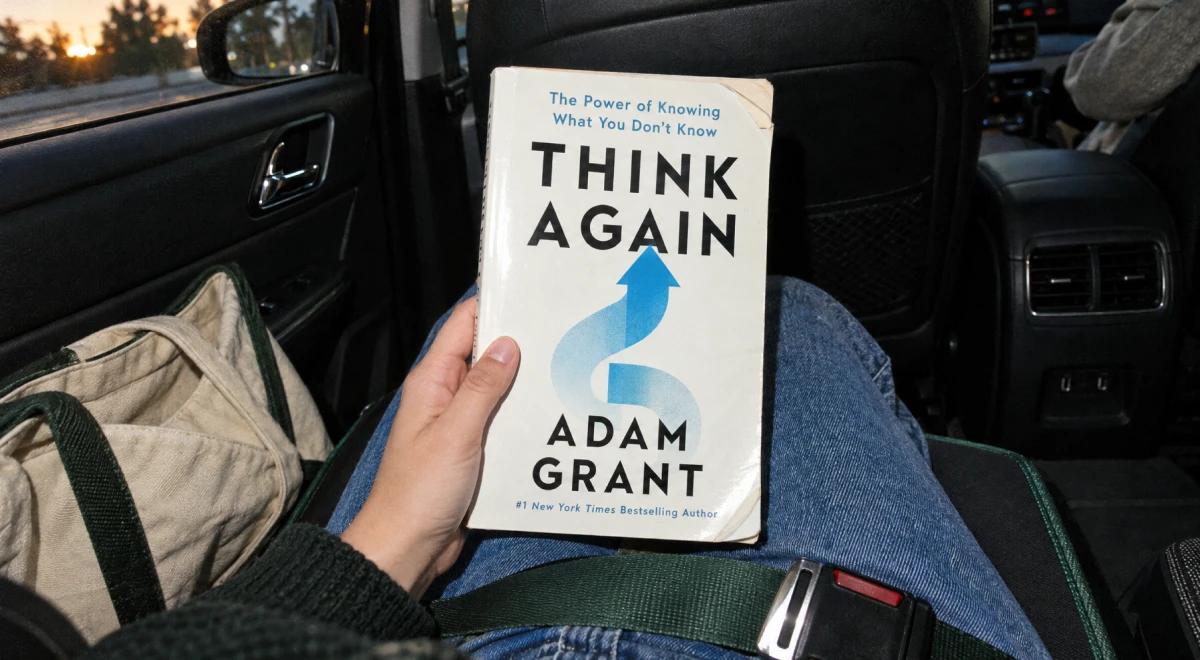

How much of what you're certain about could you defend if a smart skeptic pushed back for ten minutes?
Most of us would run out of road fast. That gap between feeling sure and being able to justify it is the territory of epistemology — the branch of philosophy that studies what knowledge is, how belief becomes justified, and how we separate truth from a good-sounding guess. The best books on epistemology do something practical with that: they sharpen how you read the news, size up an expert, and second-guess your own memory.
If you've cracked open Kant and quietly set him back down, you're in good company. Plenty of epistemology philosophy books were built for seminar rooms, not subway rides. This reading list runs the other way — a quick grounding in the classic ideas, then accessible epistemology books you can finish, several of them available as 15-minute summaries on Headway.
📘 Get the key ideas in 15 minutes on Headway.

Quick answer: The best books on epistemology at a glance
If you're not sure where to start with epistemology, these four modern titles are the most useful books on the theory of knowledge for a beginner — they teach you to think clearly about knowledge without a philosophy degree, and each one is in the Headway library as a 15-minute summary.
| Book | Best for | What it teaches about knowledge |
|---|---|---|
'Think Again' by Adam Grant | Chronic certainty | How to test your beliefs and know what you don't know |
'Factfulness' by Hans Rosling, Anna Rosling Rönnlund, and Ola Rosling | Misreading data | Ten instincts that distort how you read evidence |
'Too Big to Know' by David Weinberger | The internet age | How knowledge moved from experts to the network |
'A Spy's Guide to Thinking' by John Braddock | High-stakes calls | Telling what you assume apart from what you can prove |
What is epistemology, in plain English
Epistemology is the theory of knowledge: the study of what counts as knowing, how we know what we know, and when a belief has earned the right to be called knowledge. For most of its history, the field leaned on one definition — knowledge as justified true belief. You know something if it's true, you believe it, and you have good reason for believing it.
Then in 1963, Edmund Gettier blew a hole in that tidy formula. The Gettier problem describes cases where all three boxes are checked, and it still feels wrong to say the person knows. Epistemologists have argued about the fix ever since, which tells you how slippery the nature of knowledge really is.
A couple of distinctions do most of the heavy lifting. A priori knowledge holds before experience, like math and logic; a posteriori knowledge depends on it, like everything you learned by looking. Epistemic skepticism keeps the whole project honest by asking whether we can be certain of anything at all. And not every kind of knowing is a tidy proposition — some understanding, like what grief teaches, is lived rather than argued.
The field has grown newer branches too. Social epistemology studies how groups and institutions produce knowledge, virtue epistemology treats clear thinking as a kind of character, and work on epistemic injustice examines who gets believed in the first place.
It's the philosophy-side cousin of questions psychology chases in the lab — for that angle, our psychology books for beginners cover how the mind forms belief, and belief grounded in faith gets its own treatment in our Christian books for women.


The classic epistemology books that built the field
Before the accessible stuff, it helps to know the names the whole conversation still orbits. These are the classic epistemology books — foundational, and, fair warning, dense.
Plato's 'Theaetetus' is where the justified-true-belief idea first gets stress-tested, which makes Plato epistemology the starting gun for the field. Centuries later, Descartes' epistemology rebooted it: in 'Meditations on First Philosophy', he doubts everything he can until he hits something he can't, landing on "I think, therefore I am." That rationalist streak — reason as the source of knowledge — runs headfirst into the empiricists.
John Locke made the empiricist case that the mind starts closer to a blank slate, and David Hume pushed the point further. His 'An Enquiry Concerning Human Understanding' questions induction and causality, arguing that we never truly observe cause and effect — only one thing reliably following another, which habit then hardens into a rule.
Kant epistemology steps in to broker peace: 'Critique of Pure Reason' sets out to reconcile rationalism and empiricism, claiming the mind supplies the structure while the senses supply the content.
Two major movements, rationalism and empiricism, have defined most of that history, with skepticism pressing on both. Books on rationalism and empiricism still fill a big share of any philosophy of knowledge book list, and these remain the essential epistemology books everyone cites. You can read the originals, and philosophy students should. For everyone else, a modern guide whose author does the translating is the kinder on-ramp.
Accessible epistemology books for beginners and self-study
You don't need the primary sources to start thinking like an epistemologist. These contemporary epistemology books take the field's big questions — what counts as evidence, and when a claim has earned your trust — and ground them in ordinary life, which makes them some of the easiest, most accessible epistemology books around.
They also work as introductory epistemology books for self-study, so whether you came looking for books on knowledge and truth or books on knowledge and belief, they cover both without the jargon. Each one sits in the Headway library as a 15-minute summary you can sample before buying the full copy.
1. 'Think Again' by Adam Grant — the skill of knowing what you don't know
Organizational psychologist Adam Grant builds the whole book around something most of us never practice: changing our minds on purpose. His case is that confidence feels good, but calibration is what keeps you from being wrong in public — a point backed by research on how poorly people gauge their own competence — and he hands you concrete ways to test your assumptions instead of guarding them.
It reads like a field manual for intellectual humility, the quiet center of virtue epistemology, and a useful counter to the opposite failure: the nagging sense you're a fraud that feeds imposter syndrome. If you've ever clung to an opinion past its expiration date, start here.
2. 'Factfulness' by Hans Rosling, Anna Rosling Rönnlund, and Ola Rosling — why your instincts misread the facts
The late physician Hans Rosling spent years proving that smart, caring people are often wildly wrong about basic global facts — not because the data is hidden, but because our instincts bend it. 'Factfulness' names ten of those instincts and shows how each one skews the way you read numbers, from the urge to split the world into "us and them" to the pull of a dramatic headline.
It's less abstract theory than epistemology and evidence in working clothes, and it rewires how you handle any statistic that lands in front of you. The same evidence-first habit underlies science itself — it's how we came to know anything solid about, say, the far reaches of space.
3. 'Too Big to Know' by David Weinberger — how knowledge works now that the facts aren't the facts
Weinberger wrote this before "misinformation age" was on everyone's lips, and it reads as sharper now. His argument: knowledge used to live in experts and books, and now it lives in the network — in links and the messy back-and-forth of the crowd.
That shift is the heart of social epistemology, and he's honest about the trade, and about the shrinking role of the lone expert, since the same web that makes us collectively smarter also makes us individually easier to fool. Read it when you want a clear-eyed take on how we know things now that the smartest entity in the room is often the room.
4. 'A Spy's Guide to Thinking' by John Braddock — judging evidence under pressure
A former intelligence officer, John Braddock compresses fieldcraft into a short read built around one loop: get data, form a hypothesis, test it, act. It sounds obvious until you notice how rarely you run it when the stakes are high.
He's sharp on the difference between what you assume and what you can support — the applied side of epistemic justification and everyday critical thinking — and on making a sound call when the evidence is thin. For readers who want books on skepticism that pay off at work and not just on paper, this one earns its spot.
Get through the best epistemology books in minutes with Headway
The practical snag with any epistemology reading list is time. The foundational texts are long, and even the accessible books about epistemology ask for attention you may not have on a Tuesday night. Headway helps here: the key ideas from these titles come condensed into 15-minute reads or listens, with a personalized plan that keeps you moving instead of stalling at chapter two.
It works for real readers. One tested Headway for professional development and kept at it. Others have used it to rebuild a reading habit they'd dropped at 16 or to get through 20 business books in three months. It's one reason Headway has passed 60M+ downloads. And if epistemology is your way into a wider self-improvement reading list, you can line up the next summaries in about a minute.
📘 Start with a personalized plan on Headway.
FAQs on epistemology books
How do I start learning epistemology on my own?
Start with a plain-language guide before the primary texts. Contemporary, accessible epistemology books like 'Think Again' map the core questions without the jargon, which is where to start with epistemology for most people. From there, add one classic at a time and keep a notebook for the questions that stump you — that habit is what makes self-study stick. These introductory epistemology books double as a warm-up for philosophy students, too.
What's the difference between epistemology and metaphysics?
Metaphysics and epistemology are two of philosophy's biggest pillars, and they're easy to confuse. Metaphysics asks what exists — the nature of reality and existence itself. Epistemology asks how we could ever know any of it, which is why it's called the theory of knowledge rather than the theory of what's real. You usually need both, since any claim about what exists invites the question of how you know it.
What are foundationalism and coherentism?
Foundationalism and coherentism are two historical answers to one question: what makes a belief justified? Foundationalists say certain basic beliefs need no further support, and everything else rests on them. Coherentists reject that base and argue a belief is justified when it fits a wider web of beliefs that hold together. The back-and-forth between them is one of the oldest debates in the theory of knowledge.
What's the difference between internalism and externalism about justification?
Much of contemporary epistemology turns on internalism versus externalism regarding justification. Internalists hold that whatever justifies a belief has to be something you can reach by reflection — your own reasons. Externalists say justification can depend on factors outside your awareness, like whether the belief came from a reliable process. It stays a live debate because it changes when we're entitled to say we know something at all.
Why does epistemology matter in everyday life?
Epistemology isn't only academic — it's the backbone of everyday critical thinking. Every time you weigh a source or notice that a confident claim has no evidence behind it, you're doing applied epistemology. Learning the basics makes you harder to fool, which counts for more each year as the volume of information and misinformation climbs.
What's the difference between rationalism and empiricism?
Rationalists argue that reason is the main source of knowledge, so some truths are knowable a priori, through thought alone. Empiricists counter that nearly everything worth knowing is a posteriori — it arrives through the senses. Descartes leans rationalist, Hume is firmly empiricist, and Kant argues both camps are half right. Along with skepticism, these are the major movements that shaped how we judge evidence today.
Is justified true belief the same as knowledge?
For a long time, philosophers treated them as identical: knowledge was belief that's both true and backed by good reasons. The Gettier problem complicated that by finding cases where a belief is justified and true by luck, which doesn't feel like genuine knowing. Most modern work on justified true belief is an attempt to repair or replace that old three-part definition.