Self-growth
 Apps & Digital Tools
 Business & Career
 Success
 Growth Tools
 Psychology
 Communication
 Relationships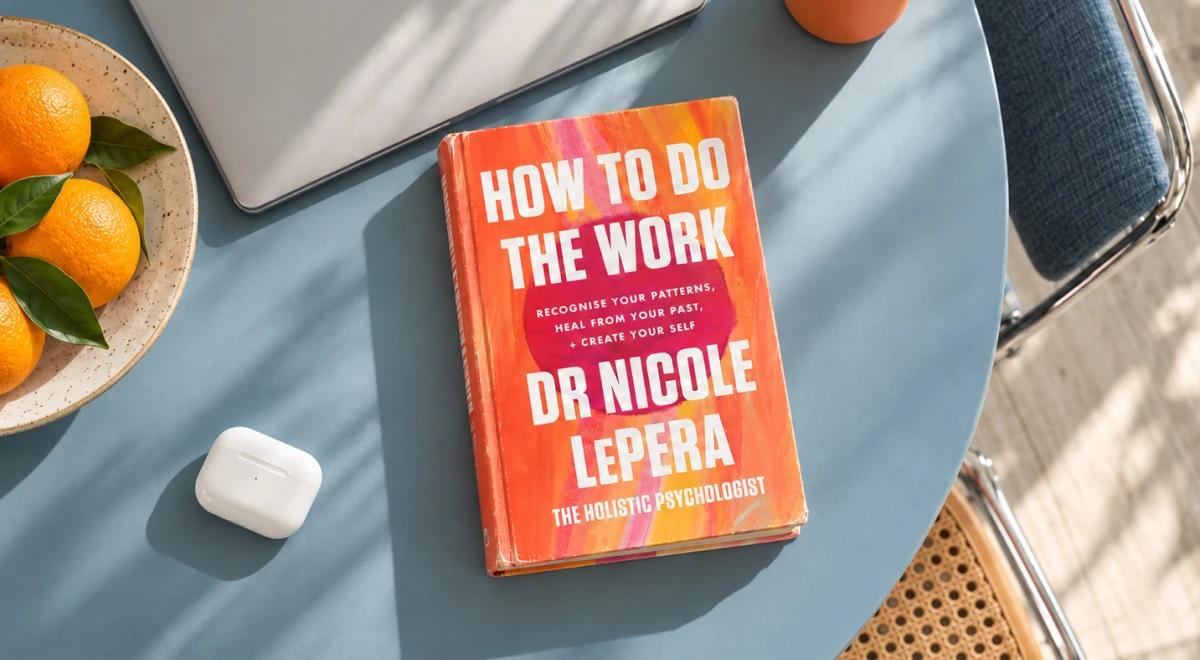

Some people never learned to sit with a hard feeling. So when things get tense, they blow up, go cold, change the subject, or somehow make their mood your job to fix.
That pattern has a name — emotional immaturity: trouble handling emotions, conflict, responsibility, and other people's needs like a grown adult. It shows up in parents, partners, bosses, and old friends, and being close to it is quietly draining. The best books on emotional immaturity help you see the pattern clearly, stop taking it personally, and protect your own peace.
This list gathers six reads — three for the adult children of emotionally immature parents, and three for the immature dynamics that show up in adult relationships. Every title is available in full, or as a 15-minute Headway summary you can start today.
📘 Get the key ideas on Headway.

Quick answer: The best books on emotional immaturity
Short on time? These emotional immaturity books cover both sides — the parents you grew up with and the people you deal with now.
| Book | Best for |
|---|---|
'Adult Children of Emotionally Immature Parents' by Lindsay Gibson | The definitive guide to immature parents and their grown kids |
'Toxic Parents' by Susan Forward | Breaking free from controlling or hurtful parents |
'Running on Empty' by Jonice Webb | Building the emotional awareness you weren't taught |
'Psychopath Free' by Jackson MacKenzie | Leaving a manipulative or abusive relationship |
'Emotional Blackmail' by Susan Forward | Spotting guilt, fear, and obligation as control |
'How to Do the Work' by Nicole LePera | Reparenting yourself and changing the pattern |
What emotional immaturity really means (and how it differs from neglect)
Emotional immaturity and emotional neglect get mixed up constantly, and it's worth separating them. Emotional neglect is about what a caregiver fails to provide — attention, comfort, a response to your feelings. Emotional immaturity is about how a person manages emotions, conflict, and responsibility, which is usually badly and at everyone else's expense.
The two often overlap, since an emotionally immature parent tends to be a neglectful one, but you can absolutely be raised by involved, present parents who still never learned to handle a feeling.
The best psychology books about emotional immaturity work on two levels — naming the pattern and handing you tools — and the strongest books on emotional immaturity in adults keep both in view.
Maybe you had a selfish parent who made everything about themselves, or self-involved parents who were emotionally insensitive to whatever you felt. Either way, none of the parent's behavior was your responsibility to manage as a kid. You didn't cause your parents' emotional immaturity, and you can't fix it for them — but you can learn to stop absorbing it.
The good news is that emotional maturity can be learned, at any age. The skills these books teach — reading a feeling, staying steady in conflict, weighing someone else's view against your own — line up with what psychologists call emotional intelligence, which research links to more satisfying relationships and greater well-being.
You're probably here because you recognize a specific person. A few common signs of an emotionally immature person:
Everything routes back to them. Your win becomes their story; your bad day becomes their inconvenience.
Responsibility slides off. Apologies come with an excuse stapled on, when they come at all.
They lack empathy for any feeling that isn't their own, so you learn to shrink yours.
Conflict turns into weather — the silent treatment, guilt trips, or an outburst that somehow makes you the problem.
You feel emotionally lonely even when they're sitting right next to you.
That mix of closeness and distance is its own kind of emotional loneliness. If you grew up with it, you may have learned to keep everyone else happy at your own expense — a habit worth unpacking with a book on people-pleasing.
And if you want the broader map of how minds work, a primer on psychology books for beginners pairs well with everything below.
Best books on emotionally immature parents and adult children
Whether you're after books about emotionally immature parents or broader books about emotional immaturity, start with these three — for anyone who grew up managing a parent's moods instead of the other way around.
1. 'Adult Children of Emotionally Immature Parents' by Lindsay Gibson — the one to start with
Clinical psychologist Lindsay Gibson wrote the book most people reach for first — a New York Times bestseller that's helped countless people finally name what they grew up with.
Gibson sorts emotionally immature parents into four types: the emotional parent, ruled by feelings and prone to blowups; the driven parent, who stays busy and turns every interaction into a project; the passive parent, who avoids dealing with anything hard; and the rejecting parent, who mostly wants to be left alone. Odds are you'll recognize yours within a chapter.
What makes Gibson's book the backbone of this list is what comes after the diagnosis. She explains how these parents leave adult children over-responsible, self-doubting, and lonely.
From there, she hands you practical tools to set boundaries, manage relationships with difficult parents, and relate on adult levels — so you can function independently instead of sliding back into the old kid role. Her follow-up, 'Recovering from Emotionally Immature Parents', goes into more depth once you're ready. If you read only one, read this.
2. 'Toxic Parents' by Susan Forward — for control that crossed a line
Susan Forward's classic is louder and angrier than Gibson's, and for many readers that's the permission they didn't know they needed. It's about parents whose immaturity hardened into control, criticism, or outright cruelty — the difficult parents who couldn't let a child become a separate person with their own thoughts.
Forward names the behavior without flinching and refuses to let "but they're family" close the subject.
The second half is a plan. Forward walks you through letting go of misplaced guilt, standing your ground without waiting for a parent to change, and rebuilding life on your own terms.
You'll find practical insights and blunt psychotherapy techniques rather than soft reassurance. It's the right pick for anyone who's finished making excuses and wants to break free.
3. 'Running on Empty' by Jonice Webb — for the skills you were never taught
The others focus on the parent; Jonice Webb focuses on the gap they leave behind. 'Running on Empty' is technically about childhood emotional neglect, but it earns a spot here because emotionally immature parents are so often the reason a kid grows up without emotional footing.
Webb helps you see what was missing without turning it into self-blame.
Then she teaches the emotional skills a steadier upbringing would have handed you: naming feelings, sitting with the lingering feelings instead of burying them, and meeting your own needs with self-compassion.
It's the most inward-looking read on the list — less about handling your parents, more about building your own emotional awareness and reconnecting with your true self. Pair it with Gibson's book, and you've got both halves of the picture.


Books on emotional immaturity in relationships and setting boundaries
Immaturity doesn't stop at the family door. These are the books about emotionally immature people who aren't your parents — partners, exes, bosses — and they double as books on emotional maturity and relationships, covering the work of building emotional maturity in relationships and the emotional intelligence those dynamics tend to wear down.
4. 'Psychopath Free' by Jackson MacKenzie — for getting out of a toxic relationship
Jackson MacKenzie wrote this after surviving an emotionally abusive relationship, and it reads like a straight-talking friend who's been through it.
He maps the arc of getting tangled up with manipulative, low-empathy people — the early idealizing, the gaslighting, the slow draining of your confidence — so you can trust your own memory of what happened.
The back half is recovery: rebuilding self-confidence, learning to stand strong in your own read on reality again, and setting boundaries that keep these people out for good.
The title oversells it, and MacKenzie is upfront that most immature or manipulative partners aren't clinically anything — but the patterns are real, and naming them is how a lot of people finally break free and feel confident again.
5. 'Emotional Blackmail' by Susan Forward — for fear, obligation, and guilt
Forward's second appearance targets the move emotionally immature people fall back on when they can't handle hearing "no": manipulation through fear, obligation, and guilt — FOG, in her shorthand.
If someone in your life turns every disagreement into a threat to the whole relationship, this book reads like a manual you should have gotten years ago.
She breaks down exactly how the pressure works and gives you language to hold your position without caving or blowing up. For the daily emotional traps of dealing with emotionally immature family members, a demanding partner, or a boss who guilts, it's the most immediately useful read here.
Reach for it when you're worn out from choosing between guilt and a fight.
6. 'How to Do the Work' by Nicole LePera — for changing the pattern in yourself
Nicole LePera, known online as The Holistic Psychologist, turns the camera around — from the people who shaped you to the patterns you now run on autopilot.
Her core claim is that noticing your own conditioned reactions and relationship patterns is where change begins, and that you can reparent yourself instead of waiting for anyone else to grow up first.
The book mixes psychology with daily practices for self-awareness, emotional regulation, and a strong sense of self, so you can reconnect with your true nature instead of the role you were assigned.
A fair warning: some of the science is stated more confidently than the evidence supports, so take the big claims with a pinch of salt.
As a toolkit for personal growth and healthier relationships — and a way to create positive change in how you live — it earns its spot as a natural closer once you understand where your patterns started.

Build the emotional maturity these books teach — start with Headway
Reading about emotional immaturity is the easy part; living around it differently is the real work — setting a boundary and holding it, dropping a guilt trip instead of catching it, letting a parent be who they are without it wrecking your week.
Headway makes the reading fit a real schedule. You get the core ideas from 'Adult Children of Emotionally Immature Parents', 'Emotional Blackmail', and thousands more as 15-minute reads or audio for a walk — plus the wider stack of self-improvement books and audiobooks worth your time.
Progress tracking keeps you at it on the days you'd rather not. Pick one book, take in a single idea today, discover ways to hold your ground and build confidence, and start building the emotional maturity, healthier relationships, and better life you weren't handed.
📘 Read your first summary and stop carrying what was never yours.
Frequently asked questions on books on emotional immaturity
Can an emotionally immature person change?
Sometimes, but only if they want to and are willing to do uncomfortable work. Emotional maturity can be built at any age through self-awareness, therapy, and practice — yet many emotionally immature people don't see a problem to fix, so they never start. The safest bet is to focus on what you control: your boundaries, your expectations, and your own growth, rather than waiting on theirs.
What causes emotional immaturity?
It usually traces back to childhood. People who never saw feelings handled well — often because their own parents were emotionally immature — don't develop those skills automatically. Trauma, chronic stress, or being shielded from every consequence can stall growth too. Understanding the cause isn't about excusing the behavior; it's about seeing that immaturity is a skills gap, not a personal attack aimed at you.
Is emotional immaturity the same as narcissism?
No, though they overlap. Emotional immaturity is a broad difficulty managing feelings, conflict, and responsibility. Narcissism is a specific personality pattern built on grandiosity and a real lack of empathy. Many emotionally immature people are simply underdeveloped rather than narcissistic, and can be reasoned with. If someone shows entrenched entitlement and no empathy at all, a book on narcissistic dynamics may fit better than a general one.
How do you set boundaries with emotionally immature parents?
Start small and specific: decide in advance what you will and won't discuss, how long you'll stay, and what you'll do if a conversation turns. State the boundary once, plainly, then hold it through the pushback — an emotionally immature parent will usually test it. You're not asking permission or winning an argument. Books like Gibson's give scripts for exactly these moments, minus the guilt.
Can you have a good relationship with an emotionally immature parent?
Often you can have a workable one, once you adjust expectations. The fastest way to avoid disappointment is to stop expecting deep emotional intimacy from someone who can't offer it. Many adult children find peace by relating on lighter terms — shared activities over deep talks — and getting emotional support elsewhere. It's less than the parent you wanted, but far steadier than the constant hope they'll finally change.
Is emotional immaturity the same as emotional neglect?
They're related but distinct. Emotional neglect is a failure to meet a child's emotional needs; emotional immaturity is a person's inability to handle emotions and responsibility well. An emotionally immature parent often causes childhood emotional neglect, but not always — and immaturity turns up in partners and coworkers too, not only parents. If your main wound is what you didn't receive, neglect-focused reads may serve you better.
Do these books replace therapy for dealing with emotional immaturity?
No — they're a strong start, not a substitute. Books explain the patterns, cut the self-blame, and give you practical tools you can use right away. For deep wounds, a manipulative relationship, or your own stuck patterns, a therapist or other trained professionals can move things faster.