Self-growth
 Apps & Digital Tools
 Business & Career
 Success
 Growth Tools
 Psychology
 Communication
 Relationships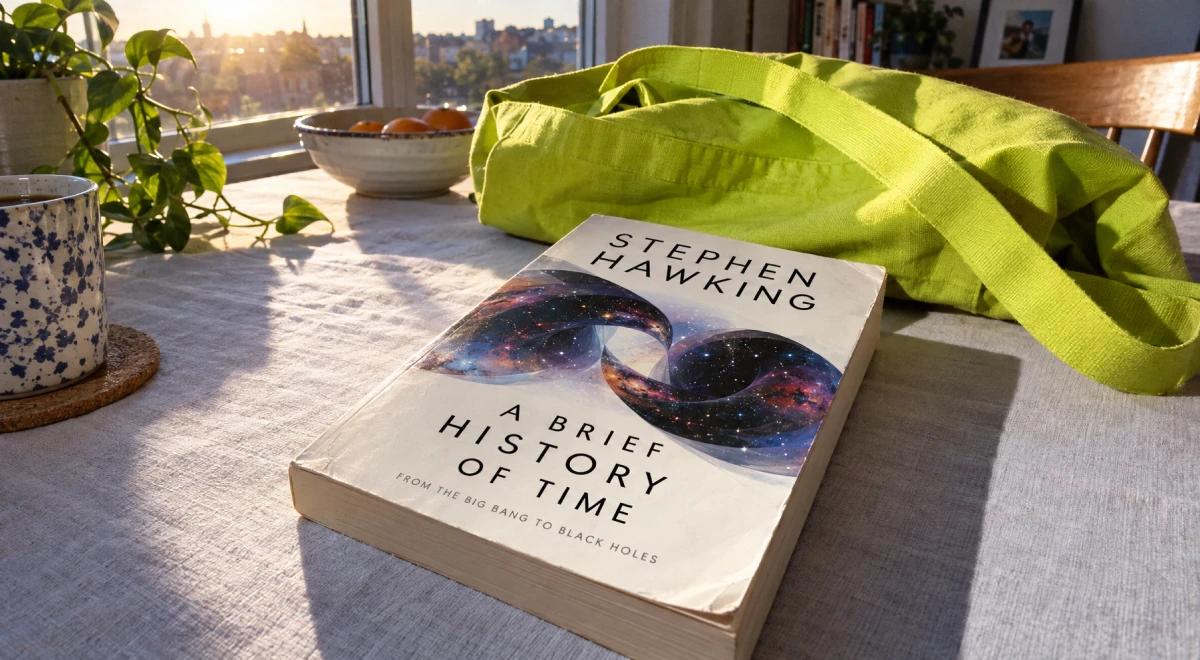

When Samantha Harvey's 'Orbital' — a quiet, contemplative 136-page novel about six astronauts spending a single day aboard the International Space Station, told in real time — won the 2024 Booker Prize, its sales jumped 818% in a single week.
Astonishingly, the book outsold the previous three Booker winners combined. This incredible commercial success proves that a simple, highly emotional story about looking down at Earth from orbit can out-sell almost anything on the market.
However, this massive spike in interest highlights a very real problem for readers: the category of "books about space" covers an impossibly wide range of genres. It includes everything from toddler board books to Stephen Hawking's intense cosmology, astronaut memoirs, and hard science fiction.
Most recommendation lists simply throw all these titles into one undifferentiated pile without considering who is actually reading them.
So, what are the best books about space? Space exploration literature is a broad genre encompassing astrophysics, historical astronaut biographies, science fiction, and children's education, exploring everything from human spaceflight to the origins of the universe.
In this article, you'll find the absolute best titles by format and audience — covering nonfiction, fiction, kids' books, space exploration history, and practical stargazing — so you can easily find exactly what you need.
📘 Seeking quick insights about space? Get Headway and find the reads that suit your interests.

Quick answer: The best books about space, sorted by who's reading them
If you want to know what to read next, here is how the genre breaks down:
Best books about space are split cleanly into hard science, fiction, and kids' picture books.
Books about space for kids range from touch-and-feel board books to middle-grade novels.
Books about space for adults include both astrophysics primers and literary fiction.
Fiction books about space turn astronaut life and alien contact into page-turners.
Best books about space exploration cover NASA's real missions, from Apollo to Mars rovers.
What are the best books about space for total beginners
If you want to understand the fabric of reality, you need to read foundational astrophysics. Modern astrophysics is the branch of astronomy that studies the physical nature of the universe, dark matter, and dark energy to understand our place in the cosmos.
So, what are the best books about space for someone who simply wants the facts?
The absolute classic entry point is 'A Brief History of Time' by Professor Stephen Hawking, which elegantly covers space, time, black holes, and the origins of the universe in a single brilliant volume. It explains the mechanics of light and gravity with incredible clarity.
For readers who want the big concepts without needing a physics degree, 'Astrophysics for People in a Hurry' by Neil deGrasse Tyson is the ultimate choice. It breaks down massive scientific concepts into highly digestible, short chapters that you can read during your morning commute.
Another fantastic title is 'Cosmic Queries', co-authored by Neil deGrasse Tyson and James Trefil. This book tackles the big questions: our origins, the search for other life, and humanity's ultimate fate. It explains the science with incredible simplicity, making it perfect for readers who want to imagine what lies beyond our Solar System.
Both 'Cosmos' by Carl Sagan and 'Astrophysics for People in a Hurry' are the two titles that readers most often ask for by name when diving into this genre. These titles absolutely belong on any list of the best nonfiction books and serve as a brilliant modern continuation of early philosophical inquiries, much like foundational Aristotle books.
Best books about space exploration: The real history behind the missions
For many readers, the true thrill of this genre comes from reading about real missions and the people who made them happen. The best books about space exploration focus entirely on the human and logistical realities of leaving Earth.
Books about space exploration like 'The Space Race' cover the entire history of human spaceflight, from the earliest test launches to today's modern orbital missions.
If you want a deep dive into one specific, determined effort, 'Mission to Pluto' covers the incredible New Horizons mission in full, detailing how astronomers tracked a tiny planet at the edge of the galaxy.
Books like Mary Roach's 'Packing for Mars' cover the logistical and emotional reality of astronaut training, teaching us about the pain, isolation, and physical challenges that engineers and astronauts must endure when preparing for space.
Throughout these historical accounts, you will encounter the massive contributions of NASA. The history of American spaceflight is defined by a number of incredible achievements:
The X-15 program's massive advances in rocket-powered flight, which laid the groundwork for modern aerospace engineering.
The Apollo program's historic 1969 moon landings, a monumental triumph of human ingenuity and courage.
The Hubble Space Telescope's groundbreaking contributions to modern astronomy, capturing images of distant galaxies and nebulae.
The Mars rovers' incredible discovery of evidence of past water on the planet's surface fundamentally changed our search for extraterrestrial life.
📘 Stop adding massive science books to your "to-read" pile. Try Headway to read or listen to the core concepts of the universe in just 15 minutes.

Space books minus the boring science
Headway turns space books into 15-minute summaries.
Read space summariesFiction books about space that read like the real thing
Science fiction books about space use the backdrop of the universe to explore deep human psychology, survival, and technology, separating them entirely from hard-science nonfiction.
If you are looking for fiction books about space that prioritize scientific accuracy, Andy Weir is the definitive author to start with. His novels, including 'The Martian' and 'Project Hail Mary', feature intense survival, problem-solving, and humor, appealing strongly to young adults and older readers alike.
For readers seeking a more literary experience, Samantha Harvey's 'Orbital' follows six astronauts watching sixteen sunrises during one day on the International Space Station. 'The Sparrow' by Mary Doria Russell explores first contact with an alien civilization, using the mission to explore humanity itself rather than just focusing on futuristic technology.
'Good Morning, Midnight' by Lily Brooks-Dalton tells a haunting story by pairing an astronaut returning from Jupiter with a woman alone in the Arctic, contrasting their profound isolation.
At the highly psychological end of the genre, 'Solaris' by Stanisław Lem features a mysterious ocean that forces a crew to confront their own painful memories, solidifying its place among modern classic books.
If you want something stranger and more experimental, 'The Employees' by Olga Ravn takes place on a ship in the 22nd century. These books use the isolation of the cosmos to explore deep human relationships, making them excellent companions to psychology books for beginners.
For adults who want to imagine life among the stars, these titles are absolutely essential reading.
Books about space for kids, from board books to middle grade
When looking for books about space for kids, you must carefully match the content to the child's age to ensure the concepts are accessible. The best books about space for kids range from simple visual stimulation to complex stories about growing up on other planets.
Babies and toddlers: 'Touch the Brightest Star' is a wonderful touch-and-feel board book that introduces a baby to the night sky through tactile exploration and gentle rhymes.
Early picture books: 'Hello, World! Solar System' uses incredibly colorful illustrations to introduce the planets to early readers. 'Eight Spinning Planets' uses fun, die-cut circles to keep young children engaged, while 'ABCs of Space' assigns one scientific letter per page to build foundational knowledge.
Slightly older readers: 'Faces of the Moon' beautifully explains the phases of the Moon in a way kids can easily understand. 'The Sun Is Kind of a Big Deal' is a hilarious, kid-friendly nonfiction book that teaches young readers about our Solar System's most important star.
Middle grade and young adults: For teens and older children who want to imagine a different fate for humanity, 'You Are the First Kid on Mars' explores the exciting prospect of future colonization. 'Scratching the Surface' offers a gripping novel about kids actually living on the surface of Mars, dealing with the daily realities of an alien world.
A beginner's guide to stargazing without a telescope, science degree
You do not need a degree in astronomy to explore the sky. Practical stargazing guides help beginners identify celestial objects using an ordinary backyard telescope or simply the naked eye. To get started:
Find a location away from bright city light to let your eyes adjust to the darkness.
Use a practical guidebook to identify bright constellations and stars visible to the naked eye.
Once you know the basics, use a beginner-friendly telescope to spot the craters on the Moon or the rings of Saturn.
Keep a log of your observations to track how the night sky changes with the seasons.
Books aimed specifically at hands-on stargazing, rather than dense theory, will dramatically increase your enjoyment of the night sky without overwhelming you with complex mathematics.
📘 Turn your curiosity into knowledge. Get the Headway app to enjoy bite-sized summaries of the world's most popular science and space books.
Which books about space match your age and interests
Finding the right book depends entirely on what you want to learn. Here is a quick breakdown to help you choose.
| Book | Format | Best for |
|---|---|---|
'A Brief History of Time' — Stephen Hawking | Nonfiction | Readers who want the classic, foundational cosmology text |
'Astrophysics for People in a Hurry' — Neil deGrasse Tyson | Nonfiction | Readers who want the big concepts in short chapters |
'Project Hail Mary' — Andy Weir | Fiction | Readers who want science-driven survival fiction |
'Orbital' — Samantha Harvey | Fiction | Readers who want a literary, single-day astronaut story |
'The Space Race' | Nonfiction / history | Readers who want the real history of human spaceflight |
'Hello, World! Solar System' | Kids (picture book) | Toddlers and early readers learning the planets |
'You Are the First Kid on Mars' | Kids (middle grade) | Kids who want a Mars-colonization adventure story |


Free space reading worth knowing about
If you are looking for high-quality, budget-friendly options, NASA provides incredible free downloadable e-books on its official website.
These completely free resources are a fantastic way to supplement the popular science books listed above, offering deep insights into the history of space flight, the mechanics of air propulsion, and the incredible wonders of our galaxy.
Turn your interest in space into a daily reading habit with Headway!
If you are fascinated by the universe but lack the time to read hundreds of pages, Headway offers incredibly practical, 15-minute summaries of the world's best astrophysics books. Reading these summaries is a fantastic way to engage with self-improvement books focused on science and knowledge. Here is how you can use the app to build a daily learning habit:
'A Brief History of Time' (Stephen Hawking): Tip — pick one concept, like black holes or the Big Bang, and try to explain it out loud to someone else in under a minute. Exercise — write down the single question about the universe you most want answered, then note which chapter of the summary directly addresses it.
'Astrophysics for People in a Hurry' (Neil deGrasse Tyson): Tip — read this summary in the "in a hurry" spirit it was written for; listening to one chapter over your morning coffee is enough. Exercise — pick one of the 12 short chapters and summarize its core point in just three sentences.
'Cosmic Queries' (Neil deGrasse Tyson & James Trefil): Tip — use this book's big-question framing as an engaging conversation starter with your family. Exercise — write down your own answer to "where do we come from?" before reading the authors' scientific take.
'How To: Absurd Scientific Advice for Common Real-World Problems' (Randall Munroe): Tip — treat this summary as a hilarious palate cleanser between the denser reads on this list. Exercise — pick one absurd scenario from the book and sketch out your own entirely wrong solution before reading Munroe's actual explanation.
'The Disordered Cosmos' (Chanda Prescod-Weinstein): Tip — read this summary for the profoundly human side of physics, not just the hard science. Exercise — note one specific place where the book directly connects a complex scientific concept to a social or personal issue.
You can easily explore Headway's full astrophysics collection and add these titles to your list of books to read before you die.
📘 Simply download the Headway app to start learning today!
FAQs about books about space
What are the best books about space for someone who has never read a science book before?
If you have never read a science book, start with 'Astrophysics for People in a Hurry' by Neil deGrasse Tyson. It breaks down complex astrophysics into incredibly short, accessible chapters, ensuring you understand the universe without getting bogged down by complicated mathematics or dense academic jargon.
What is the best book about space exploration and NASA's history?
For a comprehensive look at human spaceflight, 'The Space Race' provides a fantastic, highly detailed overview of NASA's history. It covers everything from the intense early rocket tests to the historic Apollo missions' three-day journey to the Moon, highlighting the immense dedication of the engineers and astronauts involved.
Are Andy Weir's space novels scientifically accurate?
Yes, Andy Weir is famous for his rigorous dedication to scientific accuracy. Novels like 'The Martian' and 'Project Hail Mary' rely heavily on real physics, chemistry, and orbital mechanics, ensuring that their protagonists survive by using actual, scientifically sound problem-solving rather than relying on magical science fiction tropes.
What is a good book about space for a 5-to-8-year-old versus a teenager?
For a 5-to-8-year-old, 'The Sun Is Kind of a Big Deal' is a hilarious, engaging nonfiction book that perfectly explains our solar system. For a teenager, a middle-grade novel like 'Scratching the Surface' provides a gripping, imaginative adventure about young adults living on a Mars colony.
What are Erika Nesvold's recommended science fiction books about space settlement?
While specific recommendations frequently change, experts like Erika Nesvold often point to hard science fiction that realistically addresses the immense logistical and ethical challenges of building a sustainable society off-Earth, focusing heavily on how human relationships and legal structures will evolve when astronauts embark on permanent settlement missions.
Is Samantha Harvey's 'Orbital' based on a real astronaut's account?
No, 'Orbital' is a work of literary fiction, not a direct biographical account. However, Samantha Harvey heavily researched the daily routines, physical sensations, and profound psychological experiences of real astronauts aboard the International Space Station to craft a highly realistic, emotionally resonant novel about life in orbit.
What is the difference between a stargazing guide and an astrophysics book?
A stargazing guide is a highly practical manual designed to help you physically identify constellations, planets, and stars in the night sky using your naked eye or a telescope. An astrophysics book explains the underlying theoretical science, such as how black holes form or how the universe expands.
Are NASA's free e-books a good supplement to popular science books about space?
Absolutely. NASA's free downloadable e-books are an incredible, budget-friendly resource. They offer deep, factual insights into the history of aeronautics, detailed mission logs, and stunning imagery from modern telescopes, making them the perfect companion to popular science books for readers looking to expand their knowledge at no cost.