Self-growth
 Apps & Digital Tools
 Business & Career
 Success
 Growth Tools
 Psychology
 Communication
 Relationships
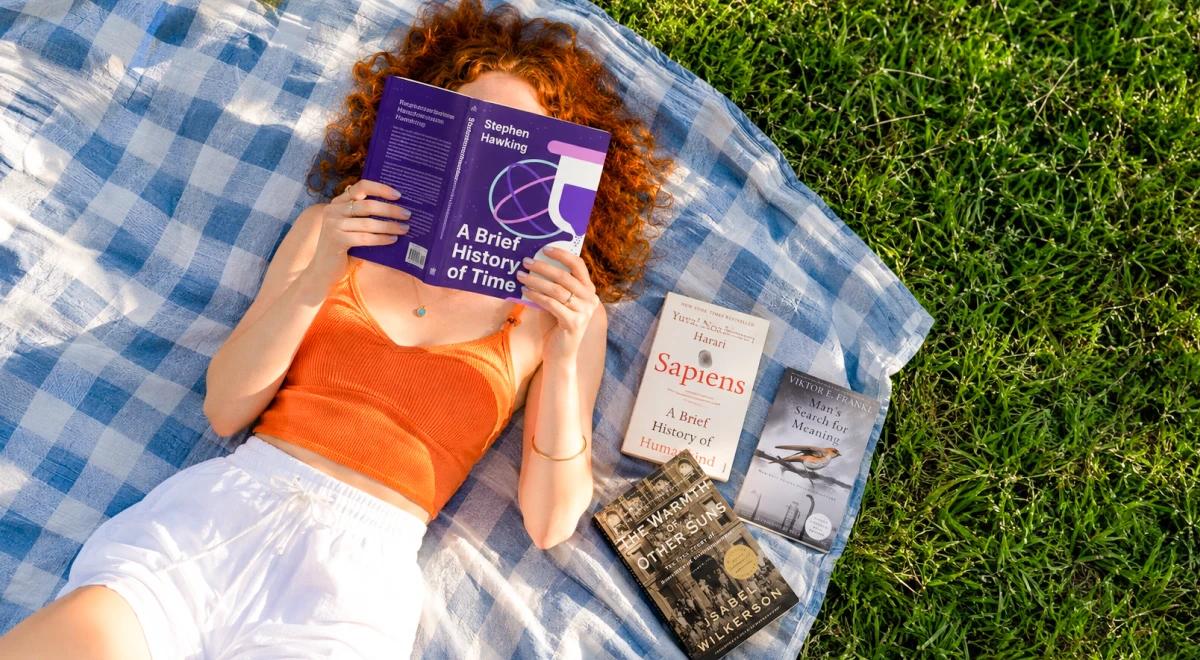
As of October 2025, 38% of U.S. adults had read just one to five books in the past year, according to Pew Research Center. When your reading time is that tight, the best non-fiction books of all time deserve a careful pick, not a random grab. Think of this as a focused companion to our wider list of all-time great reads across genres.
This isn't a 100-title dump you'll scroll past. It's a tight set sorted by what each book did out in the world: a law it changed, a field it launched, or the way it shifted how people see each other. For every pick, you'll also get a simple place to start.
One honest note first. An "all-time" label isn't a popularity contest. A few books here are genuinely hard going, and a few are short enough to finish on a slow afternoon. We'll tell you which is which, so you can match a book to the time and patience you've got.
📘 Build a reading habit with Headway from scratch.

The short answer: Five favorite non-fiction books nearly every list includes
Short on time? These five best non-fiction books of all time show up on nearly every serious list:
‘Silent Spring’ by Rachel Carson: the book that forced pesticide regulation.
‘The Immortal Life of Henrietta Lacks’ by Rebecca Skloot: science, race, and medical consent in one true story.
‘Man's Search for Meaning’ by Viktor Frankl: a psychiatrist's case for purpose, written after the camps.
‘Thinking, Fast and Slow’ by Daniel Kahneman: how two mental systems drive every decision.
‘Educated’ by Tara Westover: leaving an isolated family to reach Cambridge.
What makes the best non-fiction books last
A non-fiction classic is a book that still earns its spot decades later, not because it's old, but because it keeps doing work, usually by pairing careful research with real writing craft. Plenty of bestsellers fade in a year. The ones that stick tend to share three things.
It changed something you can point to. A law, a field of study, or a public argument shifted because the book existed.
It holds up. The facts still check out, even after other researchers went looking for holes.
It's still readable today, without a dictionary of dead jargon.
That's the lens for everything below: lasting impact over hype. Not "this is important because people say so," but "here's the concrete thing it did."
Books that started something: Non-fiction that moved the real world
Some books don't just describe the world. They push it somewhere new.
1юRachel Carson's ‘Silent Spring’ (1962) laid out how pesticides like DDT were poisoning birds, water, people, and the natural world. The public reaction helped spark the modern environmental movement and led to real pesticide regulation in the U.S. It's worth reading even now for how calmly it builds a case that felt radical at the time.
Betty Friedan's ‘The Feminine Mystique’ (1963) named the quiet frustration of millions of American housewives and helped kick off second-wave feminism and a new era of feminist thought. If you want to see how one book can put words to something a whole generation felt but couldn't explain, this is it.
Upton Sinclair's ‘The Jungle’ (1906) aimed for readers' hearts and hit their stomachs instead. His account of Chicago's meatpacking plants was so grim it pushed federal food-safety laws through Congress. For more titles that left a mark on how nations run, our roundup of history books worth reading goes wider.
Books that built a whole field from scratch
A few books don't just add to a field. They invent it. These are some of the best non-fiction books about science and ideas, and none of them needs an expert to enjoy.
Charles Darwin's ‘On the Origin of Species’ (1859) introduced evolution by natural selection and reorganized all of biology around one idea. Is it beginner-friendly? Mostly yes, if you read it as a patient argument rather than a textbook. Darwin writes like someone trying hard to convince a skeptical friend, which he was.
Stephen Hawking's ‘A Brief History of Time’ (1988) did something rare: it made cosmology a dinner-table topic. It's shorter than its reputation suggests, and Hawking keeps the math almost entirely offstage. Expect to reread a page here and there, not to need a physics degree.
Daniel Kahneman's ‘Thinking, Fast and Slow’ (2011) laid the popular groundwork for behavioral economics by showing how two mental systems, one fast and one slow, run your decisions. It's dense but rewarding, and it pairs well with lighter reads if you'd rather see where to begin with psychology first.
Adam Smith's ‘The Wealth of Nations’ (1776) is the other foundational text here. It laid the foundations of modern economics, though most readers today meet its ideas secondhand rather than in the full thousand-page original.
True stories that read like fiction books, from Henrietta Lacks to Theranos
The best non-fiction books based on true stories can grip you harder than any thriller, because you can't tell yourself none of it happened. This is narrative journalism at its best: real reporting shaped with the scenes and pacing of fiction.
Rebecca Skloot's ‘The Immortal Life of Henrietta Lacks’ (2010) follows the cells taken from a Black woman in 1951 without her knowledge, cells that went on to power decades of medical research while her family got nothing. It reads like a novel and reframed how we talk about medical consent.
John Carreyrou's ‘Bad Blood’ (2018) tracks the rise and collapse of Theranos, the blood-testing startup that promised everything and delivered fraud. One stretch has staff quietly running tests on commercial machines while executives tell investors the opposite. It moves like a heist.
John Hersey's ‘Hiroshima’ (1946) follows six survivors of the World War II atomic bomb through the hours after it fell. It's short, plain, and devastating, and it changed how journalists write about catastrophe.
Truman Capote's ‘In Cold Blood’ (1966) helped invent the modern true-crime book with its account of the 1959 Clutter family murder in Kansas. If that's your lane, we've gathered more true crime that reads like a thriller.
Patrick Radden Keefe's ‘Say Nothing’ (2019) opens with a 1972 abduction and moves through the Northern Ireland conflict known as the Troubles. It tracks real people across decades and reads like a thriller, even though every name is real. Good for anyone drawn to a conflict that tore at a whole country, told through the people who lived it.
Erik Larson's ‘The Devil in the White City’ (2003) braids two true stories from 1890s Chicago: the architects racing to finish the 1893 World's Fair, and a serial killer who used the crowds as cover. It's a strong slice of American history that moves like a novel. Best if you like your non-fiction with real tension.



Memoirs that turn one life into something you keep
A good memoir or biography hands you one person's life and somehow gives you back something about your own.
Tara Westover's ‘Educated’ (2018), a bestselling memoir, traces her path from a survivalist family in rural Idaho, with no formal schooling, to a PhD at Cambridge. Best for anyone who's ever felt torn between where they come from and where they're headed.
Paul Kalanithi's ‘When Breath Becomes Air’ (2016) was written by a neurosurgeon facing terminal cancer at 36. It's a short, clear look at what makes a life meaningful in the face of death. Best for readers ready for something quiet and heavy.
Trevor Noah's ‘Born a Crime’ (2016) tells of growing up mixed-race in apartheid South Africa, where his very existence broke the law. It's funnier than that sounds, and sharpest when he writes about his mother. Best if you want history and culture told through one wry, specific family.
Viktor Frankl's ‘Man's Search for Meaning’ (1946) pairs his survival of the Nazi camps with the therapy he built afterward: the argument that purpose, not comfort, carries people through struggle and suffering. Best for anyone hunting for a reason to keep going.
‘The Autobiography of Malcolm X’ (1965), told to Alex Haley, traces one man's path through crime, prison, faith, and leadership, and it became required reading on the African American experience and race in America. A cornerstone of civil rights reading, it digs into identity and social injustice without softening anything. Best for readers who want a book that argues as much as it recounts.
‘The Diary of a Young Girl’ by Anne Frank, first published in 1947, is a widely read account of the Holocaust, written by a Jewish teenager hiding from the Nazis in Amsterdam. It's often one of the first serious history books children read, and it still lands decades later. Best for anyone who wants history at human scale.
Books that quietly change how you live
Some books don't hand you a to-do list. They slowly change what you notice.
Marcus Aurelius kept ‘Meditations’, a work of Stoic philosophy, as private notes to himself while running an empire roughly 1,900 years ago. The surprise is how modern it feels: reminders to control your reaction, not the event. Read a few entries at a time, and you start catching yourself mid-overreaction.
Susan Cain's ‘Quiet’ (2012) argues that introverts are built differently, not worse, and that offices and schools often reward the loudest voice over the best idea. After reading it, plenty of people stop apologizing for needing quiet to think.
Isabel Wilkerson's ‘Caste’ (2020) argues that American racism works less like personal prejudice and more like a rigid ranking system, and compares it to caste in India and Nazi Germany. It changes how you read everyday hierarchies, at work and beyond.
Where to start: Match a non-fiction classic to the time you have
Knowing a book is great doesn't tell you how to get into it. This table pairs each pick with a rough length and the easiest way in, whether that's previewing a summary first or jumping to a specific chapter. If you'd rather build momentum with short books you can finish fast, start at the lighter end.
| Book | What it changed | Rough length | Best way in |
|---|---|---|---|
‘Silent Spring’ | Sparked pesticide regulation | Medium | Preview the summary, then read the opening "fable" chapter |
‘A Brief History of Time’ | Made cosmology public | Short | Read straight through; it's shorter than people expect |
‘The Immortal Life of Henrietta Lacks’ | Reframed medical consent | Medium | Start at chapter one; it reads like a novel |
‘Thinking, Fast and Slow’ | Founded popular behavioral economics | Long/dense | Summary first, then dip into the chapters you need |
‘Educated’ | A memoir of leaving and learning | Medium | Read straight through |
‘Meditations’ | A 2,000-year-old handbook for living | Short | Read a few entries at a time, not cover to cover |
Pick your first book — start it in 15 minutes on Headway
The fastest way to stall is to save all of them at once. Pick one, ideally the one that made you pause while reading this. The best non-fiction books of all time only do anything once you open them.
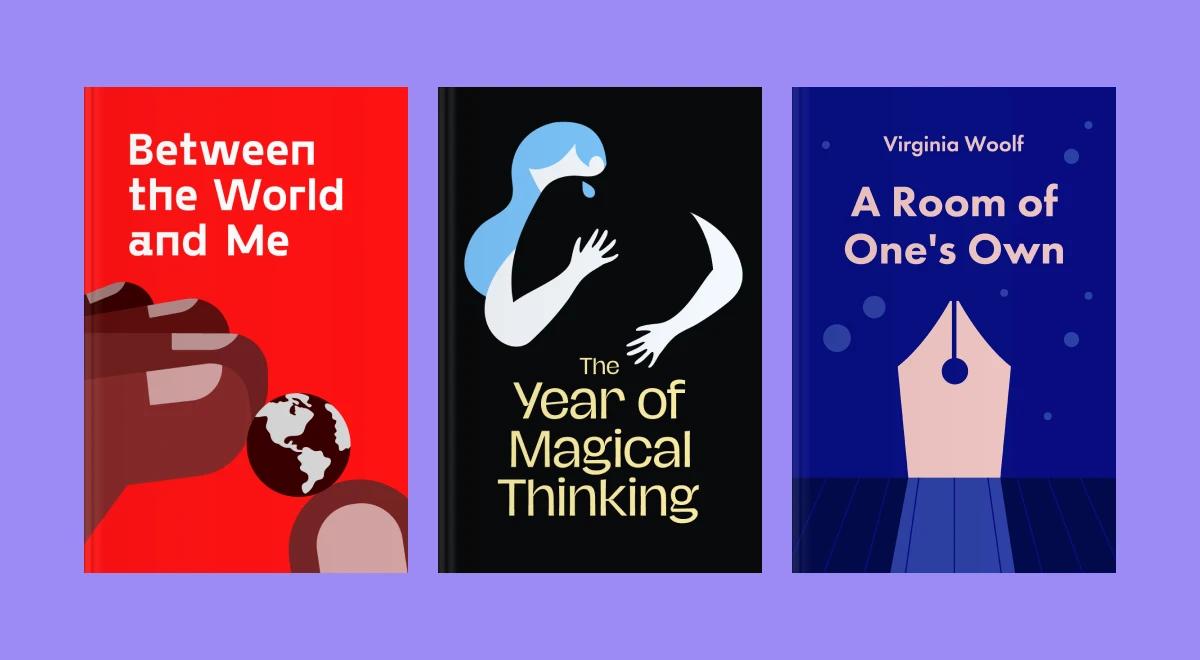
Find your next life-changing book — take the quiz now.
For the dense picks, like ‘Thinking, Fast and Slow’, a short summary can tell you whether the full book is worth your hours before you commit them. Several of these titles, including ‘Silent Spring’, ‘Educated’, ‘On the Origin of Species’, and ‘Caste’, have summaries in Headway's library you can read or listen to in about 15 minutes.
Then make it a habit you can keep. A few pages a day beats a weekend binge you never repeat, and a little planning helps you make what you read stick.
📘 Start a daily reading habit on Headway!
FAQs about best non-fiction books of all time
What's the best-selling non-fiction book of all time?
By sales, the Christian Bible leads with an estimated 5 to 7 billion copies, according to Guinness World Records. But religious, political, and philosophical texts are usually set apart from normal book-sales counts because their print figures are hard to track. Among secular titles, the Guinness World Records book itself is often cited, with well over 100 million copies sold.
What are the best non-fiction books from the 2020s so far?
A few recent books already read like future classics. Clint Smith's ‘How the Word Is Passed’ (2021) reckons with how America remembers slavery. Michelle Zauner's ‘Crying in H Mart’ (2021) is a grief memoir built around food and family. Ed Yong's ‘An Immense World’ (2022) explores how animals sense things we can't. None appear on the list above.
What are some popular non-fiction books?
Popular and all-time aren't the same thing. Some non-fiction gets recommended constantly without topping all-time lists: Yuval Noah Harari's ‘Sapiens’ and Jared Diamond's ‘Guns, Germs, and Steel’ for big-picture history, Michelle Alexander's ‘The New Jim Crow’ for politics and civil rights, and Stephen King's ‘On Writing’ for any aspiring writer. Short on time? Essay collections from writers like Virginia Woolf are an easy way in.
What are the best non-fiction books about science?
For science that reads easily, start with writers who make it fun. Mary Roach digs into odd corners of the body and space travel with real humor, from ‘Stiff’ to ‘Packing for Mars’. For the natural world, Susan Casey's books on oceans and the deep sea pull you right under. Neither asks for any science background to enjoy.
What is the 50-page rule?
The 50-page rule is a simple way to decide whether to keep going: give a book 50 pages, and if it hasn't earned your time by then, set it down without guilt. Librarian Nancy Pearl added a twist for older readers. Once you're past 50, subtract your age from 100, and that's how many pages a book gets before you quit.