Self-growth
 Apps & Digital Tools
 Business & Career
 Success
 Growth Tools
 Psychology
 Communication
 Relationships
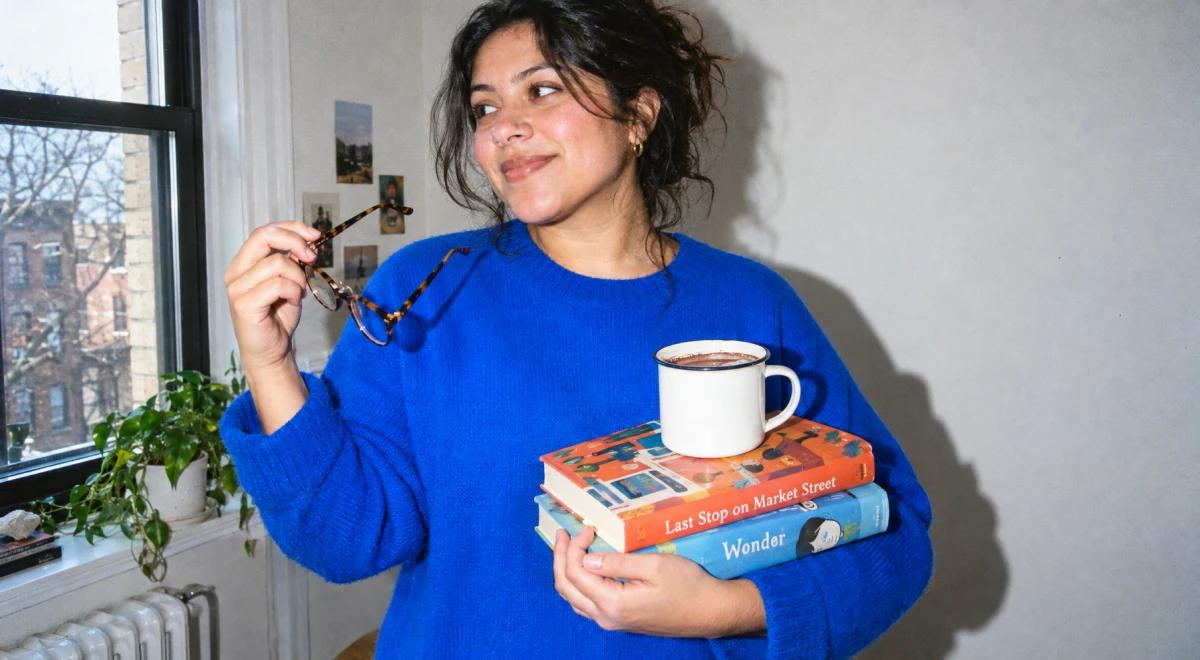

Looking for books about kindness that do more than sound sweet? Start with a quiet, useful fact: in a review of 27 studies, researchers found that doing kind things gives the giver a small but measurable lift in well-being. In other words, kindness is a skill people build by practicing, not just a nice idea to admire from the sidelines.
That's the problem with most lists you'll find. They're the same handful of classroom picture books, which helps a teacher but leaves out the parent of a nine-year-old, the adult who wants to read about generosity for themselves, and anyone wondering what to actually do after the last page.
So this list is sorted two ways: by reader (young children, older kids, and adults) and by the specific lesson each book builds, from empathy to inclusion to self-kindness. You'll see picture-book names like Trudy Ludwig and Matt de la Peña next to grown-up writers like Adam Grant and Rutger Bregman, whose ideas you can also sample as Headway summaries.
Treat the whole thing as one more shelf of books for personal growth, and pair each title with the small act that follows it.
A quick note before the list: this piece touches on well-being, and it's general information, not personal mental-health advice. Kindness can genuinely help you feel better, but results vary from person to person, and the Headway app is a microlearning and daily growth tool, not a medical one.

Quick answer: The best books about kindness at a glance
Short on time? Start with one of these, depending on who you're reading for. The table below shows what each book is best at — and who will get the most from it.
'Last Stop on Market Street' by Matt de la Peña: the picture book that teaches young children to spot beauty and gratitude in everyday life.
'Wonder' by R.J. Palacio: the middle-grade story that turned "choose kind" into a classroom motto.
'The Book of Joy' by the Dalai Lama and Desmond Tutu: compassion and generosity, explained by two of the world's wisest voices.
'Give and Take' by Adam Grant: proof that generosity isn't just nice — it shapes careers and success.
'Humankind' by Rutger Bregman: the case that people are, at heart, far kinder than the news would suggest.
Quick picks before the full list: A kindness book for each reader
If you want a fast starting point, here's one pick per reader before the full breakdown.
Ages 3 to 7: 'The Invisible Boy' by Trudy Ludwig, on noticing the left-out kid.
Ages 8 to 12: 'Wonder' by R.J. Palacio, kindness tested across a whole school year.
For generosity: 'Give and Take' by Adam Grant, on why givers often come out ahead.
For a true story: 'An Invisible Thread' by Laura Schroff, one lunch, two changed lives.
For self-kindness: pair any of these books about kindness with a gentler inner voice.
How to choose among kindness books, not just the most popular one
Two questions narrow this down fast. First, who's reading: a young child, an older child, or an adult. Second, which part of kindness you want to grow.
There are five worth knowing, and the list below is grouped by them, so you can jump to the section you need:
Empathy: feeling what someone else feels.
Inclusion: noticing who's being left out, and doing something about it.
Generosity: giving your time, help, or things.
Self-kindness: how you treat yourself when you mess up.
Repair: owning a mistake and making it right.
Figure out those two answers, and the right section below is easy to find.
Children's books about kindness: Picture books that show small acts
These work best for roughly ages 3 to 7, where a story does far more than a lecture. Rather than run every title through the same template, here's what each one is really for, and the small act to try after it waits in a later section.
1. 'Be Kind' by Pat Zietlow Miller: What kindness really means
This one builds the first skill most kids need: the pause to ask what kindness even looks like. 'Be Kind' opens when Tanisha spills grape juice on her new dress and gets laughed at, and a young girl works through her options while the story shows how small acts can ripple outward. Good for a child who wants to help but freezes on how.
2. 'The Invisible Boy' by Trudy Ludwig: Including the kid who feels unseen
This is the inclusion pick. A quiet young boy named Brian feels invisible at school until a new friend and one small gesture pull him in. Patrice Barton's colorful illustrations carry the message without a word: Brian is drawn in gray until kindness colors him in. Reach for it when your child is the quiet one, or sits near one.
3. 'Have You Filled a Bucket Today?' by Carol McCloud: A picture of simple acts
This gives kids a mental image they'll actually use. Everyone carries an invisible bucket, and kind actions fill it while unkind ones empty it. The metaphor is simple enough for a four-year-old and sticky enough that you'll hear them repeat it for weeks.
4. 'Try a Little Kindness' by Henry Cole: A funny take on different ways to be kind
Bestselling illustrator Henry Cole fills this funny picture book with hysterical cartoon animal characters who model different ways to spread kindness, from sharing a seat to speaking up for a friend. The humor does the teaching, so it lands with kids who tune out anything that feels like a lesson. A great read-aloud when you want giggles and a point.
5. 'Last Stop on Market Street' by Matt de la Peña: Kindness on an ordinary bus ride
This ties kindness to gratitude and to valuing people over money. A young boy named CJ wonders why they wait in the rain and why they don't have a car, until his Nana helps him notice the good around him, ending at a community soup kitchen. It's beautifully told, and it reads wonderfully aloud.
6. 'Strictly No Elephants' by Lisa Mantchev: Making room for every friend
When a young boy and his tiny pet elephant are turned away from the Pet Club, they find children with equally unusual pets and start a club where everyone is welcome. It's a warm story about helping friends who feel left out, with a big-hearted appeal that works for the littlest readers.
7. 'The Big Umbrella' by Amy June Bates: There's always room for more
A friendly red umbrella keeps stretching to shelter everyone who needs it, no matter how tall, hairy, or different. It's a gentle metaphor for inclusion and for a whole community that makes room, and it opens an easy conversation about welcoming people in.
8. 'Each Kindness' by Jacqueline Woodson: The chance you don't want to miss
This is the honest one. A girl brushes off the new student, Maya, again and again, and then Maya moves away before she can make it right. There's no tidy ending, which is the powerful message: a chance to be kind can slip past you. Best for slightly older children who can sit with that.
9. 'The Kindness Book' by Todd Parr: Kindness in its many forms
Todd Parr keeps it bright, bold, and simple, showing kindness in its many forms as an everyday choice kids make again and again. It's a favorite for teaching kids kindness in classrooms, and it often comes with free teaching resources, so it's easy to borrow before you buy.
10. 'The Cat Man of Aleppo' by Irene Latham and Karim Shamsi-Basha: Selfless kindness in a hard place
This true story carries more weight than the others. It follows a man who stayed in his city during the war in Syria to care for abandoned cats, a quiet act of selfless kindness in the middle of loss. Save it for an older child, and plan to frame it gently, because the setting invites real questions.
One more for animal lovers: 'The Lion Inside' by Rachel Bright pairs a timid little mouse with a big lion in a story about courage and an unexpected friendship.
Chapter books where kindness gets tested over a whole story
For roughly ages 8 to 12, the lesson changes shape. Here kindness isn't a single page; it's a choice a character keeps making across a plot. These are the titles most lists skip.
11. 'Wonder' by R.J. Palacio follows Auggie, a boy with a facial difference, through his first year at a mainstream school. The book's quiet rule, choose kind, gets tested from every side, including the young people watching from the edges. It's the strongest pick for a child heading into a new school or sorting out who their real friends are.
12. 'El Deafo' by Cece Bell is a graphic memoir about growing up with hearing loss, told with humor instead of pity. It's a gentle way for a kid to understand difference from the inside, and the comic format pulls in readers who stall on dense text.
13. 'Out of My Mind' by Sharon M. Draper centers on Melody, a brilliant girl with cerebral palsy who can't speak until she gets a communication device. It's a powerful story that asks readers to look past what they assume about someone, which is empathy doing real work.
14. 'Restart' by Gordon Korman flips the usual setup. A kid loses his memory after a fall and learns he used to be the school bully, then has to decide who to be now. It's a sharp, readable story about repair and second chances.
Books about kindness for adults who want to understand and practice it
Kindness isn't only a kid topic, and the search results rarely admit it. If you're reading for yourself, these five cover human kindness, generosity, compassion, and self-kindness, and each reframes something you thought you understood.
15. 'Give and Take' by Adam Grant makes the case that generosity is a strategy, not just a virtue. Grant sorts people into givers, takers, and matchers, and shows how givers can end up the most successful, not the most drained. It's for anyone who quietly believes being a good person means finishing last.
16. 'Humankind' by Rutger Bregman argues that people are kinder by default than the headlines suggest. He takes apart famous stories about human cruelty and shows how often the grim version is the myth. This is the book for the cynic in your life, maybe you on a rough day.
17. 'The Book of Joy' by the Dalai Lama and Desmond Tutu treats compassion as a path to joy, built from a week of talks between two old friends who had every reason to be bitter and chose otherwise. It's warmth with real depth, and it pairs naturally with building emotional intelligence.
18. 'Nonviolent Communication' by Marshall B. Rosenberg reframes kindness as how you speak, especially when you're annoyed. His method is to name what you observe, feel, and need instead of firing off a complaint.
Real kindness still has a limit, which is why this reads well next to setting boundaries with friends. And if you feel everything deeply, there's a whole shelf of books for highly sensitive people that covers similar ground.
19. 'An Invisible Thread' by Laura Schroff and Alex Tresniowski is a true story: a busy ad executive buys lunch for a boy panhandling on a New York corner, and that one act grows into a friendship that reshapes both their lives. It's for readers who'd rather have a story than a framework.
The fifth skill, self-kindness, runs under all of this, because how you treat yourself sets the ceiling for how you treat everyone else. It's worth reading about being kinder to yourself alongside the rest. All five of these adult titles are available as Headway summaries, so you can sample the core ideas before committing to the full book.


At a glance: Which kindness book fits which reader and lesson
Here's the whole list in one view, so you can scan by reader or by skill instead of scrolling through every entry.
| Book | Reader | Kindness skill it builds | Format |
|---|---|---|---|
'Be Kind' | Ages 3 to 7 | Empathy | Picture book |
'The Invisible Boy' | Ages 3 to 7 | Inclusion | Picture book |
'Have You Filled a Bucket Today?' | Ages 3 to 7 | Generosity | Picture book |
'Try a Little Kindness' | Ages 3 to 6 | Empathy | Picture book |
'Last Stop on Market Street' | Ages 4 to 8 | Generosity | Picture book |
'Strictly No Elephants' | Ages 4 to 8 | Inclusion | Picture book |
'The Big Umbrella' | Ages 4 to 8 | Inclusion | Picture book |
'Each Kindness' | Ages 5 to 9 | Repair | Picture book |
'The Kindness Book' | Ages 3 to 6 | Empathy | Picture book |
'The Cat Man of Aleppo' | Ages 7 to 10 | Generosity | Picture book |
'Wonder' | Ages 8 to 12 | Inclusion | Chapter book |
'El Deafo' | Ages 8 to 12 | Empathy | Chapter book |
'Out of My Mind' | Ages 8 to 12 | Empathy | Chapter book |
'Restart' | Ages 8 to 12 | Repair | Chapter book |
'Give and Take' | Adult | Generosity | Nonfiction |
'Humankind' | Adult | Human kindness | Nonfiction |
'The Book of Joy' | Adult | Compassion | Nonfiction |
'Nonviolent Communication' | Adult | Empathy and repair | Nonfiction |
'An Invisible Thread' | Adult | Generosity | Nonfiction |
Turn a kindness book into simple acts of kindness to try after each read
A story becomes a habit when you do something with it. Here's one small act to try after each read. Keep them low-effort, and skip any that don't fit your reader.
After 'Have You Filled a Bucket Today?', ask your child to name one person whose bucket they filled today, and how.
After 'The Invisible Boy', pick one classmate who seems left out and invite them to something this week.
After 'Be Kind', have your child do one kind thing for someone who won't know it was them.
After 'Each Kindness', talk about a time one of you missed a chance to be kind, with no blame, just noticing.
After 'Last Stop on Market Street', point out one good thing on your next ordinary errand together.
After 'Try a Little Kindness', let your child pick one silly, friendly thing to do for a sibling or friend.
After 'Wonder', write down one precept, a short rule to live by, and stick it on the fridge for the week.
After 'Give and Take', do one five-minute favor for someone with zero expectation of anything back.
After 'Nonviolent Communication', take one tense message you nearly sent and rewrite it around a need instead of a complaint.
What the research actually says about kindness
Here's why a kindness reading habit is worth building. That meta-analysis up top, Curry and colleagues' 2018 review, pooled 27 studies and found a small but real well-being lift for the person doing the kind act, not just the person receiving it. Small is the honest word here, not "transforms," but it's consistent, and it shows up across different kinds of kindness.
That matters for how you read these books. A story plants the idea, and the act you pair with it is what turns the idea into practice. This is general research about well-being, not advice for a specific person, so treat it as a nudge rather than a prescription.

Build kindness one book at a time with Headway
Kindness is a habit you can read your way into, for a child or for yourself. The through-line in every section above is the same: the book opens the door, and the small act you try afterward keeps it open.
For the grown-up titles, summaries are a low-stakes way to explore the ideas before buying the full book about kindness, and tracking your reading can turn "I keep meaning to read more about this" into something that sticks. If you'd rather stay in warmer territory for a while, these sit comfortably next to other uplifting, feel-good reads.
So pick one book, for whichever reader you had in mind, and do its act this week. That's the whole method.
📘 Build a steady reading habit with Headway.
FAQs about books about kindness
What are the best books about kindness for toddlers?
For ages two to four, go for the simplest and most durable. Board books like 'Kindness Makes Me Strong' by Elizabeth Verdick and 'Hands Are Not for Hitting' by Martine Agassi teach gentle hands and words in a few sturdy pages. They survive chewing and drops, and the short text matches a toddler's attention span far better than a full picture-book story does.
Where can I find free or printable books about kindness?
Start with your local library, which often runs free read-aloud programs and lends most of these titles. Several publishers also post free classroom activity kits and read-aloud videos for books like 'The Kindness Book'. Just know that full, in-copyright books aren't available as free PDFs, and sites offering them that way are usually pirated and worth avoiding.
What's a good book to teach a child empathy specifically?
Empathy is feeling what someone else feels, which is narrower than general kindness. For that exact skill, 'Each Kindness' lands hardest, because it shows the real cost of not imagining another kid's side until it's too late. 'Out of My Mind' works the same way for older readers, putting you inside a character others constantly underestimate.
What are good books about empathy for adults?
Adult readers have their own shelf. 'The War for Kindness' by Jamil Zaki, a Stanford psychologist, treats empathy as a skill you can grow with practice. 'Against Empathy' by Paul Bloom pushes back and argues for reasoned compassion instead. Read side by side, they show you both sides of how empathy really works.
Are there classroom resources or lesson plans for teaching kindness?
Yes, and many are free. The Random Acts of Kindness Foundation offers free K-12 lesson plans, and publishers often post activity kits and read-aloud guides for popular picture books. Pair one of those guides with a title from this list, and you have a ready-made lesson with almost no prep on your end.
When should you start reading kindness books to a child?
Earlier than you might think. Sturdy board books work from around age one, when the ideas stay simple and concrete. Empathy deepens most between ages three and seven, which is the sweet spot for picture books, and chapter books take over around age eight as kids start following longer stories.
What's the difference between books about kindness and books about compassion?
They overlap, but the split is useful. Kindness is the action, the thing you actually do. Compassion is the feeling underneath, noticing someone's struggle and wanting to ease it. A title like 'Be Kind' shows the action, while 'The Book of Joy' digs into the feeling that drives it.
Do kindness books actually make kids kinder?
On their own, not much. What moves the needle is pairing the story with a conversation and a small action the child tries themselves. Reading, talking, and doing together is why every book on this list comes with one act, instead of hoping the message sticks from the page alone.