Self-growth
 Apps & Digital Tools
 Business & Career
 Success
 Growth Tools
 Psychology
 Communication
 Relationships

Did you know that the real reason most people avoid personal finance is simple: the material usually reads like a dry textbook?
This article is fixing that: it is a short, highly opinionated list of the best books for financial literacy. But what is financial literacy exactly? Financial literacy is the ability to understand and use different financial skills, including budgeting, investing, and managing personal debt.
These five books are ranked by who they actually fit, whether you are a total beginner, a young adult, or someone ready to finally start investing.
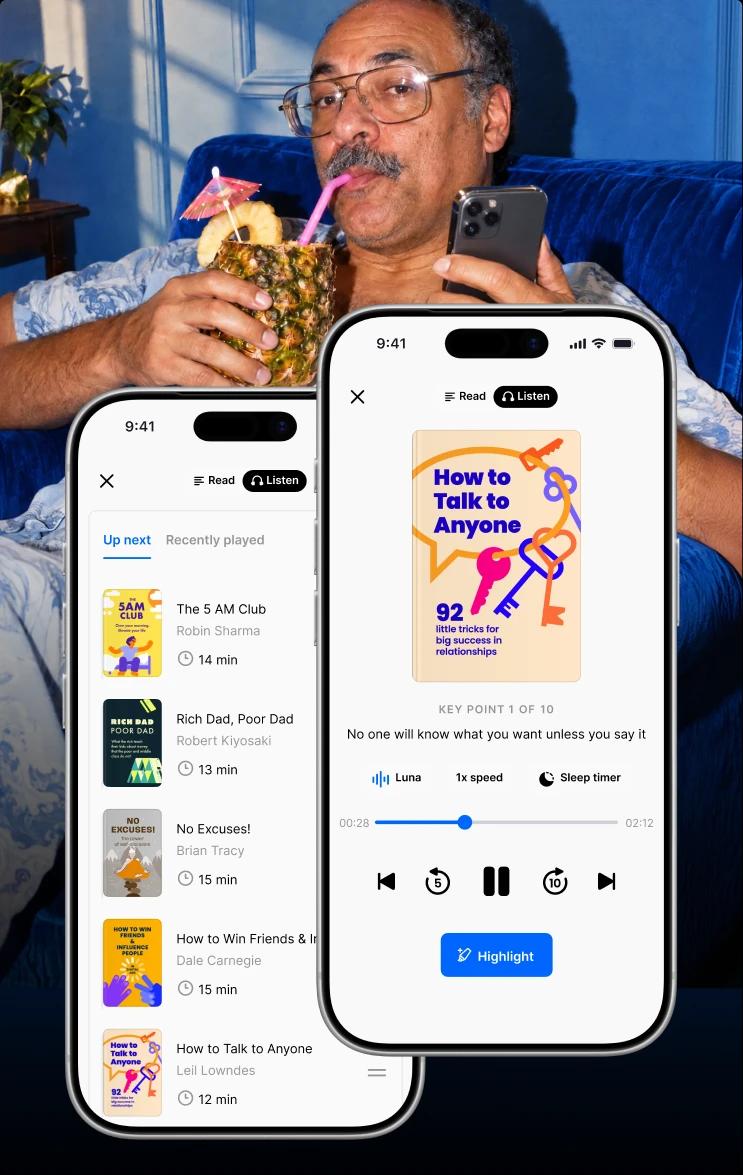
📘 And if you're short on time, get Headway: the book summary and daily microlearning app offers 2,500+ different summaries, including some of the best finance reads.

TL;DR: The five best books for financial literacy, ranked by where you're starting
If you need a fast answer, here is the breakdown of the best books for financial literacy.
'The Psychology of Money' — start here if your spending is driven by emotion, not math.
'The Richest Man in Babylon' — start here if you want timeless rules in under 150 pages.
'I Will Teach You to Be Rich' — start here if you're in your 20s and want a step-by-step system.
'Rich Dad Poor Dad' — start here if you need a mindset shift about assets versus income.
'The Simple Path to Wealth' — start here if you're ready to actually start investing.
Why financial literacy books outperform financial literacy apps and courses (for a first step)
Financial education is severely lacking. The 2026 TIAA Institute–GFLEC Personal Finance Index found that US adults answered only 47% of basic personal finance questions correctly.
That represents the lowest score in the survey's ten-year history. Furthermore, Gen Z averaged just 38%. It's the clearest evidence yet that financial literacy isn't something most people pick up by accident.
Books work as a fantastic, low-pressure first step compared to expensive courses or hiring advisors. They give you the foundational vocabulary of personal finance.
However, financial literacy books cannot replace building a real budget or consulting a licensed advisor when you have complex tax issues. They set the groundwork for financial empowerment, but you still have to do the heavy lifting of changing your habits.
Among the 17 best books for self-improvement, finance books offer some of the most immediate, measurable returns on your time.
📘 Ready to build your financial literacy? Download Headway to access expert summaries of the best finance books in 15 minutes.
The five best books for financial literacy, explained one at a time
Here is a closer look at each title to help you decide which one matches your current situation.
1. 'The Psychology of Money' (Morgan Housel)
This book argues that doing well with money has a little to do with how smart you are and a lot to do with how you behave.
It is genuinely best for readers who already know the math — they know they should save more and spend less — but keep making emotional money decisions anyway. The single idea readers actually remember is that wealth is what you don't see; it's the cars not purchased, and the upgrades declined.
Like many great psychology books for beginners, it focuses heavily on mindset. The only caution is that it is highly philosophical, so do not expect a step-by-step budgeting spreadsheet.
2. 'The Richest Man in Babylon' (George S. Clason)
Clason uses parables set in ancient Babylon to explain the most basic laws of building wealth. It is best for readers who want ancient-parable simplicity over modern financial jargon.
The core concept readers take away is "pay yourself first," meaning you must save a portion of your income before paying any other bills. It is a fantastic entry point if you feel intimidated by modern finance.
However, be aware that the faux-Biblical language can feel a bit dated to some modern readers.
3. 'I Will Teach You to Be Rich' (Ramit Sethi)
Sethi provides a highly tactical, six-week program to automate your finances and crush debt. This is easily one of the best financial literacy books for young adults in their 20s who want an actual step-by-step system, not just philosophy.
Readers remember his concept of "conscious spending," which encourages you to spend extravagantly on the things you love, as long as you cut costs mercilessly on the things you don't.
The main caution here is that some of the specific advice regarding banks, credit cards, and interest rates is US-specific.
4. 'Rich Dad Poor Dad' (Robert Kiyosaki)
Kiyosaki contrasts the financial mindset of his highly educated but financially struggling biological father with the mindset of his friend's wealthy, entrepreneurial father. It is best for readers who need a massive mindset reset on what actually constitutes wealth.
The most memorable takeaway is the strict definition of an asset (something that puts money in your pocket) versus a liability (something that takes money out of your pocket).
While considered one of the essential self-help books for men looking to build businesses, readers should be cautious that some of the specific tactical advice on real estate and taxes is dated and highly controversial.
5. 'The Simple Path to Wealth' (J.L. Collins)
Collins wrote this book as a series of letters to his daughter, explaining how to achieve financial independence without constantly stressing about the stock market.
It is best for readers who are finally ready to open an investment account and want the simplest possible approach. The core takeaway is to avoid picking individual stocks and instead buy low-cost broad market index funds and hold them forever.
It is incredibly effective, but the caution is that you really need to have your debt paid off and an emergency fund built before this book becomes truly actionable.
📘 Don't have time to read a 300-page finance book? Try Headway to absorb the key takeaways from top financial authors while you commute.
Best books for financial literacy, compared side by side
If you are building a list of good books to read for adults, comparing the top finance titles side by side helps you pick the right starting point.
| Book | Best for | Core topic | Read time |
|---|---|---|---|
The Psychology of Money | Emotional spenders | Money psychology | ~5 hours |
The Richest Man in Babylon | Total beginners | Saving fundamentals | ~2 hours |
I Will Teach You to Be Rich | Young adults, 20s | Budgeting and automation | ~6 hours |
Rich Dad Poor Dad | Mindset shift | Assets vs. liabilities | ~5 hours |
The Simple Path to Wealth | Ready-to-invest readers | Index fund investing | ~5 hours |
Best financial literacy books for teens and young adults specifically
When looking for the best financial literacy books for teens or the best books to read for financial literacy as a high school graduate, the list narrows. 'Rich Dad Poor Dad' and 'I Will Teach You to Be Rich' tend to land best with this age group because they focus heavily on mindset and automation rather than complex retirement planning.
Parents and teen readers should expect to focus on mindset first, and tactics second. The goal is to build a framework for how to think about money before the teen ever gets their first credit card.
It is also important to note that some tactical advice regarding specific interest rates or account types changes over time, so readers should always verify current numbers before opening accounts. Building financial literacy from a young age is just as important as studying the best leadership books early in a career.



Read the ideas first with Headway before committing to a full book!
Several of these titles are considered some of the best nonfiction books of all time. However, you might not know which author's tone clicks with you until you start reading.
Headway's summaries let you preview all five of these best books for financial literacy 2026 before deciding which one deserves a full read. Several of these titles are available as complete book summaries in the Headway library.
Think of Headway as your personal discovery tool. A 15-minute summary answers the question, "Is this book actually for me?" before you spend a week trying to push through a dense chapter on stocks and bonds.
📘 Start exploring these financial concepts today by downloading Headway!

FAQs about the best books for financial literacy
What is the single best book for financial literacy for a total beginner?
For a total beginner who finds modern financial jargon overwhelming, 'The Richest Man in Babylon' is the absolute best starting point. It uses simple, ancient parables to teach the foundational rule of personal finance: pay yourself first before you pay anyone else.
What are the best financial literacy books for teens?
'Rich Dad Poor Dad' is frequently recommended as one of the best financial literacy books for teens because it fundamentally shifts how a young person views assets versus liabilities, teaching them to buy things that generate income rather than things that just cost money.
What are the best financial literacy books for young adults just starting out?
'I Will Teach You to Be Rich' by Ramit Sethi is widely considered the best choice for young adults in their twenties. It provides a highly specific, actionable six-week plan to automate savings, pay off student loans, and start investing without giving up the things they love.
Do I need to read these books in order?
No, you absolutely do not need to read these books in any specific order. The best financial literacy books for beginners are the ones that address your immediate problem. If you need a mindset shift, start with 'The Psychology of Money'; if you are ready to buy index funds, start with 'The Simple Path to Wealth'.
Are older financial literacy books like Rich Dad Poor Dad still relevant in 2026?
The core mindset lessons in older books like 'Rich Dad Poor Dad' — specifically the difference between an asset and a liability — remain completely relevant. However, readers must remember that specific tactical advice regarding real estate laws, tax loopholes, and interest rates is often heavily dated.
What's the difference between a financial literacy book and an investing book?
A financial literacy book focuses on the behavioral foundations of money, teaching you how to budget, save, manage debt, and develop a healthy mindset. An investing book assumes you already have a solid financial foundation and focuses specifically on tactics for growing wealth through markets or real estate.
Can financial literacy books actually replace a financial advisor?
No, financial literacy books cannot replace a licensed, fiduciary financial advisor. Books are incredible for building your foundational knowledge and helping you manage everyday personal finance, but an advisor is necessary for handling complex tax strategies, estate planning, and highly personalized retirement planning.
What should I read after finishing my first financial literacy book?
After finishing a foundational book on personal finance, you should read a book that targets your next specific goal. If you mastered budgeting, move on to an investing book like 'The Simple Path to Wealth'. If you want to increase your income, move on to a book focused on career growth or negotiation.
What other titles should I read to understand the modern financial landscape?
Once you master the basics, exploring the broader financial landscape helps build true financial security and long-term financial freedom. You might want to pick up 'Your Money or Your Life' by Joe Dominguez for deep financial planning, or modern guides like 'Rich AF' by Vivian Tu and 'How to Money' by Jean Chatzky. If you want to dive deeper into index funds, 'The Bogleheads' Guide to Investing' by Taylor Larimore — building on the philosophy of John C. Bogle — is excellent, while John Hope Bryant offers brilliant perspectives on economic empowerment.