Self-growth
 Business & Career
 Success
 Communication
 Healing
 Relationships
 Psychology
 Happiness
Finding the best audiobooks app depends on what you need — a massive library, free borrowing, or quick learning bites that fit into your actual life. Here's a carefully curated list of top audiobook apps for various needs, whether you're looking for extensive libraries, free listening, or quick learning moments to grow with minimal time.
Among these options, there's something for everyone. And if you're juggling a packed schedule but still want to grow, apps like Headway let you turn commutes, chores, or short breaks into powerful learning moments with 15-minute book summaries, rather than 10-hour commitments.
Quick list: Top seven best audiobook apps
Audible — Best for massive libraries and new releases
Libby — Best free option (borrow from your local library)
Scribd — Best for all-in-one content (audiobooks, ebooks, and magazines)
Libro.fm — Best for supporting local bookstores and owning DRM-free audiobooks
Google Play Books — Best for casual one-off listens
LibriVox — Best for classic and public domain free listening
Headway — Best for bite-sized learning, self-growth, and busy lifestyles
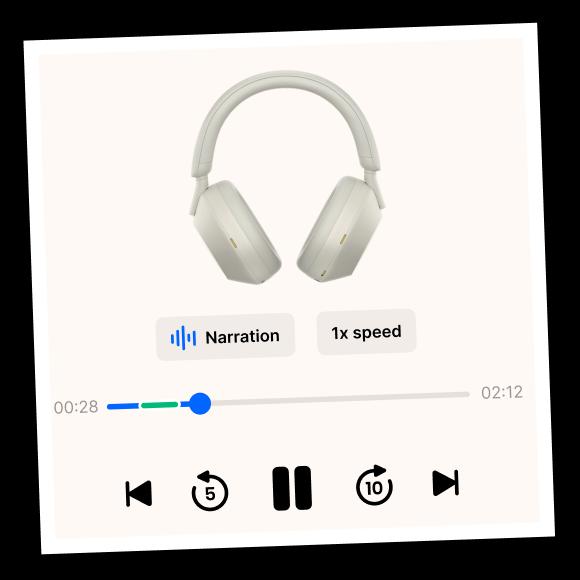
A 2k-title library right at your fingertips!
Try Headway and never struggle with your next read.
Try nowHeadway: Learning that fits your real schedule
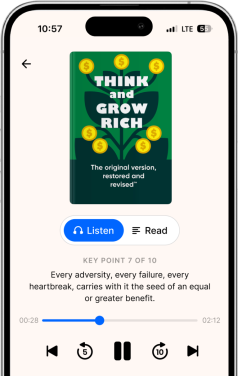
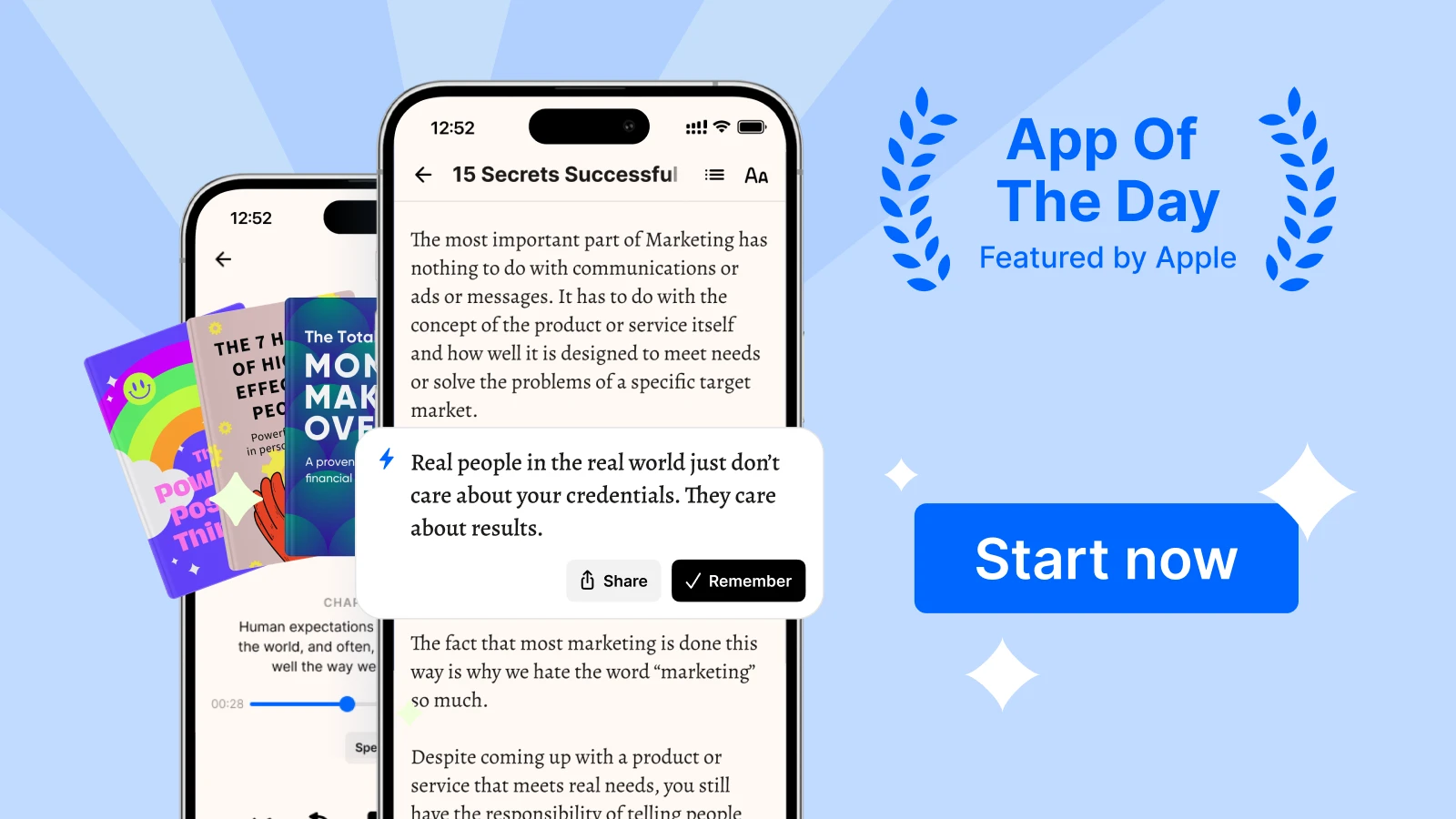
Headway offers 15-minute summaries of nonfiction bestsellers in audio and text. You get key insights from books on productivity, leadership, relationships, and health — without carving out massive time blocks.
Who it's for: Self-growth seekers who want to learn consistently but face time constraints. Commuters who turn drive time into learning time. Parents who read while their kids nap. Anyone who's ever thought, "I want to read more, but I'm too busy."
The app includes daily personalized picks, progress tracking, and habit-building features. You're not just consuming content — you're building a sustainable reading practice. With over 1,500 summaries and growing, there's always something relevant to your current goals.
Why it works: You can finish a summary during one coffee break. Listen while doing chores. Read during lunch. The bite-sized format removes the guilt of "not finishing books" because you actually complete what you start. Plus, if a summary really clicks, you can dive into the full audiobook elsewhere.
Headway has become the #1 most-downloaded book-summary app globally because it solves a crucial real problem — wanting to grow but lacking the time.
Audible: When you want every bestseller at your fingertips
Audible remains the giant in audiobook listening. Amazon owns it and has over 500,000 titles in its library. If you're after new releases from your favorite narrators or Audible Originals, this app is your go-to option.
Who it's for: People who listen to audiobooks a lot. Like Netflix, they want premium quality audio and don't mind a monthly subscription ($14.95/month for the Plus Catalog). The sleep timer and bookmarks make it easy to pick up where you left off, whether you're listening during your commute or before bed.
The catch? The price adds up, and wait times for popular titles through the Plus catalog can frustrate you. Additionally, if you're looking to learn quickly rather than spend 10 hours on a full physical book equivalent, Audible might not meet your goals.
Libby: Your library card's secret superpower
Libby turns your library card into a free audiobook player. This library app lets you borrow audiobooks from your local library without leaving your couch: No monthly subscription, no credit card. All you need is your library membership.
Who it's for: Budget-conscious readers who already have a library card and don't mind waitlists for popular titles. The user-friendly interface works on both iOS and Android, making it accessible wherever you are.
The reality: Waitlists can stretch weeks for bestsellers. You're competing with other library patrons, so if you need instant access or want niche nonfiction for personal development, you might get stuck. Still, for free audiobooks with zero commitment, Libby wins.
Scribd: Netflix for books (and magazines, and sheet music)
Scribd offers audiobooks, ebooks, magazines, and podcasts for $11.99/month. Imagine it as the all-you-can-consume reading buffet.
Who it's for: Many users of different formats say they use audio while exercising and text while eating lunch. The combination means you're never bored, and the subscription model removes decision paralysis about buying specific titles.
The trade-off: Scribd's library isn't as massive as Audible's for audiobooks specifically. You might hit limits on popular titles per month. But for casual exploration across different content types, it's solid.
Libro.fm: Support independent bookstores while you listen
Libro.fm lets you buy audiobooks while supporting local bookstores. You choose a bookstore to help, pay per audiobook (or subscribe for monthly credits), and get DRM-free files you actually own.
Who it's for: Readers who care about where their money goes. You're not just renting access — you own these files forever. Plus, knowing that your purchase helps a real bookstore adds a bit more meaning to each listen.
What to know: At $14.99/month for one credit, it costs about the same as Audible but with better ethics. The library's smaller than its big corporate competitors, though.
Google Play Books: No subscription, just pay for what you want
Google Play Books lets you buy audiobooks individually without monthly commitments. Browse, buy, and listen. Simple.
Who it's for: Casual listeners who don't use an app enough to justify subscriptions. Maybe you listen to one audiobook every two months while traveling. Pay $10 to $20 per book instead of $15/month for unused credits.
The catch: Per-book prices add up fast if you're a heavy listener. But the flexibility and playback quality across devices work well for sporadic needs. If you already use Google's ecosystem, having your favorite audiobook accessible across phone, tablet, and computer is convenient.

LibriVox: Free classics read by volunteers
LibriVox offers public domain audiobooks read by volunteers. Think Jane Austen, Mark Twain, and philosophy classics — all free.
Who it's for: Literature lovers, students, or anyone who is keen on classic texts (with a nice bonus — these books are free). Narration quality varies wildly since volunteers record these, but hey, free is free.
The limitation: The app only works if you're into older books. It doesn't have modern bestsellers, no self-help from the last century. But for diving into philosophy or classic fiction during your morning walk, it's perfect.
Why bite-sized learning & summaries matter (the rise of microlearning)
Not everyone has hours to finish audiobooks. You're juggling work, family, hobbies, and trying to squeeze in personal growth somewhere. Traditional audiobook listening takes 6 to 12 hours per book.
Enter microlearning: absorbing key ideas from great books in 10 to 20-minute chunks. Instead of committing to a full book, you get the core insights during your commute or while making dinner. This approach fits modern life better than pretending you'll find 10 uninterrupted hours.
Microlearning isn't about shortcuts — it's about smart learning. You absorb concepts faster, apply them quicker, and actually finish what you start. For busy professionals, parents, or anyone building new habits, this method makes reading accessible again.
Why Headway deserves a spot
Your lifestyle, goals, and budget determine which audiobooks app is best for you.
Do you expect ongoing new releases? Try Audible.
Do you need free access? Grab Libby.
Want all-in-one content? Scribd's got you.
Care about supporting local bookstores? Choose Libro.fm.
But if you're building a learning habit without massive time blocks and if you want self-growth that actually fits between meetings, commutes, and cooking dinner — check out Headway. It's designed for real life, not ideal schedules.
You don't need to "find time to read." You need reading that fits the time you have. Start with one app, see what sticks, and build from there. Your future self will thank you for beginning today.
Frequently asked questions about audiobook apps
What's the difference between audiobook apps and summary apps?
Audiobook apps give you full-length narrations of books, usually 6 to 12 hours. Summary apps condense key ideas into 10 to 20-minute reads or listens. Traditional audiobook apps work great for fiction and deep dives. Summary apps excel for nonfiction learning when time's limited.
Is Headway an audiobook app or a book-summary app — can it replace Audible?
Headway is a book summary app that focuses on nonfiction self-growth content. It won't replace Audible if you love 10-hour fiction audiobooks or want every new release. However, for learning and personal development, Headway delivers more actionable content more quickly. Many users pair both — Audible for entertainment and Headway for learning.
Are there free audiobook apps?
Yes. Libby lets you borrow from your local library with just a library card. Hoopla works similarly. LibriVox offers free public domain classics. These apps require either library membership or settling for older titles, but they're genuinely free with no subscription fees.
Which app is best if I don't have much time but want to learn quickly?
Headway wins here. These 15-minute summaries mean that you finish something meaningful during one commute or lunch break. Traditional audiobook apps require hours per book, which doesn't work when you're squeezing learning into life's gaps.
Can I use these apps offline or on the commute, or while doing chores?
Most audiobook apps offer offline downloads. Audible, Libby, Scribd, Google Play Books, and Headway all let you download content for offline playback. This feature is perfect for commutes through dead zones, flights, or doing dishes without streaming data. Just download before you leave the Wi-Fi zone.
What about Spotify for audiobooks?
Spotify added audiobooks recently (15 hours/month for Premium subscribers). The catalog's growing, but it's smaller than dedicated platforms. This service works if you already have a Spotify Premium subscription and want to listen to audiobooks occasionally without an additional subscription. For serious listeners or specific titles, dedicated apps still work better.
How do I know which audiobook player functionality I need?
Consider your habits. Do you need sleep timers for bedtime listening? Do you want bookmarks for jumping between chapters? Do you care about playback speed controls? Most apps (Audible, Libby, Google Play Books) cover the basics well. Test free trials to see which interface clicks with your brain.