Self-growth
 Business & Career
 Success
 Communication
 Healing
 Relationships
 Psychology
 Happiness
Books on how to control your emotions are resources that help you understand, regulate, and manage emotional responses to stressful or challenging situations. You know, those moments where a snarky comment from a coworker or a frustrating traffic jam sends your heart rate through the roof and makes you want to snap.
According to research on the amygdala hijack, a concept coined by psychologist Daniel Goleman, there's a split-second window in which we can use cognitive techniques to dampen our brain's immediate stress response. By using the methods taught in these books to engage the prefrontal cortex, the brain's logic center, you can actually rewire your brain to stay calm under pressure.
Whether you're looking for a step-by-step guide to handle negative emotions or seeking practical strategies to improve your social skills, the right literature can be life-changing. From the foundational science of emotional intelligence to modern dialectical behavior therapy (DBT) techniques, these titles offer a practical guide to finding inner peace in everyday life.
By the time you finish this guide, you'll have a clear idea of which self-help book belongs on your nightstand (or your Kindle Edition) to help you navigate the messiness of being human with more grace and a lot less stress.
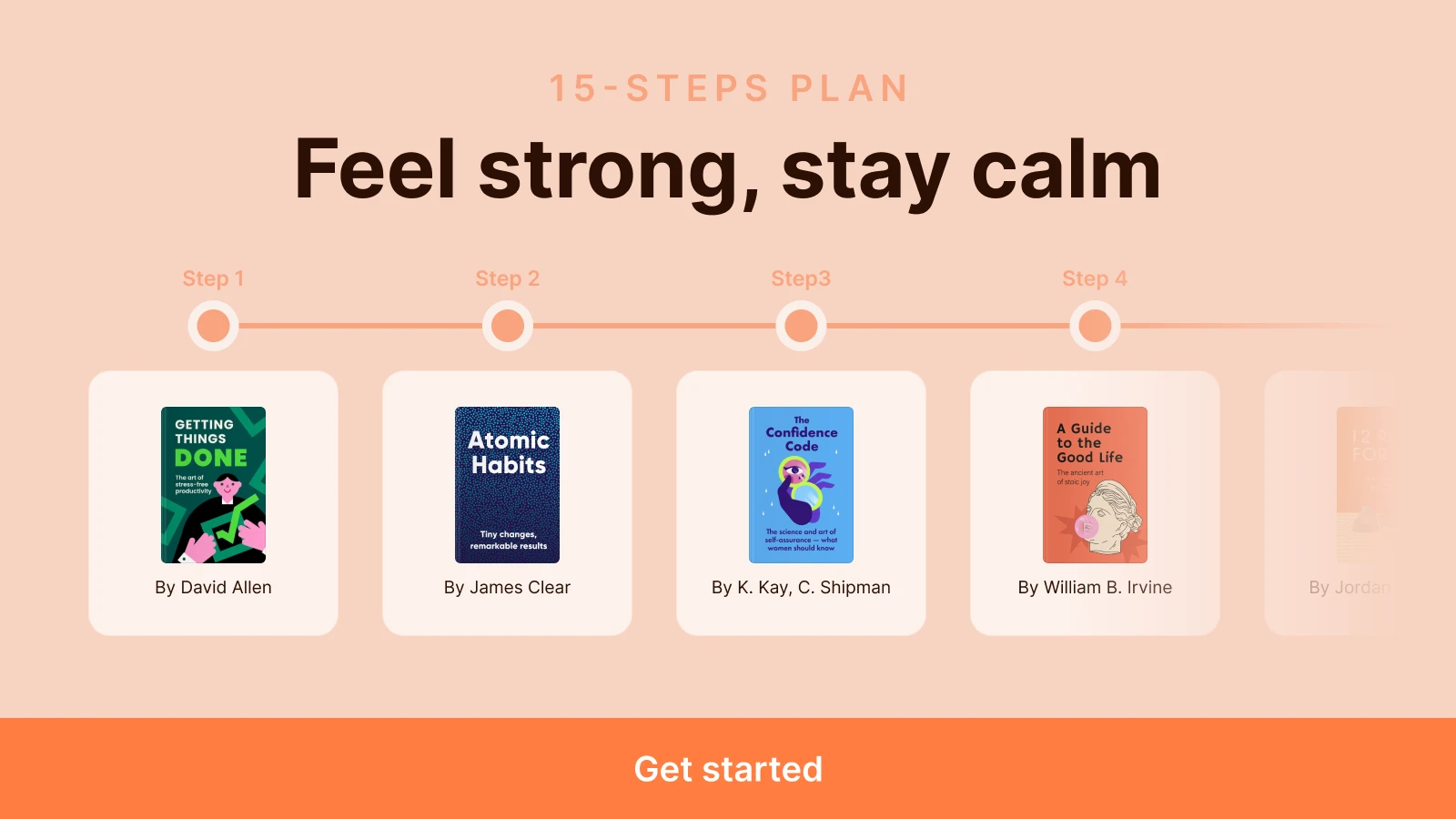
Try Headway to learn more about yourself.
Quick answers: What are the best books on how to control emotions, and do they work?
Here's a quick breakdown of what books on how to control your emotions actually do and which ones are sitting at the top of the bestseller lists right now.
What do books on how to control your emotions mean?
Basically, these are resources that teach you emotional regulation and emotional intelligence. Instead of just "feeling your feelings" until they blow up, these books show you how to identify a physical sensation (like a tight chest or a hot face) and use self-control to decide what happens next. It's about managing your emotions so they don't manage you.
Does reading books on emotional control help?
Our brains are wired to feel before they think. By reading about self-regulation, you're training your "thinking brain" to catch up. It builds self-awareness, so you stop seeing every minor setback as a total disaster and start seeing them as manageable moments in everyday life.
Best books on how to control your emotions (top 3 picks)
'Permission to Feel' by Marc Brackett: A brilliant framework for emotional literacy. It's a practical guide for anyone who feels off but can't quite put their finger on why.
'Emotional Agility' by Susan David: This one is life-changing. It teaches you to be flexible with your feelings rather than suppress them, which is huge for personal growth.
'Atlas of the Heart' by Brené Brown: Think of this as a map for the human soul. It helps you take control by defining the subtle differences between things like anger, disappointment, and hurt.
(Note: You can find Headway summaries for 'Permission to Feel' and 'Emotional Agility' right now if you want the "cheat sheet" version to start your journey today!)
Ten books on how to control emotions: Deep dive book lists by category
Best books on how to control your emotions (emotional intelligence)
If you want to actually stay calm when things go south, you have to start with emotional intelligence. While it's a familiar corporate buzzword, it's also the foundation of how we function. Most of what we know about this today started with Daniel Goleman. His work really changed how we think about what it means to be "smart." It turns out, your IQ doesn't matter much if you can't handle a difficult conversation without losing your cool.
Goleman's framework is all about self-awareness. If you don't know what you're feeling, you're basically a boat without a rudder. You need to be able to look at yourself in real-life situations and say, "Okay, I'm feeling defensive right now," before you say something you'll regret later. This awareness is the first step toward self-regulation and, eventually, better social skills.
Here are some book recommendations to get you started:
'Emotional Intelligence' by Daniel Goleman: It's the best book to start with if you want the "why" behind your moods. It explains how our "emotional brain" can hijack our logic and what we can do to stop that from happening.
'Emotional Intelligence 2.0' by Travis Bradberry: If Goleman is the theory, this is the step-by-step guide. It's full of practical strategies to raise your EQ and is a consistent favorite on Goodreads.
'Master Your Emotions' by Thibaut Meurisse: This self-help book doesn't mess around with fluff. It's a very practical guide to how your biology affects your mood and how to reprogram those negative emotions that keep holding you back.
By focusing on these books, you're building mental toughness. You aren't just learning to calm down; you're learning the mechanics of your own mind. Whether you're reading the paperback or the Kindle Edition, the goal is the same: moving from reactive to proactive.
📘 Too busy for a 300-page deep dive? Get the core insights of these emotional mastery books in 15 minutes on Headway.
Practical books on how to control your emotions (skills and exercises)
Sometimes, just knowing "why" you're upset doesn't actually stop your heart from racing or your voice from shaking in the middle of a meeting. Understanding the science is great, but when you're in the thick of a heated argument, you need a practical guide that gives you something to do right that second.
If you've ever looked into mental health resources, you've probably heard of dialectical behavior therapy, or DBT. It's one of the most useful frameworks for anyone who feels like their feelings are a bit too "loud." It focuses on self-regulation through four main pillars: mindfulness, distress tolerance, emotional regulation, and interpersonal effectiveness. It sounds fancy, but it's just a step-by-step guide to not letting a bad mood ruin your week.
Here are the best book recommendations for getting your hands dirty with actual exercises:
4. 'The Dialectical Behavior Therapy Skills Workbook' by Matthew McKay: This is an excellent self-help book if you want to take control. It's not something you just read; it's something you work through. It's packed with practical strategies to help you handle negative emotions without spiraling. The book reviews on Amazon are full of stories from people who say that it changed their real-life reactions.
5. 'Emotional Agility' by Susan David: This one is a favorite on Goodreads for a reason. Susan David talks about how "hooking" onto your thoughts is what gets you in trouble. Her approach is a life-changing way to stop the tug-of-war with your feelings. It's a great practical guide to self-acceptance while still pushing for personal growth.
6. 'Feeling Good' by David Burns: The manual of Cognitive Behavioral Therapy (CBT). It's a massive bestseller on Amazon because it offers a step-by-step guide to identifying "cognitive distortions" — the lies your brain tells you that tank your self-esteem.
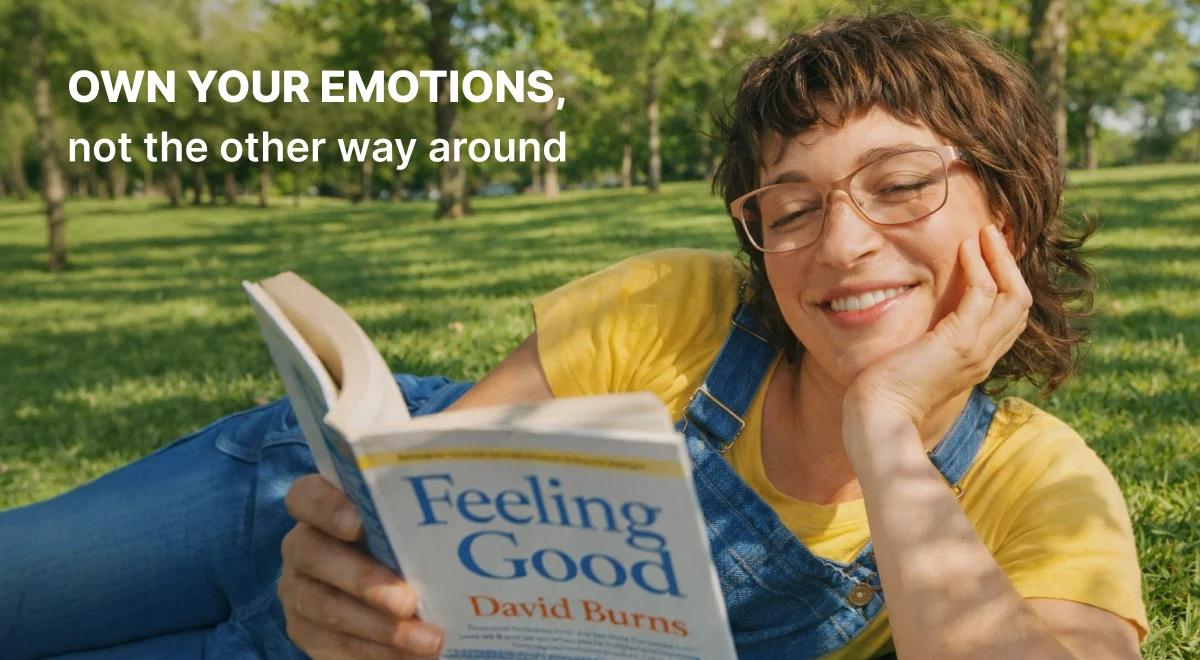
Start reading Burns's CBT insights in 15-minute summaries to spot your own distortions.
Books that help with stress, anxiety, and real-world emotional challenges
Between a demanding job, social pressures, and maybe even dealing with ADHD, keeping your well-being in check is a full-time job. You need nonfiction that understands that everyday life isn't always a calm meditation session. Sometimes, self-care is about finding the self-control to not check your email at 11 PM or learning how to deal with a sudden wave of panic.
7. 'The Upward Spiral' by Alex Korb — This is a solid paperback for anyone who wants to understand how small changes in your brain chemistry can lead to inner peace. It's very grounded in neuroscience but written in a way that feels like a chat with a smart friend.
8. 'Burnout' by Emily Nagoski — If you feel like you can never seem to recharge, this is the best book for you. It explains the "stress cycle" and why "just relaxing" doesn't work. It's a step-by-step guide to completing the stress response so your body can finally find some self-regulation.

9. 'The Happiness Trap' by Russ Harris — Based on Acceptance and Commitment Therapy (ACT), this book is a massive hit for young adult readers and adults alike. It challenges the idea that we should always be happy and gives you practical strategies to handle negative emotions as they come, rather than fighting them.
10. 'The Body Keeps the Score' by Bessel van der Kolk — This is an essential read for anyone dealing with trauma-related negative emotions. It explains how the body stores stress and provides a practical guide to releasing it through yoga, mindfulness, and self-regulation.
Whether you're looking for a young adult perspective or a deeper look into mental health, the goal is the same: building the confidence to trust your own mind.
📘 Stop the scroll and start the soul-work. Find your inner peace by listening to the world's best self-help summaries on Headway.
How to choose the right book on how to control your emotions
Picking out a self-help book is a lot like trying on a new pair of boots — if it doesn't fit the way you actually walk, you're just going to end up with blisters and a half-finished chapter. Before you hit "buy" on Amazon, you've got to be honest about what's actually going on in your head right now. Are you looking for a deep scientific explanation, or just someone to tell you how to stop yelling at your GPS?
The "best" book is entirely subjective. It depends on your publication date preference (some people like the classics, others want the latest research), your current well-being, and how much time you actually have to sit down and read a paperback.
Here is a quick decision tree to help you take control of your shelf:
If you want the science and research, look for Daniel Goleman. If you're the type who needs to see the data and understand the "why" before you can commit to a change, his work on emotional intelligence is the gold standard. It's less about fluff and more about how your brain is actually wired.
If you want actionable exercises, you need a workbook. Look for titles that mention dialectical behavior therapy (DBT) or practical strategies. You want something with checklists, writing prompts, and "real-world" homework that you can do between meetings.
If you want emotional literacy and language, go for Brené Brown or Marc Brackett. Sometimes the problem isn't that you can't control your emotions, it's that you don't have the words to describe them. These books help you name what's happening, so it loses its power over you.
Don't ignore the book reviews on Goodreads either. Look for reviewers who mention having similar struggles — whether that's ADHD, high-pressure work environments, or just general self-esteem issues. If they found the step-by-step guide helpful, there's a good chance you will too.
Headway summaries on how to control your emotions to read
If your "to-read" list is a mile long, you know how life can get in the way of a 300-page nonfiction deep dive. This conflict is exactly why Headway exists. The app distills the key ideas from the best self-help and mental health titles, leaving you with just the practical strategies you can actually use in everyday life.
If you're looking for books on how to control your emotions, here are the specific summaries on the app that will give you the biggest "bang for your buck" in terms of personal growth:
'Emotional Intelligence' by Daniel Goleman: This one is a must-listen. It breaks down the four pillars of EQ and shows you how to build self-awareness so you can stop your emotions from hijacking your logic.
'Emotional Agility' by Susan David: This summary is a life-changing look at how to stop fighting your feelings. It teaches self-regulation by helping you "unhook" from negative emotions instead of just trying to "be positive."
'Master Your Emotions' by Thibaut Meurisse: If you want a practical guide to managing your emotions on a daily basis, this is it. It's a very tactical approach to handling emotional triggers without losing your inner peace.
'Permission to Feel' by Marc Brackett: This one focuses on the "RULER" method (Recognizing, Understanding, Labeling, Expressing, and Regulating). It's a fantastic step-by-step guide for building emotional intelligence in yourself and the people around you.
By spending just 15 minutes with a summary, you can decide whether the full paperback is worth your time, or just walk away with the practical strategies you need to take control of your day.
Take control of your growth and emotions with Headway!
At the end of the day, learning how to control your emotions isn't about reaching some perfect state where you never get annoyed or anxious again. If you're feeling a bit overwhelmed by the sheer number of book recommendations on Amazon or Goodreads, don't feel like you have to buy every single paperback or Kindle edition today.
The best way to start your self-improvement journey is to pick just one title that actually speaks to what you're going through right now. Maybe you need a deep dive into emotional intelligence with Daniel Goleman, or maybe you need the gritty, hands-on work of a DBT workbook to help with your self-regulation.
If you're short on time but still want the life-changing insights from these best sellers, let Headway do the heavy lifting for you. You can listen to a summary while you're doing the dishes or driving to work, grabbing those practical strategies for managing your emotions in just 15 minutes. It's the easiest way to take control of your mental health and build the mental toughness you need for everyday life.
📘 Start with one summary on Headway, see what clicks, and then dive deeper into the books on how to control your emotions that actually make sense for your journey.
FAQs about the books on how to control your emotions
What are the best books on how to control emotions?
If you want the science, 'Emotional Intelligence' by Daniel Goleman is the best place to start. For a practical guide with exercises, 'The Dialectical Behavior Therapy Skills Workbook' is one of the best on the market. If you're looking for a favorite modern Kindle edition, Thibaut Meurisse offers practical strategies in 'Master Your Emotions' that work in everyday life.
Why do I struggle to regulate my emotions?
Most of us struggle because we weren't taught self-regulation as kids. Factors like ADHD, high stress, or specific emotional triggers can make it even harder to take control. It's not a character flaw; your brain is just reacting to negative emotions before your thinking brain can catch up. Reading a self-help book helps bridge that gap.
Which emotional intelligence book is best?
While Daniel Goleman wrote the foundational text, many prefer 'Emotional Intelligence 2.0' by Travis Bradberry for its step-by-step guide and focus on social skills. It's a huge hit on Goodreads because it's a practical guide rather than just a theory book. It helps you build self-awareness and self-control in a very relatable, real-life way.
What are the signs of poor emotional regulation?
Common signs include feeling easily overwhelmed by minor setbacks, frequent mood swings, or difficulty recovering from negative emotions. You might also notice your self-esteem takes a hit after you snap at someone. Learning emotional regulation through a workbook or DBT can help you manage these reactions and find more inner peace in your well-being.
What did Freud say about emotions?
Freud believed that we often repress our feelings into the unconscious mind, leading to psychological tension. He argued that if we don't find a healthy way to express them, they'll manifest as physical or mental distress. Modern nonfiction often builds on this by teaching self-acceptance and self-awareness to prevent that internal buildup.