russia has launched a full-scale war in Ukraine. Donate to support Ukraine and protect the world’s peace.

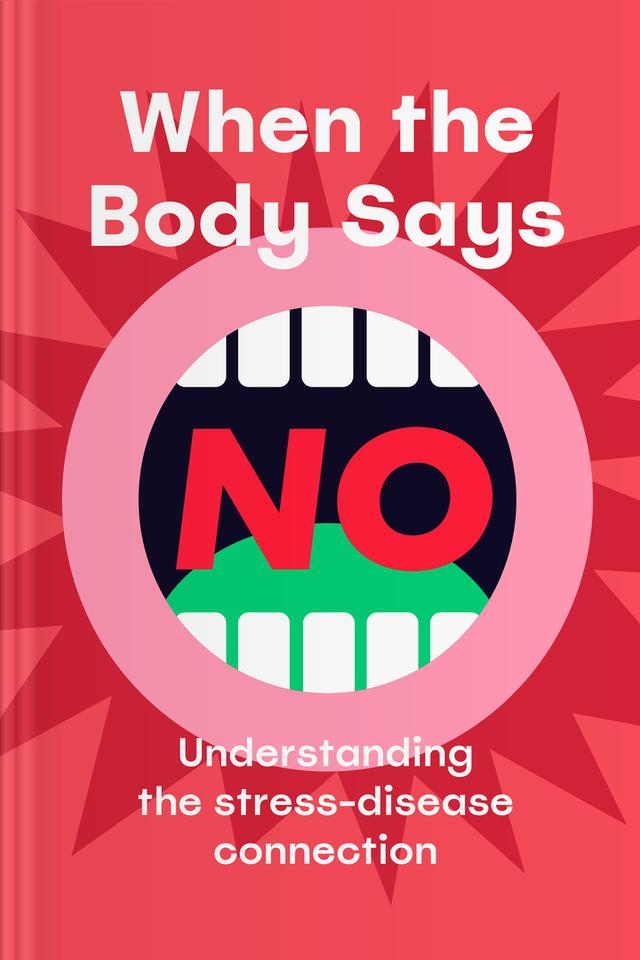
When the Body Says No

summary ofWhen the Body Says NoBook by Gabor Mate, MD

19 min
00:00
/
00:00
Get full summary

You’ll learn

  • Why do childhood experiences still impact your current health
  • How to attain emotional competence for better stress management
  • The delicate balance between cognition, emotions, and physiology
  • How societal beliefs affect personal well-being

first KEY POINT

Medical professionals’ consistent denial of the connection between stress and its effect on our health calls for immediate attention

Medical professionals need to forgo their orthodox mindset that everything must fit into the scientifically explainable definition. There’s more to people’s health than can be defined by scientific terms. It’s essential for them to know that there’s a great connection between people’s societal upbringing and the illnesses they suffer later in life.When stress is being discussed, many scientists view it as an isolated situation that’s spontaneous enough to throw a patient off balance. They hardly consider its long-term effects and how historical background can be a significant influence. In the future of healthcare, the importance of childhood experience should be normalized, and doctors should be encouraged to learn more about their patients.As a physician, Gabor Mate uses his experience with patients to narrate how important it is for doctors to inquire about their patient’s upbringing. Several patients have met an untimely death due to the ignorance and negligence of the doctors attending to them. There’s nothing wrong with knowing about a patient’s mental history because it gives a clearer insight into why they suffer from the illness plaguing them.

second KEY POINT

Our body reacts to stress in ways that can be mild or devastatingly severe to our health

One of the most critical aspects of our lives in regards to our health is the environment we grew up in. The places we stayed in and the experiences we’ve had go a long way in determining our current health status.Mary was a workaholic who always felt obliged to help people out. She was a joyous and cheerful person, but she lost her life early to a very little wound. She had injured herself with a sewing needle, and despite many surgeries and pain relief drugs, she couldn’t make it. Her problem was traced to Raynaud’s phenomenon, a medical condition in which the small arteries supplying the fingers are narrowed, depriving the tissues of oxygen. Before she knew it, gangrene set in, and she required surgeries, but it was not enough. After her death, the author, who was also her doctor, realized he and other doctors had done things the wrong way. As she went from one surgery to another, none of the doctors bothered to check why she had a problem healing; they treated the illnesses as they came.Mary was a chronic smoker who also loved working all the time. As a kid, she had been abused and had to take care of her younger ones from the very young age of seven. Right from her childhood, she had neglected herself to look after other people, and this mindset stuck with her till her last days. The stress she was exposed to, and the fact that she didn’t stop smoking early enough contributed to her death.The body is a reflection of what happens around us. A lot of doctors and physicians never see the need to understand where their patients are coming from — some believe it’s unethical to know such a thing. The claim is wrong and makes the treatment of illnesses in patients somewhat inadequate. We are influenced by what goes on in our society.Natalie was a married woman who also found it hard to say no to helping people. She was diagnosed with multiple sclerosis, a brain anomaly that impairs the functions of the nervous system’s cells. While she didn’t require any major treatment, she suffered relapses because she was in an abusive relationship where she had to care for her husband, who had cancer, and a son who was into drugs and alcohol.

book cover

Continue reading with Headway app

Continue reading

Full summary is waiting for you in the app

first KEY POINT

Understanding the delicate balance of relationships among our cognitive performances, our emotional environment, and physiology is essential to general well-being

second KEY POINT

We tend to dismiss the importance of stress, seeing it as a temporary state of mind that’s expected of us when we are about to achieve a task

third KEY POINT

Emotional repression occurs when we subdue our emotions and keep pushing it back into our minds

fourth KEY POINT

Coping mechanisms developed at a young age go a long way in determining what we expect from the people around us

fifth KEY POINT

Paying attention to our past experiences gives us an insight into why we relapse from health treatments

sixth KEY POINT

The fear of abandonment and loss makes us vulnerable to needless anxiety

seventh KEY POINT

We must dismantle the social beliefs programmed in us and install the determination to be better in its stead

eighth KEY POINT

Conclusion

About the author

Gabor Mate is a revered Canadian doctor who dedicated his whole life to studying trauma and addiction. His works constantly appear in The Vancouver Sun, and The Globe and Mail.

Join 55+ million learners worldwide

172K 5 reviews on App Store and Google Play

Get started

Frequently asked questions

What is When the Body Says No: Understanding the Stress-Disease Connection about?

When the Body Says No: Understanding the Stress-Disease Connection by Dr. Gabor Maté explores the relationship between emotional stress and physical illness. The author argues that unresolved emotional issues can manifest as serious health problems, emphasizing the importance of recognizing how our minds and bodies are interconnected.

How many pages is When the Body Says No: Understanding the Stress-Disease Connection and when was it published?

When the Body Says No: Understanding the Stress-Disease Connection has 304 pages and was published in 2003. This insightful work combines clinical anecdotes with research, making it an essential read for anyone interested in health and psychology.

Is When the Body Says No: Understanding the Stress-Disease Connection worth reading?

Yes, When the Body Says No is highly regarded for its deep insights into how psychological stress affects physical health. Readers consistently praise Dr. Maté's compassionate approach and the practical implications of his research.

What are the key takeaways from When the Body Says No: Understanding the Stress-Disease Connection?

Key takeaways include the idea that emotional repression can lead to chronic illness, the significance of self-awareness in health, and the necessity of addressing emotional wounds. The book provides a holistic view of health that is often overlooked in conventional medical practices.

How does When the Body Says No: Understanding the Stress-Disease Connection link stress to disease?

The book highlights that chronic stress and emotional turmoil can weaken the immune system and contribute to various diseases. Dr. Maté emphasizes that understanding this connection is crucial for prevention and healing.