Self-growth
 Business & Career
 Success
 Communication
 Healing
 Relationships
 Psychology
 Happiness
You’ll learn
- To accept negative feelings
- Ways to manage harmful thoughts
- To practice mindfulness regularly
- How to improve self-esteem
- How to live your life according to your values
Protect the world’s peace. Donate to support Ukraine
first KEY POINT
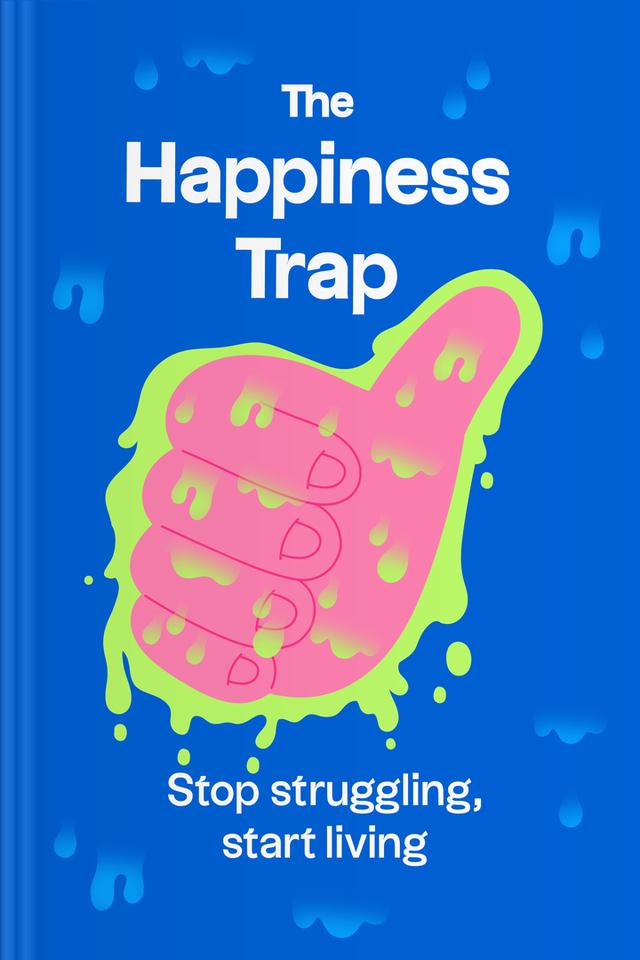
What is the one thing we desire and wish for others? Happiness. The concept of being joyous and fortunate is deeply engraved in modern beliefs. Ironically, in our search for happiness, we ignore all the sadness or accept it as part of life. But if we think about it, misery is more frequent than happiness.According to the World Health Organization (WHO), one in twenty adults attempts suicide. If happiness were natural to people, surely this wouldn't happen. Loneliness, low self-esteem, anger issues, losing the sense of self 一 we encounter these issues more often than happiness, or we wouldn't seek it.Society preaches unending joy, building its structure on it. It dictates that something's wrong with you if you're not happy. As a result, we feed ourselves with thoughts like: “You're stupid,” “Nobody needs you,” and “What are you good for anyway?”. We assume that a better life means zero negative feelings.However, we never wonder why they're here in the first place. Our brain produced distressing feelings during evolution to warn our ancestors about wild animals and bad weather. The first people learned to discern bad from good and dangerous from safe. Today, we can understand happiness through comparison, yet we still shun uncomfortable emotions.
Russ Harris challenges this concept using acceptance and commitment therapy (ACT). He offers to share mental space for negative feelings by accepting and observing them. For Harris, the best strategy is the smart cohabitation of all thoughts in our minds. Only by acknowledging bad feelings can we stop being afraid of them and progress in life.Disclaimer: The following advice will not help people with addictions or mental illnesses. In this case, consider seeking professional help.
second KEY POINT
Words have always played a defining role in human evolution. Still, the words inside our heads have been a gray eminence all along. We find ourselves believing every thought that sprints through our minds. We can put aside a phone or a book if it’s useless, but we can’t do the same with our worries. Instead, we believe all our thoughts are real, true, and wise.According to research, “I’m fat,” “I’m incompetent,” and “Nobody likes me” are a few examples of 80% of negative ideas people have daily. Taken seriously, they reinforce symptoms of depression, low self-esteem, and anxiety. But from the perspective of ACT, thoughts are no more than words.
Continue reading with Headway app
Continue readingfirst KEY POINT
second KEY POINT
third KEY POINT
fourth KEY POINT
fifth KEY POINT
sixth KEY POINT