Self-growth
 Apps & Digital Tools
 Business & Career
 Success
 Growth Tools
 Psychology
 Communication
 Relationships
You’ll learn
- How to use silence
- To moderate conflicts
- Who suffers from punishment
- Why parental lectures do not work
first KEY POINT
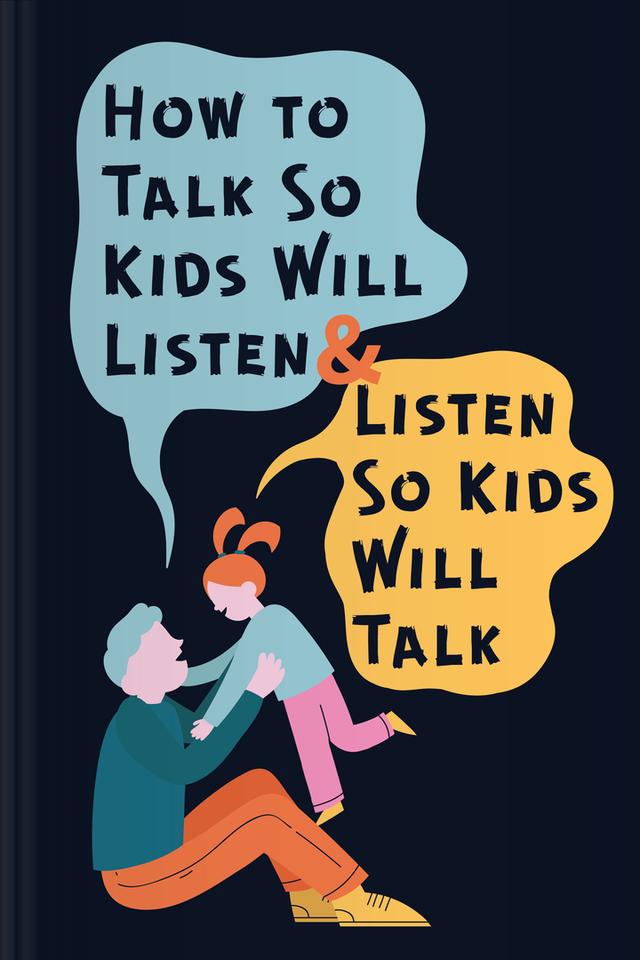
You've probably seen infants throwing tantrums in stores or restaurants for whatever reason. No matter what the parents do to get them to calm down, the children will keep screaming at the top of their voices. Eventually, the parents will become frustrated and start yelling at their kids, demanding they stay quiet.Such a fiasco is common because parents do not know how to communicate effectively with their children.Rather than yell at your children or threaten them with all sorts of punishments, you can encourage them to cultivate good behavior by improving your communication with them. And to do that, you have to show empathy.No other parenting technique is as effective as relating to kids with a compassionate attitude. As a parent, you can encourage your child to listen to you and develop good habits by acting in ways that make them feel strong and loved.
Most of us were probably yelled at and told not to feel a certain way as children, so we struggle to speak naturally in terms of empathy. Nevertheless, to cultivate great relationships with our children and help them mature into responsible adults, we have to learn the language of acceptance and practice its methods.When we communicate with empathy and understanding, we open a channel of trust, respect, and love. We create a bridge of communication that not only deals with their current behavior but also instills lifelong self-awareness and emotional intelligence skills.With the strategies and insights shared in this summary, you will be well-equipped to foster stronger bonds with your children, guiding them toward a future where they can express their emotions responsibly and interact with others empathetically.
second KEY POINT
As adults, we find it very hurtful and frustrating to have our feelings disregarded. Generally speaking, we find it more comfortable to open up and talk about our problems when somebody listens to us and acknowledges our experiences.And by doing so, we can better cope with our feelings and focus on solutions. The same goes for children — they also can help themselves if they have someone who can listen to them and respond empathetically.Firstly, learn to listen to your children with full attention. When someone claims to be listening but isn't, your best efforts to convince them can feel like an exercise in futility.So, whenever your child is trying to tell you something, give them your full attention. Do not pretend to be listening — stop whatever you are doing and focus. You don't even have to say anything. Usually, just being quietly there for a child shows that you care.Secondly, say something to recognize their emotions instead of asking questions or giving advice. Having thoughts questioned, blamed, or advised upon makes it difficult for children to think logically or constructively. A simple “Oh, let me think..” or “I see” can go a long way for kids.For instance, if your child tells you they’re tired after school, you can simply say, “Oh, I’m sorry, dear. I see you’re tired.”
Continue reading with Headway app
Continue readingfirst KEY POINT
second KEY POINT
third KEY POINT
fourth KEY POINT
fifth KEY POINT
sixth KEY POINT
Related blog articles

Elevate the way you learn with Headway — the smart, streamlin...

Discover top apps that help you learn in just 10 minutes a da...

Curious about the Deepstash app? Find out if this app offers ...

The answer to the question "Is Blinkist worth it?" depends on...

Discover practical tips, expert insights, and book-powered to...