Self-growth
 Business & Career
 Success
 Communication
 Healing
 Relationships
 Psychology
 Happiness

Recent social media data shows that 4.8 billion people now use digital platforms. Besides, we spend an average of 2 hours and 24 minutes every day on social media platforms. A large part of this screen time is wasted on doomscrolling and zombie scrolling. This's when your thumb moves up and down your screen while your brain is on autopilot.
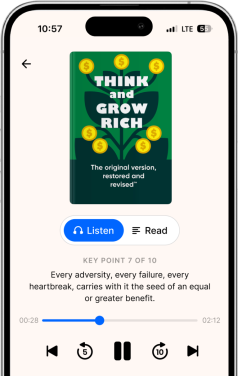
When you feel mentally foggy after 45 minutes of mindless scrolling, your focus suffers. Experts like Chris Bailey and James Clear have found ways to fix this. You can use their ideas to reclaim your focus through short book summaries on the Headway app. Replace scrolling with microlearning lessons give you self-growth tips from top experts to improve your mental health and well-being.
If you want to stop this loop, you must build better habits. Next time, when you feel the urge to scroll, try a quick summary instead.
Download the Headway app to get your daily growth toolkit now!
Quick tips on how to stop zombie scrolling
Here's your go-to strategy:
Build self-discipline.
Manage your energy.
Beat avoidance.
Reclaim your focus.
Turn idle time into skills.
Keep reading to see the full list of ways to fix your routine.
📘 Stop the mindless loop and build your mind with Headway!
Zombie scrolling quiz: Are you scrolling on autopilot?
Sometimes we don't even know we are doing it, even though there are many reasons why screen time is bad. Take this quick quiz to see if you have a zombie scrolling pattern. Answer "yes" or "no" to these questions:
📘 Get your focus back with Headway!
What is zombie scrolling syndrome?
Zombie scrolling is using your phone without a clear goal. You keep swiping through endless scrolling feeds even though you are bored or tired.
It's a passive habit that leaves you feeling drained and disconnected from the real world. It's also different from intentional smartphone use. When you check your phone for a specific reason, you have a goal in mind.
When you zombie scroll, you have no goal. You just watch short videos or posts because the screen is there. Many young adults and adolescents do this for hours at a time. It feels like a hard-to-break trance.
Zombie scrolling vs doomscrolling vs brain rot
It helps to know the difference between these modern terms. They all involve social media use, but the feeling is different.
| Term | What it means |
|---|---|
Zombie scrolling | Passive, mindless scrolling without a clear goal or purpose. |
Doomscrolling | Compulsive consumption of negative news and distressing content. |
Brain rot | The mental fog you feel from too much low-value content on TikTok. |
These habits can cause psychological distress and hurt your physical health.
📘 Fix your digital diet with Headway!
Why zombie scrolling is so addictive
Technology is built to keep you on your phone. Developers use tricks to catch your attention. Here is why it's so hard to stop scrolling addiction:
Dopamine and the reward system
Every time you see something new, your brain releases dopamine. This chemical gives you a slight rush. Digital platforms use a variable reward system. It works like a slot machine. You don't know when the next "good" post will come, so you keep looking. This is the heart of social media addiction.
Infinite scroll and algorithms
Infinite scrolling means there is no bottom. You never reach a "stop" sign. Artificial intelligence and algorithms learn what you like. They show you exactly what will keep you on the app. When you feel bored, these notifications pull you back in.
Emotional avoidance and validation
Many people scroll to avoid stress or loneliness. It's a way to "zone out" from real life. You might also look for validation through likes. This loop makes smartphone addiction very powerful in the digital age.
📘 Learn to manage your digital habits with Headway!
How microlearning helps you replace zombie scrolling
You can't just stop using your phone. The best way is to replace a bad habit with a good one. Reading trains your attention better than passive feeds, so take a break from Facebook and opt for an app to stop doomscrolling. When you read, you use your brain.
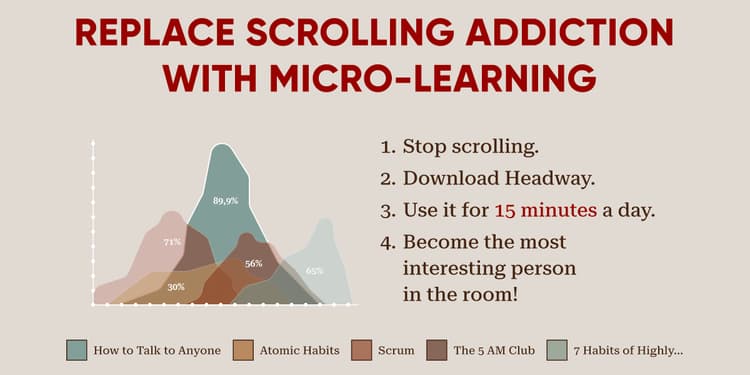
Headway makes every spare minute count. You can get key ideas in 15 minutes. These short microlearning sessions are much better for your mental health than watching random clips.



Time to stop the scroll: Practical tips from top productivity experts
These specific book summaries on the Headway app give you real tools to fight the scroll.
1. Build self-discipline
Discipline is a skill you build with repeated habits. It's not just something you are born with. You can develop it through consistent daily practice. When you feel the urge to scroll, you can pause and choose a better action.
Exercise: Choose one "scroll trigger," such as boredom. Attach a new action to it. For example, "When I open my phone out of boredom, I will read one key idea on Headway first."
2. Manage energy
Energy is your most important resource, not time. You need to balance physical, emotional, and mental energy. If you are tired, you are more likely to zombie scroll. Using rituals can help you recover and stay focused.
Exercise: Create a short evening ritual. Charge your phone away from your bed. Do a 5-minute reset and listen to one summary section instead of scrolling.
📘 Manage your energy with Headway!
3. Beat avoidance
Procrastination is often linked to impulsiveness and low task value. It's not laziness. You scroll because the phone gives a quick reward while your work feels hard. You can fix this by making the better habit more valuable.
Exercise: Before you start a hard task, listen to a summary on motivation or focus. This gives your brain a positive spark to help you start.
4. Reclaim attention
Your attention shapes your life. When you make autopilot choices, your focus gets weak. You need to set boundaries for distractions. Intention is the key to presence in the real world.
Exercise: Try a "focus before feed" rule. Spend 10 minutes learning on Headway before you open any social app.
📘 Get Headway and learn to hyperfocus!
5. Use time blocks
This method uses focused work bursts and short breaks. It helps you manage interruptions. Instead of checking your phone when you feel a break is needed, you follow a set rhythm. This keeps you productive and kind to yourself.
Exercise: Use a "learning Pomodoro break." During your break, avoid your feed. Read one key idea and write down one action from a summary.
6. Turn curiosity into skill
Ultralearning is focused self-education. You can build skills tied to your personal goals. Using summaries is a great way to explore a topic before you spend hours on it.
Exercise: Pick one skill you want this month. Use Headway to find books on that topic. This turns your phone into a tool for growth.
📘 Start your ultralearning path on Headway!
What to do instead of zombie scrolling: Productive swaps
If you want to break the loop, try these swaps. They give your brain a better reward than a social feed.
Physical activity: Move your body
Move before your thumb takes over. A 5-minute walk or some stretching can reset your brain. You could also do a quick tidy-up or take a water break. These help your physical health and mood.
Learning habits: Replace the scroll
Listen to a 10–15 minute summary on Headway. You can save key ideas to revisit later. This uses your smartphone for a good purpose.
Mental reset: A cleaner reward
Practice two minutes of mindfulness. Journal one thought or write your top task for tomorrow. These actions give you peace instead of the noise of endless scrolling.
Social connection: Choose people
Send a thoughtful message or call a friend. Share a useful idea you learned from a summary. This builds a real connection instead of the lonely feeling of social media use.
📘 Build better relationships with Headway!
What zombie scrolling does to your brain, mood, and body
Symptoms of zombie scrolling include reduced focus and mental fatigue. It causes sleep disruption because of the blue light. You might feel emotional numbness or increased procrastination.
Physical issues like eye strain are common. Over time, you have less connection with the people around you in real life.
Warning signs you’re stuck in a zombie scrolling loop
Watch for these signs in your daily life:
You scroll without remembering why you opened the app.
You scroll longer than you planned.
You feel irritated when someone interrupts your scrolling.
You use scrolling to avoid hard tasks.
You sleep later because of your phone use.
You feel drained after you were supposed to be "relaxing."
If you have these signs, you may need a digital detox.
📘 Reclaim your time on Headway!
A 7-day anti-zombie scrolling routine
Quitting completely is hard. Try this plan for one week to see how your life changes.
Day 1: Track your scroll triggers. Notice when you reach for your phone.
Day 2: Remove one high-trigger app from your home screen.
Day 3: Replace one scroll session with a Headway summary.
Day 4: Try one Pomodoro with a learning break.
Day 5: Create a no-scroll bedtime routine.
Day 6: Share one key idea from a book with a friend.
Day 7: Review the amount of time spent and choose next week’s goal.
📘 Build your habit on Headway!

Stop scrolling and start growing with the Headway app!
Zombie scrolling syndrome drains your attention and leaves you feeling empty. It's a habit that steals your focus and your happiness in the real world. But you can take control today.
By choosing to replace these mindless minutes with learning, you rebuild your mind. Headway is the main tool for learning more about this topic and many others. It turns your spare minutes into growth.
You can track your progress and see your knowledge grow every day. It's like having a curator for the world's best books in your pocket. Instead of the negative effects of an infinite feed, you get the joy of finishing something useful.
You deserve to feel proud of how you spend your time. Do not let another day vanish into the screen.
Download the Headway app to boost your personal development and knowledge today. Turn your phone into a tool for success and start your journey now!
Frequently asked questions about zombie scrolling
What is zombie scrolling?
Zombie scrolling is when you use your phone without thinking. Your thumb keeps swiping through infinite feeds while your brain is on autopilot. You are not looking for anything specific. You are just watching clips or reading posts because the screen is there.
Is zombie scrolling the same as doomscrolling?
No, they are different. Zombie scrolling is mindless and passive. You are just passing the time without a goal. Doomscrolling is when you actively look for bad news or negative stories. Both habits use too much of your time and can hurt your focus.
Why do I zombie scroll at night?
You scroll at night because your brain wants a low-effort reward. When you are tired, your willpower is low. The phone gives you easy dopamine without any hard work. It feels like relief from a long day, but it actually keeps your brain awake and alert. This makes it harder to fall asleep and leaves you feeling drained the next morning.
How do I stop zombie scrolling?
You can stop by tracking your triggers and setting clear boundaries. Remove the apps that cause the habit from your home screen. When you feel the urge to scroll, replace it with a better quick habit like microlearning. Try reading a summary for 10 minutes instead.
What can I do instead of zombie scrolling?
There are many great swaps you can try. You can take a short walk, stretch, or journal one thought. You could also call a friend or practice mindfulness for two minutes. A very smart choice is to listen to a book summary. This gives you expert ideas and practical tips. These swaps are much better for your mental health and overall happiness.
Can microlearning help with phone addiction?
Microlearning can help by replacing passive scrolling with intentional learning. It gives your brain the dopamine hit of achievement instead of just novelty. This helps you rebuild your attention span over time. While it's a great tool for most people, severe compulsive phone use may need extra support from a professional. For most scrollers, it's a perfect way to reclaim their focus.