Self-growth
 Apps & Digital Tools
 Business & Career
 Success
 Growth Tools
 Psychology
 Communication
 Relationships

The question usually shows up after something small. You cried at a meeting comment that probably wasn't meant unkindly. The afternoon disappeared into a loop over a text that landed wrong. A movie scene caught you off guard and hit so hard you had to leave the room. And somewhere in the middle of all of it, the same thought lands: why am I so sensitive?
The internet hands you two competing answers. One says you're overly sensitive and should toughen up. The other tells you you're a highly sensitive person, and it's a gift you should lean into. Both are too simple. The honest version is more useful and more specific to you.
The writers who've actually mapped sensitivity — Elaine Aron, Bessel van der Kolk, Peter Levine — have been condensed into 15-minute reads and audios.
📘 Understand your sensitivity in 15 minutes a day — start with the Headway app.
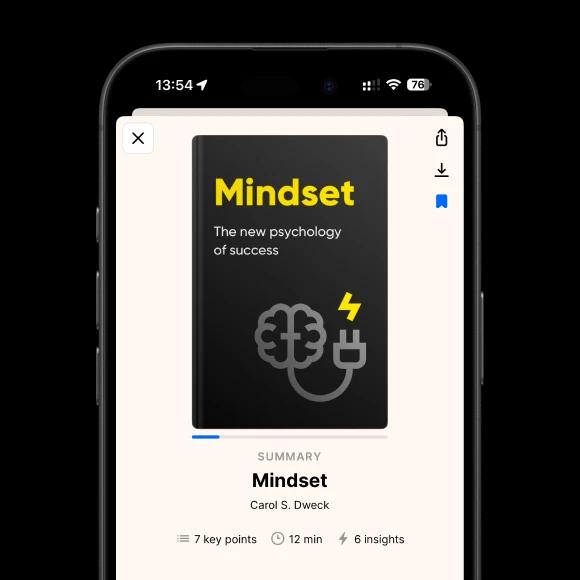
Is your high sensitivity actually a superpower?
Bestselling authors have mapped the science. See what they found.
Get the insightWhy am I so sensitive? The short answer (TL;DR)
You're likely sensitive because your nervous system processes incoming information — sound, faces, criticism, emotional cues — more deeply than the average person's. This is largely innate and well-documented in research on sensory processing sensitivity.
Here's a quick overview:
The trait shows up in about 1 in 5 people. It's not a disorder. It's a personality trait that can become harder to live with under stress, exhaustion, or unprocessed difficulty.
Sensitivity comes with costs (overwhelm, intensity, reactivity to criticism) and real benefits (empathy, depth, creativity, attention to detail). You don't have to pick a side.
If your sensitivity has spiked recently, the cause is usually specific — stress, hormonal shifts, grief, accumulated overload — rather than your baseline trait changing.
What being sensitive actually means
Sensitivity, in the psychological sense, is about how deeply your nervous system processes information. Sensory input. Emotional cues. Social subtext. Tiny shifts in the environment that most people don't catch. People high in sensitivity register more, more deeply, and for longer than average — what's often called emotional sensitivity, though it goes well past feelings.
The clinical framework here is Sensory Processing Sensitivity (SPS), developed by Dr. Elaine Aron in the 1990s. People who score high on SPS are often called Highly Sensitive People — HSP for short. Aron laid out four characteristics, easy to remember through the acronym DOES:
Depth of processing. You think things through more thoroughly than the people around you.
Overstimulation. Sensory or social environments wear you out faster. Crowds, loud noises, packed schedules — they cost you more than they cost others.
Emotional reactivity and empathy. You feel strongly, and you pick up on the emotions of others without trying.
Sensing the subtle. You notice small shifts in tone, light, and mood — and in stimuli most people filter right past.
About 1 in 5 people score high on SPS. It's a trait, not a disorder. But trait sensitivity isn't the whole story. Some people aren't trait-sensitive at all and become situationally sensitive — through stress, traumatic events, or burnout. The difference matters because the response to each is different.
📘 From overwhelmed to understood — give Headway a try.
Five real reasons you're so sensitive
Take a look at this and find the reason that might be yours:
1. Your nervous system was built this way
For trait-sensitive people, the answer is mostly biological. fMRI studies on HSPs show heightened activity in brain regions tied to attention, empathy, awareness, and depth of processing. Sensitivity is genetic, evolutionary, and observable in more than 100 species — meaning some of us were always going to be the ones who noticed more.
Parents often spot it early; a highly sensitive child tends to react to fabric tags, big sounds, and small social tensions long before they have words for any of it. This is the foundation. Everything else builds on top of it.
2. Your environment taught you to scan for danger
If you grew up in a household where emotions were unpredictable, or where you had to track an adult's mood to stay okay, you probably developed hypervigilance early. A survival skill that turned into a personality habit.
Years later, you're still picking up the micro-shifts in other people's tone — except now those shifts aren't dangerous, and the constant scanning just leaves you tired. Environmental factors in childhood don't create trait sensitivity, but they shape how it gets expressed.
3. You're processing more than you realize
Sensitivity isn't only about feeling. It's about how much information you're absorbing. Social subtext, emotional undercurrent, lighting, sound, unspoken expectations — all of it at once. Most people filter most of it out. You don't. That's why ordinary social settings can leave you depleted in a way that doesn't match the apparent demand.
Overthinking isn't always anxiety, either; sometimes it's the natural processing speed of a brain handling more stimuli than the room seems to be giving off.
4. Something has been amplifying it lately.
If you used to feel steadier and now you cry at things that didn't used to land, or you find yourself starting to overreact to things you'd normally let slide, the variable to look at isn't your trait — it's what's changed. Chronic stress. Bad sleep. Hormonal shifts (PMDD, perimenopause, postpartum). Grief. Burnout. Long periods of time absorbing more than you've had a chance to process.
All of those amplify baseline sensitivity, and they show up in different emotional responses — which is why the original question splits into so many subtler ones:
Why am I so sensitive and cry easily?
Why am I so sensitive to criticism?
Why am I so sensitive to what others say?
Why am I so defensive and sensitive?
Why am I so emotionally sensitive?
Why am I so emotional over things that didn't used to bother me?
Same root, different surfaces. The person typing those isn't broken. They're carrying a load they haven't named yet.



5. Something else might be going on alongside it
A few conditions can mimic or amplify trait sensitivity — ADHD, autism, anxiety disorders, complex PTSD, PMDD, and emotion dysregulation patterns. Some are classed as mental health conditions, others aren't. None of them means you're broken.
They mean the picture has more layers than just "I'm sensitive," and a clearer diagnosis often unlocks tools that self-management alone can't reach. High neuroticism scores on personality tests can overlap with sensitivity, but they aren't the same thing. If sensitivity is causing real impairment in daily life, this is worth talking through with a professional.
📘 The library every sensitive person wishes they'd opened sooner — try Headway.
What to do with your sensitivity (without trying to erase it)
The cultural pressure to be less sensitive is usually an instruction to be less attentive and less empathetic — not a trade most thoughtful people actually want to make. The better goal: manage the costs without giving up the qualities.
1) Regulate your nervous system before your feelings
Sensitivity is a nervous-system trait, so the response starts there. Long exhales when something hits hard — deep breaths that emphasize the out-breath. Cold water on the face when you can't shake an overwhelming feeling. Slower walks. Consistent sleep. These move the needle in daily life more than any amount of trying to talk yourself out of feeling things.
2) Reduce input load on purpose
You aren't going to make yourself less sensitive. You can decide how much you take in. Turn notifications off when you can. Pick the quieter room when you have a choice. Resist booking back-to-back commitments. Build in recovery time after a stimulating day as a structural part of your week, not a guilty indulgence. Self-care here isn't candles. It's a calendar design.
3) Set boundaries with people, not just with environments
Saying no to one extra obligation lets you say yes — fully — to the ones that matter. Especially if you aren't naturally extroverted, recharge time isn't optional.
4) Separate the trait from the wound
Trait sensitivity benefits from accommodation. Wound-driven sensitivity benefits from healing. The two tangle together. Therapy — particularly somatic experiencing or Internal Family Systems — can help you tell the difference between what's hardware and what's history.
Whether you call yourself an empath, a highly sensitive person, or just someone who feels more, the labels matter less than what you do with them. You don't have to call it a superpower. But you don't have to apologize for it either. The goal is wellness, not erasure.
Find out more about your sensitivity with the Headway app!
The people who've thought hardest about sensitivity, the nervous system, and emotional depth have already written down what they figured out.
Elaine Aron's 'The Highly Sensitive Person' is the foundational text — start there if you only read one.
Bessel van der Kolk's 'The Body Keeps the Score' explains why sensitivity and past experience tend to braid together.
Peter Levine's 'Waking the Tiger' makes the somatic case for healing.
If you've been searching adjacent questions too — why am I so emotional, why do I feel empty, why am I so dumb for caring this much, even if I am in love or just very attached — a lot of the same writers quietly speak to those layers as well. All of it into focused 15-minute reads, built to support your well-being and mental health on your own time.
📘 The books that actually map sensitivity — try them on Headway today.
Frequently asked questions on why am I so sensitive
1. What causes a person to be highly sensitive?
Most of it comes down to genes. Researchers have spotted the same kind of sensitivity in more than 100 species, which is a pretty good sign people aren't picking it up at school. Your childhood doesn't make you sensitive in the first place, but it does decide how the trait actually plays out in your adult life.
2. How do I stop being oversensitive?
Honestly? You probably can't. The wiring is already there, and most attempts to override it just make things a lot worse. What actually helps is taking less in. Quieter rooms when you have the choice. Fewer plans stacked back to back. Real downtime after a hard day, before the next one starts coming at you.
3. Are highly sensitive people high IQ?
No, those are two different things. You can be super sensitive without being particularly bright, and the reverse is true too. Sensitive brains do process information more deeply, which sometimes gets mistaken for being smarter. Brain scan studies show extra activity in awareness-related areas for HSPs, but nothing that consistently maps to IQ on any test.
4. Why am I so sensitive and cry easily?
If you used to feel steadier and now you're crying at random things, the trait probably isn't the problem. Something else has changed. Could be bad sleep, hormones, grief, stress that's been building, or working too long without a break. Any of those lowers the bar for tears. The answer is usually about lightening the load, not getting tougher.
5. Is life harder for a highly sensitive person?
In some places, yes. Open-plan offices wear sensitive people out faster than the rest. So do noisy cities and relationships that run on conflict. Put the same person in a quieter job, with fewer commitments and calmer relationships around them, and the trait often turns into a strength. So a lot of it depends on setup.
6. What are some famous highly sensitive people?
Carl Jung gets mentioned a lot, partly because his ideas about introversion and depth fed into Aron's research. More recently, Alanis Morissette has talked about being an HSP in interviews, and Nicole Kidman has described herself in similar terms. Celebrity isn't really the point of these lists. They mostly just show how often the trait shows up in creative people.
7. Is sensitivity genetic or learned?
Genetic, mainly. There are specific gene variants linked to the kind of deep processing sensitive people do. But how the trait actually shows up in your daily life depends a lot on what your childhood was like. The same wiring can look like quiet observation if you grew up safe, or constant danger-scanning if you didn't.