Self-growth
 Apps & Digital Tools
 Business & Career
 Success
 Growth Tools
 Psychology
 Communication
 Relationships

You know that sinking feeling when you drop your coffee or fire off an email to the wrong person? One second everything's fine, and the next, your brain is piling on: You're such an idiot. You can't do anything right. In those moments of peak frustration, a lot of people end up typing "Why am I so stupid" or "Why am I so dumb" into a search bar — and if that's what brought you here, you're in very good company.
That reaction doesn't mean you lack intellect. What it actually signals is that you're dealing with intense stress, exhaustion, or shame. And your brain has a very specific, fixable reason for defaulting to those harsh labels.
Getting clear on why this happens is what helps you stop the spiral. The good news: once you understand the mechanics, this is completely workable. And if you want to dig into this further, the Headway app turns the best psychology books into 15-minute reads — so you can clear the mental fog without clearing your schedule.
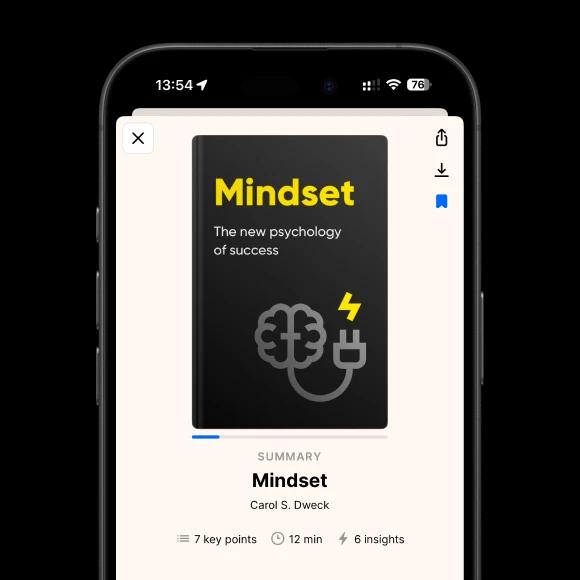
Tired of being your own worst critic?
Shift from self-doubt to self-mastery. Read the core ideas from top psychology books in 15 minutes.
Change your mindsetQuick answer: The thought "Why am I so dumb and slow?" doesn’t define you
Feeling stupid doesn't mean you have low self-esteem or lack intelligence — even smart people with good grades experience this, often for the first time after a big life change or added pressure from work, family members, or school. Most of the time, it's your own worst critic turning one stupid mistake into a sweeping judgment about your entire worth.
This reaction is a normal part of the learning process, driven by a specific part of the brain that catastrophizes under stress. Catching it early is one of the best things you can do for your well-being — and it gets easier once you stop overthinking and start working the problem.
Your brain uses cognitive distortions to make you feel stupid
That instant internal punch — the voice that tells you you're a failure — is pure negative self-talk. It takes one event and turns it into a verdict on your entire personality. In psychology, these automatic, faulty thought patterns are called cognitive distortions. They're the engine behind sudden waves of self-doubt and the persistent dread of imposter syndrome.
When you make a simple error, your brain doesn't log it as an isolated incident — it catastrophizes it. Here are the three main tricks your mind plays, pulled straight from cognitive behavioral therapy (CBT):
Global labeling: One action ("I missed a deadline") becomes a sweeping judgment ("I am useless" or "I'm just dumb").
Catastrophizing: A small setback gets blown into a full-blown crisis, which kicks off an anxiety spiral.
Emotional Reasoning: Believing something is true just because you feel it. Example: "I feel stupid, so I must be stupid."
Catching these patterns is what puts you back in the driver's seat. You're not actually incompetent — you're stressed, and your brain is falling back on an old, harsh habit. That distinction matters more than you might think.
Why your brain may feel slow, foggy, or overloaded
The thought "Why am I so stupid and slow?" tends to surface when you're deep in a brain fog episode. Worth knowing: brain fog isn't a formal medical diagnosis, and it says nothing about your intelligence. It's a catch-all for a cluster of cognitive symptoms — trouble concentrating, slower thinking, forgetting where you put things five minutes ago.
What causes it?
Lifestyle habits: Research from the University of Rochester Medicine has linked cognitive difficulties to smoking and vaping. Erratic sleep, too much screen time, a poor diet, and alcohol can all make your mind feel like it's running on dial-up.
Digital overload: Constant notifications and the endless churn of social media can lead to the kind of mental fatigue people now call "brain rot" — and honestly, the name fits.
Medical factors: Anxiety, nutrient deficiencies (low B12 is a sneaky one), and hormonal fluctuations can all trigger that foggy, underwater feeling.

Brain fog is usually temporary and responds well to basic care — sleep, water, fewer screens. That said, if symptoms stick around, get worse, or start interfering with your daily life, see a doctor. Any fogginess paired with confusion, trouble speaking, or vision changes needs prompt medical attention.
📱 Want to understand your brain better? The Headway app has quick summaries of top psychology books on stress, mood, and mental clarity — try it out and start with one today.
When feeling dumb is tied to a real learning challenge
What if it's not just stress? For some people, the struggle to keep up isn't a character flaw — it's a sign that their brain processes certain things differently. This is more common than you'd expect.
People who've spent years feeling stuck or slow often eventually discover they have learning disabilities or ADHD — and suddenly a lifetime of "Why is this so hard for me?" has a real answer. It doesn't mean they weren't trying; it means they were working against a system that wasn't built for how their brain operates. Getting that answer, even years later, reframes a lifetime of frustration as something that was never a personal failure.
It's not about effort: This isn't laziness. It's a genuine difference in processing speed or executive function.
Challenge ≠ failure: When a task feels impossible, it's easy to mistake a learning difference for a lack of intelligence. They're not the same thing.
Get a real read on it: If this feeling has followed you your whole life, a licensed therapist or doctor can offer diagnostic clarity — and that clarity opens the door to actual strategies instead of self-blame.
How do I shift from "I am stupid" to a growth mindset?
Moving from "I'm stupid" to a growth mindset comes down to changing your relationship with mistakes. Instead of treating an error as proof of a personal flaw ("I'm stupid"), a growth mindset treats it as feedback ("that approach didn't work — what can I try next?"). It's a subtle shift, but it changes everything about how you engage with hard problems.
It's also a direct pushback against the highlight-reel culture on social media, where everyone seems to nail everything on the first try. They don't. Your effort and your strategy matter far more than any fixed idea of what "smart" is supposed to look like. Start by giving yourself credit for attempting hard things, not just for getting them right.
What to do when the thought "why am I so dumb?" shows up
When that thought lands, you don't have to just take it. Here's a four-step reset:
Name it: Say to yourself, "I'm having the thought that I'm dumb." Putting a little distance between you and the thought makes it easier to examine.
Check your state: Are you tired? Hungry? Running on fumes? Your brain will tell you you're stupid long before it tells you you're just depleted.
Get specific: What exactly went wrong? Naming the actual problem shrinks it from a global verdict to something manageable.
Take one step: Break the task into its smallest possible next action. Movement beats rumination every time.
One more thing worth knowing: this feeling is especially common for pregnant women and new parents. Hormonal shifts, chronic sleep deprivation, and the sheer mental load of caring for a newborn temporarily hit memory and processing speed hard. That's a physiological response to exhaustion — not a reflection of your intelligence.
How to replace harsh self-talk with more accurate thoughts
Rewriting your self-talk doesn't mean swapping out criticism for empty affirmations. According to David D. Burns' CBT classic 'Feeling Good: The New Mood Therapy,' the goal is to become a forensic scientist of your own mind — to systematically identify the lies your brain tells you and replace them with what's actually true. Not positive thinking. Accurate thinking.
Burns identifies 10 common distortions. When it comes to feeling stupid, two show up the most:
All-or-nothing thinking: You're either a genius or a total failure. No middle ground. One mistake = you're stupid.
Overgeneralization: One bad moment becomes a permanent pattern. "I messed up that presentation, so I'll always fail at everything I try."
Apply the triple-column technique
This CBT tool turns vague, crushing thoughts into something you can actually work with. Grab a piece of paper (or open a note on your phone) and fill in three columns: the automatic thought, the distortion behind it, and the accurate reframe.
| Automatic negative thought | Cognitive distortion | Rational reframe |
|---|---|---|
I am stupid. I missed a detail on that report. | All-or-Nothing Thinking; Global labeling | One mistake on one report doesn't erase everything I've done well. I'm a capable person who made an error. |
I'll never get this right. I should just quit. | Overgeneralization; Catastrophizing | I'm struggling right now, which means I need to adjust my approach or take a break. This is new to me — that's part of learning, not proof I can't do it. |
I'm so forgetful. I'm useless. | Global labeling | My attention was divided. I need to take a breath and use a system — like writing things down. I'm not useless; I'm overwhelmed. |
I feel dumb because I don't understand this. | Emotional reasoning | Feelings aren't facts. This subject is genuinely new and difficult. It takes time and repeated effort to learn something. I'll come back to it tomorrow. |
Work through this long enough, and you stop fighting your feelings — you start correcting the faulty thinking that created them. No therapist required to get started.



When the inner critic won't quit: signs it's time for real support
Self-doubt is part of being human. But if you're stuck in a loop of worthlessness that won't let up, it's worth calling in some backup. Sometimes those intense thoughts are rooted in deeper issues — chronic burnout, social anxiety disorder, or past experiences with emotional abuse like gaslighting — and no amount of journaling will touch them.
Signs it's time to reach out:
It's affecting your daily life: Your inner dialogue is making it hard to get through the day or maintain relationships.
The cycle doesn't break: You've felt this way for as long as you can remember, and nothing seems to shift it.
You need the right support: A mental health professional trained in CBT can give you tools that actually fit your situation — not just general advice.
You deserve to approach yourself with the same basic respect you'd extend to anyone else. Asking for help isn't a sign of failure — it's how you stop one.
Books to help you stop calling yourself stupid — all on Headway
If you want to go further than a single article, these books are worth your time. All of them are available on Headway as 15-minute summaries. Each one takes a different angle on the same core problem — pick the one that matches where you're at right now.
1. 'Detox Your Thoughts: Quit Negative Self-Talk for Good and Discover the Life You've Always Wanted' by Andrea Bonior
Bonior is a clinical psychologist, and it shows — this book doesn't just tell you to "think positive." It walks you through the actual mechanics of how self-sabotaging thoughts form and, more importantly, how to break the pattern. The exercises are practical enough to try on a rough Tuesday, not just in a therapist's office. If your inner critic has been running the show for a while, this is a solid place to start taking it apart.
2. 'Negative Self-Talk and How to Change It' by Shad Helmstetter
Helmstetter goes straight at the problem: the voice in your head is trained, and it can be retrained. The book makes a compelling case for why your inner dialogue has such an outsized effect on your behavior — and then gives you step-by-step techniques to replace the damaging scripts with something more useful. Direct, no-frills, and genuinely actionable.
3. 'What to Say When You Talk to Yourself' by Shad Helmstetter
Where Helmstetter's first book diagnoses the problem, this one goes after the subconscious roots of it. The core idea: the words you repeat to yourself, day in and day out, quietly program what you believe you're capable of. The book teaches you to interrupt that programming with deliberate, specific self-talk — and explains the neuroscience behind why it actually works.
4. 'Chatter: The Voice in Our Heads, Why It Matters, and How to Harness It' by Ethan Kross
Kross is a research psychologist at the University of Michigan, and 'Chatter' is what happens when rigorous science meets genuinely readable prose. He breaks down why the voice in your head can turn into a wrecking ball — and, more usefully, what the research actually says quiets it. Distancing techniques, environmental tweaks, the role of other people in regulating your inner voice — it's all grounded in real data rather than feel-good advice.
5. 'Feeling Good: The New Mood Therapy' by David D. Burns
Already referenced in this article for good reason — this is the book that put CBT on the map for general audiences. Burns makes the case, backed by decades of research, that the way you think directly shapes how you feel. The Triple-Column Technique above comes straight from its pages. It's dense with exercises, but every one of them earns its place if you're serious about changing how you talk to yourself.
6. 'Your Inner Critic is a Big Jerk: And Other Truths About Being Creative' by Danielle Krysa
Don't let the casual title fool you — this book is sharp. Krysa focuses specifically on the way harsh self-talk sabotages creative work, and she tackles it with humor and zero condescension. If your inner critic tends to get loudest whenever you try to make or build something, this is the book that will finally make you laugh at it instead of listening to it.
📚 All six titles are available on Headway as actionable summaries. Download the app and start with the one that speaks to you most.
Done calling yourself stupid? Make your move with Headway
If you've ever typed "Why am I so stupid" into a search bar at 11PM, you already know how fast that inner critic can show up — and how hard it is to shake. Quieting that voice is a daily practice, not a one-time fix. Headway distills the best self-development books into 15-minute reads you can actually fit into your day, whether you've got a commute to fill or five minutes before bed.
Personalized reading plans: Answer a few questions about your goals, and Headway builds a reading path around them.
Audio and text formats: Read or listen — on your commute, during a workout, while doing the dishes.
Daily reminders and streaks: Small sessions, consistent habit, real progress over time.
The work of changing your mental patterns is incremental — small sessions, consistent effort, and over time, a brain that doesn't reach for "stupid" the second something goes sideways. Headway just makes sure you keep showing up for it.
📘 Quiet your inner critic with Headway.
Frequently asked questions about your "Why am I so dumb and useless" feeling
Why am I so stupid and forgetful?
Feeling stupid and forgetful at the same time usually traces back to the same root: sleep deprivation, chronic stress, or cognitive overload. When your brain is running on fumes, memory is the first thing to go — and blank moments get misread as proof you're dumb and forgetful by nature. You're not; you're depleted. Sleep first.
Why am I so dumb and stupid?
Calling yourself dumb and stupid usually means one failure has triggered a much bigger crash. The brain conflates a single bad moment with a permanent verdict — that's overgeneralization, a core cognitive distortion. The actual problem is almost always specific and fixable. The label isn't accurate; it's what stress sounds like when it's doing all the talking.
Why am I so stupid at math?
Math struggles usually trace back to how the subject was taught, not your intelligence. Most people who feel dumb in math hit a foundational gap early that never got properly filled. Domain-specific difficulty isn't a verdict on your brain — it's a skill that responds to targeted practice and finding the right explanation for your particular sticking point.
Why am I so dumb in everything?
Feeling dumb at everything at once is almost always burnout or severe stress, not an accurate picture of your abilities. When your brain is overloaded, nothing feels manageable — and that helplessness gets mislabeled as stupidity. Narrow it down: name one specific area that's hard and work on that. The "everything" feeling usually shrinks once you do.
Why am I so stupid and worthless?
That combination — stupid and worthless — is the language of emotional reasoning, where intense feelings get mistaken for facts. You are not your worst moment. If this thought shows up regularly, it's worth talking to a therapist — not because something is fundamentally wrong with you, but because you deserve better tools to fight back with.
Can negative self-talk damage my performance?
Yes — and there's a biological reason for it. Constant self-criticism triggers cortisol release, which temporarily impairs working memory and decision-making. When you replace harsh labels with accurate, specific observations, you give your brain room to actually function instead of grinding through a stress fog. The harshest inner critics are rarely the highest performers.
Can anxiety make you feel dumb?
Absolutely. Anxiety redirects mental resources — your brain is busy scanning for threats, leaving less bandwidth for memory, focus, and clear thinking. You might blank on a word mid-sentence or lose the thread of a conversation entirely. It's not a drop in intelligence; it's your nervous system, not your IQ, running the show.
Why do I feel stupid around certain people?
Social comparison makes capable people feel slow. When you're around someone more confident or experienced in a specific area, your brain over-indexes on the gap and ignores everything you actually know. It's a context effect, not a measure of intelligence — you likely don't feel this way when you're in your own element.
Why do I feel extremely stupid?
This hits hardest during moments of social embarrassment or public failure. Your brain reads those situations as threats and fires a fight-or-flight response, which shuts down rational thinking and magnifies every flaw in sight. It's a temporary emotional reaction — not an accurate read of your intelligence, your value, or what you're actually capable of.
How do I stop feeling stupid?
Practice self-compassion, prioritize sleep, and break big tasks into pieces small enough to actually start. When a self-critical thought comes up, counter it with a specific fact rather than arguing emotionally — "one missed deadline is not proof I'm incompetent." Small, consistent wins stack up, and over time, your brain starts reaching for those instead.