Self-growth
 Apps & Digital Tools
 Business & Career
 Success
 Growth Tools
 Psychology
 Communication
 Relationships

You grind through a brutal week, promise yourself a quiet weekend, and still wake up Monday feeling like your battery never charged. Is that just stress talking, or the start of something heavier?
When people ask about stress vs burnout, they often treat the two as the same thing by different names. They're not. Stress is your body reacting to pressure in real time. Burnout is what settles in after prolonged stress grinds down your emotional and physical reserves with no chance to refill. The key differences between them decide what helps — a weekend off can reset stress and barely touch burnout.
The same mistake shows up again and again: people treat late-stage burnout like a rough patch of stress, rest for a day, and wonder why nothing lifts. Knowing which one you're facing is the difference between a fix that works and weeks wasted on the wrong one.
📘 Get a personalized plan to steady your mind with Headway.

Quick answer: Stress vs burnout
Stress is a short-term response to pressure. Your body switches on, deadlines get met, and once the pressure eases, you recover.
Burnout is the complete exhaustion that follows chronic stress with no real recovery. Rest helps less, and motivation fades.
Stress tends to leave you wired and anxious; burnout leaves you empty, detached, and mentally drained.
You can be stressed without being burned out — but ignored stress is the main road into burnout.
What stress is — and what it does to your body
Stress is your nervous system doing its job. When your brain registers a demand — a deadline, a hard conversation, a packed calendar — it triggers the fight-or-flight response and floods you with cortisol and adrenaline. Your heart rate climbs, your focus narrows, and you get a short burst of energy to meet the moment. In small doses, that pressure is useful.
The trouble starts when the pressure never lets up. Acute stress fades once the stressor passes; chronic stress keeps the alarm ringing, so your body stays braced for a threat that never clears. Over weeks and months, excessive stress chips away at sleep, digestion, and overall mood. You might feel anxious for no reason, snap at small things, or lie awake feeling tired yet wired, already feeling overwhelmed by tomorrow's list.
Robert Sapolsky's 'Why Zebras Don't Get Ulcers' makes the point plainly: humans are built for short bursts of danger, rather than the slow grind of prolonged stress.
What burnout is — and why a day off doesn't fix it
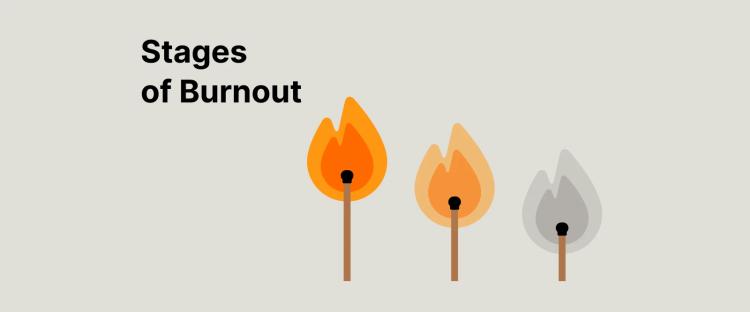
Burnout is what's left after chronic stress drains the tank and never lets it refill. The World Health Organization classifies it as an occupational phenomenon — not a character flaw — with three features: deep emotional exhaustion, growing detachment, and a sense that nothing you do matters. It builds slowly, which is why most people miss it. Burnout tends to move through 12 recognizable stages, from the urge to prove yourself to eventual collapse.
Where stress leaves you wired, emotional burnout leaves you flat. You stop caring about work you used to like, and burnout drains your emotional energy until small tasks feel impossibly heavy. Physical exhaustion sets in — the tired-but-can't-sleep kind — with frequent colds, headaches, and brain fog, and you keep feeling drained no matter how much you rest.
The cruel part is that rest brings only temporary relief: a weekend or even a vacation blunts the edge, then the complete exhaustion returns within days, because the workload, the lack of control, and the workplace stress haven't changed. Burnout hits hard across high-demand fields, from healthcare workers and founders to teachers and students deep in academic burnout, and each group faces its own unique challenges.
Stress vs burnout: the key differences
The clearest way to see the difference is cause, timeline, and feel. Stress is tied to specific pressures and eases when they pass; burnout is those pressures stacking up unmanaged for too long — one is too much at once, the other is running on empty.
| Stress | Burnout | |
|---|---|---|
Root cause | Too many demands at once | Prolonged stress with no recovery |
Onset | Comes on fast, fades with rest | Builds gradually over months |
Emotional state | Wired, anxious, overwhelmed | Flat, detached, hopeless |
Energy | Depleted but recoverable | Complete exhaustion that rest barely touches |
Motivation | Still there, if strained | Fading or gone |
What helps | Regular breaks, firmer boundaries | Deeper change: workload, support, time |
Read down the two columns, and you'll often catch yourself sliding from the left side to the right. That drift is the cue to act before you push harder.
📘 Map your next step with Headway.
Common signs you're sliding from stress into burnout
Stress and burnout share enough symptoms that people miss the handoff between them. Watch for the early signs of burnout — the warning signs that you've crossed from strained to depleted:
You feel exhausted on waking, even after a full night's sleep.
You're losing motivation on tasks you used to handle without thinking.
You feel emotionally depleted — short-tempered, numb, or quietly resentful.
You're leaning on scrolling, snacks, or wine for a temporary relief that never lands.
You feel detached from people and work you once cared about.
Small problems start to feel like proof of personal failure.
If several sound familiar and they've lasted for weeks, that's mental exhaustion setting in, not a passing bad mood. It helps to read the full list of burnout symptoms and learn how mental exhaustion differs from everyday tiredness. The common thread: stress spikes and settles, while burnout lingers and spreads into the rest of your life — and people experiencing burnout rarely notice the exact day it took hold.

Stress, burnout, depression, and anxiety: where the lines blur
Burnout's later stages can look a lot like depression — low mood, exhaustion, loss of interest — and chronic stress often travels with anxiety. They aren't identical, though. Stress ties to specific pressures, and burnout is usually rooted in your situation, most often work. Depression and anxiety are clinical conditions that can significantly impact every part of life, and they don't lift when you change jobs or take leave.
Because the overlap is real, self-diagnosis has limits here. If low mood, dread, or hopelessness stick around, or you're struggling to function, talk with a doctor or therapist rather than wait it out. Naming the right problem is what points you to the right support.
How to manage stress before it becomes burnout
You can't delete pressure from your life, but you can keep it from hardening into burnout. These stress management techniques work best as daily habits of self-care, not emergency measures:
Set clear boundaries. Decide when work stops and protect that line to hold your work-life balance; 'The Art of Saying No' by Damon Zahariades helps if you over-commit by reflex.
Take regular breaks. Short pauses across the day do more for focus than one heroic collapse on the weekend.
Move your body. Regular exercise — even a walk — burns off stress hormones and lifts your overall mood.
Protect your sleep. Rest is the foundation everything else sits on, so guard it like a meeting you can't move.
Practice mindfulness. A few minutes of slow breathing signals your nervous system that the threat has passed. Kelly McGonigal's 'The Upside of Stress' reframes how pressure affects you.
Lead with self-compassion. Treating rest as something you have to earn keeps the cycle spinning. You don't.
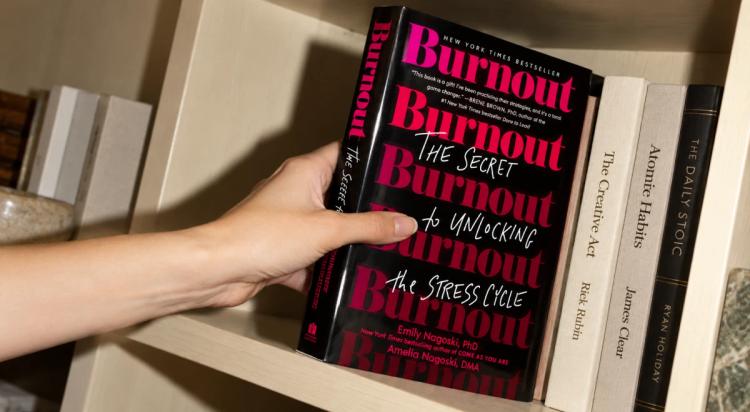
For a fuller playbook, 'Burnout: The Secret to Unlocking the Stress Cycle' by Emily and Amelia Nagoski shows why finishing the stress cycle matters as much as removing the stressor.
Protect your mental wellness with Headway
Recovering from stress and burnout is less about one grand reset and more about small, repeatable choices that protect your energy. In about 15 minutes a day, Headway gives you summaries of the best books on stress management, resilience, boundaries, and well-being, in a form you can use on a coffee break.
Your plan adapts to where you are now, tracks your progress so recovery feels visible, and keeps each insight short enough that a tired brain can hold onto it — steady support for maintaining mental wellness that works around a hard week instead of adding to it.
📘 Build a calmer routine with Headway.
Frequently asked questions about stress vs burnout
Can burnout lead to depression?
It can. Left unaddressed, the chronic stress behind burnout keeps grinding down your mood, sleep, and motivation, and for some people, that tips into clinical depression or anxiety. Burnout isn't the same as depression, but it's a recognized risk factor. If low mood or hopelessness deepens and follows you outside of work, treat it as a signal to seek support rather than push through.
How long does it take to recover from burnout?
Recovery depends on how long burnout went unaddressed. Mild cases can ease in a few weeks of real rest and firmer boundaries; moderate to severe burnout often takes months and may need professional support. The timeline isn't linear, and off days are normal. What speeds it up is changing the conditions that caused it — resting harder alone won't do it.
Is burnout a mental illness?
Burnout isn't classified as a medical condition. The World Health Organization describes it as an occupational phenomenon — a syndrome tied to chronic workplace stress that wasn't managed. Its later stages can overlap with depression and anxiety, which are clinical conditions. If your symptoms are severe or lasting, a professional can help you tell them apart and treat them.
Can you be burned out without feeling stressed?
You can. By the later stages, the wired, anxious edge of stress often gives way to numbness and detachment. Most people expect burnout to feel like intense pressure, but it frequently feels like the opposite — flat, empty, and disconnected. That emotional distance is itself a warning sign, not evidence that everything is fine.
Does burnout ever go away on its own?
Usually not without some change. Rest and time off bring temporary relief, but burnout rarely fades while the conditions that caused it — a heavy workload and ongoing workplace stress — stay in place.
Sustainable change turns it around: firmer work boundaries, more rest so your nervous system can settle, and support from the people around you. Spotting the early warning signs and acting early shortens recovery.
When should I talk to a professional?
Reach out if exhaustion, low mood, or hopelessness last for weeks, interfere with work or relationships, or leave you unable to rest no matter what you try. A doctor or therapist can rule out conditions like depression, anxiety, or thyroid issues and map out a recovery plan. Asking for help early tends to shorten how long it all lasts.