Self-growth
 Apps & Digital Tools
 Business & Career
 Success
 Growth Tools
 Psychology
 Communication
 Relationships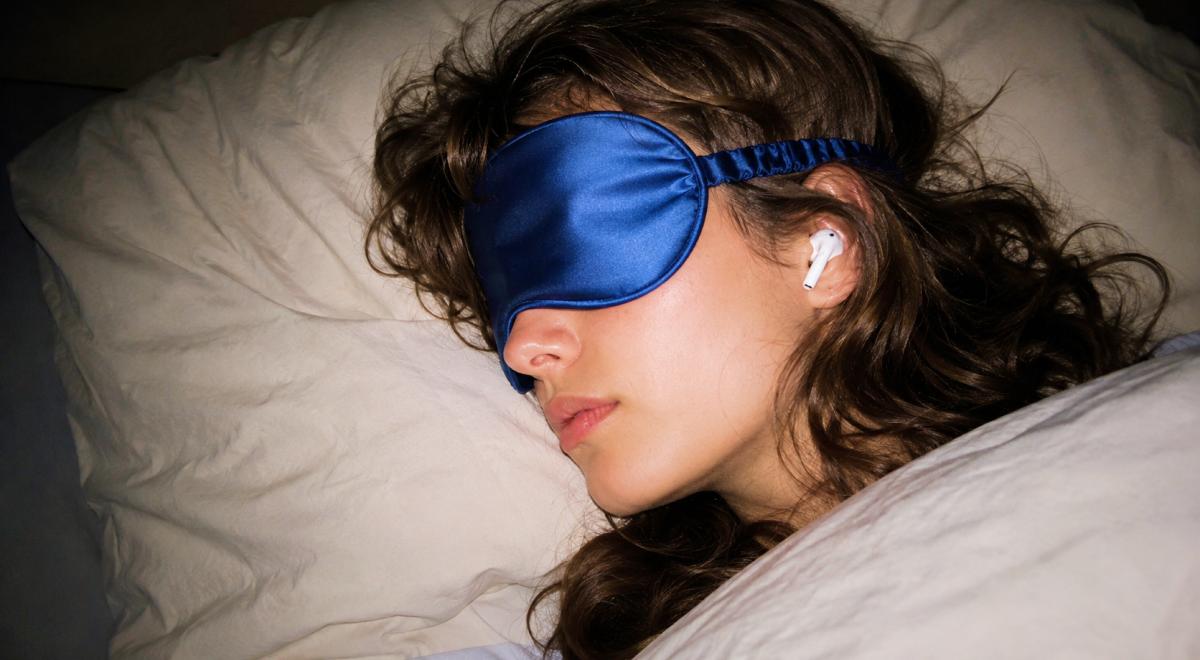

The lights are off, the day is done, and your mind is auditioning topics for tonight's programming: the budget, the group chat, a conversation from 2019. What worked at age five still works now — a calm voice, a gentle narrative, something for your attention to follow that isn't your own to-do list. That's the entire premise of sleep stories for adults, and it's why they've quietly become one of the most searched-for sleep aids on the internet.
But not all bedtime listening is equal. Some content winds your brain down; some winds it up while pretending to relax you. This guide covers why stories and calm audio help adults fall asleep, how to choose and use them so they actually work, and — since your brain deserves better material than counting sheep — 18 books available on Headway in both text and audio that make ideal wind-down company.
For the techniques side of falling asleep — breathing, muscle relaxation, cognitive shuffling — see our full guide on how to quiet your mind to sleep.
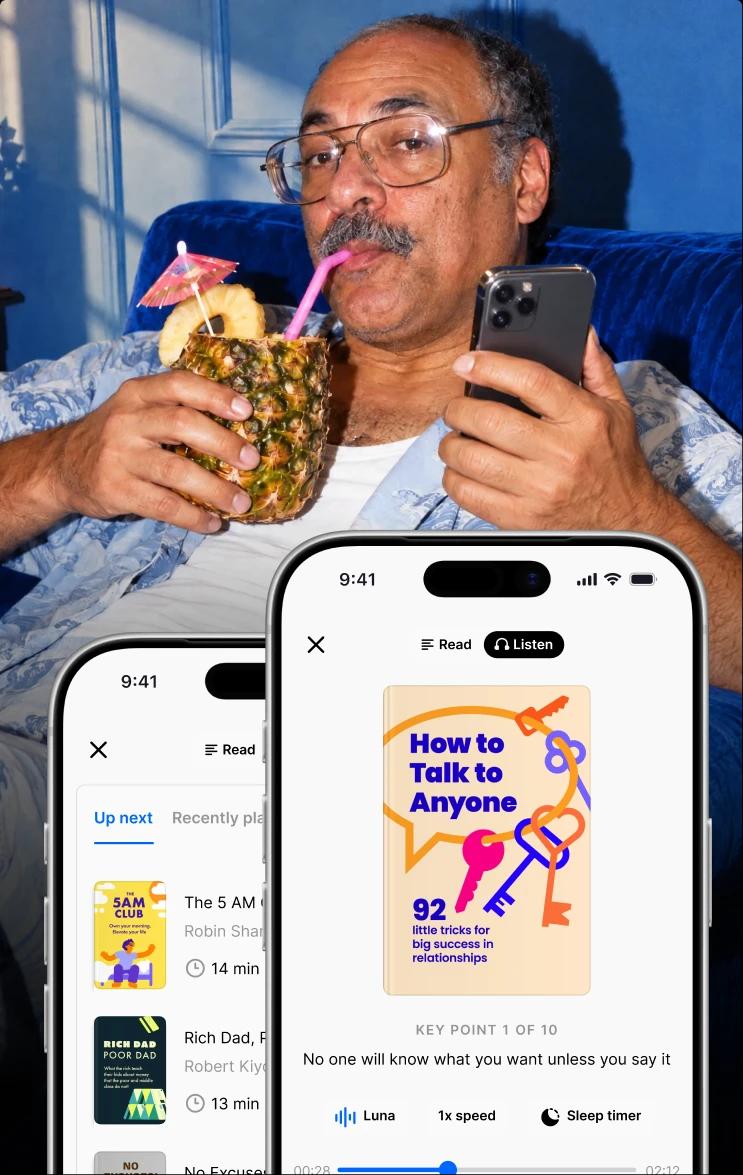
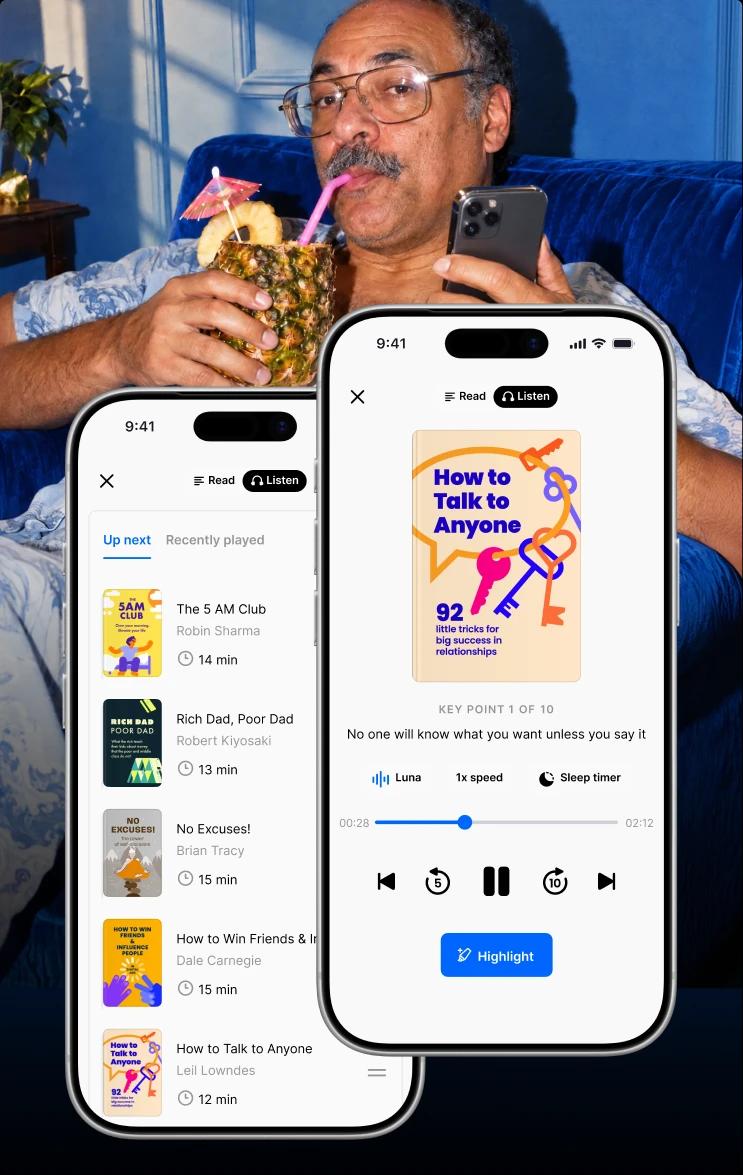
The Headway app turns bestselling nonfiction into 15-minute summaries you can read or listen to — a calm, finite piece of input for the last stretch of your evening.
📘 Make bedtime the quietest part of your day with Headway.
Disclaimer: This article is for informational purposes only and is not a substitute for professional medical advice, diagnosis, or treatment. If sleep problems persist, please talk to a doctor or a behavioral sleep specialist.

Quick answer: How to use sleep stories and calm audio as an adult
The short version: give your attention a handrail that leads away from your own thoughts. Here's the formula that works tonight:
Choose low-stakes content: Calm narration, gentle nonfiction, familiar topics — nothing with cliffhangers, breaking news, or plot twists worth staying awake for.
Keep it short and finite: A 15-minute summary or a single story ends; a feed or an autoplay queue doesn't. Your wind-down needs an off-ramp.
Set the volume just above a whisper: The audio should be easy to drift away from, not compete for your attention.
Use a sleep timer: Sound that continues all night can fragment your sleep even after it helps you fall asleep.
Repeat familiar material: Novelty is stimulating; familiarity is soothing. Re-listening to something you know is a feature, not a failure.
Why do stories help adults fall asleep?
The mechanics are surprisingly elegant. When you lie in the dark with nothing to do, your brain's self-referential network — the "me and my problems" channel — switches on with zero competition, which is why bedtime is prime time for overthinking. A story changes the channel. Narrative gives your attention a gentle track to follow, occupying the same mental bandwidth your racing thoughts want to use, without demanding anything from you in return.
There's a second ingredient: stakes, or the lack of them. A good sleep story is deliberately unhurried and consequence-free. Nothing important will happen, and your brain knows it — so it grants itself permission to stop monitoring. That's also why your favorite sitcom rewatch knocks you out while a new thriller keeps you up: familiar, low-stakes content lets your vigilance stand down.
And a third: the voice itself. Slow, warm narration works on adults roughly the way it works on children — steady pacing entrains your breathing, and a calm human voice reads to your nervous system as safety. Combine all three, and a story becomes less entertainment and more an off-switch with a plot.
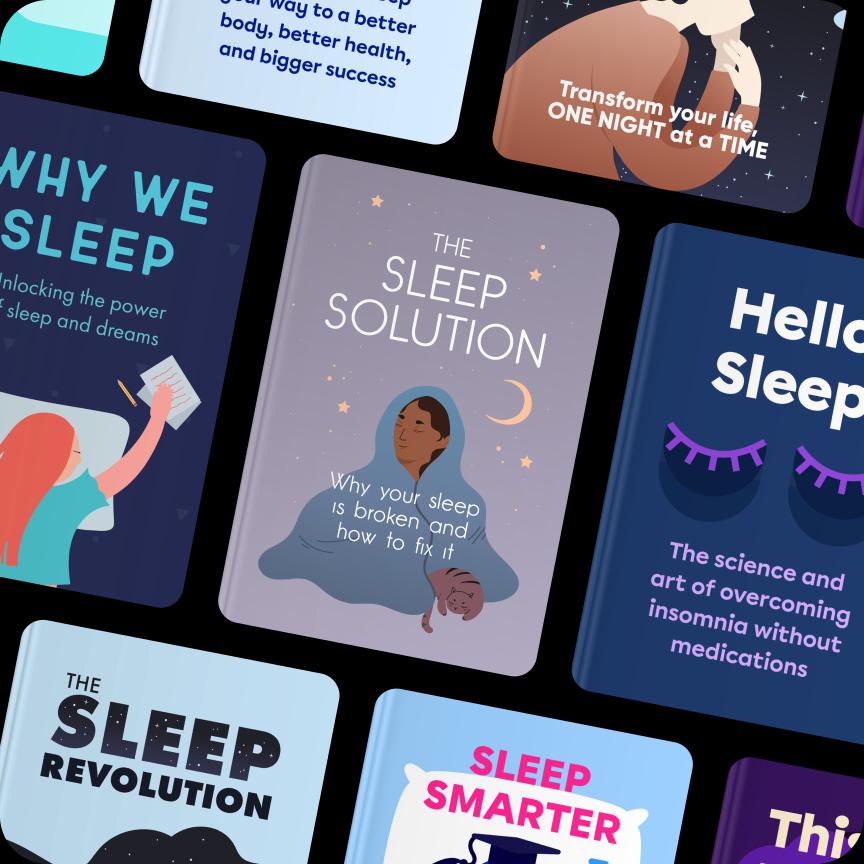
Tired all day, awake all night?
Books that explain why — condensed into 15-minute summaries you can finish before bed.
What makes bedtime listening actually work: The setup
Most of the difference between "audio that helps" and "audio that keeps you up" comes down to a few choices made before you press play:
Pick calm over gripping: If you're tempted to stay awake for the ending, it's entertainment, not a sleep aid. Save the thrillers for daylight.
Prefer finite over endless: A 15-minute book summary has a natural end point. Feeds, autoplay, and "just one more episode" formats are engineered to prevent exactly the disengagement you're trying to achieve.
Go audio or paper in the last stretch: If you're reading on a screen, dim it fully and use night mode — or switch to audio and keep your eyes closed. Bright light late in the evening pushes your body clock the wrong direction.
Keep the phone out of reach after pressing play: The audio is the wind-down; the device is the risk. Start your listen, put the phone face-down across the room or on the nightstand, and let the timer handle the rest.
Build the ritual: Same time, same routine, most nights. Your brain learns that this voice, this chapter, this chair means the day is over — and starts powering down on cue.
📘 Replace the bedtime scroll with a 15-minute listen on Headway.
18 books on Headway that make perfect wind-down listening
Sleep stories don't have to be fiction. Some of the most effective bedtime material is gentle nonfiction — calm, structured, and quietly useful, so your brain gets one good idea instead of forty loud ones. Every book below is available on Headway as a 15-minute summary in both text and audio: listen with your eyes closed, or read a few screens with the lights low. They're grouped by what your nights need most.
If you want to understand your sleep
1. 'Why We Sleep: Unlocking the Power of Sleep and Dreams' by Matthew Walker
Neuroscientist Matthew Walker makes the definitive case for sleep as the foundation of physical and mental health — memory, immunity, mood, and longevity all run through it. The book explains what actually happens across a night of sleep and dreams, and why shortchanging it costs more than most of us realize.
Choose it if you need motivation more than techniques: understanding what sleep does for you is often the nudge that makes protecting it non-negotiable. The summary delivers the core science in 15 minutes — enough to change how you think about your bedtime without keeping you up reading about it.
2. 'The Sleep Solution: Why Your Sleep Is Broken and How to Fix It' by W. Chris Winter
Sleep specialist W. Chris Winter takes a refreshingly unfussy approach: most sleep problems are fixable, and much of what people believe about their "broken" sleep is wrong. He breaks down the common culprits — from sleep anxiety to bad scheduling — and offers practical corrections for each.
Choose it if you lie awake worrying about lying awake. Winter is especially good at deflating sleep panic, and readers often report changes within weeks of applying his advice. A calm, reassuring listen that's ideally suited to the very hour it's written about.
3. 'The Sleep Revolution: Transforming Your Life One Night at a Time' by Arianna Huffington
Written after Huffington's own collapse from exhaustion, this book examines our cultural glorification of sleeplessness — and what it's costing us in health, judgment, and relationships. It's part manifesto, part practical guide to renegotiating your relationship with rest.
Choose it if your sleep problem is really a priorities problem: you could sleep more, but work, screens, and hustle culture keep winning the negotiation. It pairs the "why" with enough "how" to start tonight.
4. 'Hello Sleep: The Science and Art of Overcoming Insomnia Without Medications' by Jade Wu
Behavioral sleep psychologist Jade Wu offers an evidence-based path out of insomnia that doesn't run through the pharmacy. Drawing on the same principles as CBT-I — the first-line clinical treatment for chronic sleep trouble — she reframes sleep as a friend you've fallen out with, not an enemy to defeat.
Choose it if your relationship with sleep has turned adversarial: clock-watching, dread, effort. Wu's compassionate, science-backed approach is the closest thing on this list to a therapy session in book form.
5. 'Sleep Smarter: 21 Essential Strategies to Sleep Your Way to A Better Body, Better Health, and Bigger Success' by Shawn Stevenson
Stevenson delivers exactly what the subtitle promises: 21 concrete, immediately applicable strategies covering light, temperature, timing, caffeine, exercise, and evening routines. It's the most tactical book in the science group — less theory, more checklist.
Choose it if you want quick wins. The strategies are modular, so you can implement two or three tonight without redesigning your life. The summary format suits it perfectly: all 21 ideas, none of the padding.
6. 'This Is Why You Dream: What Your Sleeping Brain Reveals About Your Waking Life' by Rahul Jandial
Neurosurgeon Rahul Jandial explores the strangest third of your existence: what the brain is actually doing while you dream, and what those dreams might mean for creativity, emotional processing, and memory. It's the most wonder-driven book on this list.
Choose it if curiosity relaxes you. For some people, the best wind-down material isn't advice at all — it's something quietly fascinating that makes the prospect of sleep more inviting. This delivers exactly that.
If your timing is the problem
7. 'The Circadian Code: Lose Weight, Supercharge Your Energy, and Transform Your Health from Morning to Midnight' by Satchin Panda
Circadian biologist Satchin Panda shows that when you sleep, eat, and move matters nearly as much as what you do. Aligning your daily rhythm with your internal clock improves sleep quality, energy, and metabolic health — and misaligning it quietly sabotages all three.
Choose it if your schedule is chaotic: shift work, late dinners, weekend sleep-ins, screens at midnight. Panda gives you the levers to reset your body clock, which often fixes "insomnia" that was really rhythm disruption all along.
8. 'The Power of When' by Michael Breus
Sleep doctor Michael Breus argues there's no universal perfect schedule — there's yours. By identifying your chronotype, you can choose better times for sleeping, eating, working, and exercising, and stop fighting your own biology.
Choose it if you've always suspected you're wired differently from the "early bird wins" advice. Night owls in particular tend to find this book vindicating — and practically useful for building a schedule that works with their wiring instead of against it.
9. 'Eat, Move, Sleep: How Small Choices Lead to Big Changes' by Tom Rath
Rath's premise is disarmingly simple: food, movement, and sleep form a triangle, and small daily choices in each corner compound into major changes in wellbeing. No overhauls, no 5 a.m. cold plunges — just better small decisions, consistently.
Choose it if grand sleep protocols have failed you and you'd rather improve by inches. It's gentle, encouraging, and refreshingly free of guilt — a good bedtime tone in itself.
If your situation is specific
10. 'Why We Can't Sleep: Women's New Midlife Crisis' by Ada Calhoun
Calhoun examines why Gen X women in particular lie awake at night: the compound pressure of careers, caregiving, financial strain, and social expectations that arrived without an instruction manual. It's reporting and companionship more than a how-to.
Choose it if your 3 a.m. thoughts are less "did I lock the door" and more "how did life get this heavy." Sometimes the most sleep-restoring thing a book can offer is the recognition that you're not uniquely failing — the conditions are genuinely hard.
11. 'You Can Fix Your Brain: Just 1 Hour a Week to the Best Memory, Productivity, and Sleep You've Ever Had' by Tom O'Bryan
O'Bryan connects lifestyle inputs — food, environment, habits — to brain function, arguing that small weekly changes accumulate into better memory, focus, and sleep. The one-hour-a-week framing keeps the commitment realistic.
Choose it if you think of your sleep problems as part of a bigger picture: brain fog, low energy, scattered focus. It treats sleep as one output of overall brain health rather than an isolated fix.
12. 'Breath: The New Science of a Lost Art' by James Nestor
Nestor's surprise bestseller argues that modern humans have forgotten how to breathe — and that relearning it changes everything from stress levels to snoring and sleep apnea. Nasal breathing, slower exhales, and better breathing mechanics all directly support deeper sleep.
Choose it if you wake unrefreshed, snore, or suspect your nights are shallower than they should be. It's also full of techniques you can literally practice while falling asleep, which makes it unusually functional bedtime material.
If it's not your sleep — it's the baby's
13. 'The No-Cry Sleep Solution' by Elizabeth Pantley
Pantley offers gentle, gradual strategies for helping babies and young children learn to sleep — without leaving them to cry it out. It's methodical, reassuring, and built for exhausted parents who need a plan they can live with.
Choose it if your own sleep problem has a very small, very loud cause. The 15-minute summary is a mercy here: no sleep-deprived parent has bandwidth for a full parenting book, and the audio version works one-handed at 2 a.m.
14. 'The Happiest Baby on the Block: The New Way to Calm Crying and Help Your Newborn Baby Sleep Longer' by Harvey Karp
Pediatrician Harvey Karp's classic teaches techniques for calming newborns and extending their sleep — swaddling, shushing, and the rest of his famous soothing toolkit. Millions of parents swear by it.
Choose it if you're in the newborn trenches right now. Interesting for this list: Karp's core insight — steady sound, snug pressure, and rhythm read as safety to the nervous system — is exactly the same principle behind adult sleep stories. It never stopped applying to you.
If what you really need is stillness
15. 'The Ruthless Elimination of Hurry: How to Stay Emotionally Healthy and Spiritually Alive in the Chaos of the Modern World' by John Mark Comer
Comer's argument is that hurry — not busyness itself, but the frantic inner pace — is the root problem beneath modern exhaustion. He makes the case for a deliberately slower life with room for rest, silence, and presence.
Choose it if your mind arrives at bedtime still running at daytime speed. This is wind-down material in the deepest sense: it doesn't just help you sleep tonight; it questions the pace that's wrecking your nights in the first place.
16. 'Wherever You Go, There You Are: Mindfulness Meditation in Everyday Life' by Jon Kabat-Zinn
The book that brought mindfulness to the mainstream, written by the founder of mindfulness-based stress reduction. Kabat-Zinn introduces simple, unpretentious practices for meeting the present moment — no incense required.
Choose it if racing thoughts are your main sleep thief. Mindfulness is the trainable skill underneath half the techniques in every sleep guide, and Kabat-Zinn's calm, spacious prose is itself the kind of voice worth falling asleep to.
17. 'The Art of Stillness: Adventures in Going Nowhere' by Pico Iyer
Travel writer Pico Iyer makes the counterintuitive case that the greatest adventure left is sitting still. Drawing on his own retreats and conversations with artists and monks, he explores what silence and stillness give back in clarity and peace.
Choose it if you want beauty rather than instructions. This is the closest thing on the list to a true sleep story: short, meditative, gorgeously written, and entirely free of action items.
18. 'Stillness Is the Key' by Ryan Holiday
Holiday draws on Stoic, Buddhist, and historical examples to argue that stillness — a settled, unhurried mind — is the common engine behind great work, good judgment, and genuine happiness. Rest, sleep, and solitude get treated as disciplines, not indulgences.
Choose it if you respect your sleep more when it's framed as a competitive advantage. Holiday gives high-achievers philosophical permission to power down — which, for a certain kind of overthinker, is the only permission slip that works.
📘 All 18 titles are on Headway — start with any of them tonight, in text or audio.
Match the book to your night
Not sure where to start? Find your tonight-brain in the left column:
What's happening tonight | Start with |
Racing thoughts you can't switch off | 'Wherever You Go, There You Are' or 'Stillness Is the Key' |
Anxiety about the sleep itself | 'Hello Sleep' or 'The Sleep Solution' |
You want quick, practical fixes | 'Sleep Smarter' |
Your schedule is fighting your body clock | 'The Circadian Code' or 'The Power of When' |
You need motivation to prioritize sleep | 'Why We Sleep' or 'The Sleep Revolution' |
A newborn is running your nights | 'The Happiest Baby on the Block' or 'The No-Cry Sleep Solution' |
You want something beautiful and plot-free | 'The Art of Stillness or This Is Why You Dream' |

What Headway users listen to instead of the bedtime scroll
The hard part of better bedtime input isn't knowing scrolling is bad — it's having something equally easy to reach for. It helps to see how real people made the swap.
Enrique García Galán, a software engineer, keeps his evening reading light and curiosity-led: a little on whatever topic has his attention at night, in summary form. The format is what makes it work at that hour — a 15-minute listen has an ending, so there's no "one more chapter" negotiation, and audio means the lights stay off.
Nicky, a writer and editor, got a more direct payoff: after swapping social media time for Headway summaries, she picked up 'The Sleep Solution' — and noticed real improvements in her sleep quality within weeks of applying it. Bedtime listening that quietly fixes bedtime is about as efficient as reading gets.
📘 Give your evenings better material — wind down with a summary on Headway.



Why the wrong bedtime content backfires
If audio and stories help sleep, why does a night of Netflix or a podcast binge leave you wired? Three traps are worth naming:
Cliffhanger content: Anything designed to make you want the next part — series, thrillers, drama podcasts — is engineered against disengagement. Your brain stays subscribed after the screen goes dark.
Endless formats: Feeds and autoplay have no exit. Without a natural end point, "winding down" quietly becomes "consuming until you pass out," which is not the same as falling asleep.
High-stakes input: News, work content, and heated commentary put your threat-detection system on duty right when it should be clocking out. Interesting is fine; alarming is not.
The fix isn't abstinence — it's curation. One calm, finite, low-stakes piece of input, then silence. Your only job after pressing play is to stop supervising the process.
What to do when you wake up at 3 a.m.
Middle-of-the-night wake-ups tempt you straight back to the phone — and the phone is exactly what will finish the job of waking you. Instead:
Don't open anything with a feed: Work messages and bright screens tell your brain the day has started. It believes you.
Skip the clock check: Knowing it's 3:47 changes nothing except your stress level.
Return to familiar audio if you need it: A summary or chapter you've heard before, volume just above a whisper, sleep timer on. Familiar is soothing; novel is stimulating.
Park urgent thoughts on paper: One sentence, then let it wait for morning.
Reset if you're spiraling: After roughly 20 minutes of frustrated wakefulness, move to a chair and do something calm in dim light — then return to bed when sleepy.

When bedtime listening isn't enough
Sleep stories and calm audio are tools, not treatments. It's time to bring in a professional if you regularly struggle to fall or stay asleep, if it's been going on for months, or if daytime exhaustion, irritability, or persistent anxiety are eating into your life.
It's also worth knowing that racing thoughts aren't always the real culprit. Sleep disorders like sleep apnea or restless legs syndrome — and physical issues like chronic pain — can fragment your nights in ways no story can fix. If your sleep hygiene is solid but your sleep quality stays poor, a doctor may recommend a sleep study to rule these out.
The good news: the leading treatment isn't a lifetime of pills. Cognitive behavioral therapy for insomnia (CBT-I) is the first-line, evidence-based approach for chronic sleep trouble, usually delivered in a handful of sessions with a behavioral sleep specialist. Several books on this list — 'Hello Sleep' especially — are built on its principles and make a good first step while you decide.
Turn bedtime into story time with Headway
The five-year-old logic still holds: a calm voice and a gentle narrative beat while lying in the dark with your own thoughts. The adult upgrade is material worth falling asleep to — and a format that respects your evening.
Headway can be that format:
Text and audio for every title: Read a few screens with the lights low, or listen with your eyes closed — every summary works both ways, so your wind-down fits the night you're having.
15 minutes, then it ends: One finite, calm piece of input instead of an endless feed. Your brain gets one gentle idea instead of forty loud ones.
A library built for this list: All 18 books above — from 'Why We Sleep' to 'The Art of Stillness' — ready in summary form, with thousands more titles alongside them.
A daily habit that sticks: Streaks and personalized plans keep your wind-down consistent, which is what your sleep rhythm loves most.
📘 Tonight deserves a better ending. Wind down with Headway.
Frequently asked questions on sleep stories for adults
What are sleep stories for adults?
Sleep stories are calm, slow-paced audio narratives designed to help adults fall asleep — the grown-up version of a bedtime story. They work by giving your attention something gentle to follow instead of your own thoughts, with deliberately low stakes so your brain stops monitoring for anything important. Calm nonfiction, meditative writing, and familiar book summaries serve the same function.
Do sleep stories actually work?
For many people, yes — especially those whose main obstacle is a racing mind. A story occupies the mental bandwidth that overthinking would otherwise use, a slow narration pace helps settle your breathing, and a calm voice reads to your nervous system as safety. They work best as part of a consistent wind-down routine rather than as a one-off rescue.
Is it bad to fall asleep listening to audio?
Falling asleep to audio is fine for most people; the risk is audio that keeps playing all night, which can fragment your sleep even without fully waking you. Use a sleep timer, keep the volume just above a whisper, and choose content without sudden loudness changes. If you share a bed, a single soft earbud or a small speaker on your side works well.
What should adults listen to before bed instead of scrolling?
Anything calm, finite, and low-stakes: a 15-minute book summary, a familiar audiobook chapter, meditative nonfiction, or gentle ambient sound. The key differences from scrolling are the end point — a summary finishes, a feed doesn't — and the stakes, since feeds are engineered to provoke exactly the alertness you're trying to shed.
What are the best books about sleep?
For the science, Why We Sleep by Matthew Walker is the modern standard. For fixing your own sleep, The Sleep Solution and Hello Sleep are the most practical, and Sleep Smarter offers the quickest tactical wins. For timing and body-clock issues, try The Circadian Code or The Power of When. All are available on Headway as 15-minute summaries in text and audio.
Can reading before bed replace sleep stories?
Yes, if you manage the light. Paper books and dim, warm-toned screens are fine; a bright screen at full blast works against your body clock. Reading and listening serve the same purpose — redirecting attention to something calm and finite — so choose whichever lets you keep the room darker and your body more settled. Many people read until drowsy, then switch to audio for the final stretch.
Are book summaries good bedtime listening?
Unusually good, for structural reasons: they're calm, finite, and complete in one sitting. A 15-minute summary ends on its own — no cliffhanger, no autoplay, no "one more chapter" negotiation — which makes disengaging effortless. Choosing gentle topics (stillness, mindfulness, sleep itself) keeps the content as restful as the format.
When should I seek help for sleep problems?
Talk to a doctor or behavioral sleep specialist if you struggle to fall or stay asleep several nights a week for a month or more, or if daytime exhaustion and persistent anxiety are affecting your work and mood. Ask about CBT-I — cognitive behavioral therapy for insomnia — the first-line treatment for chronic sleep trouble. No amount of bedtime audio substitutes for treating an underlying sleep disorder.