Self-growth
 Apps & Digital Tools
 Business & Career
 Success
 Growth Tools
 Psychology
 Communication
 Relationships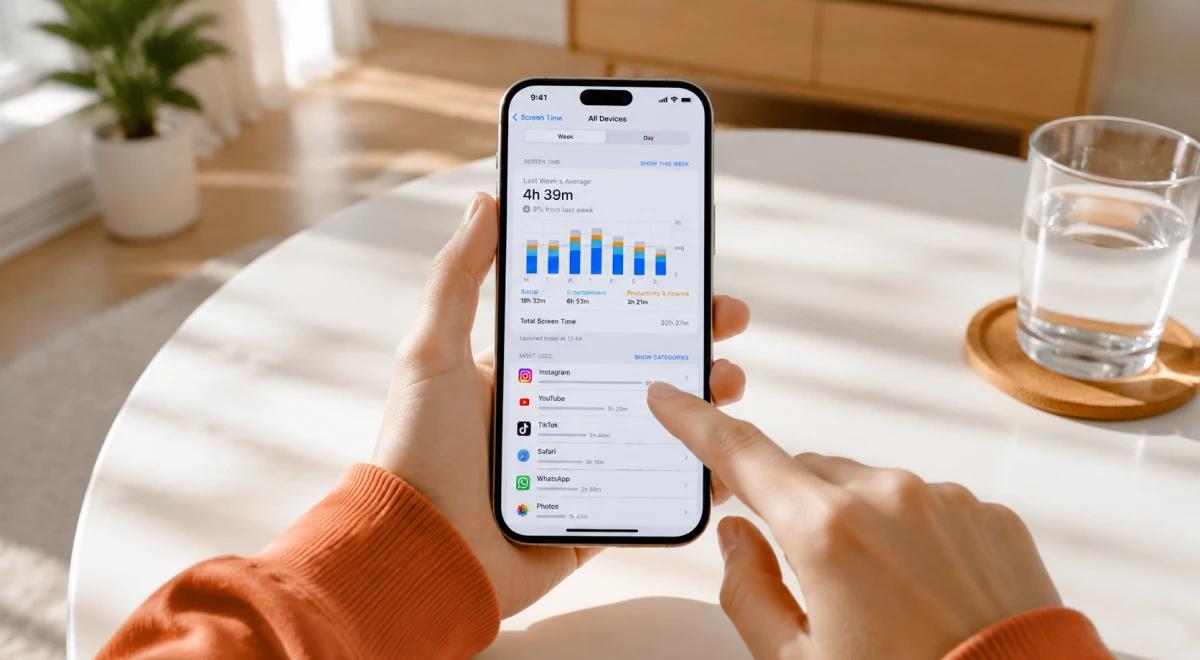

If you've been hunting for how to reduce screen time tips, start with the raw number. The average American adult spends close to seven hours a day looking at a screen, and that's before work even counts.
Kids can average five to seven hours a day, too! The consequences of excessive use of screens do not appear on-screen but show up later on in your attention span, sleep, eyesight, mood, and all those evenings that were wasted doing nothing you can remember.
The idea here is not to quit using screens altogether because most of us can't, and others of us should not have to.
However, we can exchange all the time we spend doing things that deplete our energy from screens for things that will provide us with positive energy, and then we can ensure that any time we reclaim will not be used up with more "scrolling".
📘 One of the most dependable swaps for that habit is structured reading, and Headway fits it into the same 15-minute gaps you'd otherwise hand to Instagram — try the app today!
*Heads up: this is general information, not medical advice. For concerns about your sleep, eyesight, or mental health, check with a qualified healthcare professional.

How to reduce screen time: The short answer (TL;DR)
Here are the tips on how to reduce screen time, stripped down to what matters:
Track first. Learn to track your screen time for a full week before you change a thing. Most people underestimate their daily total by a third or more, and only the two or three heaviest apps really matter.
Add friction to screens, remove it from everything else. Delete the worst apps, turn off notifications, and leave the phone in another room. Keep a book by the couch so the easy choice is the better one.
Build at least two screen-free zones into your day. The first hour after you wake and the hour before bed are the easiest to defend.
Replace the time on purpose. Reading, a walk, a real conversation, anything that leaves you better off than zombie scrolling does.
For families, the household sets the rules. Phone-free meals and screen-free bedrooms beat personal willpower every time.
The real reasons why screen time is bad
Cutting back is about more than your calendar. Heavy screen use carries real health risks, and four of them are well-documented. Here are the reasons why excessive screen time is bad:
Sleep. Sleep deprivation is caused by two factors, one of which is having your sleep disturbed through exposure to blue light from a cell phone or other device. The blue light will suppress the natural production of melatonin, the hormone that tells your body it is time for sleep, and this causes the brain to be wired or busy. The result is commonly known as insufficient sleep, late nights, and poor quality of sleep the next day.
Your eyes. Hours of close focus on digital devices bring on digital eye strain. Think dry eyes, blurry vision, headaches, and a stiff neck. Eye doctors push the 20-20-20 rule, which we'll get to below.
Attention. A steady diet of short clips and fast-moving news feeds trains your brain to expect a little reward every few seconds. Slower things start to feel like a slog. Reading a book or sitting through a long meeting suddenly takes the patience that the feed has been chipping away at. You notice it most when your eyes bounce off the page after one paragraph, already itching to check something.
Mental health. Heavy social media use is linked to higher rates of anxiety and depression, especially in teens and young adults, and it opens the door to cyberbullying. The flip side is encouraging: people who take a break from social media tend to feel measurably better within weeks.
How to reduce screen time tips: Seven that stick and are worth trying
Here's how to reduce screen time effectively: tips that hold up in a normal, busy life. Seven of them, roughly ordered by payoff.
1. Track your screen time before you touch anything
Your iPhone or Android already tracks your screen time for you, split by app and by day. Watch it for a week and change nothing. The total usually lands a third higher than people guess. The most common smartphone use you'll spot is the same one or two apps, opened on autopilot, and those are the only ones the rest of this list cares about.
2. Turn off notifications you never asked for
Use your settings to stop receiving all notifications except for calls, texts & appointments (these are the only ones you really need). Turn off all social media, retail, news & email notifications as well. With each vibration from a notification, it will urge you to pick up your phone to see what the notification is.
If you turn off all of your notifications, most people will pick up their phones significantly less than before in about a week without having to do anything else.
3. Make your bedroom screen-free
Charge your phone in another room. A ten-dollar alarm clock covers the one job your phone had by the bed. Keep the TV out too, if you can, along with any other electronic devices.
Of all the how to reduce screen time before bed tips out there, this is the one that does the most, because a glowing screen within arm's reach is almost impossible to ignore at midnight. Better sleep and clearer mornings tend to follow fast.
4. Use the 20-20-20 rule on screen-heavy days
If your job parks you in front of a monitor for hours, borrow the standard eye doctor fix. Every 20 minutes, look at something 20 feet away for 20 seconds. Set a repeating reminder if you tend to forget.
That one habit heads off most of the eye strain that piles up over a long day of staring. While you're up, roll your shoulders back and unclench your jaw, since the same long stretches at a desk stiffen your neck as much as they tire your eyes.
5. Carve out screen-free zones around meals and mornings
The first hour of the day and any meal you have with other people are the two most important times to create screen-free zones.
Both of these times are quite short and easy to protect, but people will fight against this idea until they have created their screen-free zone, experienced it for themselves (mostly), and continue to do so for the rest of their lives. The small screen-free zones of creating these two spots in your day will completely reset your day for success.
📘 Replace the feed with something that gives back. Download Headway.
6. Hide or delete the apps you scroll on most
Identify your two to three most frequently used apps, and place great difficulty in trying to get to them. Remove the app completely, log out, and bury them in a folder labeled "later." This difficulty is what creates the break in the autopilot function of your brain that does most of your doom-scrolling.
Want to know how to reduce phone screen time addiction tips in a single line? This is it. A couple of extras help too:
Switch your phone to greyscale so the bright, candy-colored icons lose their pull.
Install an app to stop doomscrolling that adds a pause before a feed loads.
Use your phone's built-in tools to set time limits on each app so they lock once you hit your cap. It's a painless way to limit screen time without deleting a thing.
7. Replace the screen time, don't just delete it
Empty time never stays empty. Cut a scrolling habit, and something rushes in to fill the gap, so if you don't pick the replacement yourself, the old habit is back within a week.
Better swaps: 15 minutes of reading a book, a walk for some physical activity, a phone call, or a bit of video chatting with someone you miss, a few pages of journaling, or cooking a proper dinner instead of watching TV on the couch.
The activity matters less than having it ready before the urge shows up. Keep it stupidly easy to start, because a replacement you have to go hunting for is one you'll skip.


How to reduce screen time as a family
Personal rules wobble fast when everyone else on the couch is scrolling. Screen habits get set by the household, and the American Academy of Pediatrics says much the same: clear family norms beat one person's willpower. Four moves that work better when the whole house is in:
Make meals phone-free. All devices are turned off in another room during dinner. This rule alone does more for connection at the table than anything else you could try.
Set one shared screen curfew. Everyone's phones and tablets charge in a common spot starting an hour before the kids' bedtime, adults included. For younger kids, parental controls and set time limits make it stick.
Be the role model. Children copy your relationship with the phone before they ever listen to your rules. If you're glued to yours, any limit you hand them reads as unfair, and they'll tune it out.
Swap in things you do together. Board games, a walk, cooking as a team, reading aloud, and a kickabout in the yard. Shared replacements hold far better than a flat ban. The how to reduce screen time tips above work the same in a quiet one-person flat or a full, noisy house.

Try Headway — 15 minutes of reading beats an hour of scrolling
The most useful replacement for recreational screen time is reading, and Headway is built for the exact 15-minute pockets you'd otherwise lose to a feed. Its library covers the books that map this problem head-on:
Cal Newport's 'Digital Minimalism'
Catherine Price's 'How to Break Up With Your Phone'
Anna Lembke's 'Dopamine Nation'
Alongside thousands of other titles on focus, habits, and growth. Put simply, Headway lets you replace doomscrolling with microlearning. Fifteen minutes a day works out to roughly two books a week, about a hundred of the most influential nonfiction books in a year. That's what trading screen time for a healthy balance actually buys you.
📘 Swap 15 minutes of scrolling for a real book summary — try Headway!
FAQs about tips on how to reduce screen time
How do I drastically reduce my screen time?
Start by deleting your two worst apps and turning off every notification you didn't ask for. Charge the phone in another room overnight, and protect a screen-free hour around breakfast and bedtime. The big one: line up a replacement first, like a walk or 15 minutes of reading, so the freed time has somewhere to go.
Is 7 hours of screen time okay?
There is no one-size-fits-all answer to this question. Your 7 hours of screen time could be spent working or scrolling through social media before bed. If your sleep quality or mood is declining, it could be time to cut back on your screen time. For example, if the past couple of months have been all about watching Netflix, it may be time to reduce that down to 3 days a week and fill the rest of the time with other activities.
What to replace screen time with?
You need a backup plan on the spot, or your screen time will take over. You could easily substitute a walk, a real phone call, cooking, journaling, or reading for 15 minutes each of those three days a week instead of Netflix. Headway fits this category because it can help you fill those small voids that would have previously been filled by scrolling through your feeds with short bursts of reading a book's summary.
What can my kids do instead of screen time?
Before they become bored, provide them with some activities to do instead of screen time. It is easy to say, "go play," when they are bored, but this often does not work for a variety of reasons. Examples include board games, arts and crafts, building with building sets, playing sports, cooking together, or reading aloud. The hardest part of these activities for parents is doing them with their child to get them started, because kids will model what they see more than what you tell them to do.
What is the 30 30 30 rule for screen time?
It's a quick break for tired eyes. Every 30 minutes of screen use, look at something at least 30 feet away for 30 seconds. That short pause relaxes your focusing muscles and stops your eyes from drying out. It's a close cousin of the 20-20-20 rule, just spaced further apart, and a recurring timer helps you stick to it.