Self-growth
 Business & Career
 Success
 Communication
 Healing
 Relationships
 Psychology
 Happiness
Imagine you bought another 500-page novel. Yet, it's been collecting dust on your nightstand for the past three months. Does that hit too close to home?
Between work, family, and the endless scroll of social media, finding time to read feels nearly impossible. But here's the thing — short books to read exist for a reason. A novella under 200 pages can deliver the same emotional punch as its chunkier counterparts. You can actually finish one in a single weekend (or even one sitting if you're feeling ambitious).
What counts as a short book? Generally, anything under 200 pages. Some of the best books ever written fit this description, and they've stayed on bestselling lists for decades. Whether you're a lifelong book lover or picking up your first book in months, these titles deliver.
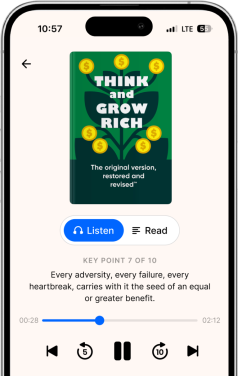
Of course, even short novels take time. If you're looking to absorb book recommendations and key insights faster, Headway offers summaries of the world's bestselling books. Think of it as your shortcut to wisdom without the time commitment. Download the Headway app and start learning today.
➡️ What is Headway and how does it work?
Now, let's get into the book recommendations worth your attention.
Quick answer: What is a short book and why read it?
A short book is typically any work of fiction or nonfiction under 200 pages — roughly 50,000 words or fewer. This classification includes novellas, classic literary works like 'The Old Man and the Sea' and 'Animal Farm,' memoirs, and condensed nonfiction guides.
Short books can be read in one sitting or over a weekend, making them ideal for busy readers, book clubs with tight schedules, or anyone stuck in a reading slump. Despite their length, many short novels have won major literary awards (including the Booker Prize and Nobel Prize in Literature) and remain bestselling favorites decades after publication.
Thrillers and psychological mysteries
If you want tension without a 400-page commitment, these short novels deliver. High stakes, quick payoff — perfect for a weekend read.
1. 'The Stranger' by Albert Camus
Camus wrote this existentialist classic in the 1940s, and it still unsettles readers today. The story follows Meursault, a man who commits a senseless crime on a sun-drenched beach in Algeria.
What makes this thriller so disturbing isn't the violence — it's Meursault's complete emotional detachment from his own life. At around 120 pages, you can finish it in one sitting and spend the rest of the evening questioning everything.
📘 Question life's meaning with Headway.
2. 'The Vegetarian' by Han Kang
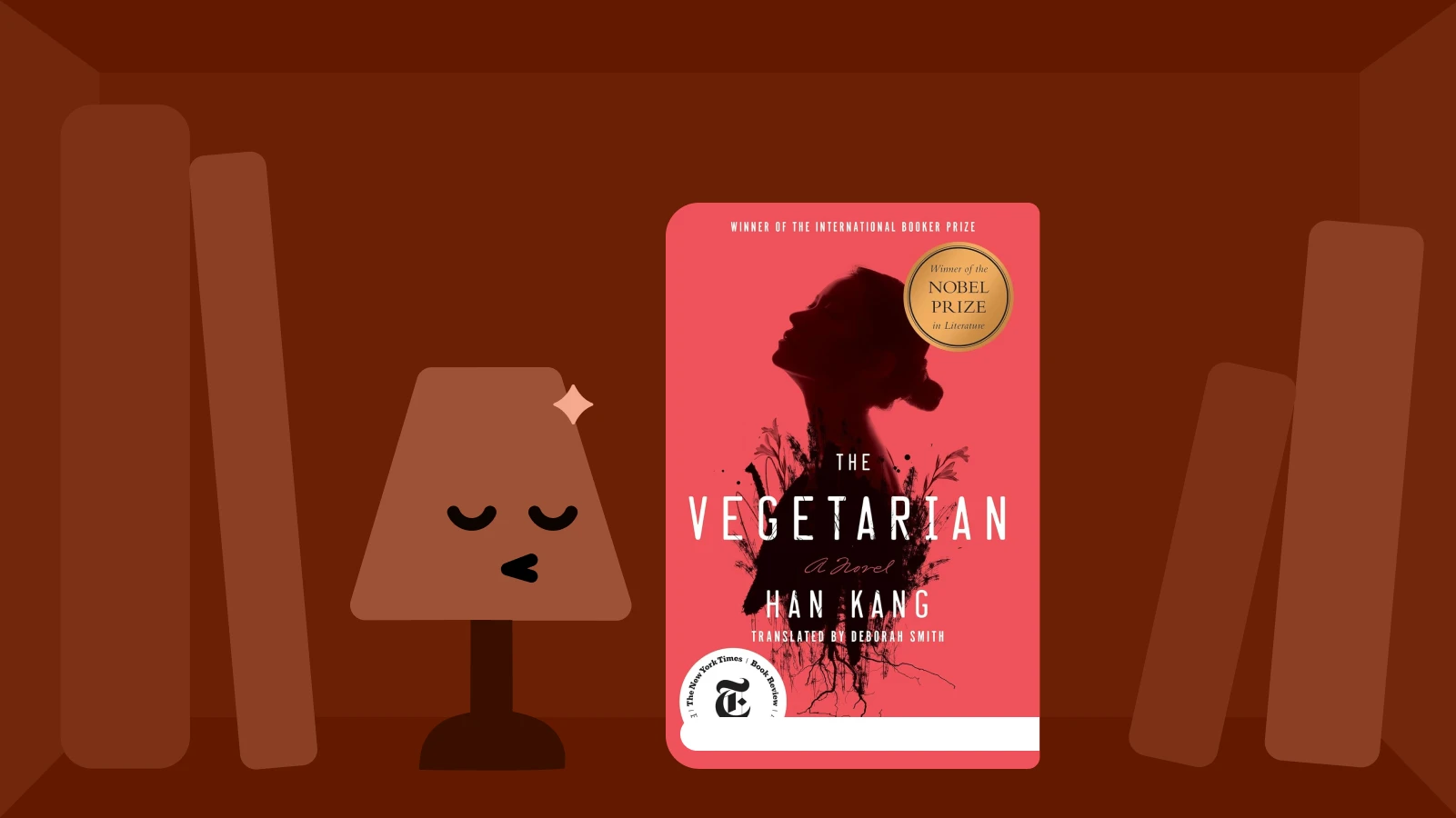 Han Kang won the International Booker Prize for this strange, haunting novella. A young woman in South Korea decides to stop eating meat after a series of disturbing dreams. What begins as a personal choice spirals into psychological horror as her family tries to force her back to "normal." It's surreal, uncomfortable, and impossible to forget.
The story unfolds in three parts, each from a different narrator's perspective. If you're reading Korean or Japanese literature for the first time, this is a thought-provoking entry point.
3. 'The Sense of an Ending' by Julian Barnes
Julian Barnes won the Man Booker Prize for this slim novel about memory, aging, and the stories we tell ourselves. Tony Webster receives a mysterious inheritance that forces him to revisit his past, and he discovers that his memories aren't as reliable as he thought.
It's a quiet thriller about how we rewrite our own histories. Perfect for book club discussions about truth, regret, and self-deception.
Love stories (with a twist)
These aren't your typical romance novels. Expect passion, tragedy, and characters who stay with you.
4. 'Giovanni's Room' by James Baldwin
James Baldwin set this love story in 1950s Paris. David, an American man, falls for Giovanni, an Italian bartender, and struggles with his own identity as the relationship unfolds. It's a tragic, intense novella about desire, shame, and the cost of denying who you are.
Baldwin's prose is stunning, and the story feels as relevant now as it did when he wrote it. This short novel remains a favorite book for readers who want literary fiction that doesn't hold back.
📘 Confront identity honestly with Headway.
5. 'The Great Gatsby' by F. Scott Fitzgerald
F. Scott Fitzgerald packed the entire American Dream, and its decay, into fewer than 200 pages. You probably read this in high school, but revisiting it as an adult hits differently. Jay Gatsby's obsession with Daisy Buchanan, the parties in West Egg, the green light across the water — it's all here, condensed into a love letter to ambition and heartbreak.
Nick Carraway's coming of age in 1920s New York makes The Great Gatsby work perfectly for summer reading, or anytime you want beautiful writing that doesn't overstay its welcome.
Historical fiction
Want to travel to another era without committing to an 800-page epic? These short books transport you efficiently.
6. 'Small Things Like These' by Claire Keegan
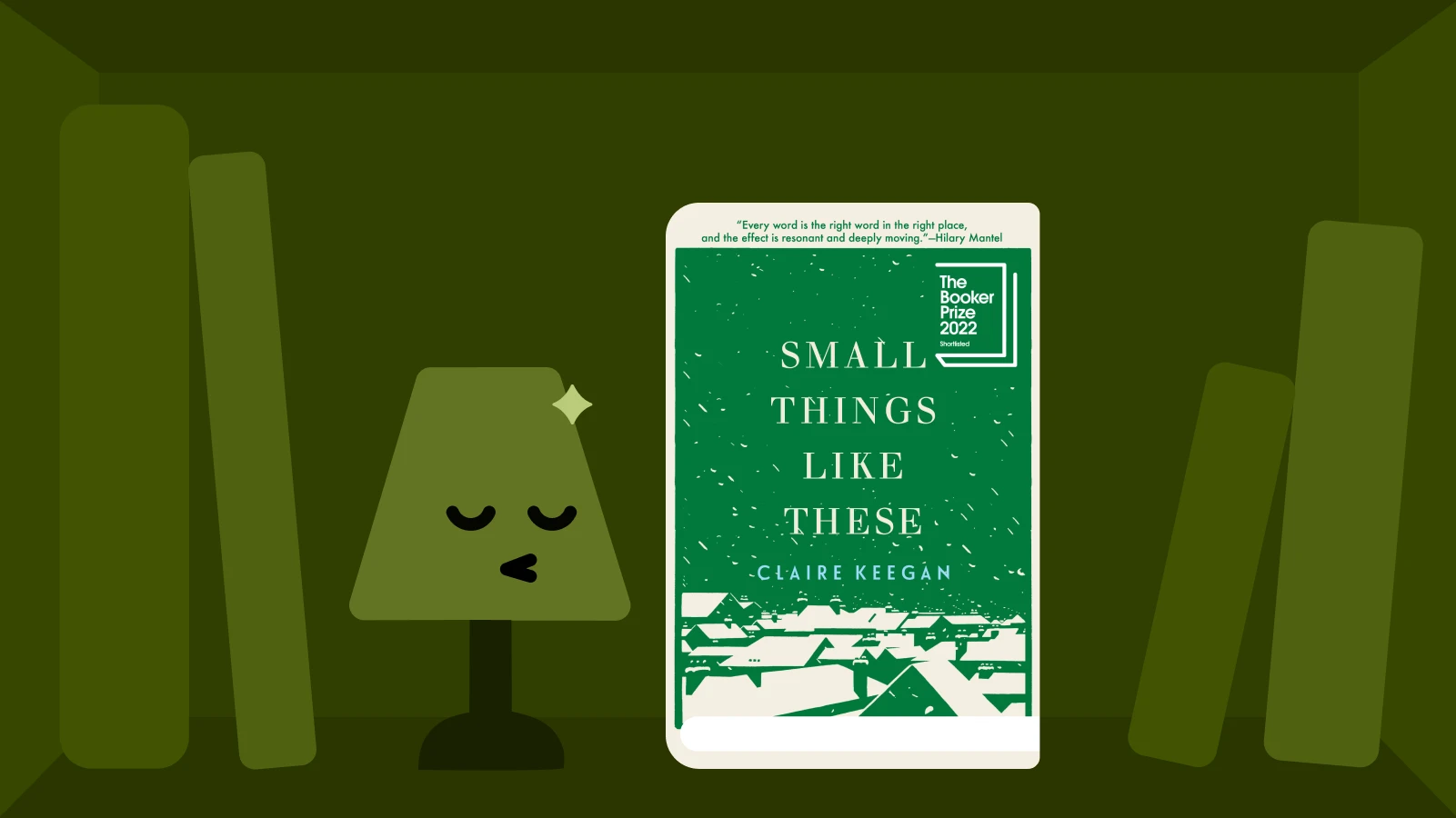 Claire Keegan writes with precision. Every sentence earns its place. In this short novel, Bill Furlong is a coal merchant in 1980s Ireland. A few weeks before Christmas, he discovers something troubling at the local convent and faces a moral dilemma that could cost him everything.
It's quiet, powerful historical fiction that explores complicity and courage. You can finish this one in an afternoon, though you'll be thinking about it for much longer.
7. 'Of Mice and Men' by John Steinbeck
Steinbeck's classic about two displaced ranch workers during the Great Depression remains required reading for good reason. George and Lennie dream of owning their own land — a small place where they can live off the fat of the land. Their friendship, with George as protector and Lennie as his best friend, anchors the story as they move from ranch to ranch in California.
'Of Mice and Men' packs more emotional weight into its 100-odd pages than most doorstop novels. It's also frequently adapted for the stage, which speaks to its lasting power.
📘 Reflect on friendship with Headway.
8. 'Home' by Toni Morrison
Toni Morrison tells the story of Frank Money, a Korean War veteran who returns to a segregated America. He's haunted by what he saw overseas and struggles to reintegrate into civilian life.
When his sister falls ill in Georgia, he must travel from New York across the country to save her, confronting his past and his country's racism along the way. At around 145 pages, this novella demonstrates Morrison's ability to say more with less.
One more classic to consider
9. 'The Old Man and the Sea' by Ernest Hemingway
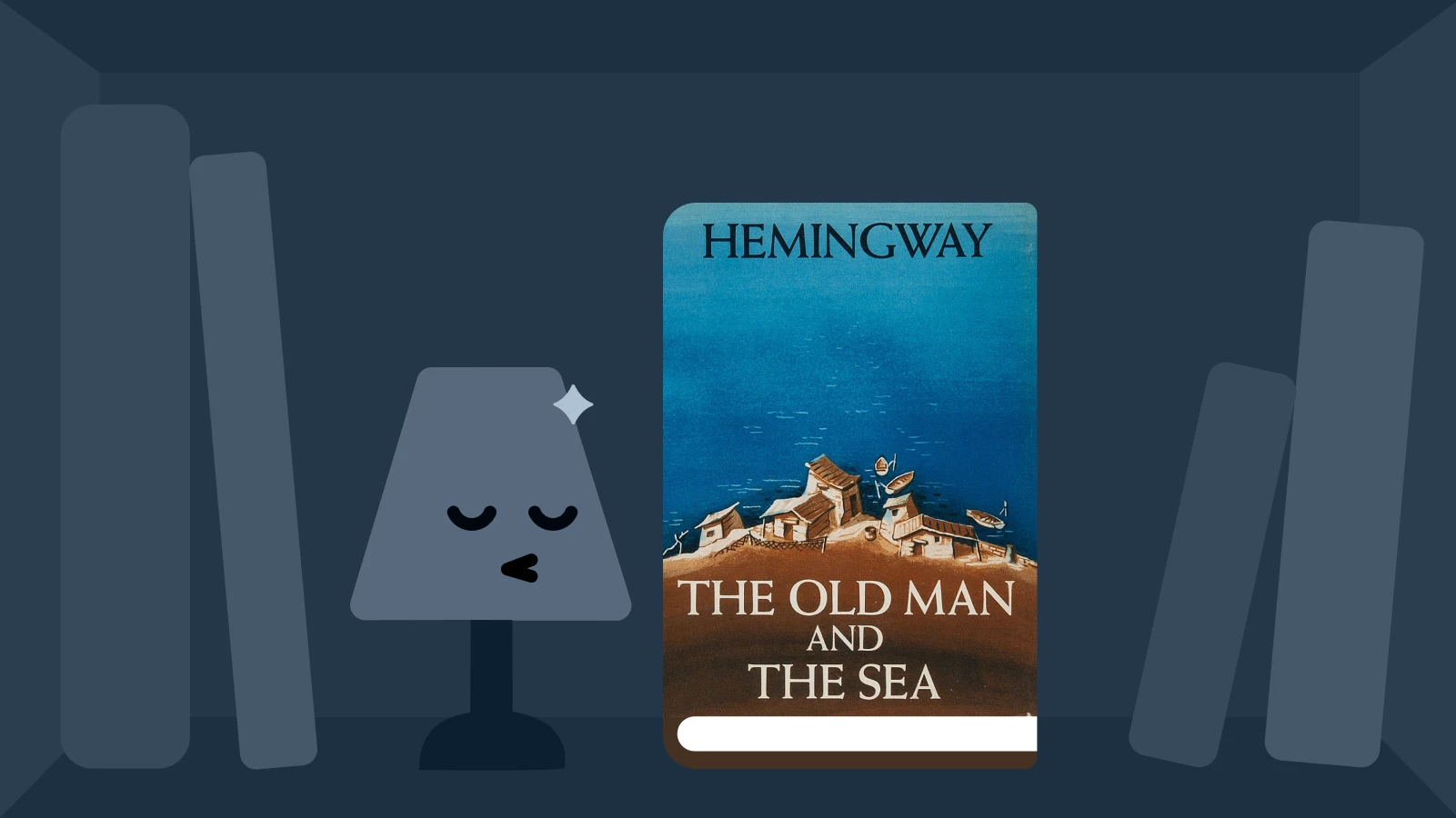 Hemingway won the Pulitzer Prize for this novella about an aging Cuban fisherman named Santiago. He hasn't caught a fish in 84 days, but he sails out anyway, and hooks the biggest marlin of his life. What follows is a battle between man and nature, endurance and surrender.
It's not historical fiction, but this fiction writing is sparse and powerful. It's Hemingway at his most distilled, telling a story about resilience that resonates with anyone who's ever struggled against impossible odds.
Sci-fi and dystopian
Big ideas don't require big page counts. These science fiction classics prove that speculative fiction can be lean and mean.
10. 'Animal Farm' by George Orwell
George Orwell disguised his political satire as a children's story about talking animals. The pigs take over Manor Farm with promises of equality — then gradually become the tyrants they replaced.
"All animals are equal, but some animals are more equal than others."
You can read 'Animal Farm' in a couple of hours, but its commentary on power and corruption sticks around. It works as both a first-time read and a rereading favorite.
📘 Want more Orwell? Read '1984' next on Headway.
11. 'The Time Machine' by H.G. Wells
H.G. Wells wrote this before the term "sci-fi" even existed, and it still feels fresh.
Wells basically invented modern science fiction with this 1895 novella. A scientist travels to the year 802,701 and finds humanity divided into two species — the childlike Eloi and the underground Morlocks. It's a brisk adventure that raises questions about class, evolution, and the fate of civilization.
12. 'Fahrenheit 451' by Ray Bradbury
Books are banned. Firemen burn them instead of putting out fires. Guy Montag is one of those firemen — until he starts questioning his job. Bradbury wrote this in the early 1950s, and his warnings about censorship and mass media feel eerily prescient.

Children's books for adults
Sometimes the simplest stories carry the deepest wisdom. Don't let the label fool you — these books have plenty to teach grown-ups.
13. 'The Little Prince' by Antoine de Saint-Exupéry
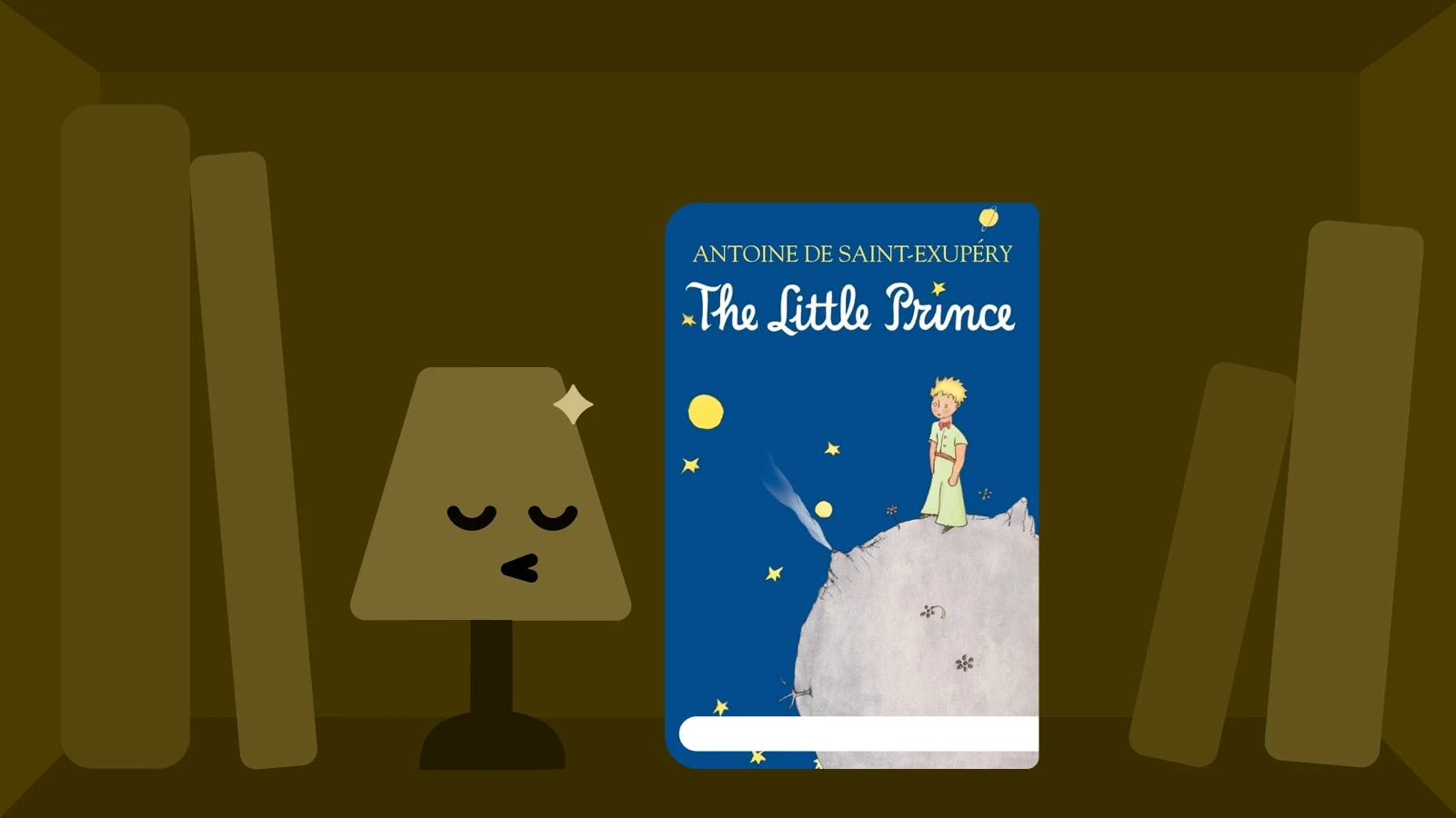 A pilot crashes in the Sahara Desert and meets a small boy who claims to come from an asteroid. The Little Prince tells stories about the strange adults he's encountered on his travels, and in doing so, reveals truths about love, loss, and what really matters.
It's been translated into hundreds of languages and remains a beloved classic. Keep tissues nearby.
14. 'Winnie-the-Pooh' by A.A. Milne
Sometimes you need a comfort read. A.A. Milne created the Hundred Acre Wood and filled it with characters who embody different aspects of human nature — from anxious Piglet to gloomy Eeyore to the ever-optimistic Pooh.
These short stories were written for Milne's son, but adults find them just as soothing. A bear of very little brain can still offer profound observations about friendship and contentment.
📘 Reflect on wisdom with Headway.
Children's books (for actual children)
Looking for short books your kids can finish and feel proud of? These classics keep young readers engaged from start to finish.
15. 'Charlotte's Web' by E.B. White
A pig named Wilbur befriends a spider named Charlotte, and she sets out to save his life with words woven into her web. E.B. White wrote this in 1952, and it remains one of the most beloved children's books ever published.
At around 180 pages with illustrations, it's perfect for reading aloud over a week of bedtimes, or for early readers tackling their first real novel. Fair warning: the ending may require a hug.
16. 'Charlie and the Chocolate Factory' by Roald Dahl
It's a great first book for readers ready to move beyond picture books.
Roald Dahl filled Willy Wonka's factory with rivers of chocolate, edible wallpaper, and children who meet fittingly ironic fates. Charlie Bucket wins a golden ticket and enters a world of pure imagination. It's funny, dark in that classic Dahl way, and short enough (around 150 pages) that kids stay hooked until the final chapter.
17. 'Matilda' by Roald Dahl
A brilliant girl with terrible parents discovers she has telekinetic powers — and uses them to fight back against the tyrannical headmistress Miss Trunchbull. Dahl loved stories where clever kids outsmart awful adults, and 'Matilda' is one of his best.
At around 230 pages, it's slightly longer but reads fast thanks to Quentin Blake's illustrations and Dahl's punchy prose. Perfect for kids who feel like they don't quite fit in.
Nonfiction and self-growth
Looking for books that actually change how you think and live? These titles pack real-life wisdom into short reads.
18. 'Man's Search for Meaning' by Viktor Frankl
Viktor Frankl survived Nazi concentration camps and emerged with a philosophy about finding purpose in suffering. The first half describes his experiences in Auschwitz. The second introduces logotherapy, his approach to psychotherapy based on meaning.
It's short, profound, and one of the best nonfiction books for anyone facing difficult times. This one will make you see your own challenges differently.
19. 'The Art of War' by Sun Tzu
Sun Tzu wrote this military strategy text thousands of years ago, and business leaders, athletes, and coaches still reference it. The chapters cover deception, terrain, and knowing your enemy — principles that apply far beyond warfare.
At just over 100 pages (including commentary), it's a quick read with lasting applications.
Love nonfiction but want the key insights faster? Headway provides 15-minute summaries of bestselling books in relationships, wealth, psychology, and personal growth. Every book on Headway is already a short book — condensed to the ideas that matter most.
Why is daily reading good for your brain?
Reading isn't just a nice hobby — it actually changes your brain for the better.
A 2025 study from the Adolescent Brain Cognitive Development (ABCD) cohort looked at over 8,000 young people in the US. Researchers tracked their daily reading habits alongside brain scans and cognitive tests. So what are the findings? People who read more each day performed better on vocabulary, reading recognition, and problem-solving tasks.
But here's the part that really matters: reading also showed up in the brain itself. MRI scans revealed that regular readers had more developed areas in regions tied to language comprehension, information processing, and connecting ideas. These changes appeared in the lateral temporal lobe (where you process what you read), the inferior parietal lobe (where your brain pulls information together), and the inferior frontal lobe (where language gets organized).
The effects were modest — reading won't turn you into a genius overnight. But even small, consistent habits add up. And unlike passive activities like watching TV (which showed weaker or negative associations in the same study), reading actively engages your brain in ways that support long-term cognitive health.
So that short book on your nightstand? It's not just entertainment. Every page you read is a small investment in a sharper, healthier mind. And when the book is under 200 pages, you're far more likely to actually finish it — which means you'll keep coming back for more.
Turn reading slumps into reading streaks with Headway
Short books aren't a compromise — they're a strategy. When you're stuck in a reading slump, a 100-page novella can reignite your love of reading. When you're short on time, a tight thriller or slim classic can fit into your actual life.
The titles on this list include award winners, book club favorites, and stories that have shaped generations of readers. Pick one that matches your mood. Start tonight. Finish by the weekend.
And if 150–200 pages still feels like too much — or you want to grow beyond books — download Headway.
You'll get 15-minute summaries of the world's best nonfiction, but that's just the beginning. Headway also offers Skills Islands to build specific abilities step by step, personalized learning sessions that adapt to your goals, and growth plans that keep you on track week after week.
Test what you've learned with quick quizzes, watch bite-sized Shorts for daily self-development inspiration, or turn on focus sounds when you need to concentrate on deep work. Whether you have five minutes or an hour, Headway meets you where you are.
Your next favorite book may take less time than you expect — discover it with Headway now.
Frequently asked questions about short books to read
What is a good short book to read?
'The Stranger' by Albert Camus, 'Animal Farm' by George Orwell, and 'The Great Gatsby' by F. Scott Fitzgerald are all excellent starting points. Each offers a complete reading experience in under 200 pages. For nonfiction, try 'Man's Search for Meaning' by Viktor Frankl — it's short but can change your perspective on life.
How many pages is a short book?
Short books are generally under 200 pages. A novella — the formal term for a work between a short story and a full novel — typically runs between 50 and 150 pages. Many award-winning works fit this category, proving that length and quality aren't related.
What is a quick book to read for a book club?
'Small Things Like These' by Claire Keegan and 'The Sense of an Ending' by Julian Barnes both work well for book clubs. They're short enough that everyone can finish them, but rich enough to spark real discussion about memory, morality, and the choices we make.
Are short books easier to read?
Not necessarily. Many short novels are literary fiction that demands close attention. What shorter books do offer is a realistic chance of finishing, which helps readers escape a reading slump and build momentum for tackling longer works. Also, short books and book summaries help you assess an author fast — so you invest your reading time only where it truly pays off.
What is a very short book?
A very short book is typically under 100 pages — sometimes called a novella or novelette. Examples include 'The Old Man and the Sea' by Ernest Hemingway (around 96 pages) and 'Animal Farm' by George Orwell (around 90 pages). These can often be finished in one sitting, making them perfect for busy readers or anyone returning to reading after a long break.
Can I read 100 pages in 1 hour?
Most adults read around 40 to 60 pages per hour when reading fiction at a comfortable pace. So 100 pages would take roughly 1.5 to 2.5 hours for the average reader. Speed depends on the complexity of the text, your familiarity with the topic, and whether you're reading for pleasure or study. Don't rush — comprehension matters more than speed.
Not sure how fast you read? This free test will give you a clear answer in minutes:
Can I read 1000 pages a day?
For most people, reading 1000 pages in a single day isn't realistic. At an average pace of 50 pages per hour, that would require 20 hours of continuous reading — leaving little time for sleep, meals, or breaks. A more achievable goal is 50 to 100 pages daily, which builds a sustainable reading habit without burnout.
What is a gently read book?
A gently read book is a secondhand book in excellent condition — read carefully and showing minimal wear. In used book terminology, this falls between "Fine" and "Very Good." The spine isn't cracked, pages aren't dog-eared, and there's no writing or highlighting. It's a great option if you want affordable books that still look and feel nearly new.