Self-growth
 Apps & Digital Tools
 Business & Career
 Success
 Growth Tools
 Psychology
 Communication
 Relationships

You already know how important it is to take care of yourself: getting adequate rest, light exercise, recording life's details, taking deep breaths, and getting to bed early. The problem is never the knowledge; rather, it's that days fill up quickly, meetings run over, and the first thing cut is any self-care.
That's why self-care apps have been developed: to help you close the gap between your intention of doing something for your self-care and your actual ability to do it.
A meta-analysis of 176 randomized controlled trials (RCTs) published in World Psychiatry (2024) concluded that an appropriate app provides modest, yet real, improvement in mood and anxiety.
The following list of apps is presented in order from most to least appropriate for each type of self-care need, along with information on pricing and suitability.
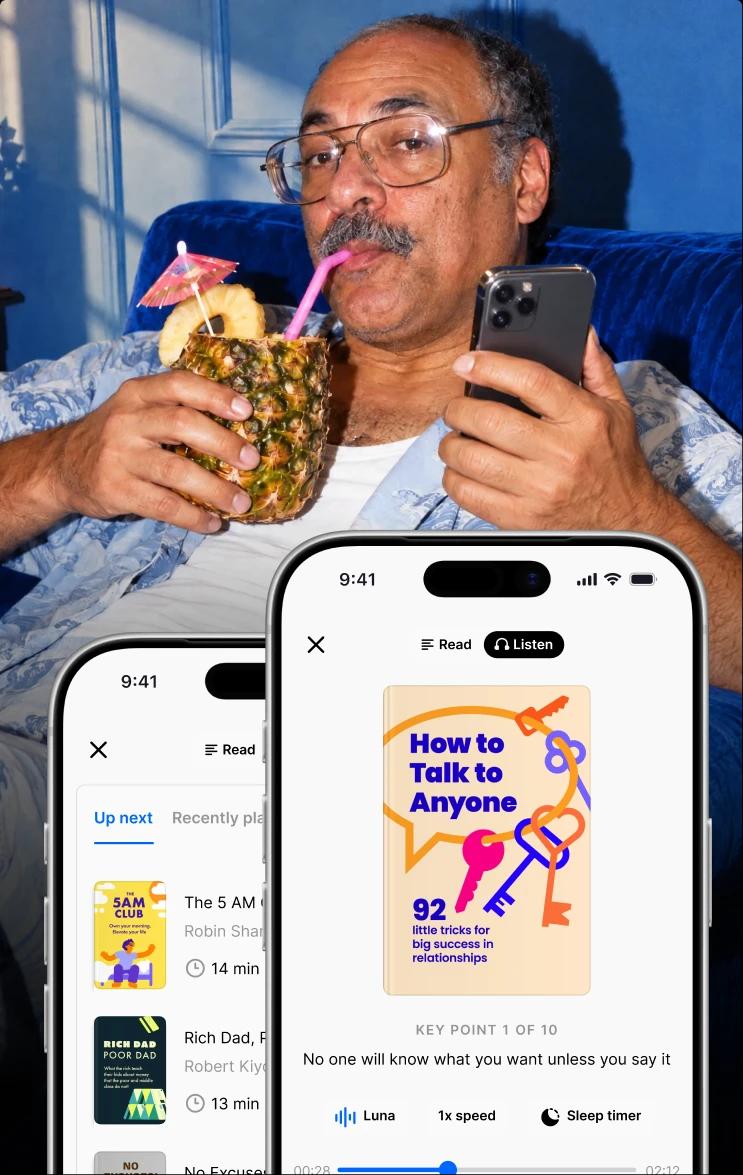
📘 Turn your coffee break into a small reset with Headway's book summaries on self-care.
*A note before we start: self-care apps support your mental well-being, but they don't replace therapy or medical care.

The self-care apps to reach for first: Six quick picks
If you only try a handful, start here.
Calm and Headspace: the best meditation apps for sleep and winding down
Finch: gentle, gamified self-care without the guilt trip
Daylio: mood tracking in about ten seconds a day
Headway: book summaries on self-care and meditation to feed a calmer head
Kaiser members can get Calm and Headspace free
Five self-care apps compared at a glance
Here's how five popular self-care apps compare side by side. Prices change often, so confirm them in the app store before you sign up.
| App | Best for | Free version | Starting price (verify) |
|---|---|---|---|
Headway | Learning as a part of self-care | Yes | ~$89.99/year or in-app plans |
Calm | Sleep and relaxation | Limited | ~$69.99/year |
Headspace | Guided meditation courses | Limited | ~$69.99/year |
Finch | Gentle, gamified routines | Generous | ~$15/year (Plus) |
Daylio | Fast mood tracking | Yes | ~$36/year (premium) |
How to choose a self-care app that fits your life
The best apps for self-care aren't the ones with the highest ratings. They're the ones you'll still open next Tuesday. Three questions sort out most of the decision.
First, what's the actual need? Sleep and calm. Knowing your own moods. Building habits. Or support on the genuinely hard days. Different jobs, different tools.
Second, how much friction can you stand? Some people want a ten-second check-in and nothing more. Others want a real course with lessons and homework. Neither is better. Pick the one you won't quietly abandon by Thursday.
Third, what tone keeps you going? Gentle and low-pressure, or streak-driven and full of charts. If a bit of guilt motivates you, fine. If it just makes you delete the app, you want the gentle kind.
A budget note: most strong picks have a usable free tier, so test before you pay. And if what you really want is something to open instead of doom-scrolling, a couple of these double as an app to replace social media, or a quiet dopamine detox app for your thumbs.
The 15 best self-care apps for 2026, grouped by what you need
These run in one count from 1 to 15, sorted by the job you want done. For each one, you get who it's for, what it does, what it costs, and the catch nobody mentions in the five-star reviews. Prices shift constantly, so treat the numbers as ballpark and check the store before you commit.
Best meditation apps for self-care (1–3)
When the goal is a calmer nervous system, start with a guided audio. These are the best meditation apps for self-care if you want a voice walking you through it.
1. Calm — best for sleep and winding down
You get Sleep Stories (yes, including the celebrity-narrated ones everyone falls asleep to), guided breathing exercises, soundscapes for focus or rain-on-a-tent vibes, and a daily ten-minute session.
The free tier is thin. The paid plan runs around $14.99 a month or $69.99 a year. Heads up: some reviews include users' frustration with a trial that auto-renews before they remember to cancel.
2. Headspace — best for learning meditation as an actual skill
The beginner courses are built in order; there are SOS sessions for stress spikes, and the focus music is solid for getting through work. About $12.99 a month or $69.99 a year. The catch is that some longtime users aren't sold on the newer AI-generated guided meditations.
3. Insight Timer — best for a free variety.
The free library is enormous, with tens of thousands of guided meditations and talks, plus a customizable timer and live sessions. A Member Plus tier unlocks the structured courses. The downside is the flip side of the upside: so much content that finding the right session takes a minute.
Mood tracking and journaling that takes seconds a day (4–7)
Awareness comes before change. These make it almost effortless to track your mood before it becomes another chore.
4. Daylio — best for people who want to journal without writing a word
You tap your mood and a few activities, and over a few weeks, it draws charts that surface patterns you'd never have caught on your own. Free, with a premium of around $36 a year. One honest thing: a single entry tells you nothing. It's a mood tracker that earns its keep slowly, so give it a month.
5. Reflectly — best for guided reflection
It leads you through short daily entries with journaling prompts and serves up mood insights in a friendly check-in flow. Similar price range to the others. The catch is that the prompts start repeating, and the paid tier locks away a fair bit of the good stuff.
6. Day One — best for a proper long-form diary
It's the most polished journaling app of the bunch, with rich entries that hold photos and location, end-to-end encryption, and search that reaches back across years. Day One is more diary than coach, so there's no mood "fix" here, just a record you'll be glad you kept. Free tier exists; premium adds unlimited entries across devices.
7. Gratitude — Best for a daily gratitude habit
A rotating prompt library, affirmations, and a vision-board feature, basically a gratitude journal with a few extras bolted on. Gratitude practice only does anything if it's regular, so set a cadence you can actually hit. Twice a week beats an ambitious daily plan you ditch in a fortnight.
📘 Try Headway when you need a soft reset, not another to-do.
Gentle, gamified self-care apps like Finch (8–10)
If most wellness apps make you feel behind, these reward small steps instead of nagging you for them. Self-care apps like Finch win people over because there's no shame baked into the design.
8. Finch — best for low-pressure, anti-guilt self-care
You raise a little virtual bird, and it grows when you do small real tasks: a breathing exercise, a two-minute stretch, a quick note about your day. You can switch streaks off completely, which matters a lot if streaks stress you out.
The free tier is generous, and Finch Plus is about $15 a year. The exercises are basic, and the cute design feels a touch childish to some grown adults.
9. Fabulous — best for routines
It's a morning routine app at heart, built around evidence-based rituals for morning, afternoon, and evening, with behavior-change programs developed at Duke's Center for Advanced Hindsight. It works fine as a plain habit tracker too. The structure is rigid, though, and not everyone wants to be told the exact order to do things in.
10. Habitica — best for people who are motivated by games
Your habits become a role-playing game: finish a task, earn points, level up a character, join a party for accountability. As an app for motivation, it's clever, and the habit tracking can be a lot of fun for a while. The catch is that the game can become the whole point, and the novelty does wear off after a few weeks.



CBT and guided support for harder days (11–14)
When stress tips over into anxious, looping thoughts, these lean on therapy-based methods. They help, but let's say it plainly: they're tools, not treatment. That 176-trial review also found that the apps built on cognitive behavioral therapy tend to have the most consistent evidence behind them.
11. Liven — Best for structured, therapist-built programs
You get CBT learning paths, mood tracking, and a personality-style intake that shapes what you see. Results take weeks of steady use, so don't write it off after two sessions.
12. MindShift CBT — best for free anxiety support
Built by the nonprofit Anxiety Canada, it offers CBT tools for worry, thought journals, and coping cards you can pull up mid-spiral. It sticks to anxiety specifically rather than general wellbeing, and it's one of the better free self-care apps for exactly that.
13. Wysa — best for in-the-moment, no-judgment check-ins
An AI chatbot walks you through CBT and breathing exercises at 2 am when nobody else is awake, and you can add human coaching on top. Worth repeating: an AI companion isn't a clinician and shouldn't be treated as one.
14. Happify — best for science-flavored mood activities
Happify runs on games and "tracks" rooted in positive psychology and CBT, with progress scores you can watch over time. If you're after depth, it can feel a little gimmicky, but for a light daily lift, it does the job.
Reading as a self-care habit (15)
Self-care isn't all about calming your mind down. Half of it is choosing what you put into your head in the first place. That's where reading earns a spot, on the input side of mental health rather than the soothing side.
15. Headway — best for turning spare minutes into clearer thinking
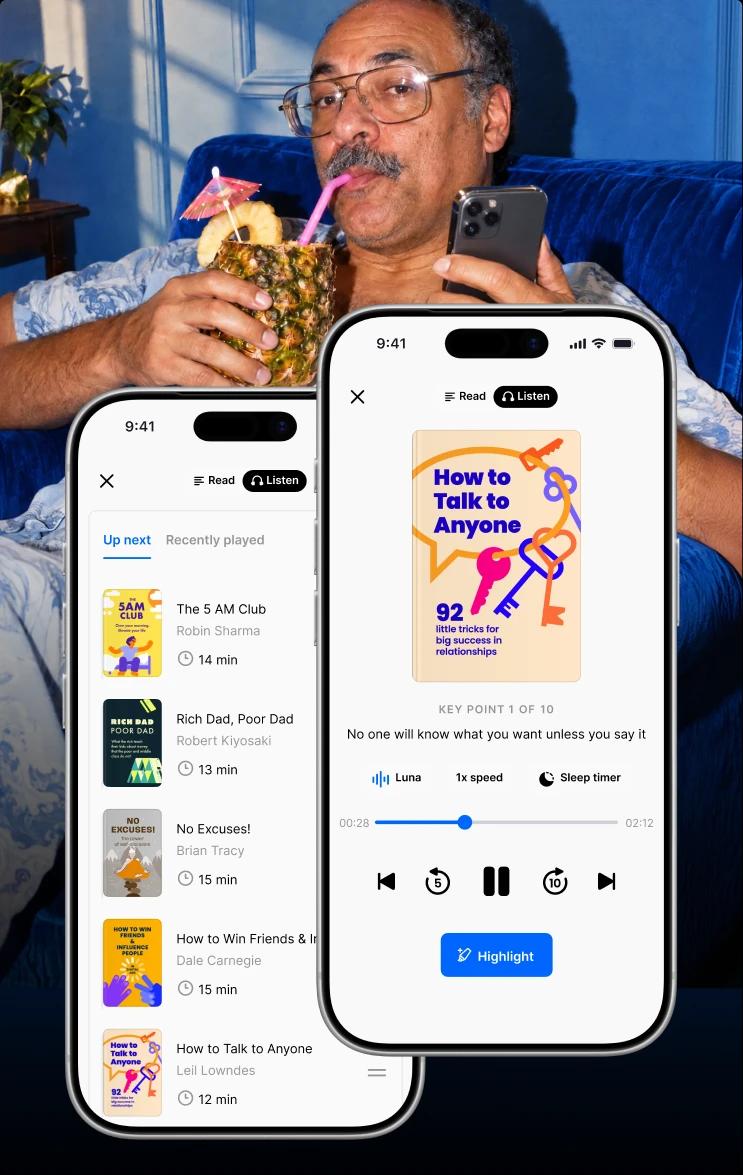
With Headway, you can find short 15-minute audiobook and text summaries on various nonfiction topics, including stress management, anxiety, relationships, mental resilience, mindfulness, and self-worth.
You'll also get a daily dose of insight and be able to track your progress and keep streaks going, which will help you develop a new reading habit without even realizing it!
You can use meditation to calm your nervous system and journaling to identify your habits or patterns. You will eventually discover that the right book will change the way you think about the other tools you were using.
So if you want to get to know yourself better but don't have time to read a full-size book, Headway is like having a pocket museum curating only nonfiction books of interest to you.
You get the core ideas first, then decide which titles are worth the long read. It's a self-improvement app for the curious-but-busy, and it's quietly good for personal growth and a bit of self-love along the way.
Note: If the burden of your situation is heavier than an app can support, contact someone. A service like BetterHelp connects you with an expert therapist or mental health professional. Reaching out for assistance is an act of strength. These apps are effective for managing day-to-day stressors, supporting overall wellness (such as self-care), and growing your mental strength over the long haul, but they are not meant to serve as a resource in cases of crisis.
Free Kaiser self-care apps members can use
What self-care apps does Kaiser offer for free? Eligible Kaiser Permanente members get full access to both Calm and Headspace at no cost, through kp.org/selfcareapps, after they sign in and redeem it.
That covers Calm's meditations and Sleep Stories, plus Headspace's self-guided library and text-based emotional support coaching (with a cap on coaching sessions per year).
One caveat worth stating clearly: eligibility depends on your plan, and not every member has access. If you're with Kaiser, sign in to your account and check what's included before you assume it's waiting for you. When it is there, it's one of the easiest ways to get two premium apps for nothing.

Make self-care a daily habit with Headway!
If one idea ties this whole list together, it's this: the best self-care app is the one you'll actually open tomorrow. So pick by need and friction, not by whichever name you've heard the most.
Headway helps you upgrade the daily routine: a few minutes with a summary on stress, mindfulness, or self-worth can teach you something. You can read or listen to them during a coffee break, and the streaks and progress tracking give you a reason to come back the next day.
Pair it with goal setting you can realistically keep, and a calmer head starts to feel less like a project and more like a habit.
Start with whatever you need most today, and keep the rest of these self-care apps in your back pocket for when the need changes. And the reminder, one last time: these are good companions for everyday wellbeing, not a stand-in for professional care when you need it.
📘 Get bite-sized insights on self-care mindfulness with Headway!
FAQs about self-care apps
Which is the best self-care app?
Self-care is very personal, and there is no "best" app. It really just depends on what you need. For sleep and meditation, Calm and Headspace are successful; for gentle, guilt-free self-care, Finch is successful; Daylio is successful for quick mood tracking; and Headway is successful for learning-based mindful self-care. Focus on one specific self-care need that bothers you the most and then try out a free version of that app before spending any money.
Do self-care apps actually work?
Self-care apps can work, but they aren't magic. According to a 2024 report of 176 studies, mental health-related use of self-care apps will lead to a small but significant reduction of anxiety and depression symptoms, with many of the best self-care apps also using CBT as a proven effective form of treatment for people suffering from these symptoms. However, like other tools for self-care, they are usually most effective if used consistently and as an added tool to therapy, rather than as a substitute for it.
What is the best meditation app for self-care?
Your best meditation app will often depend on your learning style. For example, beginners to meditation often do well with Headspace because it takes you step-by-step through the learning process. Calm has a focus on sleep and helping you wind down, so it is probably best suited for that purpose. If you are concerned about cost, Insight Timer has a large selection of free guided meditations available on its website.
Can a self-care app replace therapy?
No, a reputable app won't trick you into thinking it can take the place of therapy. Instead, it will help with tracking your mood or create ways to cope — it can't diagnose you, give you a treatment for a condition, nor can it help you with assistance to alleviate your anxiety or stress. Consult with a Licensed Practitioner about where to get help instead of relying on your phone.
What are the best self-improvement apps?
The best choices typically include short daily activities paired with something that keeps you coming back for more; some examples are: Headway — 15-minute book summaries for growth & mindset; Finch — changing small habits into a fun and relaxing game; Fabulous — building routines based on proven science. In each case, your success will be best achieved when it fits into your schedule. As such, match your schedule to each application to ensure a successful outcome.