Self-growth
 Business & Career
 Success
 Communication
 Healing
 Relationships
 Psychology
 Happiness
Ever feel like you want to grow but have no clue where to actually start?
Many professionals, students, and growth seekers hit this wall. That's why many of them decide to try personal growth tools: resources, apps, frameworks, and practices that help you improve self-growth. They also work great if you aim to build better habits and develop new skills.
These tools usually fall into categories like:
Productivity and habit tracking
Mindset and emotional growth
Learning and skill development
Relationship improvement
As you can see, some focus on improving your mental health, while others help you with goal setting or managing your daily routine. Which personal growth tool fits you depends on your goal and how much self-reflection you've done. Self-reflection often reveals what you truly need.
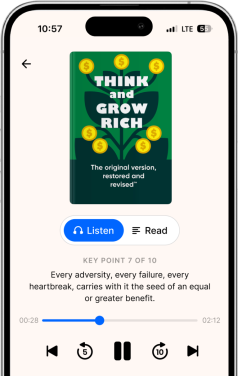
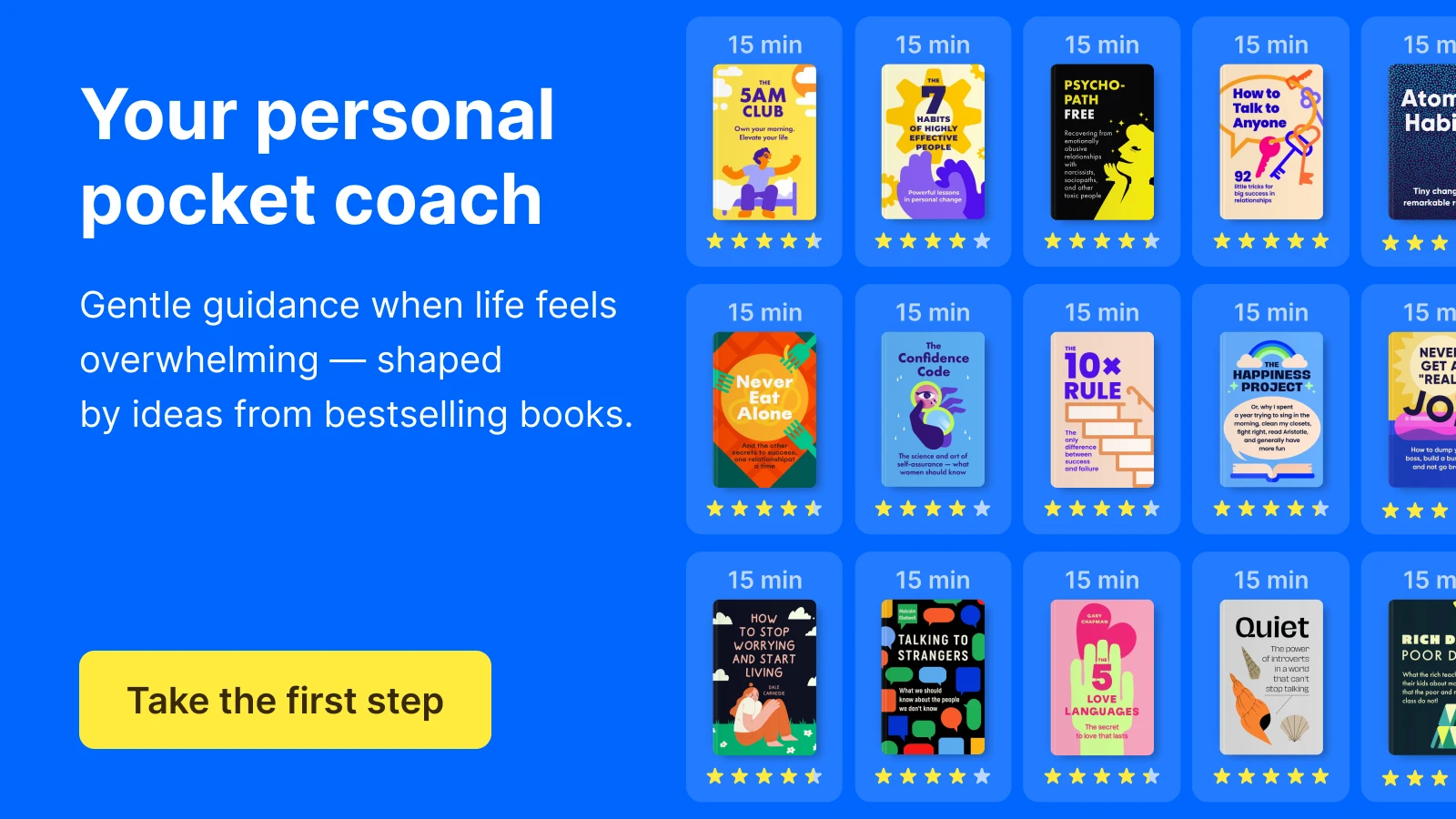
Headway can be your personal growth tool, as the app's core idea is to help you grow by providing insights and plans that motivate you to change. You can find book summaries on self-improvement, productivity, and growth plans like "Breaking bad habits" and "Master time management," everything tied to personal development.
📘 Download Headway and start learning what works for you!
Quick answer: What are personal growth tools? (examples included)
Personal growth tools are resources, apps, or platforms that help you elevate self-improvement, self-awareness, habits, mindset, and performance.
But how do they differ from strategies and approaches?
Say you've decided to improve the state of your mental health. That's a plan or strategy, a good first step. The tool is what you use to achieve that goal, whether that's a gratitude journal, a microlearning app like Headway, or a habit tracker. Those are all tools.
The top 11 personal growth tools by category (2026 edition)
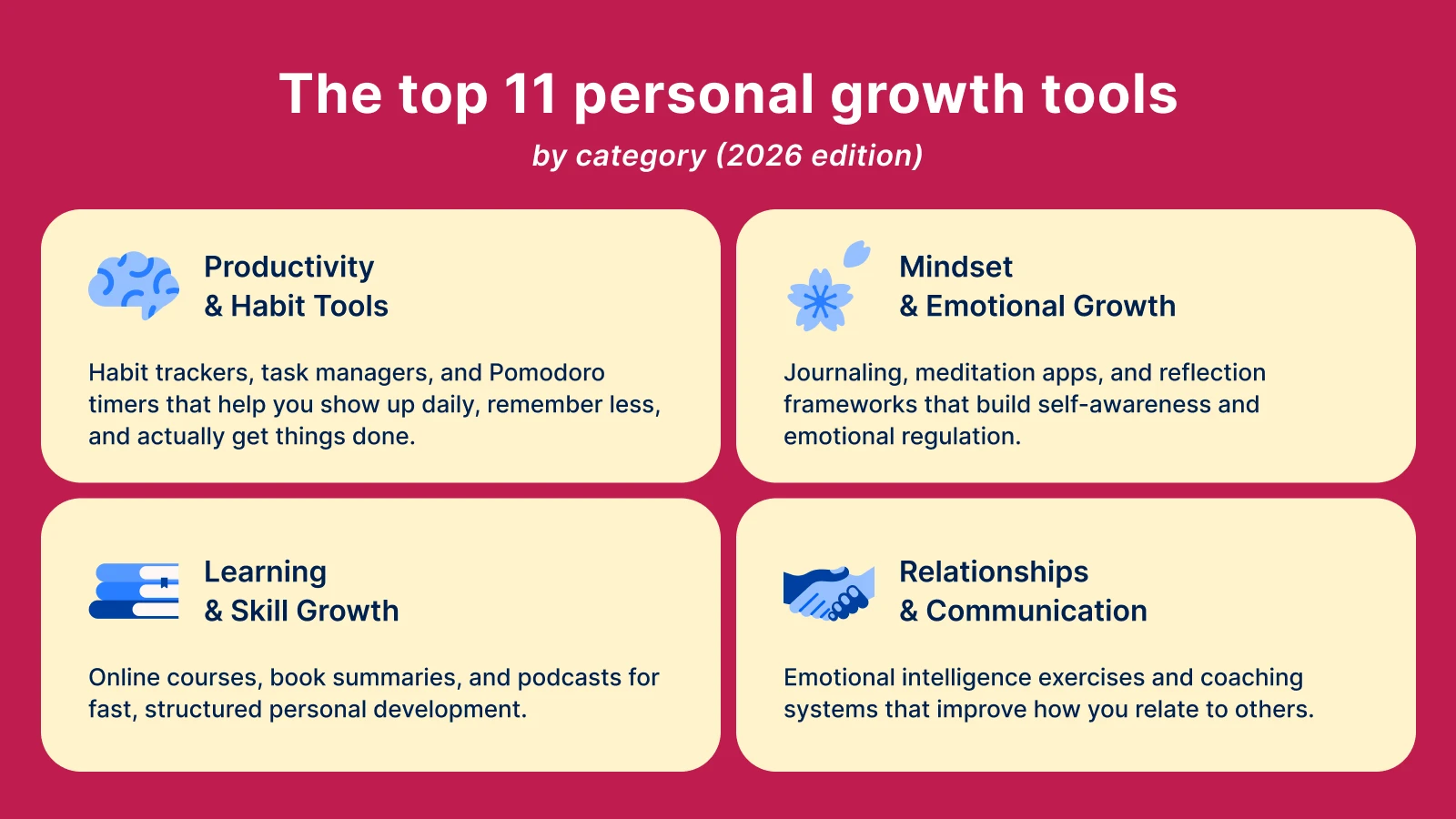
Productivity and habit tools (1–3)
Habit tracking apps. Apps like Habitica or Streaks let you mark off habits daily. Watch the streak build, and suddenly missing a day feels bad enough to keep you showing up. Not brutal, just enough push.
Task management tools. Any.do or Todoist let you dump everything rattling around your head into one place. You stop wasting energy trying to remember what needs doing and just do it.
Time management timers. Pomodoro timers split work into 25-minute chunks with 5-minute breaks. Sounds too simple, but it keeps you from burning out or scrolling when you're supposed to be working.


Mindset and emotional growth tools (4–6)
4. Journaling tools. Physical gratitude journals or apps like Day One make you write things down. You start catching thought patterns that mess you up and notice what's working. You'll even build self-awareness that you won't get by just thinking about stuff.
5. Meditation and mindfulness apps. Apps like Headspace and Calm give you guided meditations for emotional regulation. Ten minutes of breathing won't fix your life, but it puts space between feeling something and reacting. That gap matters for your mental health.
6. Reflection frameworks. Weekly reviews or gratitude prompts keep you honest. Random journaling is fine, but frameworks help you spot blind spots you'd otherwise ignore. Turn self-reflection into something you do regularly instead of only when everything's falling apart.
Learning and skill growth tools (7–9)
7. Online learning platforms. Coursera, Udemy, and LinkedIn Learning let you learn new skills without school. No matter what you need, whether it's marketing, coding, or design, these platforms can help. And the courses have clear ends, so your progress is measurable.
8. Personal growth books and summaries. Personal development books have decades of research packed in. The problem is that they take weeks to read. Headway gives you 15-minute summaries of top self-improvement books from famous mentors and experts without the time commitment.
9. Podcasts. Turn dead time into learning time while driving or cleaning. Good podcasts interview people who did what you're trying to do. You hear where they screwed up, what worked, and how they think. It's like a mentor talking while you fold laundry.
Relationship and communication tools (10–11)
10. Emotional intelligence exercises. EQ exercises help you recognize your own emotions and those of others. Name what you're feeling three times a day or take EQ assessments. Emotional intelligence touches every relationship you have, whether at work, with family, or with friends.
11. Coaching or mentoring systems. Life coaching or a mentor means someone asks questions you'd skip on your own. They see patterns you miss. Coaching clients say the value isn't advice. It's accountability and someone pointing out blind spots without making you feel bad.
Personal growth tools that stick are repeatable, but keep in mind that one meditation or mental exercise won't change you. Address the issue consistently with a plan. Only then can you build a growth mindset that shifts everything, like self-awareness, hitting SMART goals, or a fulfilling life.
📘 Stop collecting random self-help advice — try Headway for structured learning from proven personal development books!
How to build your personal growth toolkit in 2026
1. Figure out what actually needs fixing
Look at where you're struggling most: it can be a lousy daily routine or the inability to get anything done. You might also find yourself stuck replaying negative thoughts every night. That's mindset work. Self-reflect and prioritize an exact area of your life that needs improvement or a bad habit that must be fixed.
2. Pick 2–3 tools that fit together
You don't need a bunch of various tools; just pick three that fit your lifestyle best. However, they should support each other instead of pulling your attention in different directions. For instance, a good combination of tools might look like this: a habit tracker, a gratitude journal, and the Headway app (for getting quick, valuable insights from personal development books).
3. Actually put them in your calendar
You already self-reflected and picked the best tools for you. Now figure out how you'll make it work. Pick time slots and commit to doing the activities on a daily basis (a morning coffee, then journaling; bedtime routine, then gratitude journal; a lunch break at work, then read or listen to a 13-minutes summary of 'Deep Work' by Cal Newport). Work out the ways and the slots that suit your lifestyle, so you'd stick to these practices, and they'd become habits one day.
4. Check every week if anything's working
Look at what you're actually using versus what sounded good when you started. Reflect on what changed and what didn't, and adjust your routines for next week. It's totally fine if meditation apps feel like a chore, so next week, try listening to podcasts.
Start with one tool, reflect on whether it benefited you and was enjoyable to use. If yes, then stick to these tools until they become automatic. If the answer is no, then opt for other tools. There are plenty of options to choose from!
📘 Get Headway and find out today the perfect recipe for your self-growth.
How to choose the right tools for you (step-by-step guide)
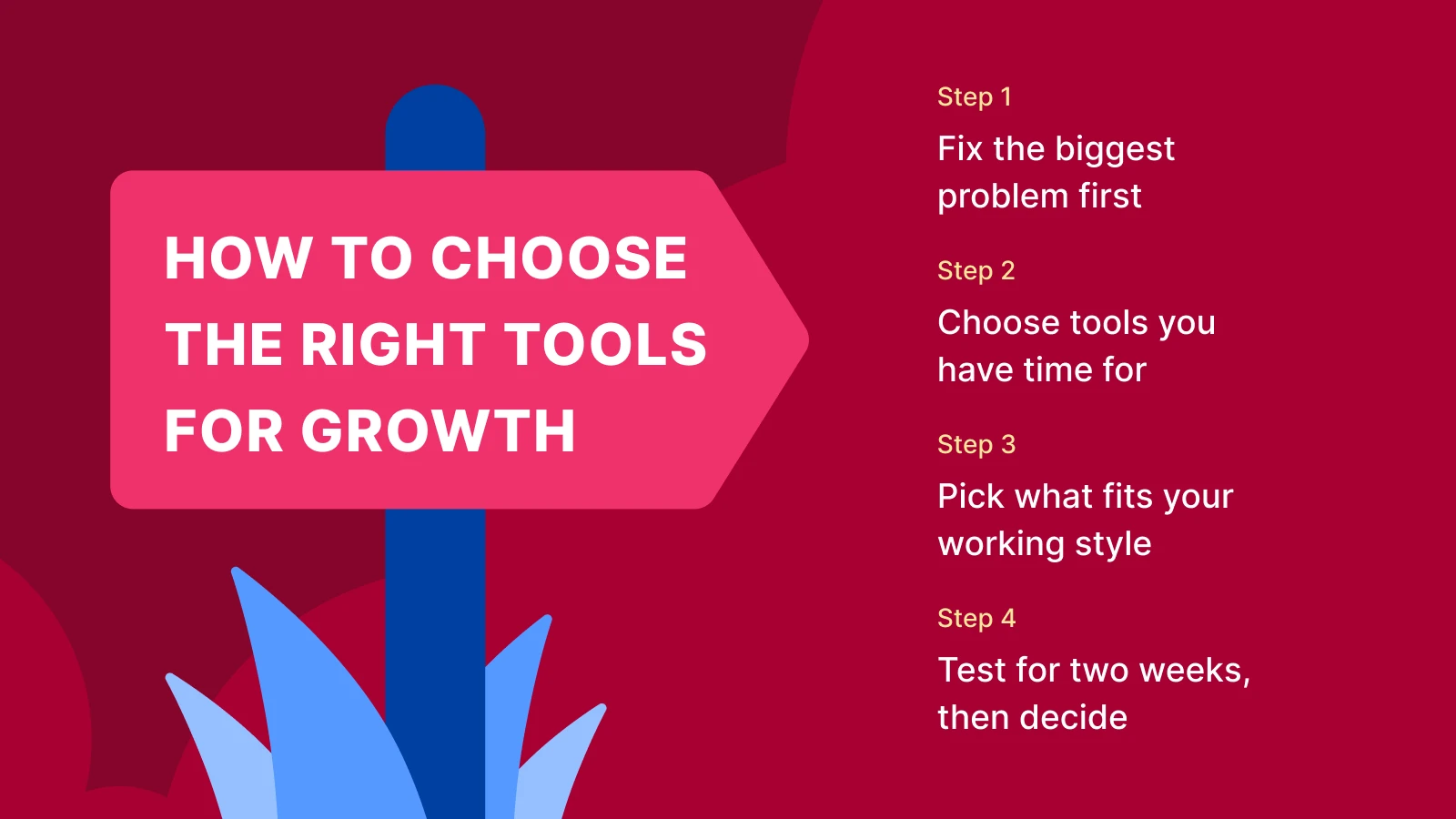
1) Match the tool to what's broken
Look at what's causing problems right now. Drowning in tasks means productivity tools matter more than emotional intelligence at work. Mental health tanking and burnout showing up means self-care and self-reflection tools come first. If you feel like there is a need for personal growth, then Headway, a microlearning and self-growth app, is the way to go.
2) Be real about your time
Ten minutes a day works for habit trackers and a gratitude journal. An hour weekly fits deeper self-reflection or online courses. Be honest about what you'll actually do, not what sounds impressive. A journal sitting unopened doesn't build self-awareness, nor does a podcast playing while you commute.
3) Know how you actually work
Some people need structure: apps with push notifications, SMART goals with deadlines, or a life coach pushing them forward. However, other people work better with loose frameworks like blank journals, quick meditations, and learning at their own pace. Pick those tools that actually work for you, not because someone on the web said it works for them.
4) Try it for two weeks before deciding
One week isn't enough to know if something's helping your personal growth journey toward your best self. Three weeks in, and if you're still forcing it, it's time to drop it. Try something different, commit to finding the right tool that works and doesn't drain you.
Your growth matters with Headway — commit today!
Personal growth tools only work if you choose the right ones and actually use them. Unfortunately, most people just collect apps, gratitude journals, and books, not knowing where to start.
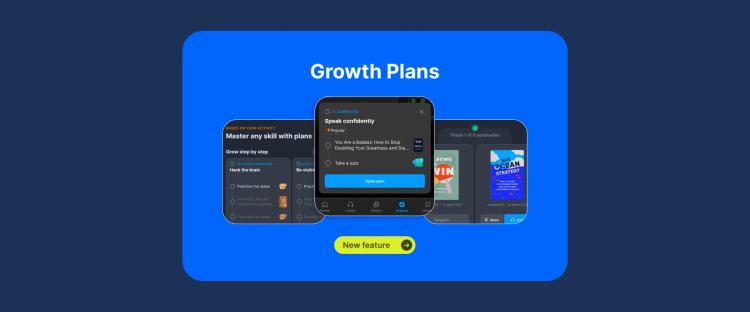
Headway is the app you can use for both of these matters: it offers 15-minute book summaries on self-improvement, EQ, and productivity, helping you understand exactly what to improve. But the Headway app also functions as a personal growth tool, with quick insights, spaced repetition, and growth plans.
📘 Still not sure where to start growing? Download Headway and take a first step forward.
Frequently asked questions about personal growth tools
What are the best tools for personal growth?
The best tools for personal growth are subjective, as everyone uses their own methods. But habit trackers like Habitica help build routines, while journaling and meditation can help improve your mindset. If you want continuous learning without spending weeks on books, Headway offers 15-minute summaries on self-development. Overall, pick 2–3 tools that support your style and growth areas; what you'll use matters consistently more than what sounds impressive when downloading.
What are the 5 areas of personal growth?
Personal growth covers mental aspects like mindset and emotional intelligence; physical health through exercise and sleep; professional development through new skills; social relationships, including vulnerability with people; and spiritual meaning around purpose and values. Most people focus on one area and ignore others. Your well-being in one area usually bleeds into the rest. Start where things feel most broken.
Can I start personal growth by myself?
Starting alone works, but it takes longer. Having a mentor, coach, or learning resources helps you skip common mistakes. Self-reflection is a powerful tool, but spotting your own blind spots is hard without an outside perspective. Books, summaries, and podcasts provide direction from people who have already worked through similar struggles. Going solo is possible, but life-changing progress comes faster with guidance instead of guessing every step.
How do I know which personal growth tools are right for me?
Try matching tools to what you actually wish to fix. When productivity falls apart, then habit trackers and time management apps are needed. Struggling with mental health means you'll benefit from journaling and meditation. The key is to find the ideal tools that work for you and your problems. Even if you didn't choose the correct ones straight away, still commit. Consistency is vital.
What's the best personal growth tool for productivity?
The best productivity tools solely depend on how your brain works. Pomodoro timers help when distractions constantly kill your focus. Task apps like Any.do work if you forget what needs doing. Habit trackers build consistency slowly over time. When mindset issues wreck productivity more than logistics do, journaling or learning from books on focus helps more than another app cluttering your phone. Essentially, fix your thinking patterns, then add supporting tools.