Self-growth
 Business & Career
 Success
 Communication
 Healing
 Relationships
 Psychology
 Happiness
Ever feel like you want to grow, but don't know where to begin or how to stay on track?
Personal development tools are resources that help you improve key areas of your life, such as building better habits, enhancing self-awareness, and developing your emotional intelligence. From apps and online courses to journals and planners, these resources guide you toward achieving your self-improvement and well-being goals.
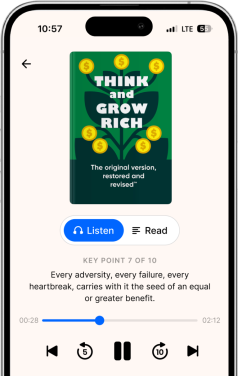
Different types of personal development tools can help with goal setting, enhancing your mindset, or building stronger habits. Headway, a microlearning app, is a great example: the platform offers quick, valuable insights to help you learn new skills and stay on track with your personal growth.
📘 Download Headway now to start making the most of your time and learning something new every day!
Quick answer: What are personal development tools for 2026?
Personal development tools in 2026 are the resources that help people improve their habits, skills, and mindset. It can be anything, like apps, journals, and courses. Tools like the Headway app, habit trackers, and productivity platforms are popular choices that guide you toward your self-growth goals.
They help you stay on track, improve self-awareness, and achieve smart goals, making personal development easier to fit into your daily routine.
Personal development tools by category (best for specific goals)
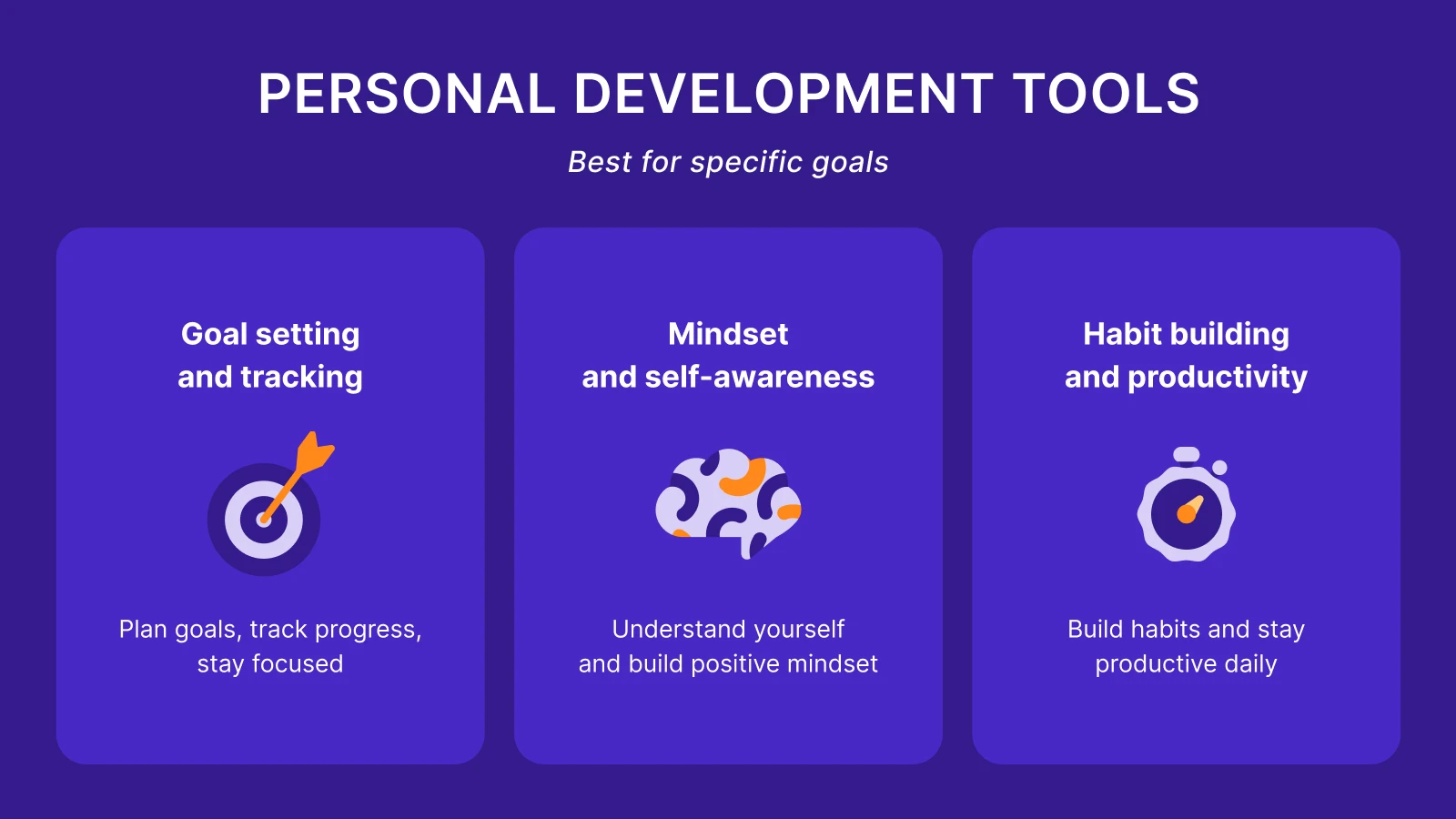
There are many types of personal development tools, each designed to help you with a specific goal. Whether you're focused on self-improvement, building good habits, or improving your self-awareness, there's something out there for you.
Tools for goal setting and tracking
Goal planners and trackers are great for keeping you organized and focused. Apps that help you set smart goals let you track your progress, giving you a clear path forward. They help break big goals into smaller, actionable steps, so you're less likely to procrastinate. Seeing your progress in real-time makes you more likely to stay on track and reach your personal growth goals.
Tools for mindset and self‑awareness
Tools like journaling apps, guided meditations, and personality tests help you understand yourself better. They help you become more mindful of your thoughts and behaviors, which is key to self-development. Apps like Headspace and Calm are great for improving your mental health and building a positive mindset. These tools help you stay grounded and focused on your growth.
Tools for habit building and productivity
Apps like habit trackers, Pomodoro timers, and to-do lists are perfect for building consistent habits. They help you stay organized and productive throughout the day. Whether you're reducing procrastination, getting more exercise, or managing your time better, these tools guide you toward self-improvement by breaking tasks into smaller, manageable chunks.
Why personal development tools matter (psychology of growth)
Personal development tools are essential because they help you stay focused and motivated on your self-improvement path. These tools give you structure, making it easier to set goals, track progress, and build better habits. They also encourage self-reflection, which creates a better understanding of yourself and how you can grow.
The science behind it is simple: habits shape who we are. By using tools like goal trackers and habit apps, we make it easier to form positive habits that stick. Tracking progress gives us a sense of accomplishment, boosting our mental health and encouraging us to keep going. It's about setting small, achievable goals that lead to big changes over time.
Top personal development tools (list with short summaries)
Here are some of the best personal development tools to help you achieve your self-improvement goals:
| Tool name | What it does | Best suited for | Key benefits |
|---|
Headway | Offers book summaries in short, digestible formats | Quick learning, people with limited time | Get valuable insights, learn new skills, and improve your self-awareness in just a few minutes each day |
Habitica | Makes habit-building fun by turning it into a game | Gamifying habit tracking, improving consistency | Boost motivation, stick to goals, and enjoy the process |
Calm | Provides guided meditations, sleep stories, and breathing exercises | Reducing stress, improving mental health | Build a daily self-care practice, improve emotional intelligence, and relax your mind |
Trello | Organizes tasks and goals visually with boards | Managing projects, setting and tracking smart goals | Stay organized, track progress, and manage deadlines easily |
Duolingo | Helps you learn new languages with fun, interactive lessons | Learning a new language | Practice daily, track progress, and keep your language skills fresh |
Evernote | A powerful note-taking app that keeps your ideas organized | Self-reflection, brainstorming, and task organization | Keep your thoughts organized, track your goals, and store important information |
MyFitnessPal | Tracks nutrition, exercise, and overall health | Improving physical health and fitness goals | Stay on track with healthy habits, monitor your diet, and reach your fitness goals |
These tools are great for helping you grow, stay productive, and make positive changes, whether it's building better habits, managing stress, or learning something new.
📘 Don't wait to improve yourself — download Headway and begin today.


Why Headway is one of the best personal development tools
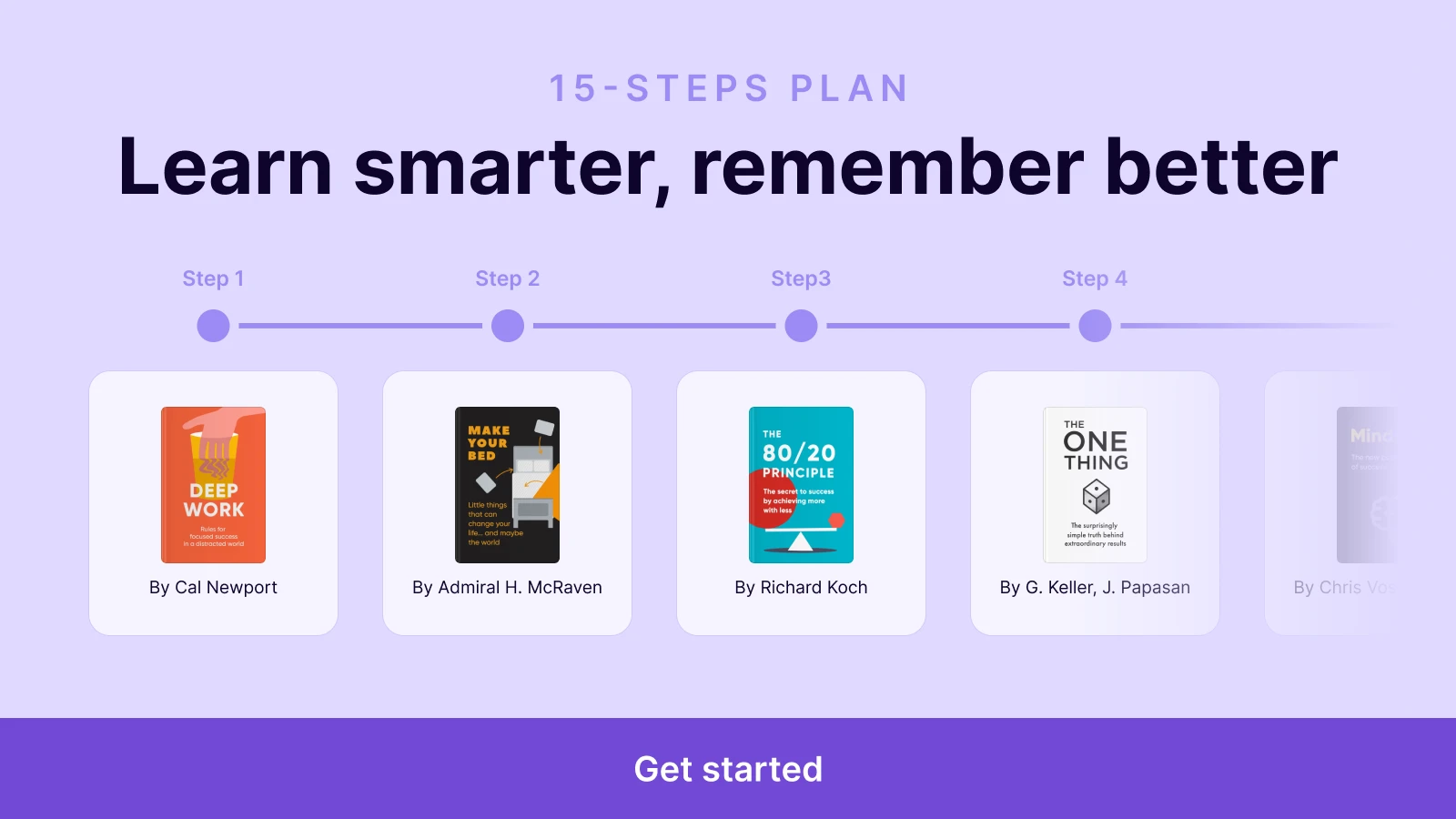
Headway is one of the top personal development tools because our app makes learning quick and easy. With book summaries in bite-sized chunks and various growth plans, it's perfect for anyone looking to improve without spending hours reading. It's a great fit for anyone who's working on building self-awareness, improving their growth mindset, or learning new skills.
The learning feed gives you valuable insights in just a few minutes. It's simple to use in your daily routine, on your home screen, while commuting, or during a short break. Plus, you can track your progress, making it easier to stay on top of your self-improvement goals and keep building habits that stick.
How to choose the right personal development tools
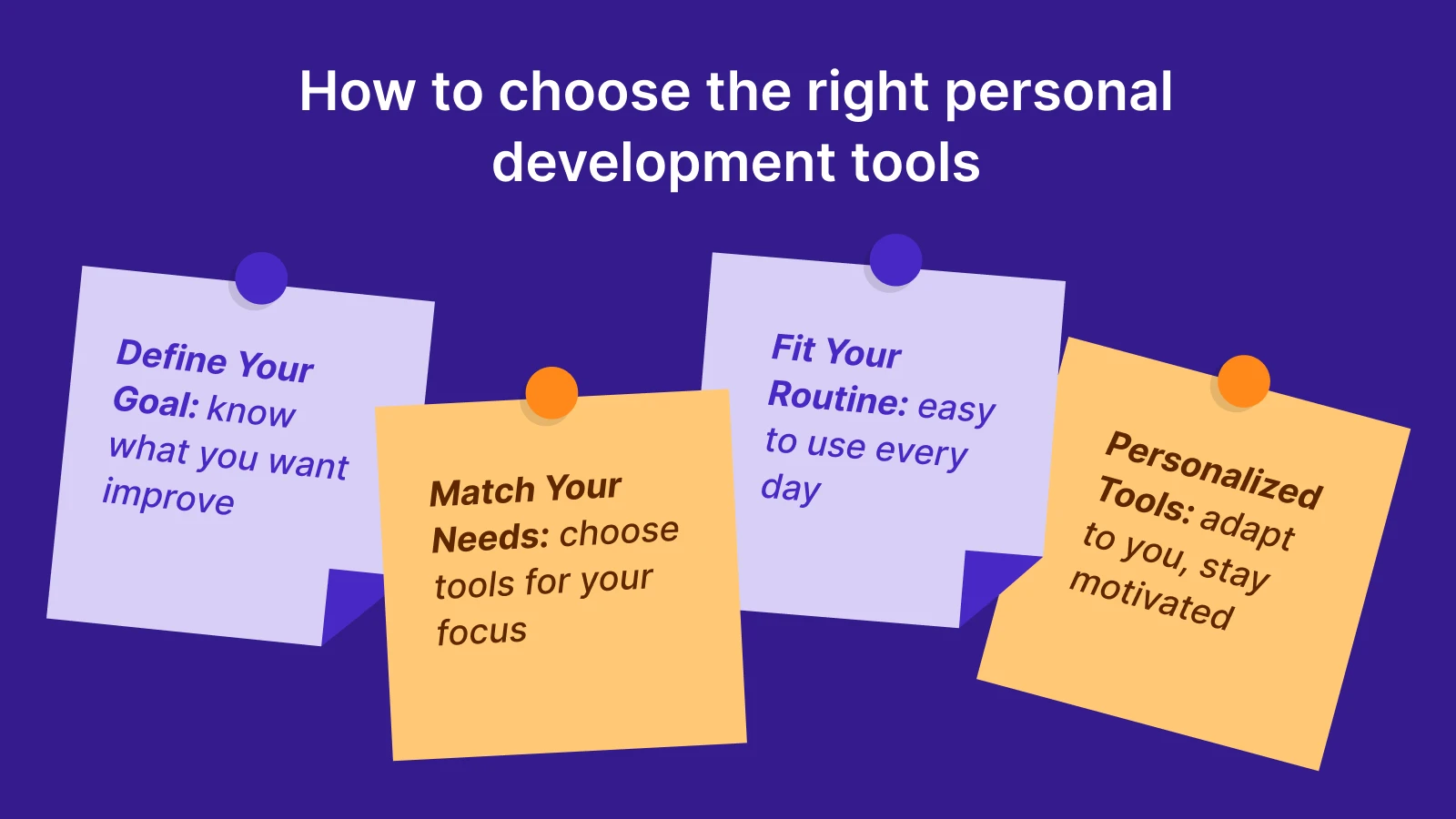
Choosing the right personal development tools is key to reaching your goals. Here's how to pick what works best for you:
Define your goal: Are you focused on improving self-awareness, building better habits, or working on goal setting? Knowing your goal will help guide your choice.
Find tools that align with your needs: If you're working on time management or developing a growth mindset, choose tools that help you stay on top of your tasks and track your progress.
Make sure they fit your routine: Choose tools that can be easily incorporated into your daily routine. The best tools help you stay consistent without adding stress.
Look for personalization: Find tools that adapt to your goals and keep you engaged. This strategy will keep you on track with your self-improvement and help you stay motivated.
How to get the most out of your tools (actionable tips)
To make the most of your personal development tools, here are some tips to help you stay on track:
Set daily or weekly check-ins: Make it a habit to review your goals and progress regularly. A simple check-in, whether daily or weekly, helps keep you focused and motivated.
Track your progress: Use tools that let you measure how you're doing. Whether you're tracking habits, self-reflection, or learning milestones, it's easier to stay on course when you can see how far you've come.
Use tools consistently: The best results come from daily use. Whether you're reading a quick Headway summary or checking off tasks, staying consistent is key to your self-improvement.
Adapt when needed: If something isn't working, don't be afraid to change it up. The right tools should help you adjust and keep moving forward with your personal growth.
Make Headway toward your personal development today!
Personal development tools can really empower you to take control of your self-improvement journey. Whether you're aiming to set goals, boost your self-awareness, or build better habits, these tools can genuinely help you stay on track. The key to success is consistency.
With the right tools in your corner, you can guide your growth, keep an eye on your progress, and maintain your motivation. Headway is a fantastic place to start, offering quick book summaries and practical insights.
📘 Download Headway today and make the most of your time as you embark on your personal growth journey!
FAQs about personal development tools
What is a personal development tool?
A personal development tool is something designed to elevate your personal development. It can be anything: an app, a self-help platform, a podcast, a strategy, or even a skill. A great example of a personal development tool is the Headway app, as it offers insights from book summaries and various growth plans for different life scenarios.
What are the best tools for personal development?
The best tools for personal development depend on what exactly you're aiming to develop. The most common options include journaling, habit trackers, meditation apps, microlearning apps like Headway, coaching platforms, career tools like LinkedIn, and time management and organization apps.
What are the 7 personal effectiveness skills?
When it comes to effectiveness, the seven skills that matter most are self-confidence, determination, stress management, problem-solving, creativity, persistence, and idea generation. When you master these skills, you can become a mentor or manager who is practically the most productive and often the most successful in your craft.
What are some self-management tools?
Some of the most common self-management tools help you with focus, organization, note-taking, and project, time, or productivity management. Popular examples include Trello, Todoist, Notion, Evernote, Pomodoro Timer, as well as traditional journals, checklists, and planners.