Self-growth
 Business & Career
 Success
 Communication
 Healing
 Relationships
 Psychology
 Happiness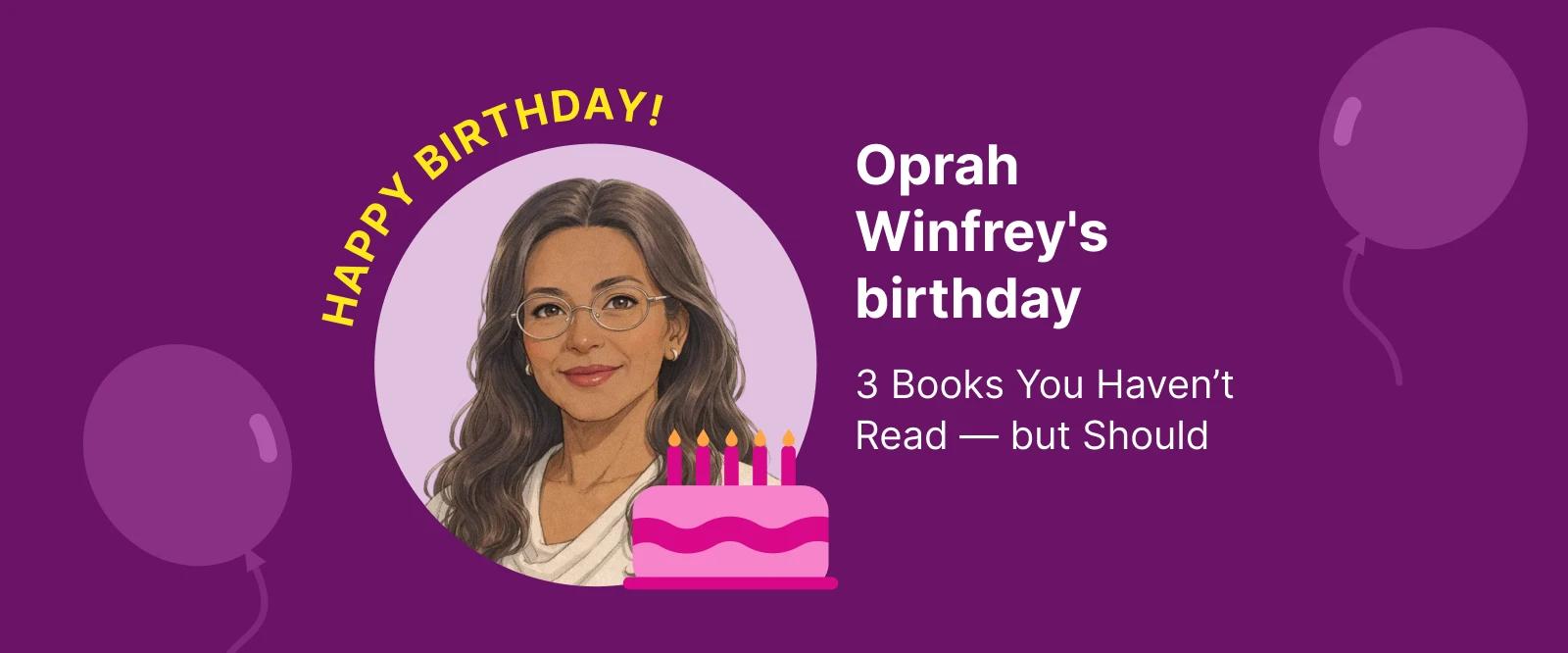
For more than 30 years, Oprah Winfrey has shaped how millions of people think about books. Not because she chased trends, but because she consistently pointed attention toward deeper questions: Why do we struggle? How do we heal? What actually matters when success stops being enough?
At 72, Oprah’s influence feels quieter — and more durable. Her books don’t promise quick fixes or dramatic reinventions. Instead, they reflect something harder and more useful: the work of understanding yourself over time.
And if you’re here, it’s probably not just because of Oprah.
You might be thinking about your own direction. Or about patterns you keep repeating. Or about experiences that still shape how you react, even years later. Oprah’s books resonate because they speak to those moments — the ones where you pause and realize something needs attention.
At Headway, we see this same pattern across thousands of summaries: people don’t look for the best book. They look for the right idea at the right moment.
Quick takeaway: 3 ideas Oprah keeps returning to — and why they matter
Purpose unfolds through attention, not certainty → ‘The Path Made Clear’
Wisdom grows through reflection and conversation → ‘The Wisdom of Sundays’
Healing begins with understanding, not judgment → ‘What Happened to You?’
These books aren’t just titles. They’re three lenses Oprah has used to make sense of life — and they’re lenses many other authors return to as well.
The 3 Oprah Winfrey books you haven’t read — but should
Book 1: ‘The Path Made Clear’
The ‘Path Made Clear’ isn’t about discovering a single life mission and locking it in forever. Oprah approaches purpose as something that emerges — through choices, attention, and honest self-reflection.
Rather than offering a formula, she explores questions that quietly reshape behavior:
Are you responding to expectations, or listening inward?
Are you moving out of fear, or curiosity?
Are you aligned with who you are now — not who you were rewarded for being?
The book’s strength is its realism. Oprah doesn’t present clarity as something she always had. She frames it as something she practiced — often after getting things wrong.
This idea shows up far beyond Oprah’s work. Psychologists, leadership thinkers, and philosophers repeatedly return to the same conclusion: direction comes after awareness, not before it.
📘With Headway, you can explore this idea through summaries from many authors — starting with The ‘Path Made Clear’, and expanding into perspectives on purpose, motivation, and decision-making from dozens of voices.


Book 2: 'The Wisdom of Sundays'
This is not a book you rush through.
The ‘Wisdom of Sundays’ grew out of ‘Super Soul Sunday’, where Oprah spent years listening — really listening — to writers, therapists, spiritual teachers, and thinkers. Each chapter distills a single theme: forgiveness, gratitude, resilience, presence.
What stands out is Oprah’s role as a curator rather than an authority. She doesn’t rush to conclusions. She connects ideas, reflects on them, and lets them breathe.
The book quietly argues for something countercultural: wisdom isn’t about consuming more information — it’s about creating space to reflect on what you already know.
You’ll find this same idea echoed across books on mindfulness, emotional intelligence, and even creativity. Insight rarely comes from intensity; it comes from attention.
📘 This theme appears across Headway summaries on reflection, awareness, and mental clarity — letting you see how different authors approach the same idea from unique angles.
Book 3: 'What Happened to You?'
Written with psychiatrist and neuroscientist Dr. Bruce D. Perry, ‘What Happened to You?’ reframes one of the most common — and harmful — questions we ask.
Instead of “What’s wrong with you?” the book asks: “What happened to you?”.
That shift changes everything.
The book explains how early experiences shape the nervous system, emotional responses, and behavior long into adulthood. Oprah brings personal context and vulnerability; Perry brings neuroscience and clarity. Together, they make trauma understandable without making it defining.
This isn’t about labels. It’s about compassion — for yourself and for others.
What’s striking is how often this idea appears across modern psychology and personal growth writing: behavior is information, not failure. Understanding precedes change.
📘With Headway, you can explore this perspective not just through ‘What Happened to You?’, but through many summaries on trauma, emotional regulation, and resilience.
The pattern behind Oprah’s books
Seen together, these books form a quiet philosophy:
Awareness before action
Compassion before judgment
Meaning before achievement
What’s interesting is that these same themes appear again and again across the most impactful books on psychology, leadership, and personal growth — even when the authors disagree on methods or beliefs.
That’s where reading across authors matters. One book can open a door. Many perspectives help you understand the room.
Explore the Ideas — not just one author
If Oprah’s books resonate, it’s not because she has all the answers. It’s because she keeps returning to the right questions.
With Headway, you can explore 2,000+ summaries full of life-changing ideas — across psychology, relationships, purpose, leadership, and emotional health. Each summary takes about 15 minutes and helps you decide which ideas — and which books — are worth your deeper attention.
📘Explore Headway and read based on what you need now, not just what’s trending.
Frequently asked questions about Oprah Winfrey’s books
When is Oprah Winfrey’s birthday?
Oprah Winfrey was born on January 29, 1954. She turns 72 this in 2026.
Are these books memoirs?
Not exactly. They blend personal reflection, conversation, and research rather than following a chronological life story.
Which Oprah book should I start with?
‘What Happened to You?’ is a strong starting point if you’re interested in emotional health. ‘The Path Made Clear’ works well if you’re reflecting on purpose or direction.
Why do Oprah’s books still feel relevant today?
Because they focus on timeless questions: how we heal, how we grow, and how our experiences shape who we become.