Self-growth
 Business & Career
 Success
 Communication
 Healing
 Relationships
 Psychology
 Happiness

Think about the last time you left a conversation feeling truly heard.
You know that specific feeling: where your shoulders drop an inch, your jaw relaxes, and you feel like you actually exist in the other person's world. Now, contrast that with the last time you didn't. Maybe you were interrupted, or perhaps they were just waiting for their turn to speak, completely ignoring your viewpoints.
The difference between those two moments usually comes down to one thing: mutual respect. It isn't just a polite given in life — it's a practice. Whether you're dealing with family members, a partner, or colleagues, this shared dignity is what keeps our mental health intact and our connections from fraying at the edges.
When we show respect, we aren't just being nice; we are acknowledging the fundamental value of the person standing before us. Better connections lead to a better life.
📘 Download Headway now to start building the relationships you've always wanted.
The one thing thriving relationships never skip.
Bestselling authors explain the secret in 15 minutes.
See what worksWhat is mutual respect? (TL;DR)
Mutual respect is the shared understanding that both people in a relationship — romantic, professional, or otherwise — have inherent value.
Mutual respect meaning goes beyond mere politeness: it is a two-way street where both human beings honor each other's personal boundaries and individuality. To define mutual respect, we must see it as the bedrock of trust and mutual respect that allows effective relationships to thrive without one person diminishing the other.
Why mutual respect matters more than you think
When mutual respect is present, everything else in a relationship becomes easier to navigate. It's the invisible safety net that catches us when we disagree. Without it, the "us vs. the problem" mentality quickly dissolves into "me vs. you," which is a fast track to resentment. This applies just as much to your social life as it does to mutual respect in the workplace.
Builds psychological safety — People speak honestly and communicate effectively when they trust they won't be punished or mocked for their thoughts.
Enables real conflict resolution — It allows you to be objective during a fight, ensuring disagreements get solved instead of just suppressed.
Sustains motivation and retention — In a professional setting, team members work harder and stay longer when they feel their contributions are seen; in fact, the American Psychological Association found that feeling respected is a top predictor of job satisfaction.
Creates emotional safety and well-being — It allows you to be vulnerable and imperfect without fear that your flaws will be used against you later.
Five signs of mutual respect in a relationship
It's often easier to spot a lack of mutual respect than it is to see the quiet, healthy version. If you're looking for signs of disrespect, you'll usually find them in eye rolls, dismissive comments, or a total disregard for setting boundaries. But what does the good stuff look like? Mutual respect in a relationship is often found in the small, boring moments.
You disagree without it becoming a verdict on character — You can hate their idea but still value their intelligence.
You honor commitments, even small ones — Showing up on time proves you know their time is just as valuable as yours.
You can say "no" without a paragraph of justifications — In healthy relationships, a boundary is a request for safety, not a personal attack.
You listen to understand, not just to respond — This is the core of active listening; you're actually curious about their perspective.
You give each other room to be wrong — There is no "I told you so" culture; instead, there is a culture of mutual respect where mistakes are handled with grace.
📘 You can't respect others if you don't respect yourself. Dive into the best books on self-worth and self-awareness on Headway today.
How to build mutual respect: Four practices that actually work
If you've realized that your culture of mutual respect at home or at the office is feeling a bit thin, don't panic. You can build mutual respect just like any other habit. It's not about grand gestures — it's about the small, daily ways you interact with the human beings in your life. Here are four ways to start moving the needle.
1. Listen to understand, not to respond
Most of us listen like we're waiting for our turn in a courtroom — we're just looking for an opening to make our point. But mutual respect means putting your own ego on the shelf for a second to actually hear someone else's viewpoints. This is the heart of active listening.
In your next disagreement, try repeating back what the other person said before you jump in with your "well, actually..." It sounds like: "So, what I'm hearing is that you feel overwhelmed when the kitchen is messy after a long day. Did I get that right?" You aren't necessarily agreeing, but you are being objective about their experience.
📘 In the book 'Nonviolent Communication,' Marshall Rosenberg explains that this kind of open communication is what transforms a conflict into a connection.
2. Honor boundaries, even when you disagree with them
One of the biggest red flags in relationships is when one person treats another's personal boundaries as a suggestion rather than a rule. You might think your partner's need for alone time on a Friday night is weird, but practicing mutual respect means you honor it anyway. This applies to everything, especially to how people handle your specific personality traits.
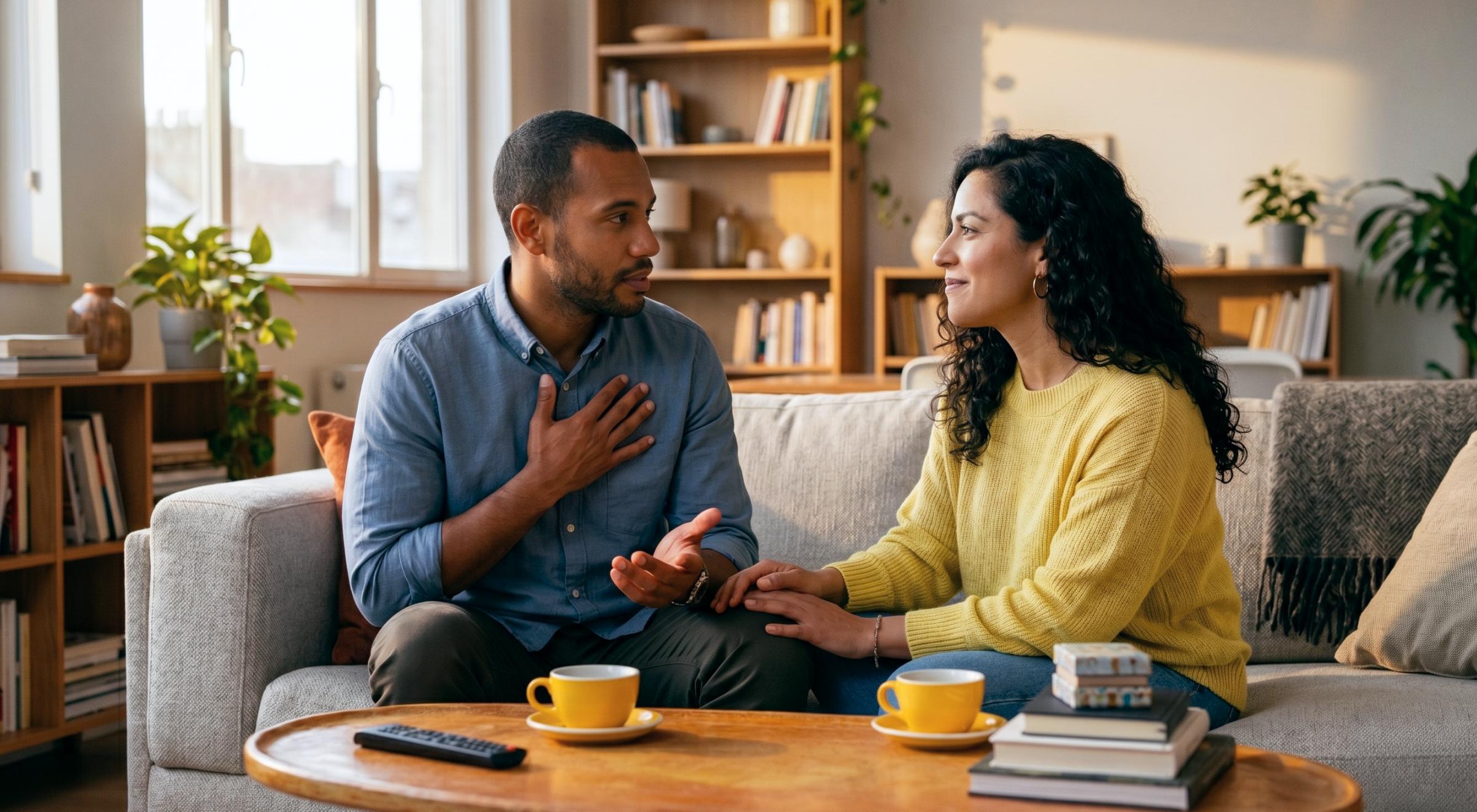
Practice mutual respect in your relationship to build stronger connections.
If a colleague says they don't answer emails after 6:00 PM, respecting that is an example of mutual respect. It shows you value their well-being more than your own convenience. When you respect a boundary you don't fully understand, you're sending a message that you see them as a whole person, not just a tool for your needs.
📘 As Henry Cloud and John Townsend point out in the book 'Boundaries,' you can't have a healthy relationship without clear "no" zones.



3. Give credit and acknowledge contributions
In a busy environment, it's so easy to let good work or a kind act go unnoticed. But mutual respect in the workplace and at home thrives on acknowledgment. When team members feel like their work is invisible, their self-esteem drops, and retention plummets.
This isn't about fake flattery. It's about self-awareness and noticing when others help you succeed. A simple "I really appreciated how you handled that difficult client today" or "Thanks for taking the bins out so I could sleep in" goes a long way.
📘 In his classic 'How to Win Friends and Influence People,' Dale Carnegie highlights that a sincere sense of being appreciated is a fundamental human need. When you acknowledge someone, you show respect for their effort and their time.
4. Keep the commitments you make to each other
Every time you do what you said you'd do, you're making a deposit into what Stephen Covey calls the "Emotional Bank Account" in 'The 7 Habits of Highly Effective People.' Mutual respect in a relationship compounds when both people are consistent. If you say you'll handle the decision-making for dinner or meet a friend at 5:00 PM, show up.
When you constantly flake or change plans, it creates a lack of mutual respect. It tells the other person that your schedule is the only one that matters. Keeping your word builds trust and mutual respect, which are the ingredients needed for effective relationships. It shows you have enough self-respect to be a person of integrity, and that you respect the other person enough not to waste their life waiting on you.
What mutual respect is NOT
To really understand what is mutual respect, we have to clear up some of the common myths. Sometimes people confuse respect with being a pushover or never speaking their mind, but that couldn't be further from the truth.
Myth: Mutual respect means you have to agree on everything.
Truth: You can find common ground without sacrificing your own viewpoints. Respect is about how you disagree. You can think their idea is a disaster while still using respectful body language and tone.
Myth: Respect is something you only give once someone has earned it.
Truth: Mutual respect means giving it as a baseline. It's a decision you make about your own character. You treat people with dignity because you are a respectful person, not because they've jumped through enough hoops.
Myth: It's a passive state.
Truth: Respect is active. It requires you to communicate effectively, check your negative behavior, and sometimes walk away from situations involving domestic violence or chronic abuse. Knowing when to leave is actually the highest form of self-respect.
Build every relationship on a stronger foundation — Start with Headway!
Whether you are currently happy and single or working to strengthen a long-term partnership, learning how to build mutual respect is the best investment you can make for your mental health. It's the secret sauce that can help you feel more connected — and yes, it even impacts your physical intimacy.
High levels of respect and safety are often the first steps to increasing sex drive and help you last longer in bed, simply because you aren't fighting a silent war in the bedroom.
Shared values and mutual respect are common attributes of every relationship that stands the test of time. But these aren't always skills we're taught in school. If you're ready to go further, some of the world's most transformative books have been written on exactly this.
On Headway, you can explore the key ideas from titles like 'Nonviolent Communication,' 'Boundaries,' and 'The 7 Habits of Highly Effective People' in 15 minutes or less. You don't have to spend weeks reading to get the tools you need to show up better at work or at home. You can take the insights and actually use them today.
What does mutual respect mean for your life? It means less drama, more trust, and a deeper sense of peace. Start today. The best relationships in your life are built one choice at a time.
📘 Download the Headway app and find your path to better relationships.
FAQs about mutual respect
What does mutual respect mean?
Mutual respect means you and the other person both recognize each other's inherent value. It's not about being a pushover or agreeing on everything, but about honoring boundaries and individuality. Think of it as a two-way street where neither person feels small or ignored. It's the essential baseline that keeps every healthy relationship from falling apart.
What are examples of mutual respect?
One big example is active listening, really hearing someone out without jumping in to fix them or argue. Another is honoring a "no" without making them feel guilty for it. In the workplace, it's about acknowledging a teammate's effort even if you disagree with their method. These small actions prove that you value the person more than your ego.
Is mutual respect a love language?
While it's not one of the official five love languages, mutual respect is the foundation they all sit on. Without it, words of affirmation feel fake, and acts of service feel like chores. Many people consider respect their primary emotional requirement; if they don't feel respected, they can't feel loved. It's the underlying fuel for any lasting bond.
How do we show mutual respect?
You show it by being objective when conflicts arise and using body language that says "I'm present." It means keeping the small commitments you make, like showing up on time and giving credit where it's due. Showing respect is less about grand speeches and more about the quiet ways you protect the dignity of the people around you every day.
What are the signs of mutual respect?
Look for relationships where you can say "no" without a long paragraph of excuses. Signs include open communication, where viewpoints are shared without fear of mockery, and a genuine interest in each other's personal growth. When it's present, you feel safe being imperfect because you know your value doesn't depend on being right or performing for the other person.