Self-growth
 Business & Career
 Success
 Communication
 Healing
 Relationships
 Psychology
 Happiness
Did you know the average employee only has about 24 minutes a week for formal learning? That's barely 1% of a standard work week. Between back-to-back meetings, Slack pings, and a never-ending inbox, carving out two hours for a training session feels about as realistic as reading 'A Game of Thrones' on your lunch break.
But here's the thing — you don't actually need hours. And that's where microlearning for employees comes into play. Instead of blocking out huge chunks of time, you can grow your skills in small, manageable bursts that fit around your actual life. Whether you're a new hire still figuring out where the coffee machine is or a senior leader juggling ten priorities, bite-sized learning lets you keep growing without burning out.
Unlock your daily growth superpower
Transform your routine to fuel continuous learning and effortless improvement.
Let's start📘 Build skills in minutes with Headway.
Quick answer: Why microlearning for employees works
If you're wondering why short lessons beat long ones, here's the gist. The benefits of microlearning come down to how our brains actually process information:
Higher knowledge retention: Your brain holds onto smaller pieces of information way better than hour-long lectures. Science backs this up (more on that below).
Fits busy schedules: You can learn during a coffee break, on your commute, or between meetings — no schedule rearranging required.
Prevents information overload: Instead of drowning in data, you absorb one idea at a time and actually remember it.
Boosts learner engagement: Short, interactive elements like flashcards, infographics, and quizzes make learning feel less like homework and more like a game. That's gamification doing its thing.
Just-in-time learning: Need a quick leadership tip before a big presentation? You can find it in five minutes flat, right on your mobile device.
What is microlearning for employees?
Microlearning is a learning strategy that breaks down big topics into short, focused lessons. We're talking about 2 to 15 minutes per session — not three-hour webinars where you zone out halfway through.
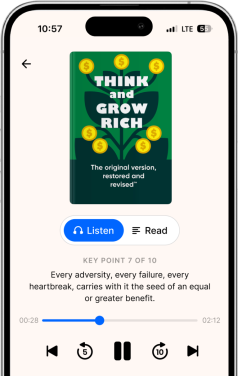
These short microlearning modules come in a variety of formats to keep you engaged. You might watch short videos, read quick book summaries on a mobile microlearning app, flip through flashcards, or take quick interactive quizzes on your phone. The whole idea is to give learners exactly what they need, right when they need it.
And unlike traditional training that asks you to sit still for hours, microlearning aligns with how we actually work today. Our attention spans are shorter (thank you, smartphone era), and our schedules are packed. A mobile-based microlearning approach respects both of those realities.
The science behind bite-sized learning
There's a famous psychological concept called the forgetting curve, first described by Hermann Ebbinghaus. It shows that we forget roughly 50% of new information within an hour and up to 70% within 24 hours — unless we actively review it.
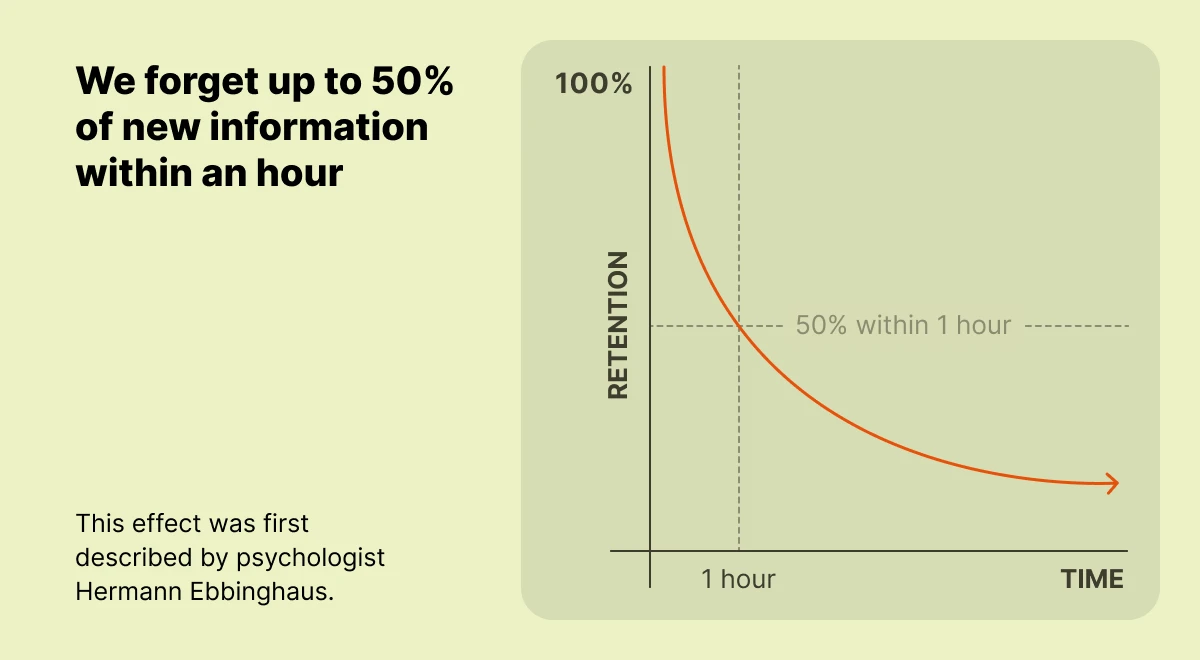
That's why traditional training sessions often fail. They dump a ton of content on you in one sitting, and then... nobody looks at it again. A week later, most of it's gone.
Microlearning fights this curve head-on. By focusing on one clear learning objective at a time and using spaced repetition — reviewing material at specific intervals — you move knowledge from short-term to long-term memory. Think of it like watering a plant. A little bit every day keeps it alive. Flood it once a month, and it dies.
In the Headway app, spaced repetition cards work exactly this way. When you save a highlight from a book summary, the app reminds you to review it later. The timing is designed so the information actually sticks instead of fading away by Friday.
📘 Strengthen memory retention with Headway.

Five practical microlearning examples for everyday work life
You don't need a special classroom or an expensive learning management system (LMS) to start. Here's how real people use microlearning to grow their skills during a typical day:
1. The morning coffee growth plan
While your coffee brews, open a personalized growth plan on the Headway microlearning app. In about ten minutes, you can finish a summary of a book like 'Atomic Habits' by James Clear and start your day with a specific goal in mind. It beats scrolling through social media, and you'll actually feel sharper when you walk into your first meeting.
2. The commuter's audio classroom
Got a 30-minute drive? That's two full book summaries. Use your commute to listen to podcasts or audio summaries through your earbuds — or via Apple CarPlay if you're driving. Headway's audio format means you can learn without ever looking at a screen. Your commute goes from "dead time" to the most productive part of your day.
3. The just-in-time leadership tip
About to have a difficult conversation with a teammate? Instead of winging it, pull up a quick summary on topics like conflict resolution or giving feedback. Five minutes of prep can completely change how that conversation goes. This is just-in-time performance support at its best — the right knowledge, right when it matters.
4. The mid-day reset
It's 2 PM. You're stuck. You've been staring at the same spreadsheet for 20 minutes. Instead of reaching for TikTok, try an interactive short lesson. These bite-sized modules ask you questions and adapt their content based on your answers. It's a refresher that helps your brain reset while you practice skills like time management or creative thinking.
5. Winding down with purpose
Before bed, use focus sounds or binaural beats to relax. You can also listen to a 15-minute summary on happiness, psychology, or mindfulness to end your day on a meaningful note. It's a calmer alternative to doom-scrolling the news — and you might actually sleep better for it.
📘 Turn small moments into growth with Headway.
Microlearning vs traditional training: A side-by-side look
Let's break down how these two training methods compare. This approach isn't about saying one is "bad," and the other is "good" — it's about knowing when each makes sense.
| Aspect | Microlearning | Traditional training |
|---|
Session length | 2–15 minutes | 1–3 hours (or longer) |
Flexibility | On-demand, on any device | Fixed schedule, often in person |
Cost | Scalable and affordable | Higher investment in time and travel |
Knowledge retention | Very high — focused, spaced review | Lower — information overload is common |
Learner control | You learn at your own pace | An instructor sets the speed |
Best for | Skill development, refreshers, and onboarding | Deep dives, hands-on workshops, and compliance training |
Content updates | Easy to swap in new microlearning content | Requires redesigning full courses |
Traditional training programs still work great for certain things, like hands-on compliance training or complex topics that need in-depth discussion. But for continuous learning and everyday employee development, microlearning is faster, cheaper, and sticks better.
How to build your own daily microlearning routine
Building a learning habit is easier than you think. Want to know the trick? Stop treating it like a big project and start treating it like brushing your teeth — a small thing you do every day without overthinking it.
Step 1: Define your "why"
What do you actually want to get better at? Maybe you want to hit your reading goals this year. Maybe you need to sharpen specific skills, such as public speaking, wealth management, or emotional intelligence. Knowing your goal makes it ten times easier to show up, even on the days when you'd rather not.
Step 2: Pick a mobile-first microlearning tool
Your phone goes everywhere with you. That's what makes mobile microlearning platforms so effective — they turn the small pockets of time you already have (like waiting in line, sitting in a waiting room, or riding the elevator) into learning moments. No laptop needed.
Step 3: Download content for offline learning
Wi-Fi isn't always reliable. Download your learning modules or summaries ahead of time so you can learn on flights, in the subway, or anywhere with a spotty connection. Headway's offline mode makes this painless.
Step 4: Track your wins and keep the streak alive
Daily streaks are weirdly motivating. Even if you only have three minutes, finishing one small lesson keeps your momentum going. The Headway app tracks your streaks and shows your progress, which makes it harder to skip a day. And those small wins add up — after a month, you might be surprised how much you've learned.
📘 Build lasting learning habits with Headway.
Implementing microlearning in your workplace
If you're a manager or an L&D professional thinking about rolling out microlearning across your team, here are a few tips that actually work:
Start with onboarding: Instead of overwhelming new hires with a 200-page handbook, break the essentials into short microlearning modules. Send new employees a quick video about company culture on Day 1, a brief quiz on workflow basics on Day 2, and a five-minute overview of key tools on Day 3. It's less intimidating, and they'll remember more.
Add it to existing training programs: You don't have to throw out your current employee training setup. Use microlearning as a complement — a refresher after a workshop, a quick recap before a quarterly review, or a follow-up module after a live session.
Track the right metrics: Completion rates are fine, but also look at knowledge retention over time. Are employees applying what they learned? Are they coming back for more? A good mobile microlearning platform gives you data on engagement, not just attendance.
Make it social: Share book summaries or learning highlights in your team's Slack channel or on your LinkedIn page. When people see their colleagues learning, it creates a culture of continuous learning — not because it's mandatory, but because it's normal.
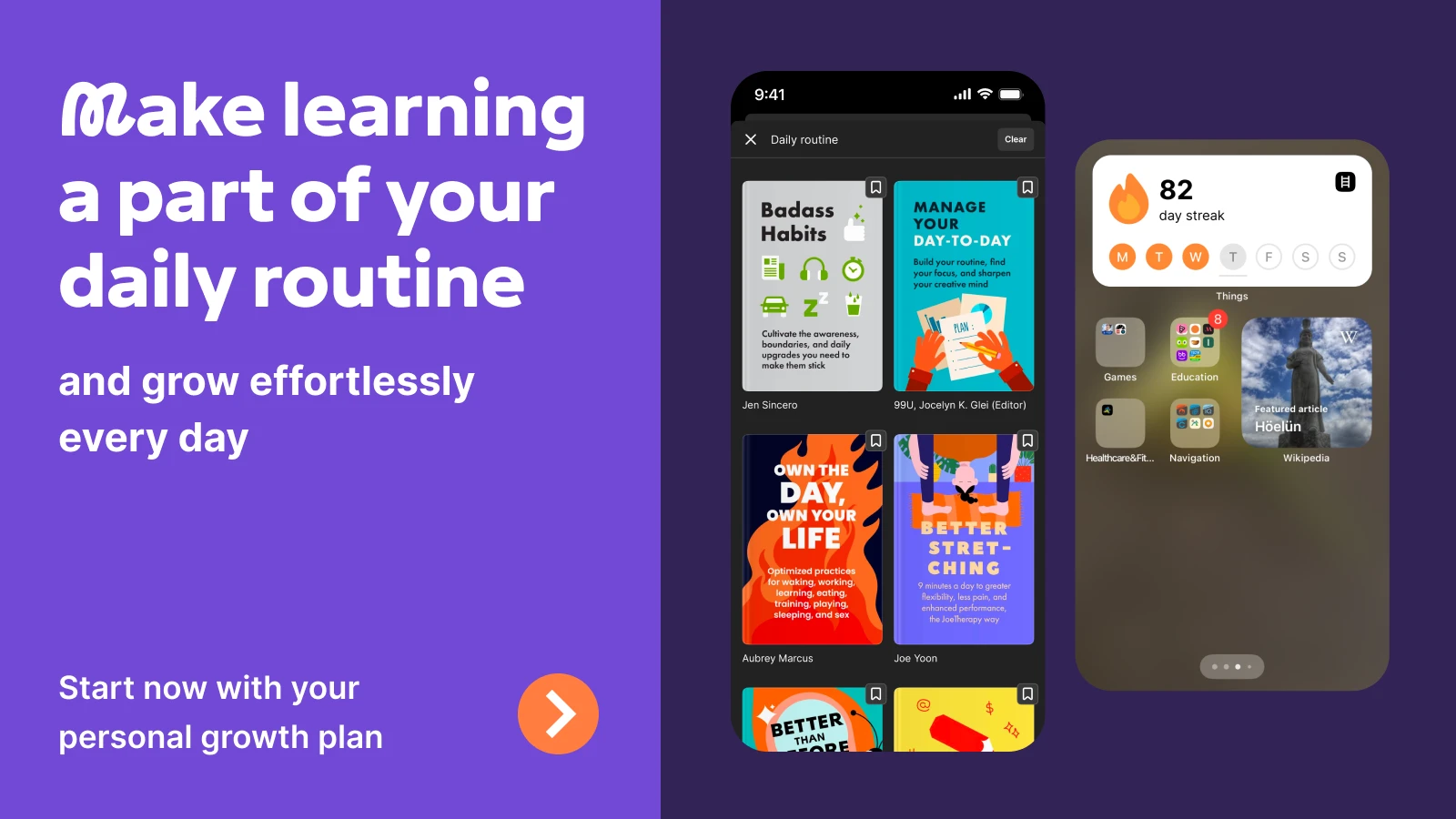
Why 55 million people choose Headway for mobile microlearning
Headway isn't just a library of book summaries — it's a mobile-first microlearning tool built to help you grow every day without overhauling your entire schedule.
Here's what makes it work:
Personalized from day one: After a quick onboarding quiz about your goals, Headway builds a custom plan just for you. Whether you want to improve your leadership, manage money better, or develop stronger relationships, the microlearning app for employees adapts to your needs.
Over 2,500 titles and growing: New summaries get added all the time, so there's always fresh microlearning content to explore — from business and productivity to psychology and wellness.
Read or listen — your call: Every summary is available in text and audio. Read on the train, listen while you cook. The mobile app microlearning experience fits whatever mode you're in.
Spaced repetition built in: Save your favorite takeaways, and the app will remind you to review them at the right time — no sticky notes required.
Offline mode: Download summaries before you head out, and learn without needing Wi-Fi.
Daily streaks and challenges: Stay motivated with progress tracking, daily goals, and the option to join challenges with other learners.
The learning experience is designed to be simple, fun, and genuinely useful. No corporate jargon. No hour-long videos. Just the best ideas from the best books, broken into pieces you can actually use.
📘 Ready to start? Download the Headway app and see how 15 minutes a day can change the way you learn, work, and grow.
Frequently asked questions on microlearning for employees
What are the best microlearning platforms for employees in 2026?
The best microlearning platforms for employees depend on what kind of learning your team needs. For self-development and leadership skills, Headway stands out — it turns bestselling nonfiction into quick audio and text summaries that employees can fit between meetings or during a commute. For building custom microlearning for employees with quizzes and tracking, SC Training (formerly EdApp) and EduMe are popular choices. TalentCards works well for flashcard-based training, especially for frontline workers. And if your team needs compliance or certification content, platforms like Coursera for Business offer longer-form courses you can pair with microlearning refreshers.
What is the difference between microlearning and e-learning?
E-learning is any learning that takes place online, whether through courses, webinars, video tutorials, or other formats. Microlearning is a specific type of e-learning that focuses on very short, bite-sized modules. Think of e-learning as the umbrella and microlearning as one (very effective) style underneath it. Most microlearning courses live inside a learning management system or a dedicated mobile microlearning app like Headway.
Can microlearning work for complex topics?
Absolutely. You can break a complex subject like "financial strategy" or "project management" into 15 or 20 small modules. Each one covers a single concept, so you master one piece before moving on to the next. It's actually easier to understand hard topics this way because you're not trying to absorb everything at once. Many microlearning mobile platforms are built specifically for this kind of structured skill development.
Is microlearning good for new employees?
It's one of the best tools for onboarding. Instead of overwhelming new employees with a mountain of paperwork and a five-hour orientation video, you can send them short, focused lessons — real-time videos, quick infographics, and interactive quizzes — spread out over their first few weeks. They learn more, retain more, and actually enjoy the process.
How long should a microlearning module be?
Most research suggests keeping each microlearning module between 2 and 15 minutes. The sweet spot depends on the topic and the format. A quick flashcard review might take two minutes, while an audio summary could run 10 to 15. The key is that each module covers one specific learning objective — no more, no less.
Can I use microlearning on my phone?
Yes, and that's kind of the whole point. The best microlearning apps mobile users love are designed for small screens and short attention windows. You can learn on your mobile phone during a commute, in a waiting room, or between meetings. Apps like Headway are built mobile-first, so the experience feels natural on your phone — not like a shrunken desktop site.
What's the best way to use microlearning with an LMS?
If your company already uses a learning management system, microlearning fits right in. You can add short video modules, interactive quizzes, and book summary assignments alongside your existing training content. The best setup combines the structure of an LMS with the flexibility of a mobile microlearning platform — so employees get both guided paths and on-demand learning whenever they need it.
Are microlearning and a mobile LMS the same thing?
Not quite. A mobile LMS (learning management system) is a platform that hosts, delivers, and tracks all kinds of training content — long courses, certifications, compliance modules, you name it. Microlearning and a mobile LMS overlap when an LMS delivers short-form content, but they're not the same. Think of it this way: an LMS is the container, and microlearning is one style of content you can put inside it. You can run microlearning through an LMS, but you can also use standalone microlearning apps mobile users love — like Headway — without an LMS at all.
What are the best microlearning courses for employees in 2026?
The most popular microlearning courses for employees right now focus on skills that matter across industries: leadership, communication, time management, emotional intelligence, and financial literacy. For soft skills, Headway offers a growing library of quick book summaries on topics like negotiation, productivity, and critical thinking — you can think of each summary as a mini-course built around a bestselling book.
SC Training has a free course library with ready-made modules on compliance, safety, and customer service. Coursera and LinkedIn Learning also break longer courses into short video lessons, which works well if your team needs certifications.