Self-growth
 Business & Career
 Success
 Communication
 Healing
 Relationships
 Psychology
 Happiness
Success isn't about the giant leaps we take — it's about the micro goals we hit every day.
We all know that feeling of staring at a huge to-do list or a set of larger goals that feel more like a heavy weight than a source of inspiration. It's easy to get paralyzed when your long-term goals look like mountains you aren't prepared to climb. This "big goal fatigue" is a real thing.
It's exactly why most New Year's resolutions end up in the bin by mid-February. But what if you stopped looking at the peak and just looked at your shoes? That's where microlearning tools like Headway come in. They help you turn that overwhelming mountain into a series of manageable tasks so you can start winning today.
📘 Try Headway today to turn your big goals into tiny, achievable wins
Unlock your daily growth superpower
Transform your routine to fuel continuous learning and effortless improvement.
Let's startQuick answer: What are micro goals, and how do they benefit?
Micro goals are small, specific milestones that break down a larger objective into tasks that take 10 minutes or less. Examples include writing one paragraph, reading a five-minute book summary on Headway, or doing two minutes of stretching.
These short-term wins work by providing immediate dopamine responses. This positive reinforcement keeps you moving toward your larger goals without the stress of procrastination.
What are micro goals? (the building blocks)
Think of your biggest ambitions as a massive Lego castle. Your larger objectives, like switching careers or writing a book, are the finished display. But you can't just wish the castle into existence. You need the bricks. Micro goals are those individual bricks. They're the stepping stones that make the final structure possible.
While a macro goal is your destination, micro goal setting is about the very next small step. If your big goals involve getting physically fit, the macro goal is the marathon. The micro goal is just putting on your running shoes. By focusing on these tiny wins, you remove the mental friction of starting.
You aren't "reorganizing the whole house." You're just "cleaning one drawer." This shift in goal setting takes the pressure off. It turns a scary, complicated task into something so simple that it's almost impossible to fail at. It's the difference between staring at a blank page and committing to writing just one sentence.
📘 You don't need a free hour to get smarter. Use Headway to turn your commute into a series of tiny wins for your career.
Why micro goals work for your brain (science behind them)
Your brain loves a finish line. Every time you complete a task — even a tiny one — your brain releases dopamine. This chemical creates a genuine sense of accomplishment, like a small reward from your nervous system. That's a big reason why micro goals work so well. You don't have to wait months to feel good about a project. You get that positive reinforcement every few minutes.
Teresa Amabile and Steven Kramer, whose research is published on Harvard Business School's website, identified what they call the "Progress Principle." It suggests that steady progress in your daily work is one of the best ways to maintain your well-being. When you finish a small step and check it off, you prove to yourself that you're capable. This mindset helps stop procrastination before it starts.
There's also something called the Zeigarnik Effect. This is the mental itch we get when a task is left half-done. Because micro goals are so short, you can finish them quickly and "close the loop" in your head. It stops your mind from feeling cluttered and gives you the energy to move to the next manageable task.
The power of micro goals is really about keeping your mood stable while you move toward something bigger.
Micro goals vs macro goals: Do you need both?
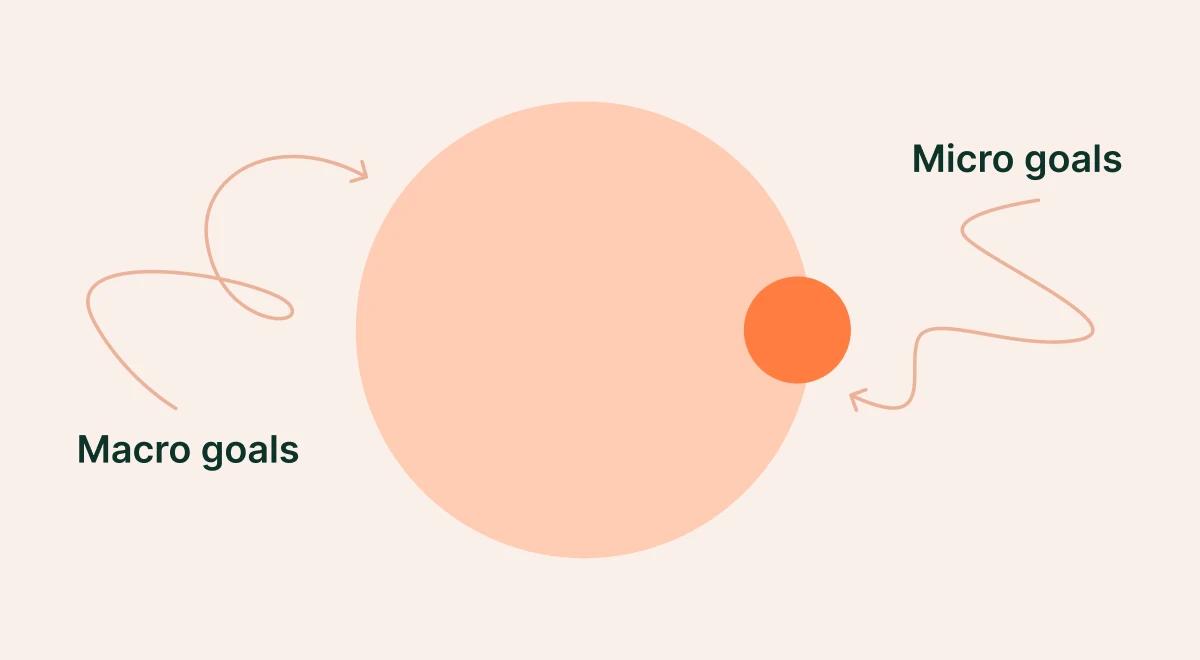
Understand how micro steps fuel macro success and get practical insights.
Some people worry that focusing on small goals means losing sight of their big goals. That's not the case. You still need those larger goals to know which way to walk. Without long-term goals, you're just doing random things without a plan. You need that destination to keep your steady progress on the right track.
Staring only at your larger objectives, though, is a quick way to hit burnout. If you only feel happy when you hit a major milestone, you'll spend most of your life feeling like you haven't done enough. That's where micro goal setting comes in. It bridges the gap.
Here's how they work together:
Macro goals provide the vision. They define where you want to end up.
Micro goals are the achievable steps. They tell you what to do at 9:00 AM today.
Macro goals often feel heavy. Effective micro-goals feel easy.
Building these stepping stones makes the path clear. Your long-term goals stay in the back of your mind as a guide, while your short-term focus stays on the one thing you're doing right now.
This balance keeps you moving forward without that overwhelming feeling of being stuck. When you break things down this way, goal setting becomes a tool for action rather than a source of stress.
📘 Growth doesn't have to be exhausting. Use Headway to find one small move that makes your professional life a little bit easier.



Micro goals examples for every part of life
It's easy to get stuck when you only think about the finish line. To make steady progress, look at what you can do right now. Hitting a small success early in the day gives you the energy to keep going. Here are some micro goals you can use to break up your day.
Career and professional development
LinkedIn update: Instead of rewriting your whole profile, just update your current job description or share an interesting article.
Follow-up: Send one quick "thank you" or check-in message to a colleague.
Inbox zero (sort of): Delete or archive just five old emails that have been sitting there for weeks.
Meeting prep: Write down three specific questions before your next call starts.
Health and well-being
Hydration: Drink one full glass of water before you allow yourself a second cup of coffee.
Movement: Stand up and stretch for 60 seconds after you finish a long task.
Meal prep: Chop just one vegetable for tonight's dinner while your lunch is heating up.
Digital break: Put your phone in another room for 10 minutes to stop the habit of constant scrolling.
Personal development and finance
Save money: Move five dollars from your checking account into a savings account. It seems tiny, but it builds the habit.
Reading: Read just two pages of a book or one summary on the Headway app.
Budgeting: Open your banking app and look at your transactions from yesterday. No judging, just looking.
Learning: Find one new word in a different language and say it out loud three times.
Focusing on these manageable tasks keeps you from feeling like you're failing. Each one is a small step that adds up. When you look back at the end of the week, you'll see that these short-term wins created a lot of momentum.
How to set micro goals you'll actually achieve
Setting micro goals isn't about being perfect. It's about being realistic, so you actually follow through. You can use this step-by-step framework to turn any of your big goals into something you can finish without breaking a sweat.
1. Pick your macro goal.
Start with the big picture. Maybe you want to get better at your job or run a marathon. That's your destination. You need to know where you're going so your micro-goal setting has a purpose.
2. Shrink the first step until it feels "stupidly easy."
Now, here's the most important part. If your goal is to write a book, don't tell yourself to write a chapter. Tell yourself to open a blank document and write one sentence. If that still feels like a complicated task, shrink it again. The goal is to lower the friction until you have no excuse to say no. These achievable steps are what stop procrastination in its tracks.
3. Assign it a specific time.
Vague plans usually fail. Instead of saying "I'll do this later," pick a time. Make it measurable. "I will read one Headway summary at 8:15 AM while I wait for the kettle to boil." When you have a clear time and place, you're much more likely to track progress and feel that sense of accomplishment. That's what turns goal-setting from a scary chore into a simple part of your day.
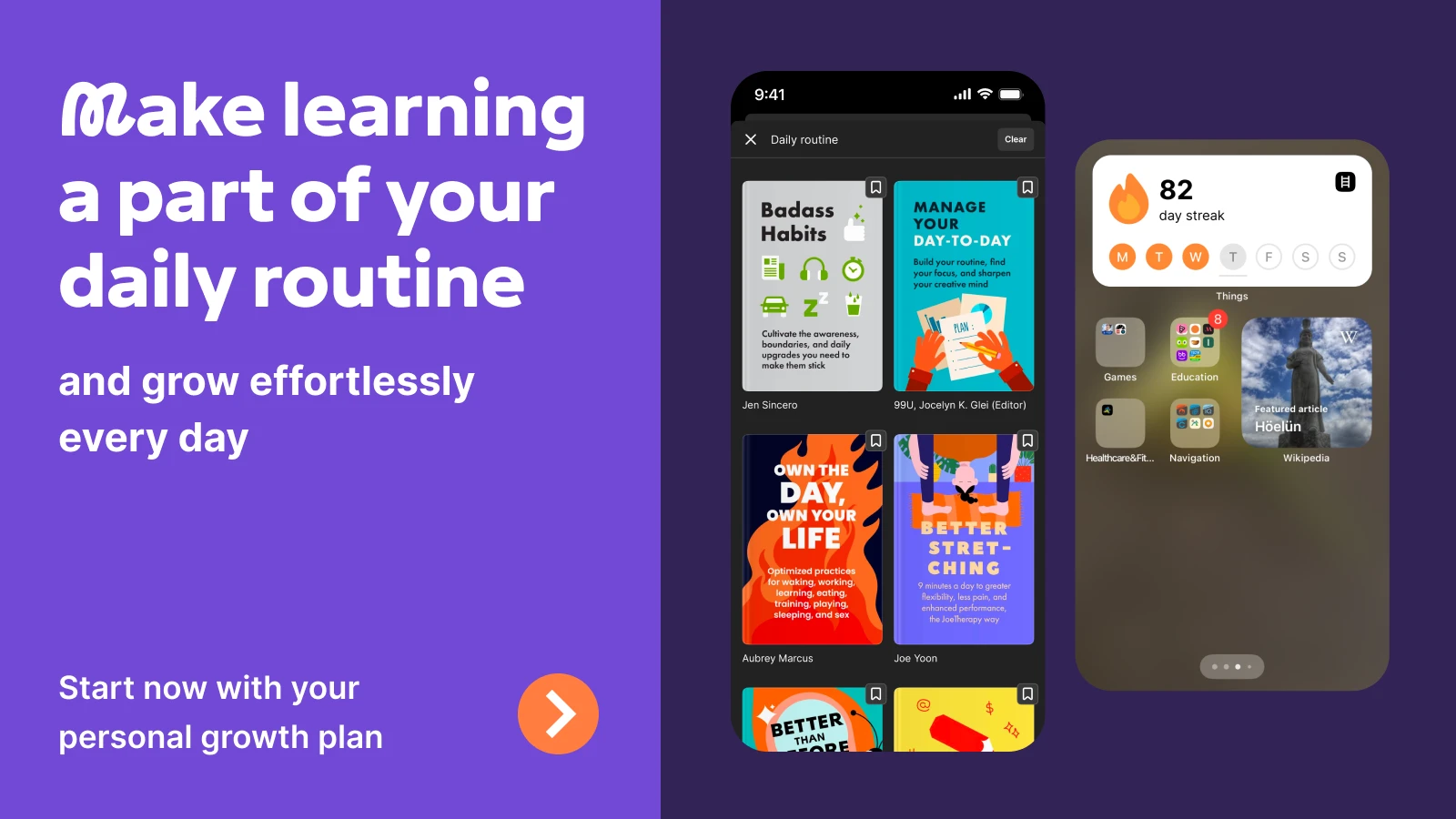
Achieving your micro goals with Headway, a microlearning app
Making learning easy enough that you actually do it every day is one of the best ways to maintain a growth mindset. That's where microlearning becomes your best friend. Most people think they need to spend hours in a library to get ahead in their professional development, but that usually leads to burnout.
Headway helps you hit your milestones by breaking down big ideas into practical steps. You can get the core message of a well-known book in about 15 minutes. This flexibility means you can work on your well-being or learn a new leadership skill while you're commuting or waiting in line.
By using these tiny windows of time, you prove to yourself that you don't need a lot of extra hours to see a change. You just need to keep taking that next small step. When you combine micro goals with a steady stream of new ideas, you stop feeling stuck and start seeing real, steady progress.
📘 Download Headway and hit your first micro goal in the next 15 minutes!
FAQs about micro goals
What are micro goals?
Micro goals are tiny, specific tasks you finish in ten minutes or less. Instead of looking at a big project that feels heavy, you focus on one small part you can actually complete today. These small steps create a dopamine response in your brain. This strategy makes you feel successful immediately and stops you from putting things off.
What is an example of a micro goal?
If you want to write a long report, a micro goal is writing just one paragraph. If you want to get fit, your goal might be to do five push-ups before your morning coffee. These aren't big achievements on their own. But they're the bricks that build your steady progress without making you feel totally overwhelmed or exhausted.
How macro goals differ from micro goals?
Macro goals are the final results you want, like buying a house or getting a promotion. Micro goals are the small, actionable steps that get you there today. While a macro goal provides a clear direction, it can often cause burnout. Micro goals provide the momentum and positive reinforcement you need to keep moving forward without getting stuck or quitting.
What micro goals can I try to achieve today?
You could send one follow-up email you've been avoiding. Maybe you drink a full glass of water before you start your workday. Another great move is reading a single book summary on the Headway app. These small wins build your confidence. They prove that you're moving toward your big goals, even when your schedule feels packed.
Can Headway help me achieve my micro goals?
Headway is built for people who want to learn but don't have much spare time. Our app breaks down big ideas from bestsellers into 15-minute summaries. Finishing one summary is a perfect micro goal. It gives you a sense of accomplishment and builds your professional development. This approach makes self-improvement feel like a daily win instead of a daunting chore.