Self-growth
 Apps & Digital Tools
 Business & Career
 Success
 Growth Tools
 Psychology
 Communication
 Relationships

You picked up your phone to check the time. Ninety minutes later, you're three TikToks deep into someone's kitchen renovation, and you can't remember what you originally meant to do. Most of us have lived that exact scene. Probably did it yesterday.
The thing is, learning how to spend less time on the phone isn't a willpower problem. Your phone was designed by some of the smartest engineers on the planet to be exactly this hard to put down. They built variable rewards into every app you open.
They made the notifications red on purpose. They removed the natural stopping points. The good news is that the same principles they use to keep you scrolling can be flipped around to help you stop — and that's most of what this article is about.
📘 Replace the scroll with something that actually leaves you better off — try Headway, the app gives you 15-minute reads from the world's best nonfiction. It is built for the gaps in your day where you'd otherwise be on Instagram.

How to spend less time on your phone: The short answer (TL;DR)
Cutting phone use works when you make the phone harder to reach and your alternatives easier. The principle is friction, not willpower — that's the answer to how to spend less time on my phone for most people.
Start by checking your actual screen time. Most people underestimate by half or more, which is part of why the problem feels invisible.
The things that actually work: turn off all notifications you don't need, log out of or delete the apps you scroll on, keep the phone out of the bedroom, set phone-free zones around meals and the first hour of the day.
Replacement matters as much as removal. If you don't fill the freed time with something rewarding, the old habit comes back fast. How to spend less time on the phone is half a habits question, not a settings one.
The most underrated replacement is reading. Even 15 minutes a day starts to change what your brain reaches for during a transition moment.
Why your phone is so hard to put down
Phones aren't accidentally addictive — they're engineered to be this way.
Variable reward schedules (you never know when the next dopamine hit lands)
infinite scroll (no natural stopping point)
Red notification badges on the lock screen (designed to register as urgency)
Personalized algorithms (the longer you stay, the better the next post gets)
Every one of these targets a specific part of the brain's reward system.
Anna Lembke, professor of psychiatry at Stanford and author of 'Dopamine Nation', has written that smartphones produce the same kind of dopamine response as nicotine and alcohol, just smaller per hit. So when you reach for the phone without meaning to, that's not a moral failure. It's biology working as advertised.
Three forces work against you specifically:
Cue-availability. The phone is always in your pocket. Whatever the trigger is (boredom, awkwardness, a transition between tasks), the response is sitting right there. There's nothing in the way.
Variable rewards. Most of your scrolling is unmemorable. Now and then, you find something genuinely interesting or funny. The brain remembers the wins and keeps you coming back for the next one, which is exactly how slot machines work.
The cost is invisible. Any single unlock feels harmless. But forty pickups a day adds up to hours you never noticed losing. There are real reasons why screen time is bad in the aggregate, even when it feels fine in the moment — links to depression, sleep disruption, attention fragmentation, and worse mental health outcomes are well-documented in adolescents and increasingly clear in adults.
How to spend less time on phone: Six steps that work
Here's a 6-step guide on how to spend less time doomscrolling:
1. Check your actual screen time first
Before you change anything, look at the data. iOS and Android both show daily and weekly screen time broken down by app. Your usage is probably higher than you'd guessed, sometimes by a lot. More importantly, you'll see which two or three apps are eating most of the time.
Those are the only ones that matter for the rest of this list. Anyone serious about how to use a phone less has to start here — without the actual number, every other step is guesswork.
2. Turn off all notifications you don't actually need
Push notifications are designed to pull you in. The defaults are aggressive on purpose. Go into your settings and turn off all notifications except text message alerts, calls, and calendar reminders. Email, Instagram, TikTok, news, and retail apps — all off.
Setting your phone to Do Not Disturb by default during certain hours helps even more. You'll check what you want when you decide to, not when the app decides for you. Most people see phone pickups drop 30–50% in the first week from this alone.
📘 The same dopamine system that pulls you into TikTok also rewards finishing a chapter. Headway gives it something to chew on.
3. Delete or log out of the apps you scroll on
Take the two or three apps from step one and make them harder to reach. Delete them from the home screen, or log out so that each time you open them requires a password. The friction is the point. If you find yourself thinking, "I just want to unlock my phone and check Instagram for one second," you've already lost an hour.
Some people go further and use an app to stop doomscrolling — apps like Opal or Freedom block social media entirely during chosen hours. The action becomes deliberate. Most people see their mindless scrolling time drop by half within two weeks.
4. Make your bedroom phone-free
Charging your phone outside the bedroom is one of the highest-leverage moves on this list. You sleep better. You wake up without reaching for it. Your evenings end without zombie scrolling for an hour in bed. A $10 alarm clock fixes the "but I use my phone as my alarm" excuse — alarm clocks are still available, and they still work.
Some people use a physical lockbox for the phone overnight if willpower isn't enough on its own. Most people resist this until they try it. Then they don't go back.
5. Set phone-free zones around the parts of the day worth protecting
The first hour of the morning. Meals with other people. Walks. The hour before sleep. Pick the parts of your day that actually matter for your mental health, and make those non-negotiable.
Be specific about it: "I don't use my phone in the morning" is too vague to stick. "My phone stays in the kitchen until I'm showered and dressed" is concrete enough to actually hold.
Setting time limits for individual apps in your settings is another layer of help. Switching the screen to grayscale during these hours strips out a lot of the visual reward and makes the phone weirdly boring, which is the point.
📘 You don't need a 300-page book. You need 15 minutes that actually leaves you with something. Headway is exactly that.
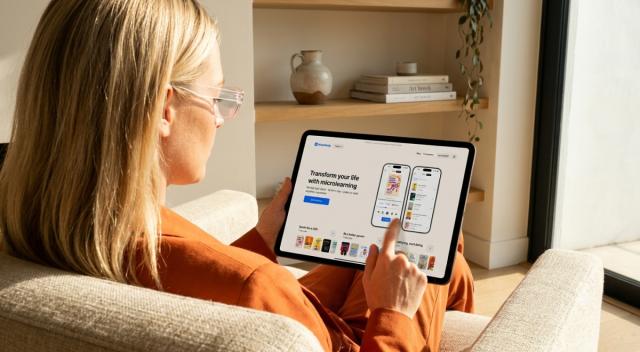


6. Replace the scroll with something better
This is the step most articles skip, and it's the one that decides whether the change actually holds. Cutting phone use creates empty space. Your brain will fill it with something. If you don't choose what, the old habit comes right back.
The best replacements are things that give you a small win in the same window you used to spend scrolling. Reading for 15 minutes. A short walk. A real conversation. Time to listen to music without doing anything else.
You could replace doomscrolling with microlearning, where you spend the same five minutes learning one thing instead of consuming forty fragments of nothing. Some people watch movies in the evening instead of grazing on shorts. Others rebuild human connection by texting one friend a day instead of scrolling past their lives.
The underlying need — for stimulation, distraction, a small reward during a transition — doesn't go away when you cut the phone. You're not eliminating it. You're rerouting it somewhere that pays you back.
What to do with the time you get back
If you cut even an hour a day of phone use, you've recovered roughly 15 hours a week. That's the kind of time block people normally take vacations to get. The question becomes what to do with it.
Pick things that deliver a small win. A 20-minute walk, 15 minutes of reading, a phone call to someone you care about, ten minutes of journaling. Activities that produce something — a feeling, a connection, a bit of knowledge — fill the space without leaving you empty the way scrolling does.
Make the alternative as easy to reach as the phone was. A book on the coffee table. A walking playlist already cued up. A notebook by the couch. Friction shapes behavior in both directions, and the alternative needs to be reachable in two seconds or less.
Don't try to use all of it. Some of the freed time is meant to be unstructured. Boredom and daydreaming aren't wasted hours. They're the conditions creativity and rest both need to show up at all.

Replace the scroll with something better — try Headway!
The single most effective replacement for mindless scrolling is reading that actually pays off, and Headway is built for the exact time slots you used to spend on Instagram.
Fifteen-minute reads from the world's best nonfiction, including Catherine Price's 'How to Break Up With Your Phone', Cal Newport's 'Digital Minimalism', Anna Lembke's 'Dopamine Nation', James Clear's 'Atomic Habits', and Nir Eyal's 'Indistractable'.
The books that map this exact problem are inside the app, condensed to their core ideas, ready while you're waiting for coffee. If you want to take a break from social media for real — not just a weekend — these are the books that explain how.
📘 Next time the phone tries to steal 90 minutes, open Headway instead. One book idea, 15 minutes, done.
FAQs about how to spend less time on your phone
How do I stop spending so much time on my phone?
Make the phone harder to grab and the alternatives easier. Turn off the notifications you don't actually need. Log out of the two or three apps eating your time. Get the phone out of the bedroom — that one alone changes a lot. And put something on the coffee table you'd actually pick up instead.
How much screentime a day is healthy?
There isn't a clean answer. Most research lands somewhere around two hours of recreational screen time per day for adults before you start seeing real drops in sleep, attention, and mood. Work screens are a different conversation. The number that matters more than the total is how much of it leaves you feeling worse than when you started.
How to break a phone addiction?
You can't quit the phone the way you'd quit cigarettes — you still need it. So the goal is to make the addictive parts harder to reach. Delete the apps you scroll on. Turn the screen to grayscale. Keep the phone out of the bedroom. And give yourself something better to do during the gaps you used to fill with it.
What are the signs of phone addiction?
You reach for it without thinking. You feel anxious when you can't find it. You check it during conversations, in the middle of the night, on the toilet, at red lights. You've lost hours and don't quite know where. If you've ever opened an app, closed it, then immediately reopened it — that's a sign too.