Self-growth
 Apps & Digital Tools
 Business & Career
 Success
 Growth Tools
 Psychology
 Communication
 Relationships

You used to answer that email in under a minute. Now you read it four times, delete two drafts, and still aren't sure the third one sounds right. Burnout does this to your sense of competence, and it tends to outlast the exhaustion itself by weeks or months — which is why learning how to rebuild confidence after burnout means closing a specific gap: your energy comes back before your judgment does.
You're not imagining how common this is. Gallup's research puts the share of employees who say they experience burnout at least sometimes at 76 percent, and burnout and loss of confidence show up together more often than people admit. This guide covers why that happens, the specific, smaller-than-expected steps that help you trust yourself again, and where a tool like Headway fits in for the days you need structure more than another pep talk.
Headway's library of books on resilience and self-trust fits into that rebuilding process as a low-effort way to reinforce it — not a replacement for the work itself, just something that makes it easier to keep showing up for.
📘 See where a plan would start for you.

Quick answer: How to rebuild confidence after burnout
A quick breakdown of what's going on and what helps, before the longer walkthrough below.
| What's going on | What helps |
|---|---|
Burnout drains your energy first, then erodes self-trust, decision-making, and your sense of competence. | Treating confidence as its own recovery track, separate from just resting, is what closes the gap. |
Confidence comes back slower than energy. | Expecting a delay instead of judging yourself for not bouncing back on the same timeline. |
A dramatic comeback feels like the goal. | Wins that feel almost too small to count are usually where rebuilding starts. |
Pushing through feels like the responsible move. | Boundaries, realistic goals, and self-compassion do more than force ever will. |
Fear of returning to work is part of the picture. | Pacing that return matters as much as anything you tell yourself. |
Headway breaks down books on resilience, self-trust, and professional confidence into 15-minute summaries, which is a reasonable first step once you're past resting and ready to begin rebuilding.
📘 Get a plan built around where you're starting from rather than guessing at the next move alone.
Why burnout makes you lose confidence in the first place
Confidence runs on a feedback loop: you do something, it goes fine, and your brain quietly files that away as proof you're capable. Burnout breaks that loop in two separate ways, and most recovery advice only deals with one of them.
The first is practical. A meta-analysis of burnout and cognitive function found measurable impairments in working memory, attention, and executive function compared with healthy controls, which lines up with why you're genuinely making more small mistakes than you used to — forgetting a step, missing a detail, needing to reread something three times.
That overlaps heavily with what mental exhaustion does to cognitive function, and it tends to ease as your nervous system recovers, separate from your confidence specifically.
The second is the part that lingers. Once your brain has logged enough of those stumbles, it starts expecting more of them, even after your actual performance improves. This is why people recovering from burnout often describe feeling capable on paper and shaky in practice — the evidence has changed, but the prediction hasn't caught up yet.
A lot of confidence is also quietly tied up with professional identity and personal values, which is part of why burnout can feel like it changes who you are, not just how tired you are. This slide rarely happens all at once.
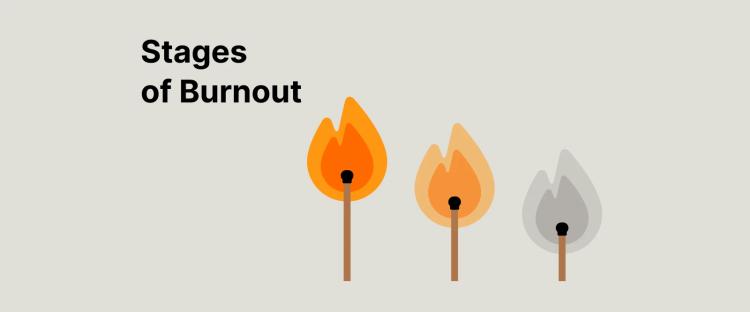
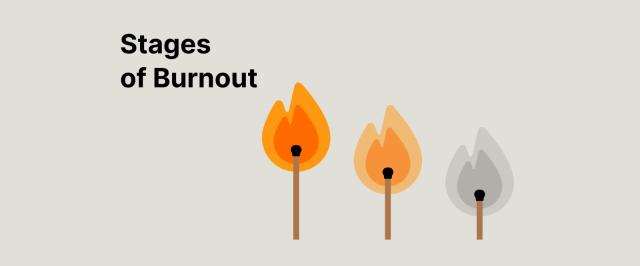
The 12 stages of burnout framework traces exactly how it builds: what starts as skipping breaks and working through lunch eventually reaches a point where ordinary tasks — presenting an idea, making a quick call, writing a straightforward email — start requiring conscious effort and a second guess. By the time most people notice their confidence is gone, it's been eroding quietly for months.
There's also a sharper version of this: once you've made a visible mistake while burned out, fear of failure can outlast the burnout that caused it. Your brain and body remember the one thing that went wrong far more vividly than the hundred things that went fine, which is exactly backward from how confidence is supposed to work.
How to tell self-doubt apart from ordinary burnout symptoms
General burnout symptoms get plenty of coverage — our breakdown of burnout symptoms covers the physical and emotional side in depth. Confidence loss shows up as its own, narrower pattern, and it's worth identifying specifically, because the fixes are different.
Watch for:
Hesitating on decisions that used to be automatic. You used to just send the email. Now you draft, redraft, and ask a coworker to sanity-check something you've done a thousand times.
Over-preparing as a confidence patch. Triple-checking work, rehearsing a two-minute update like it's a keynote, staying late to polish something that was already done.
Imposter syndrome in a role you've held for years. A sudden sense that you've been faking competence the whole time, even though nothing about your actual qualifications changed.
A louder inner critic, not a quieter one. Most people expect self-criticism to ease up as they recover. It often gets louder first, because your brain is working overtime to prevent another mistake.
Avoiding visibility. Declining to speak up in meetings, volunteering for less, letting someone else take the harder project — not because you don't care anymore, but because being wrong in public feels unaffordable right now.
None of these mean you're back where you started. They mean the part of burnout that affects self-belief needs its own recovery plan, separate from just resting and sleeping more. To the rest of the world, you might look recovered already, and building awareness of that mismatch is usually the first real move.

Dreading going back after burnout?
Headway helps you rebuild your routine with small daily streaks.
Build a streakThe mindset shift that makes rebuilding possible
The instinct to prove you're still capable by taking on more is one of the most reliable ways to end up back in the same hole within a few months. Early over-commitment is a common thread in burnout relapse, and it usually comes from a good place: you feel behind, so you try to catch up fast. Self-compassion does more real work here than most people expect from something that sounds soft.
Kristin Neff's research on self-compassion, laid out in 'Self-Compassion,' makes a case that holds up well in burnout recovery specifically: treating your own setbacks the way you'd treat a friend's protects motivation and steadies difficult emotions better than harsh self-criticism does, since you can't build confidence on a foundation of harsh self-talk that teaches your brain to avoid trying rather than to try smarter.
Cognitive reframing helps with the specific sentences your inner critic repeats. "I used to be good at this" is a feeling, not a fact, and it's worth testing against what happened this week rather than accepting it at face value. Most people can find real counter-evidence if they go looking — a task they finished, a call that went fine, a decision nobody questioned.
Carol Dweck's distinction between a fixed and a growth mindset, from 'Mindset,' is useful here too. A fixed mindset treats a mistake as proof of a permanent limit; a growth mindset treats it as one data point. Right after burnout, your brain defaults hard toward the fixed read, which is exactly the prediction you're trying to retrain.
Realistic expectations matter just as much. Your current capacity is a real number, not a character flaw, and it's temporarily lower than it used to be. Planning around the capacity you have right now, rather than the capacity you remember having a year ago, is the difference between gradual progress and rebuilding self-trust that holds, protecting the confidence you're building for the future rather than just today.
How to rebuild confidence after burnout, one step at a time
These strategies work best in the order below, though you can adapt the pace to your own week.
1. Start with wins too small to fail. Pick something you're certain you can finish today — a short email, one load of laundry, fifteen minutes of a task you've been avoiding. The point isn't the task. It's giving your brain a recent, concrete memory of following through, since that's the exact evidence your confidence runs on, and it helps complete the stress cycle your body has been stuck in.
2. Set boundaries before you set goals. Protect recovery time on your calendar the same way you'd protect a meeting. This step is essential: confidence doesn't rebuild on top of a schedule that's still draining you faster than you can recover — it needs a floor to stand on first.
3. Catch the specific sentence and write the counter-evidence. When the inner critic says something like "you're going to mess this up," write down what happened the last three times you did something similar. This is cognitive reframing in its most practical form — not forced positivity, just an honest accounting.
4. Keep your goals smaller than feels reasonable, for now. Realistic, manageable goals beat an ambitious comeback nine times out of ten, mostly because a string of finished small goals builds self-trust faster than one unfinished big one. Make the bets small enough that a miss doesn't cost you much, which also keeps fear of failure from calling the shots.
5. Ask for support out loud, and be specific about what kind. Vague venting rarely helps; naming the actual ask does. "I need you to just listen tonight" or "can you double-check this before I send it" gives someone a clear way to show up instead of guessing what you need to hear, and supportive relationships blunt self-doubt faster than working through it alone.
6. Re-engage with your field in small, low-stakes doses. Rebuilding professional confidence tends to respond well to showing up again in small ways before you're thrown back into full output — one new idea read and applied the same day, rather than a full plate of proving yourself in week one. Headway's 15-minute summaries work well here, since they give you enough structured input to feel sharp again.
7. Track progress somewhere you can actually see it. Right after burnout, your internal sense of "am I getting better" is still unreliable — the same prediction error that made you expect failure also makes it hard to register recovery. A simple log, streak, or short weekly note gives you external proof your brain can't talk you out of.
📘 See what a 15-minute daily habit could look like for you, built around where you're starting from.


How to return to work after burnout without pushing too hard
Fear of returning to work after burnout is common, and it's often a reasonable read of the situation rather than a confidence problem on its own. Before working on your own mindset, it's worth checking honestly whether the job itself has changed. If the workload that caused the burnout is still sitting there untouched, no amount of self-talk fixes a role that's genuinely overwhelmed at work by design.
If you've noticed yourself doing the bare minimum since coming back — skipping optional meetings, logging off right on time, declining anything extra — that's worth naming plainly instead of assuming it means you've stopped caring. It can be a rational, temporary quiet quitting response to depleted reserves, a way of protecting what energy you have left, rather than a verdict on your character.
For a fuller framework on telling burnout apart from ordinary stress once you're back at your desk, the research on occupational burnout breaks down the three-part model clinicians use — emotional exhaustion, cynicism, and reduced professional efficacy — and gives you language for a direct conversation with your manager instead of a vague "I'm struggling."
The importance of pacing the return is easy to underestimate, and it matters more than most people plan for. Negotiating a ramp — fewer meetings in week one, no new projects until week three — tends to work better than returning to a full plate on day one and hoping momentum carries you. Professional confidence rebuilds through a string of small, consistent proof points, not one impressive re-entrance.
📘 Get support for the return, not just survival, with a plan shaped around your actual week.
How long confidence recovery takes
There's no universal timeline, and anyone who gives you one exact number is guessing. Recovery depends on how deep the burnout went, whether the actual conditions that caused it have changed, and how much support you have while you rebuild.
Energy tends to return first, often within a few weeks of real rest, breaks, and boundary-setting. Confidence usually lags behind by additional weeks or months, because it depends on accumulated evidence rather than rest alone — you have to rack up enough proof before your brain updates its prediction.
Expect the rebuilding journey to move in anything but a straight line — that's normal, not a setback. A good week doesn't mean you're finished, and a bad day doesn't mean you've slid back to where you started. Most people describe real burnout recovery as two steps forward, one step back, repeated until the pattern tilts clearly in one direction.
This isn't only a workplace story, either. Parents describe an identical confidence drain — the quiet certainty that you used to be good at this and now you're guessing your way through bedtime, homework, and everything in between. Our guide to mom burnout covers why the recovery looks different when there's no clocking-out time and no weekend to recharge into.
What rebuilding confidence looks like, in practice
Abdelrahman Mohamed Soliman spent years in what he calls firefighting mode as a cost control manager — reacting to whatever arrived first, with no room to think ahead. He started spending 20 minutes each morning with one book insight from Headway, before the day turned reactive.
The shift showed up at work before he fully noticed it himself: a colleague later told him, "You don't rush decisions anymore — you frame them." Read Abdelrahman's full story.
Rahaf Sobh, a university student juggling coursework and a part-time schedule, used to start books and abandon them within a chapter, which left her feeling like she couldn't follow through on anything. Swapping a few minutes of scrolling each day for a short audio summary changed that pattern without demanding a bigger time commitment.
In her words, the shift boosted more than just her knowledge — she felt more confident and focused in daily life. Read Rahaf's full story.
Israel Erick López Andrade, a freelance writer with two decades of experience, had fallen into a familiar trap: consuming hours of courses and videos that left him with nothing concrete to show for the time.
Headway's structured Growth Plans — built around specific goals rather than passive consumption — gave him something to apply, breaking the loop that had been eating his evenings without moving him forward. Read Israel's full story.
None of these are dramatic before-and-afters. That's roughly the point: confidence rebuilt in small, visible increments, applied consistently, long enough for the evidence to outweigh the doubt.

Give your confidence something solid to stand on with Headway
Figuring out how to rebuild confidence after burnout isn't a single insight away — it's a string of small, repeated proof points that slowly outweigh the doubt.
Headway won't do the rebuilding for you, but it gives you a structured, low-effort way to keep showing up for your own growth while your capacity is still recovering: 15-minute summaries of books on resilience, self-trust, self-worth, boundaries, and professional well-being, available as text or audio, built around a personalized plan based on where you're starting from.
Titles like 'Self-Compassion' by Kristin Neff, 'Mindset' by Carol Dweck, and 'Daring Greatly' by Brené Brown are a reasonable place to start.
Headway has been downloaded more than 60 million times across 170 countries, and it isn't a substitute for therapy or medical care if what you're carrying runs deeper than burnout. If low mood, hopelessness, or anxiety are sticking around regardless of how your workload changes, that's worth bringing to a mental health professional directly.
For everything else — the self-doubt, the hesitation, the sense that you used to be better at this — small, consistent steps tend to beat any dramatic reset.
📘 Get your personalized plan and start with one idea this week, before you try to prove anything to anyone.
Frequently asked questions on rebuilding confidence after burnout
Can burnout cause confidence loss even if you still perform well at work?
Yes, and it's one of the more confusing versions of this. Your output can look fine from the other side — on paper, to your manager, even to clients — while you privately feel like you're guessing your way through every decision. This gap between outside performance and inside confidence is common and doesn't mean you're imagining the problem.
Can a new job or promotion fix confidence loss from burnout?
Not reliably, and it can backfire. A new role feels motivating at first, but if you're carrying the same depleted capacity and the same inner critic into it, the new work hours and new pressure can increase stress before your confidence has a real chance to rebuild. It tends to work better to rebuild some self-trust first, then make the move.
Does losing confidence after burnout affect your personal life, not just work?
Yes. The same hesitation and self-doubt that show up at your desk tend to follow you home, showing up as a hard time trusting your own decisions about relationships, parenting, or even weekend plans. It's easy to lose sight of this because workplace well-being gets most of the attention, but confidence isn't a job-specific skill — rebuilding it benefits every part of your life.
Is losing confidence after burnout the same as imposter syndrome?
They overlap but aren't identical. Imposter syndrome is a persistent sense of not deserving your position despite evidence you do; burnout-related confidence loss is more often a temporary skills-and-judgment gap your brain exaggerates after a stretch of real mistakes.
Burnout can trigger or intensify imposter feelings, especially in a role you've held for years without doubting yourself before. It shows up differently from person to person, which is why comparing your recovery to someone else's rarely helps.
What's the difference between normal self-confidence and the confidence burnout takes away?
Self-confidence in the everyday sense is a general trait — some people carry more of it by nature. What burnout takes away is narrower: a specific, situational trust that you can still do the things you used to do without a fight. Rebuilding targets that narrower piece, not a full personality overhaul, which is also why it's realistic to expect it back.
How do I know if I'm making progress, not just getting used to feeling bad?
Real progress usually comes with small, concrete signs: you finish something and don't immediately pick it apart, you say yes to something slightly harder than last week, or a mistake stops feeling like proof you're a fraud. Getting numb to the bad feeling isn't the same as feeling good about your work again, and it's worth tracking the difference instead of assuming time alone will tell you.
What role do boundaries and support play in feeling safe enough to try again?
A bigger one than most advice gives credit for. Taking action on confidence-building exercises rarely works if you don't feel safe enough to fail in front of the people around you first. Clear boundaries at work and real support at home create the space where a mistake can just be a mistake, not evidence for the case your inner critic is building against you.
Should I see a professional for burnout and loss of confidence, or can I handle it on my own?
Many people rebuild confidence with rest, boundaries, and small consistent wins alone. See a mental health professional if low mood, hopelessness, or anxiety persist regardless of how your workload or rest changes; if sleep stays disrupted for weeks; or if self-doubt starts resembling depression rather than burnout. Burnout and depression can overlap, and a professional can help you process what happened more effectively than figuring it out alone.