Self-growth
 Business & Career
 Success
 Communication
 Healing
 Relationships
 Psychology
 Happiness
Have you ever looked at a challenge and felt the words "why bother?" rise up before you even started? Maybe you've stayed in a job you hate or a relationship that drained you because you believed nothing you did would change the outcome.
This state isn't from a lack of willpower. It's a psychological condition called learned helplessness. When you face repeated setbacks that seem out of your control, your brain begins to believe that you are truly powerless.
But the science of neuroplasticity tells a different story. You aren't permanently broken. You've just developed a mental habit that can be broken. Drawing on insights from experts like Martin Seligman and Steven Maier, you'll discover how to flip the switch from "I can't" to "I can."
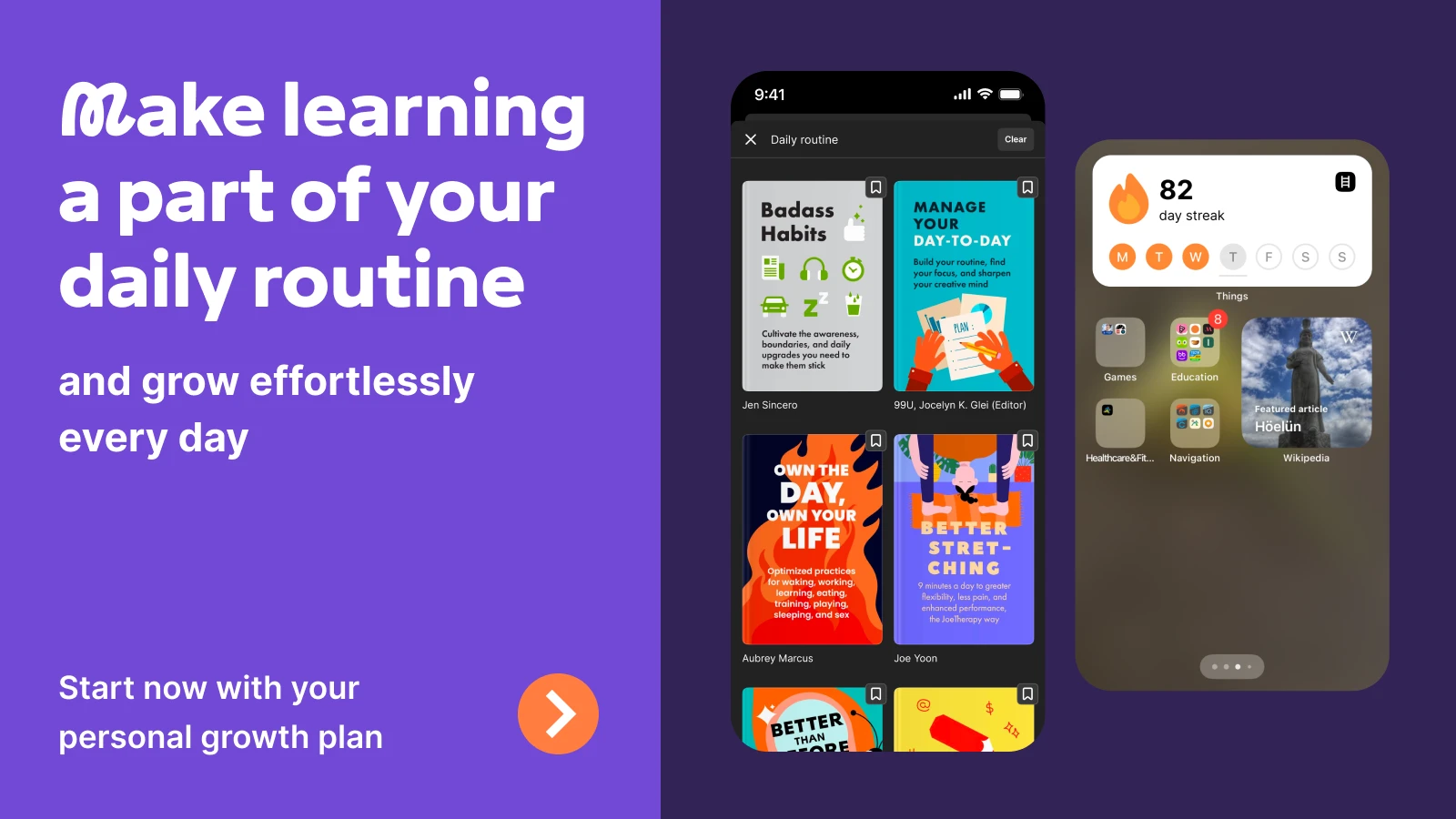
Since finding time for deep psychological research is hard between work and family, Headway offers 15-minute summaries of the world's best self-growth books to help you start unlearning passivity today. By understanding how to overcome learned helplessness, you can rebuild your self-esteem and start making choices that actually matter in your life.
➡️ What is the Headway app, and how does it work
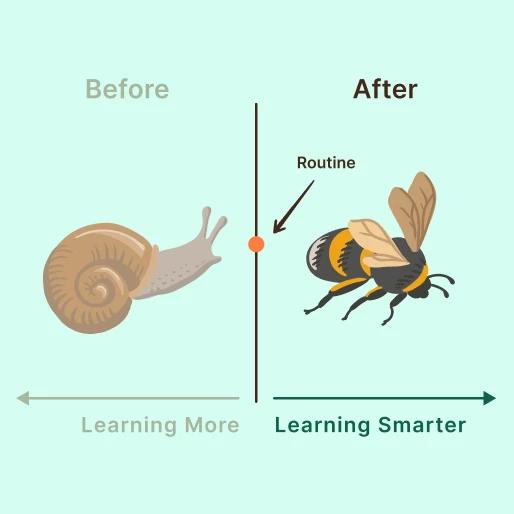
Unlock your daily growth superpower
Transform your routine to fuel continuous learning and effortless improvement.
Let's startQuick answer on how to overcome learned helplessness
If you need a fast strategy to break the cycle, follow these three evidence-based steps:
Challenge your thoughts: Use cognitive behavioral therapy (CBT) to identify and reframe negative beliefs about your control.
Force small wins: Set achievable goals that take less than five minutes to complete to prove to your brain that your actions matter.
Practice learned optimism: Shift your explanatory style from pessimistic to optimistic, viewing setbacks as temporary and specific.
Applying these methods consistently can help you move from passivity to empowered action.
How to overcome learned helplessness: Psychology and origins
To truly change, you have to understand where this feeling comes from. The concept of overcoming learned helplessness in psychology originated with Martin Seligman's 1960s experiments, in which dogs subjected to inescapable shocks later failed to escape them, even when escape was feasible.
The animals had "learned" that their actions didn't matter. When researchers finally gave them a way out, the dogs just sat there. They had accepted a sense of powerlessness that no longer existed.
In humans, this translates to a cognitive shift. When you face uncontrollable events, your brain defaults to assuming there's no control. This shift creates a cycle of helplessness that can lead to mental health conditions like depression or post-traumatic stress disorder (PTSD).
But there's a modern twist to this story. Researcher Steven Maier updated this theory in 2016. He found that helplessness might actually be the brain's default response to chronic stress. According to Maier, we don't necessarily "learn" to be helpless. Instead, we must actively learn that we have control. Remember, a sense of agency is a skill you can build, much like a muscle in the gym. If this skill isn't maintained, it's quickly unlearned under prolonged stress.
Why you might feel stuck: Symptoms and causes
Before looking at learned helplessness and how to overcome it, you need to recognize the signs. Many people experience feelings of helplessness without knowing why their motivation has vanished. It's a slow, creeping erosion of your self-worth over time.
Common symptoms of learned helplessness include:
Passivity: You stop trying to change your situation even when opportunities appear.
Low motivation: You find it hard to start even the simplest tasks.
Low self-esteem: You believe you aren't capable or worthy of better outcomes.
Procrastination: You avoid tasks because you "know" they won't turn out well anyway.
Negative thought patterns: You constantly tell yourself that "this is just how life is."
These symptoms often stem from causes of learned helplessness, like overparenting in childhood, experiencing uncontrollable events, or dealing with a lack of control in a high-pressure job. When a person experiences repeated failure without a visible exit, the brain stops looking for the door.
How to overcome learned helplessness in adults
For many, this condition follows them into maturity. Learning how to overcome learned helplessness in adults often requires a focus on the workplace and personal relationships.
If you've spent years in a toxic work environment, you might feel a total sense of powerlessness. You stop applying for new roles or suggesting new ideas. You have accepted your "fate." This mindset leads to a state of passivity that can bleed into your personal life, affecting your overall well-being.
To break this pattern, you must engage in problem-solving for small things first. Re-engage your decision-making by changing one small part of your routine. It could be as simple as choosing a different route to work or reorganizing your desk. These aren't just chores; they're exercises in reclaiming your sense of control.
Adults often struggle with low self-esteem because they view setbacks as permanent. If a project fails, they think, "I am a failure," rather than "This project had a flaw." Breaking this link is essential for your mental health. If these feelings are overwhelming, consulting a mental health professional is a vital step in your journey.
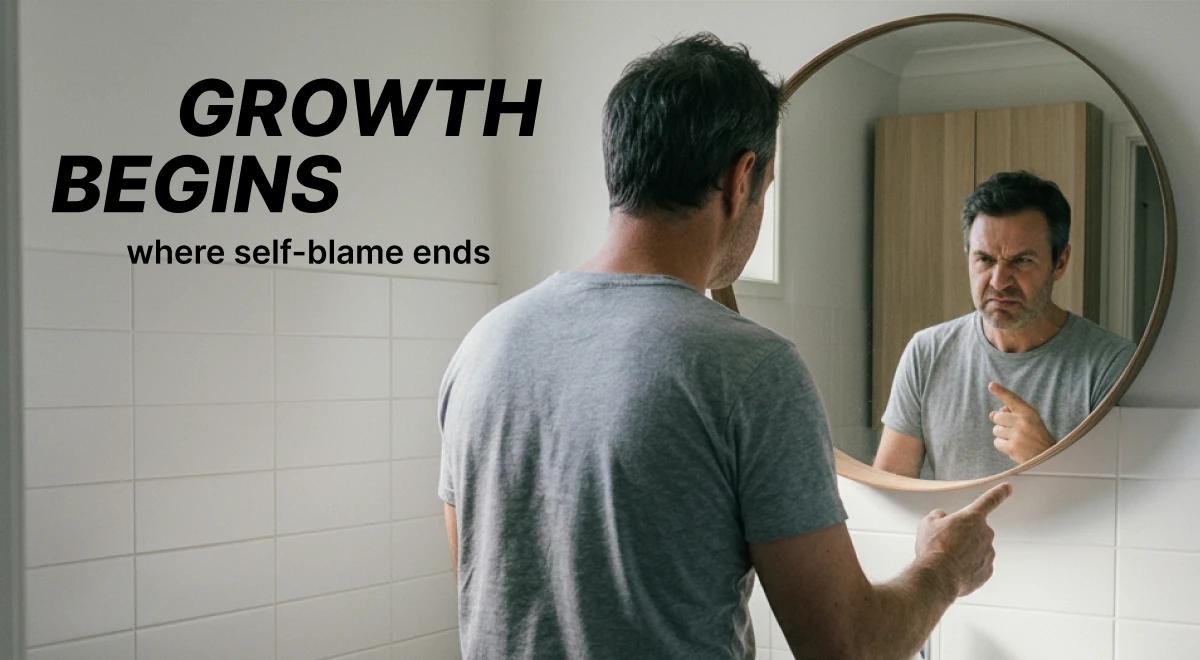
Stop the cycle of self-blame and get science-backed ideas on habits.
📘 Reclaim control through small actions with Headway.
How to help a child overcome learned helplessness
Parenting plays a big role in how we perceive control. If you want to know how to help a child overcome learned helplessness, the answer often lies in stepping back and letting them lead.
When parents do everything for their children, the children never learn to solve their own problems. This result stems from "helicopter parenting" or overparenting. It can lead to a psychological condition where the child feels incapable of navigating the world alone, resulting in a deep sense of powerlessness.
To build a child's sense of agency, you should:
Encourage risk-taking: Let them try things where they might fail safely.
Praise effort over talent: Instead of saying "You're so smart," say "I love how hard you worked on that."
Give them choices: Let them decide their schedule or hobbies to build a sense of control.
By doing this, you help them develop a healthy level of self-esteem that isn't tied to perfection, but to capability and resilience.
How to overcome learned helplessness in the classroom
Students who struggle with subjects like math often fall into a "fail-loop." After a few bad grades, they decide they are "just not a math person."
This mentality leads to a lack of control over their academic future. Educators can help by using "scaffolding," which means breaking big projects into achievable goals. When a student sees that effort leads to a specific result, they begin to unlearn their passivity.
It's about providing "action-based evidence." Every time a student completes a small task, their self-efficacy grows. They move from "I can't" to "I can, with effort." This shift matters for adolescents who are still forming their identity and self-worth.
How to overcome learned helplessness once and for all: Strategies for change
If you're ready to take action, you need a plan. Here are the most effective learned helplessness strategies for overcoming, as used by psychologists today.
Use cognitive behavioral therapy (CBT) techniques
Cognitive behavioral therapy is one of the most powerful tools for changing your brain. It focuses on the link between your thoughts, feelings, and actions.
Start by reframing your negative beliefs. When you catch yourself thinking, "I can't do this," stop and ask for evidence. Is it true that you can't do it, or is it just that you haven't done it yet? This process of reframing helps you break the negative thought patterns that keep you stuck in a cycle of helplessness. You move from a pessimistic explanatory style to an objective one.
Build your self-efficacy through behavioral activation
Self-efficacy is the belief in your ability to succeed in specific situations. You don't get this by just thinking happy thoughts. You get it through consistent action.
Behavioral activation is a technique where you act first and wait for the "feeling" of motivation to follow. Don't wait until you feel like exercising. Just put on your shoes. When you complete a small task, you provide your brain with evidence that you have a sense of agency. These "micro-wins" are the fuel for your self-worth.
Practice self-compassion and self-care
Often, a cycle of helplessness is fueled by a harsh inner critic. You beat yourself up for being "lazy," which only lowers your self-esteem and makes you more passive.
Self-compassion involves treating yourself like you would treat a friend. When you face difficult situations, acknowledge that they are hard. Taking time for self-care isn't selfish. It's necessary to maintain the energy needed to fight back against chronic stress and feelings of powerlessness.
📘 Reframe thinking patterns with Headway.

Reclaiming your power with Headway
Breaking a lifelong habit of helplessness takes time, but you don't have to do it alone. The Headway community is dedicated to helping people become the best versions of themselves through continuous learning.
Sometimes, the best way to unlearn helplessness is to fill your mind with new perspectives. Headway provides 15-minute summaries of the world's best self-development books. These are like "growth seeds" that you can plant in your mind every day. Instead of scrolling through social media and feeling a sense of powerlessness, you can spend 15 minutes learning about the science of resilience.
Recommended books on Headway to crush your goals
'Atomic Habits' by James Clear: If you struggle with procrastination, this book is a game-changer. It shows you how to build achievable goals through tiny changes that compound over time.
'The Mountain Is You' by Brianna Wiest: This book helps you understand how we self-sabotage when we feel a lack of control and how to stop it.
'Authentic Happiness' by Martin Seligman: A great read for anyone looking to improve their overall well-being and find a deeper sense of agency.
'The Optimistic Child' by Martin Seligman: The foundational text for parents looking to build resilience and avoid the pitfalls of overparenting.
'Learned Optimism' by Martin Seligman: It's the essential guide to changing your pessimistic explanatory style. It teaches you the ABCDE model to challenge your thoughts and build learned optimism.
Make the first move with the Headway microlearning app
Reclaiming your life isn't about ignoring the hard parts of the world. It's about realizing that even in difficult situations, you still have a move to make.
You might not control the economy, the weather, or other people's opinions. But you do control your response. By using CBT, setting achievable goals, and practicing self-compassion, you can finally break the cycle of helplessness.
Start today by choosing one thing you can control. Make your bed. Send one email. Read one summary on Headway. Each small act is a vote for the person you want to become.
Frequently asked questions about how to overcome learned helplessness
What are the main strategies for overcoming learned helplessness?
The best way to overcome learned helplessness involves using cognitive-behavioral therapy to change your internal dialogue and behavioral activation to start moving. By focusing on small, achievable goals, you rebuild your self-efficacy and prove to your brain that your actions have real consequences in the world.
How do I help a child overcome learned helplessness?
To help a child overcome learned helplessness, you must stop overparenting and let them experience natural consequences. Encourage them to tackle challenges independently to build their sense of agency. This practice builds self-worth and prevents them from developing a psychological condition where they feel perpetually dependent on others.
Can adults unlearn these patterns of passivity?
Yes, you can learn how to overcome learned helplessness in adults by identifying your pessimistic explanatory style. Start by reframing setbacks as temporary and specific rather than permanent and personal. Using a mental health professional for CBT can also help you break deep-seated negative thought patterns and reclaim your self-esteem.
What does Reddit suggest for overcoming learned helplessness?
When looking for how to overcome learned helplessness, Reddit users often suggest "the non-zero day" rule. That means doing at least one productive thing every day, no matter how small. This community-driven advice aligns with behavioral activation, helping people combat low motivation and slowly rebuild a sense of control over their lives.
What is the psychology behind learned helplessness?
When exploring how to overcome learned helplessness, psychology often points to the work of Steven Maier and Martin Seligman. While early studies focused on electric shocks in animals, modern research shows that our brains can be retrained. We can unlearn the habit of giving up by intentionally creating "control experiences" that strengthen our self-efficacy.
How long does it take to overcome learned helplessness?
There's no fixed timeline because everyone's situation differs, but most people notice small shifts within weeks of consistent practice. Building self-efficacy through behavioral activation takes time, just as training a muscle does. Focus on daily micro-wins rather than waiting for a dramatic breakthrough moment. Progress happens gradually, not overnight.
What's the difference between learned helplessness and depression?
Learned helplessness can lead to depression, but they're not the same. Learned helplessness is a belief that your actions don't matter, while depression is a mental health condition with broader symptoms. However, chronic feelings of powerlessness often trigger depressive episodes. If your symptoms persist despite trying self-help methods, consulting a mental health professional is crucial.
Can learned helplessness affect your physical health?
Yes, chronic stress from feeling powerless weakens your immune system and increases inflammation. When you believe you can't control outcomes, you're less likely to exercise, eat well, or seek medical care. This pattern creates a dangerous cycle where poor physical health reinforces your sense of helplessness. Breaking the mental pattern often leads to better physical habits.
What should I do if CBT techniques aren't working?
If cognitive reframing alone isn't helping, try behavioral activation first. Sometimes you need to act before your thoughts change. Start with one five-minute task daily without waiting for motivation. If you still feel stuck after consistent effort, a mental health professional can identify deeper issues like trauma or undiagnosed conditions that need specialized treatment.