Self-growth
 Business & Career
 Success
 Communication
 Healing
 Relationships
 Psychology
 Happiness
How to focus on studies has become a critical challenge in today's fast-paced world. Whether you're a student in India preparing for exams, sharing a dorm with noisy roommates, or simply struggling to concentrate after a long day, distractions are everywhere — and your attention span is paying the price.
Concentrating deeply on learning is essential for academic success and personal growth. The good news? Science-backed strategies from books like 'Make It Stick' by Peter C. Brown, 'Stolen Focus' by Johann Hari, and 'Learning How to Learn' by Barbara Oakley can help you sharpen your focus and build better study habits.
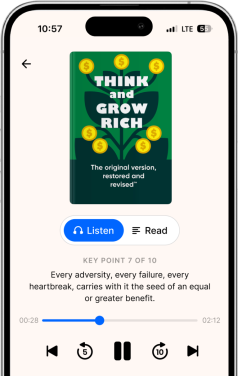
And if you want to absorb these insights without reading hundreds of pages, the Headway app offers 15-minute summaries of the world's best books on productivity, focus, and learning — perfect for busy learners who want results fast.
📘 Strengthen study focus with Headway.
Quick answer: How can I focus better while studying?
Create a distraction-free zone. Find quiet study rooms, use noise-canceling headphones, or try apps like Forest to block your phone. A tidy, well-lit space helps your brain settle into work mode.
Use the Pomodoro Technique. Work for 25 minutes, then take a 5-minute break. This rhythm keeps your mind fresh and prevents burnout — especially helpful when you're chasing good grades.
Try active recall and spaced repetition. Instead of rereading notes, quiz yourself. Review material at intervals rather than cramming the next day before an exam. Your long-term memory will thank you.
Prioritize sleep and movement. A tired brain can't focus. Get enough rest, move your body, and consider journaling before bed to clear mental clutter.
Study smarter with others. Join a study group to stay accountable and make learning more engaging. Explaining concepts to others — even in your second language like English — reinforces your understanding while having fun.
Understanding the need for focus
Concentration is the ability to focus on a specific subject, which results from controlling thoughts and being efficient. Eliminate distractions by identifying and eliminating factors that take your focus away from work, such as checking emails, text messages, or social media during the workday.
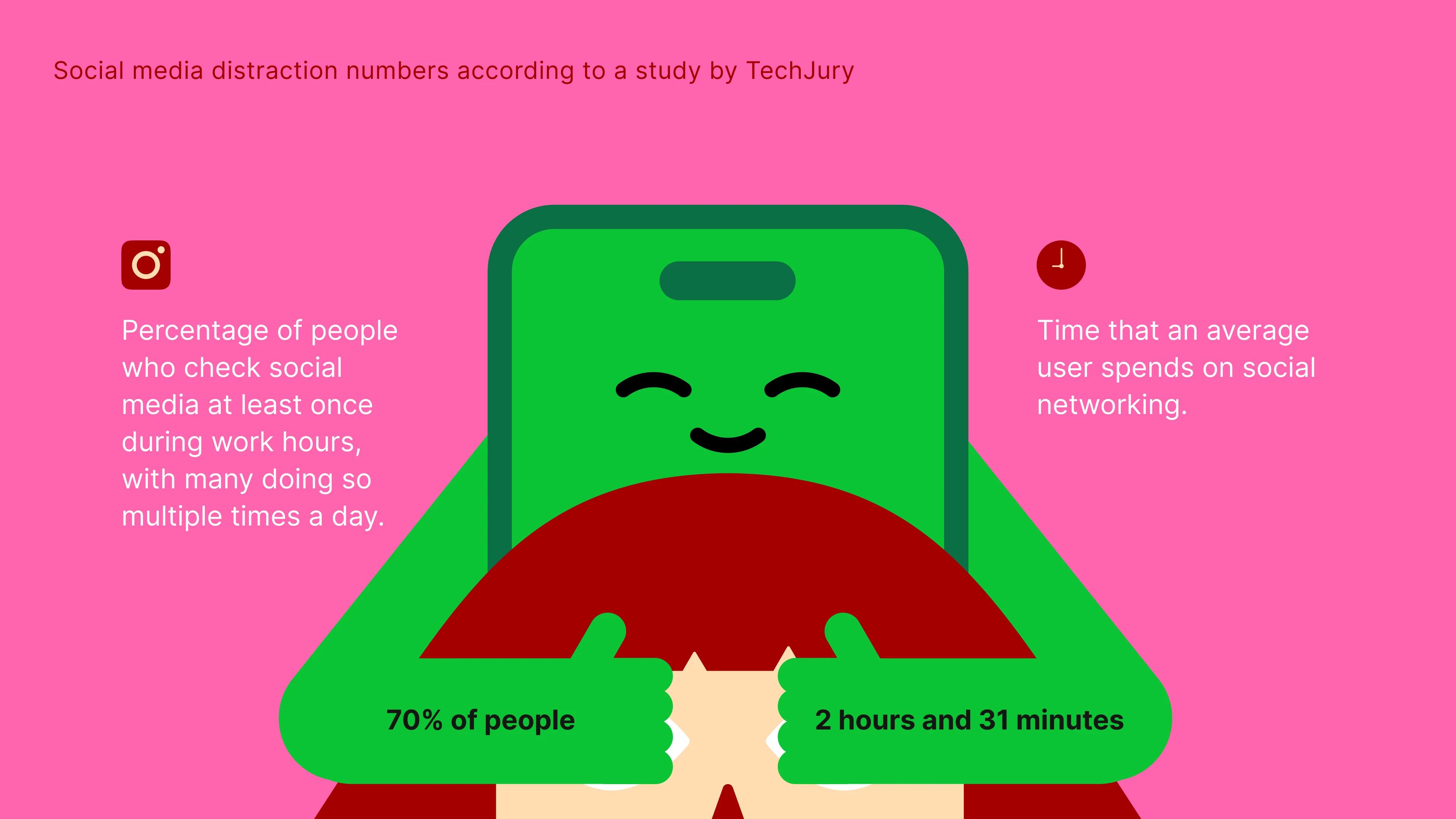
A study by TechJury found that 70% of people check social media at least once during work hours, with many doing so multiple times a day. An average user spends 2 hours and 31 minutes on social networking. It’s a good idea to put your phone away and remove distracting games and websites.
Creating the right study environment
The first step is to create a comfortable study space and organize a room or a desk for studying. Your learning space should be tidy, well-lit, and ventilated. Free your space from unnecessary things, and at the end of each day, organize your workspace and remove anything distracting from productive work. Also, remove old papers from your desk and store documents you are not using in drawers. A clean study area will help you stay focused throughout the day.
Determine your ideal noise level
While some people are more productive in silence, others find it easier to focus with music or background noise. Determine your desired noise level and consider how to maintain it at work. For example, if you concentrate better in silence but work in a busy office, buy headphones with a noise-canceling function. If you focus better with background music, choose a type of music that does not contain distracting lyrics.
📘 Optimize focus environments with Headway.
Adjust the air temperature
Feeling hot or cold can reduce your ability to concentrate. If you work in an office or study at a library, you can't adjust the thermostat, but you can keep a light sweater or fan on your desk to help you adapt to different temperatures. Adjust the temperature to make it more comfortable for you to work or study. Studies suggest that the ideal office temperature ranges from 70-73 degrees Fahrenheit (21-23 degrees Celsius).
Studying in a coffee shop
Many college students enjoy studying or working at a café while enjoying coffee. However, the background noise in most cafes can make concentrating difficult. Sometimes, a change of scenery can be beneficial, especially when you need a quieter environment. Whether it's a café in a park, on the street, or by the beach, finding a peaceful place to focus on your work or studies is important.
📘 Find focused study spaces with Headway.
Effective study tips and techniques
You may become less focused when you focus on one activity for long hours. Regular breaks throughout the day can increase your attention span and overall concentration.
Pomodoro Technique
In 'Learning How to Learn,' Barbara Oakley introduces the Pomodoro Technique as an effective strategy for improving focus and productivity. The Pomodoro Technique, created by Francesco Cirillo and named after the kitchen timer in the shape of a tomato, is named after the kitchen timer.
The Pomodoro Technique divides time into short-term segments: 25-minute work phases alternating with short breaks phases. One work phase is called "Pomodoro," and its number measures the periods of time allocated to work. All pomodoros are accompanied by a five-minute break, and only every fourth one is accompanied by a twenty-minute break. During the allotted 25 minutes, you are completely immersed in work and are not distracted by anything.
So, let's create a short Pomodoro time management instruction:
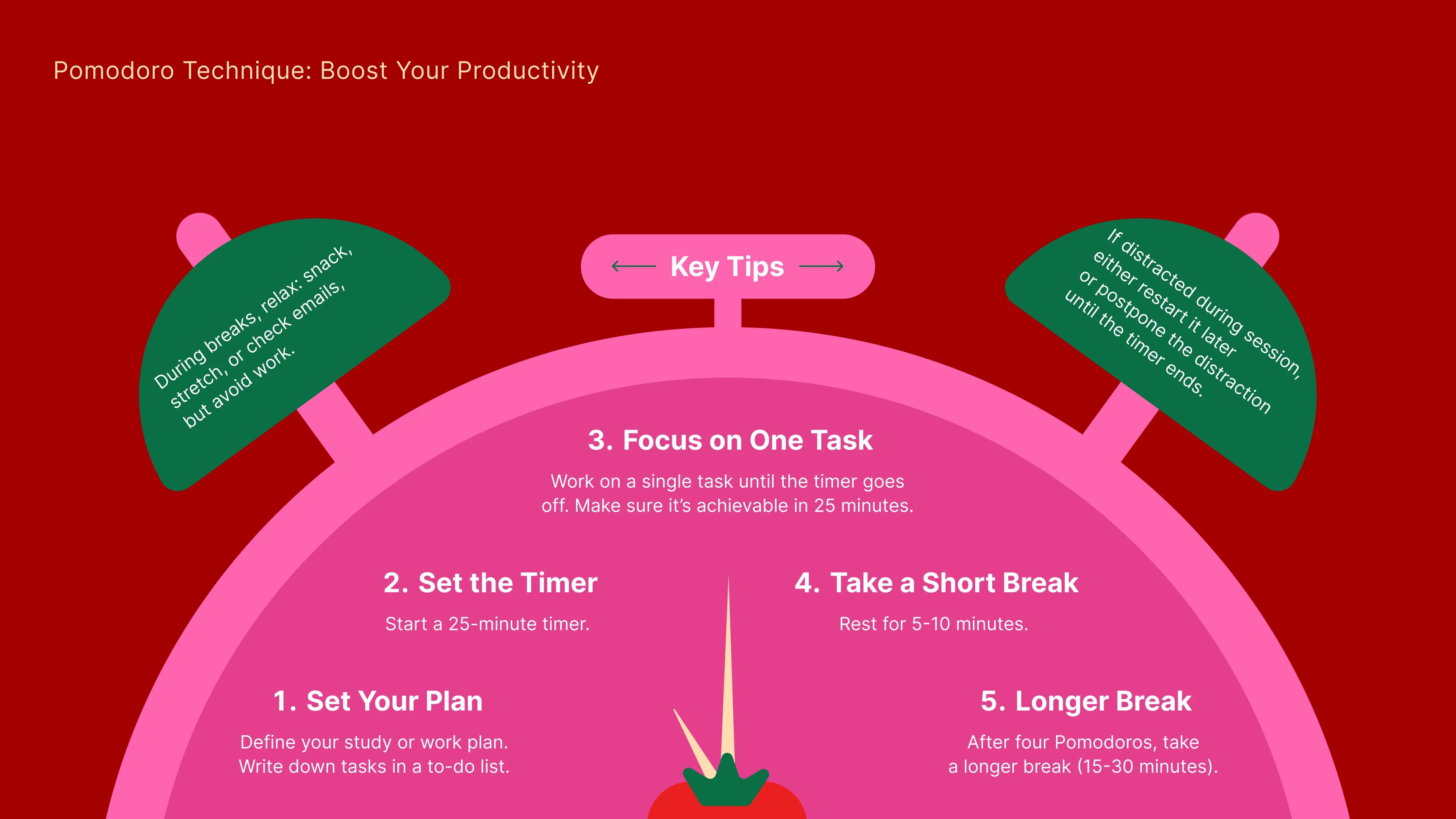
1. First, define the study plan you want. Write it down, and create a to-do list on a piece of paper, on your computer, or on your phone, where it will be convenient to follow.
2. Set your timer for 25 minutes.
3. Choose one task and work on it until the timer goes off. After that, you can check the box next to the task. The task must be small enough to fit into these 25 minutes (for example, writing a short article, finding materials, etc.).
4. Rest for 5-10 minutes.
5. After four consecutive "pomodoros," you can take a longer break of 15-30 minutes.
During your break, you can do whatever you want: grab a snack, check your email, make a call, stretch, and more. The main thing is to strictly adhere to the allotted amount of time and not waste it on work. Pay special attention to the fact that distractions should not be tolerated during the 25 minutes allocated for work. If you are distracted, for example, by an urgent call, then you have two options:
• End the pomodoro session and start a new one later.
• Put off all distractions until later.
📘 Master Pomodoro focus with Headway.


Task batching
Task batching in studying refers to grouping and working on similar tasks during a set study schedule. Instead of switching between tasks like reading, note-taking, and problem-solving, task batching allows you to focus on one activity for an extended period. This approach minimizes the cognitive load associated with task-switching, making it easier to maintain concentration and complete tasks more efficiently.
“By batching similar tasks together, you can streamline your work and reduce the mental energy spent on switching between different types of tasks.” – 'Learning How to Learn' by Barbara Oakley, PhD
Task batching can increase productivity by streamlining workflow and reducing the time spent on low-value tasks. By grouping similar tasks, you focus on high-priority work when you're most motivated and productive, ensuring your energy is directed toward what truly matters.
Spaced repetition
In 'How We Learn,' Benedict Carey discusses the concept of spaced repetition as a highly effective learning strategy.
"Spacing out study sessions—reviewing material at intervals rather than all at once—produces better long-term retention."
Memory is formed through connections between brain cells called neurons. Repetition is essential for remembering and can be scheduled at increasing intervals. Spaced repetition is valuable for learning new information, especially foreign languages.
"When you review material after some forgetting has set in, the brain has to work harder to retrieve the information, which in turn strengthens the memory."
Spaced repetition with increased intervals is practical because it becomes more difficult to acquire information with each extended repetition interval due to the time elapsed between training periods. This creates a deeper processing of learned information in long-term memory.
📘 Apply spaced repetition with Headway.
Using flashcards
In 'Make It Stick: The Science of Successful Learning,' Peter C. Brown and his co-authors emphasize the effectiveness of using flashcards for active retrieval practice, which is crucial for solidifying learning. The book advocates using flashcards to regularly quiz yourself on the material you're trying to learn. This method forces your brain to recall information actively, which strengthens memory and helps you retain the knowledge long-term.
"Flashcards are a great way to practice retrieval. Testing yourself on the material, not just rereading it, is key to embedding knowledge and making it stick."
The essence of the flash card technique is to study and check the information presented on special cards (in the form of words, numbers, images, etc.) at specific intervals. Information is placed on both sides of the cards. For example, one side has a question (e.g., a chemical formula or a date), and the other has an answer or a brief explanation.
📘 Practice active recall with Headway.
Mind mapping
A mind map is a universal tool for working with tasks, allowing you to create a roadmap for their solution from the beginning. The second option often needs help. Firstly, creating a clear and correct sequence of actions to achieve the goal is challenging. Secondly, if the problem is complex, describing possible options will destroy the plan's structure. We suggest using the popular Mind Map tool.
The idea is elementary: building a Mind Map searches for ideas and connections between them. How to find ideas is a separate story. It can be done with the help of brainstorming, analytics, or something else. But you need to record them in the Mind Map.
"Organizing and making connections between new information and what you already know helps to strengthen memory traces and build a mental model for understanding." – 'Make It Stick: The Science of Successful Learning' by Peter C. Brown
Many apps make creating a Mind Map quick and convenient. The most famous of them is Miro, a powerful tool for working with ideas. Software products are designed specifically for Mind Mapping: Coggle, Mindly, MindMup, MindMeister, Scapple, and Ayoa. Some are more convenient for mobile devices, others for teamwork, and others for those who appreciate a convenient interface.
Active recall
“Pulling the key idea from your own mind, instead of just reading or rereading it on the page, is the critical idea behind active recall.” – 'Learning How to Learn' by Barbara Oakley, PhD
Active recall is a retrieval practice where your brain goes into its vast storehouse of information and searches for one specific fact or answer. Active recall is much more effective than other forms of learning, such as recognition or passive review, taking notes, or highlighting key information in a textbook. This is the fastest and most effective way to study and prepare for any test or exam because it consolidates information into your long-term memory. The more we try to recall information, the better we understand it. It is the search practice that helps us learn information.
📘 Strengthen active recall with Headway.
Managing study time and tasks
Each of us has wished for more time. This problem is common in all aspects of life: work, relationships, and daily routine. A lack of time and resources provokes stress, and it is one of the leading causes of headaches, insomnia, procrastination, and depression. To cope with this, you must learn to prioritize and focus on what is essential and what is structured.

Method 90 for 30
In 'Stolen Focus: Why You Can't Pay Attention— and How to Think Deeply Again,' Johann Hari discusses the "90 for 30" method to help regain focus and attention in a world of distractions. The principle of the "90 to 30" method is that you must set aside an hour and a half for work and half an hour for rest. During rest, you will let your brain calm down and adjust for the next hour and a half of productivity.
Scientists have already proven that our brains cannot focus for more than 90 minutes. It gets distracted by small things, so your work efficiency will decrease. Rest a little between sets to achieve high results. You also need to prioritize according to the principle of the Eisenhower matrix.
📘 Regain deep focus with Headway.
The Eisenhower matrix
This method consists of correctly setting priorities. We often need help deciding where to start or which task to do first, in which case the Eisenhower matrix is necessary.
The matrix has four squares:
1. Important and urgent – to do
2. Important and not urgent – to plan
3. Unimportant and urgent – to delegate
4. Unimportant and not urgent – delete
"The key to maximizing your productivity is not in doing more things, but in doing more of the right things. Focus on what truly moves the needle—what’s important, not just urgent." – Michael Hyatt, 'Free to Focus'
"Eat the frog"
In most cases, we divide tasks into those that are relatively easy and those that are more difficult. "Frog" is precisely the second type of task. You should do the task you don't want to do first and then the others. This way, you will focus all your efforts on what is complex, and the rest of the tasks will seem easy.
“Eat the frog first thing in the morning. It will make the rest of your day easier and more productive.” – 'Free to Focus' by Michael Hyatt
Mental and physical well-being
To live, we need food and water and to move, rest, and care for our bodies. Otherwise, we risk serious physical health problems, which are the basis of psychological balance and a high quality of life. The "pillars" that support our physical health and energy levels for focus are physical activity, rational nutrition, personal hygiene, enough sleep, and rest. Engaging in physical activity strengthens us, boosts energy, enhances coordination and speed, strengthens muscles and bones, stimulates metabolism, maintains ideal weight, and reduces disease risk. It also releases "hormones of happiness," leading to improved mood and psychological balance.
Your daily biorhythms
Biorhythms affect a person's work capacity, ability to learn and perceive information, memory, creative skills, concentration of attention, muscle strength, reaction speed, mood, etc. More than 300 physiological processes in the human body are subject to a daily rhythm. Therefore, those who seek to use their potential to the maximum should take into account daily biorhythms in their daily routine.
📘 Prioritize what matters with Headway.
Enough sleep is crucial
First of all, we all need sleep every day. Even one time, ignoring this need harms our well-being and work capacity. To sleep effectively, it is a good idea to be outside every day during daylight hours and to go to bed at the same time every night. This is important for adjusting your biological clock. Before going to bed, setting aside 10-15 minutes to relax is advisable. You can flip through a magazine or listen to calm music. Relaxation exercises also help.
Practice meditation and mindfulness
Regular meditation and mindfulness practices can improve concentration and cognitive function. In the same way, spending time in nature, where you can take a deep breath of fresh air and distract yourself from your study routine, tasks, and deadlines, will help to maintain mental health. This will certainly help you concentrate on what is essential and allow you to study better.
📘 Restore focus through rest with Headway.
Engage in self-development
Your hobbies or favorite things will fill every day with joy and meaning. However, do not become a perfectionist — the desire to be perfect and the best in everything will not add to your free time. You must learn to set specific study goals and adequate time limits for their achievement.
Utilizing technology

In 'Free to Focus,' Michael Hyatt discusses the role of technology and electronic devices in productivity with a balanced perspective. He acknowledges that while technology can significantly enhance productivity, it can also become a source of distraction if not managed properly.
"To truly focus, we need to set boundaries around our technology usage, ensuring it serves us rather than distracts us."
Technologies are helpful in learning. We can easily access educational sites or detailed information on the required topic. Visual presentations, educational videos, interactive programs, study guides, and many books are available on the Internet and have revolutionized education.
Gadgets' negative influence on our ability to focus
However, gadgets can also negatively impact our health. Long-term use of devices with artificial light can decrease sleep quality and increase stress.
In 'Stolen Focus: Why You Can't Pay Attention— and How to Think Deeply Again,' Johann Hari explores how modern technology, particularly gadgets and apps, contributes to the erosion of our ability to focus. Hari argues that the constant barrage of notifications, the design of apps to keep us engaged, and the endless availability of information are significant factors in our declining attention spans.
Many people spend much time scrolling social networks and other entertainment content, which can interfere with work tasks and studies. Also, many gadgets receive app notifications, leading to distraction and reduced productivity.
"Many of the apps and platforms we use daily are designed to capture and keep our attention, not to help us focus or be productive."
Information from social networks is absorbed quickly, spontaneously, and in small portions in a large volume. Accordingly, the brain gets used to working with a large volume of various information and gradually loses the ability to keep attention on one thing for a long time.
📘 Reclaim attention from gadgets with Headway.
Expert hacks and insights
In their book 'The One Thing: The Surprisingly Simple Truth Behind Extraordinary Results,' Gary Keller and Jay Papasan explain the value of simplifying your workload and focusing on the most important tasks. It doesn't matter how we measure success, whether personal or professional. Only the ability to distract yourself from the unnecessary and focus on one priority will lead you to impressive results.
"What's the ONE Thing you can do such that by doing it everything else will be easier or unnecessary?" – Gary Keller, 'The One Thing: The Surprisingly Simple Truth Behind Extraordinary Results'
"Success is about doing the right thing, not about doing everything right." – Gary Keller, 'The One Thing: The Surprisingly Simple Truth Behind Extraordinary Results'
2. 'Free to Focus' by Michael Hyatt provides several actionable insights and productivity hacks to help you achieve more by doing less.
“Time blocking is one of the most powerful productivity tools you have. It helps you control your schedule and ensure that your most important tasks get the attention they deserve.” – Michael Hyatt, 'Free to Focus'
“Multitasking is a myth. The human brain is not designed to handle multiple complex tasks simultaneously without a drop in performance.” – Michael Hyatt, 'Free to Focus'
3. In 'Stolen Focus: Why You Can't Pay Attention—and How to Think Deeply Again,' Johann Hari proposes allocating specific time for undisturbed, focused work. Establishing a regular schedule for concentrated work sessions can help restore one's ability to focus.
“Attention is the most valuable resource we have, and yet we are constantly being bombarded with distractions that steal it away from us. To reclaim it, we need to take deliberate steps to protect and nurture our focus.” - Johann Hari.
📘 Protect attention deliberately with Headway.
Improve your study skills and focus with the Headway app
Did you enjoy the quotes and advice from books about effective learning and the ability to focus deeply? In our Headway app library, you can find a vast collection of book summaries covering various topics to help you achieve your goals. For example, take a look at this selection on focus or distraction.
The Headway app is a very convenient tool for growth and development. In 15 minutes, you can read or listen to a book summary on the go. No need to spend a lot of time reading an entire non-fiction book! You can quickly absorb and apply the essential ideas effectively by focusing on Headway’s key takeaways, summaries, and actionable tips.
📘 Deepen focus fast with Headway.
Frequently asked questions on how to study when you can't focus
How to study when you can't focus?
Start small. Use the Pomodoro Technique — work for 25 minutes, then take a short break. Remove your phone from sight, find a quiet spot, and tackle your hardest task first. Sometimes your brain just needs a reset: take a walk, grab water, or do a quick stretch before trying again.
How to be a 1% student?
Top students don't just study harder — they study smarter. Use active recall instead of passive rereading, space out your review sessions, and prioritize sleep over late-night cramming. Focus on understanding concepts deeply rather than memorizing facts. Consistency beats intensity every time. Small daily habits compound into extraordinary results.
How can I focus 100% while studying?
True 100% focus is rare, but you can get close. Eliminate distractions by silencing notifications and clearing your workspace. Work in short, intense bursts using time-blocking techniques. Match your study sessions to your natural energy peaks. And remember — taking regular breaks actually improves concentration rather than breaking it.
Why is my brain not allowing me to study?
Your brain might be tired, stressed, or simply overwhelmed. Poor sleep, dehydration, or too much screen time can sabotage concentration. Sometimes anxiety about the material itself creates mental blocks. Try breaking tasks into smaller pieces, moving your body, or changing your environment. Your brain isn't broken — it just needs the right conditions.
Why does Gen Z not go to college?
Many Gen Z students are questioning whether traditional college offers good value for the cost. Rising tuition, student debt concerns, and alternative paths like online courses, apprenticeships, and entrepreneurship make skipping college appealing. Some prefer gaining real-world experience faster. It's less about rejecting education and more about redefining what learning looks like.
How to focus on studies when you have a crush?
Your brain is flooded with dopamine — no wonder focusing feels impossible! Try scheduling specific times to think about your crush and specific times for studying. Use the Pomodoro Technique to stay on track. Channel that energy into motivation: good grades and self-improvement make you more interesting anyway.