Self-growth
 Apps & Digital Tools
 Business & Career
 Success
 Growth Tools
 Psychology
 Communication
 Relationships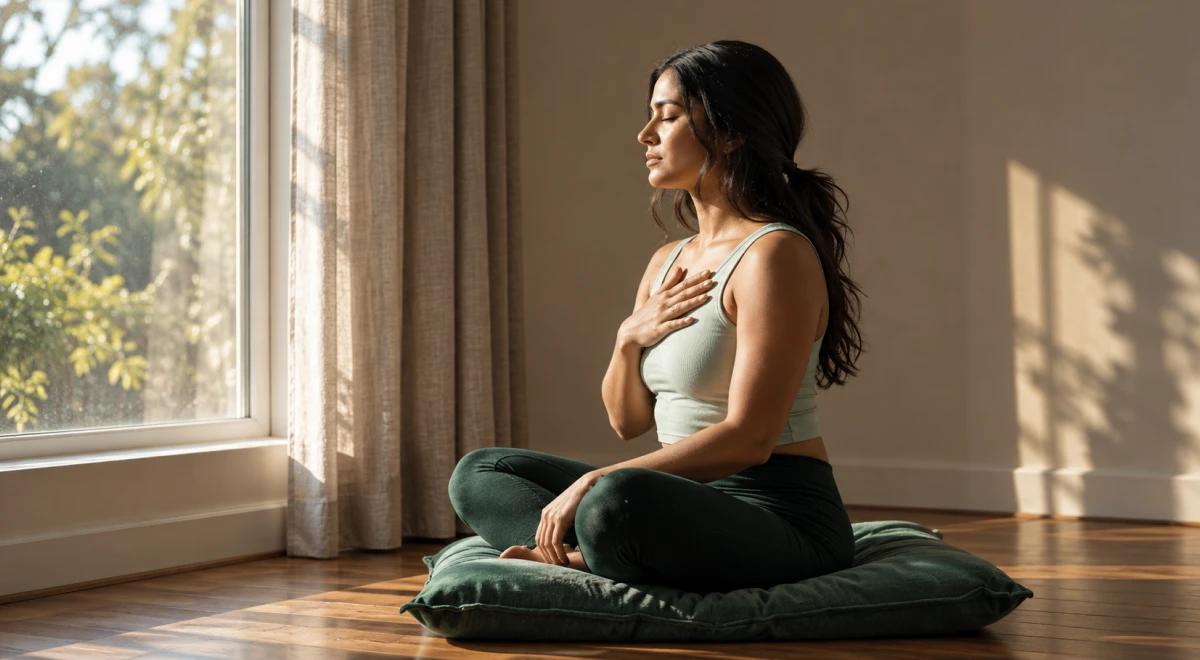

Pounding heart, shaking hands. Sounds familiar? If you're searching for how to calm down and relax before bed, you're dealing with something physical, not a character flaw. Nearly three-quarters of Americans say stress disrupts their sleep, and 68% say anxiety keeps them up at night, according to a survey from the American Academy of Sleep Medicine.
But learning to calm down matters just as much at 2 p.m. as it does at midnight. This guide covers what your body is doing during a stress response and which calming techniques hold up when you need them most, at your desk, in your car, or lying in bed.
Experts like James Nestor, Robert M. Sapolsky, and Jon Kabat-Zinn have spent years studying why our bodies react this way and how to bring them back down. We'll pull practical tips from their books that can help you unwind.
If you want daily support building these habits, download Headway and start turning stressful moments into ones you can handle.
Disclaimer: This article is for informational purposes only and isn't a substitute for professional medical advice, diagnosis, or treatment. Results from any calming technique vary from person to person, and the Headway app is a microlearning and daily growth tool, not a medical device or a replacement for therapy. If stress, panic, or anxiety are affecting your daily life, please talk to a licensed mental health professional.

Quick summary: How to calm down fast
Short on time? Here's the fast version.
How to calm down starts with your body, not your thoughts. Slow your exhale, and your parasympathetic nervous system follows close behind.
Breathing techniques help most people, but progressive muscle relaxation and grounding work better if breathing exercises make your anxiety worse.
Different situations call for different calming techniques. Maybe you need to calm down without anyone noticing, or maybe you're in the middle of a panic attack.
Books like 'Breath' by James Nestor and 'Why Zebras Don't Get Ulcers' by Robert M. Sapolsky explain why the stress response takes over and how to reverse it.
The Headway app turns ideas like these into 15-minute summaries and calming audio you can use the moment stress hits.
Keep reading for the full breakdown, including a table matched to exactly what's happening in your body right now.
Breathing techniques that calm your body down
Deep breathing is the fastest lever most people can pull, because your breath is one of the only automatic body functions you can consciously control. Slow it down, and your nervous system reads that as a signal of safety.
A meta-analysis of slow breathing studies found consistent increases in markers of parasympathetic activity, with the strongest effects showing up in patterns built around a longer exhale.
Here are three breathing techniques worth trying, depending on how wound up you are:
4-7-8 breathing: Inhale for four counts, hold for seven, and exhale slowly for eight. The extended exhale is what does the work, since it stimulates the vagus nerve and nudges your body toward rest.
Box breathing: Four counts in, four counts held, four counts out, and four counts held again. It's more symmetrical, and a lot of people find it easier than holding their breath for seven counts.
Long exhale only: If counting stresses you out even more, skip it. Just make your exhale roughly twice as long as your inhale, on repeat, for a minute or two.
Here's something most guides skip: breathing exercises don't work for everyone. Research on interoceptive sensitivity, the brain's awareness of internal body signals, shows that for some people, focusing on their breath makes the sense of danger worse instead of better.
If that's you and you keep asking why breathing exercises don't work for you, you're not doing it wrong. Your attention is probably better spent on the physical techniques in the next section instead.
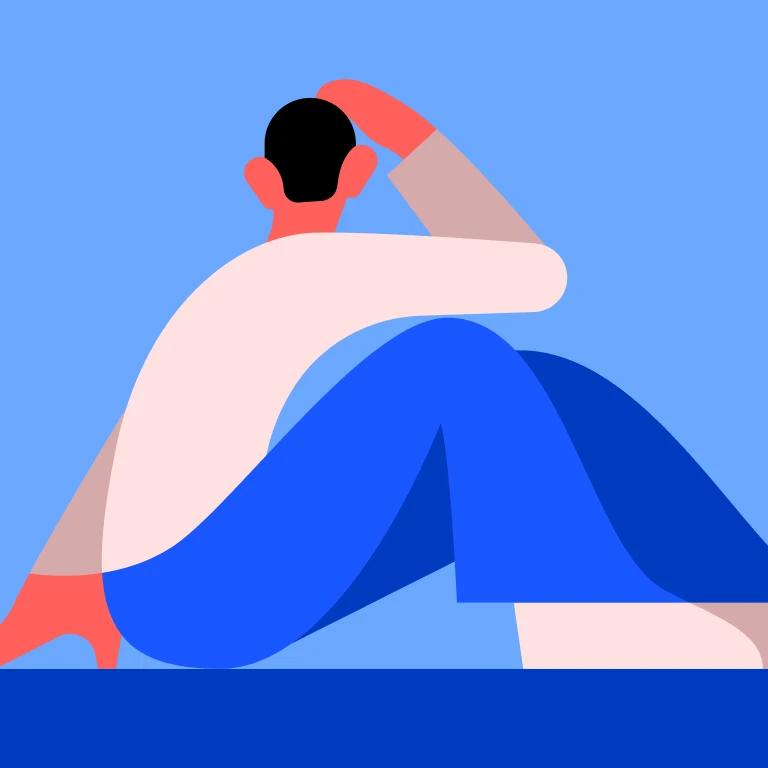
Forcing calm before bed doesn't work
The body often takes longer to calm down than the mind expects.
Explore calming techniquesPhysical ways to calm down when your body won't cooperate
Sometimes your mind is too anxious to sit still and breathe on command, and that's fine.
Physical activity gives restless stress hormones somewhere to go, which is often more effective than trying to think your way calm.
Progressive muscle relaxation (PMR) is one of the most researched physical ways to calm down, with a 2024 systematic review finding it reliably reduces stress, anxiety, and depression symptoms in adults. You tense one muscle group for about five seconds, then release it and notice the difference for ten.
Work through your feet, legs, stomach, hands, shoulders, and jaw. The release, not the tension, is what tells your brain the threat is over. Progressive muscle relaxation for anxiety works especially well right before bed or right after a hard conversation.
A few other physical options worth knowing:
Yoga combines slow movement with breath control, which helps release tension from your body while keeping your attention on something concrete.
Tai chi uses the same slow, controlled movement as yoga, with less flexibility required, so it suits people who find yoga poses intimidating.
A brisk ten-minute walk burns off the chemical charge of a stress response and releases endorphins, your body's natural mood lifters.
Squeezing a stress ball gives anxious hands something physical to do, which can quiet a racing mind almost as a side effect.
Simple stretches, like rolling your shoulders or stretching your neck side to side, calm the nervous system by releasing the muscle tension that stress hormones create.
Does walking help calm anxiety more than a formal workout? For most people, yes, mainly because walking is low-pressure and doesn't add a new performance goal on top of an already stressful day.
📘 Turn restless energy into real calm with Headway!
Calming techniques matched to exactly what's happening
Different kinds of stress call for different tools, and knowing how to feel calm in each one starts with matching the technique to the moment. That match is the difference between calming down in five minutes and staying wound up for hours.
| What's happening right now | Try this |
|---|---|
You need to calm down in five minutes before a meeting | Box breathing plus one minute of grounding through your feet on the floor. |
Someone is provoking you, and you need to stay calm without anyone noticing | Slow, quiet exhale through your nose while unclenching your jaw and hands. |
You're about to walk into an important event | A body scan from head to toe, done silently, takes under two minutes. |
Your heart is racing,g and you can't tell if it's anxiety or a panic attack | Name five things you can see, then place a hand on your chest and slow your exhale. |
You just got bad news and feel frozen | Move your body first, stand up, stretch, or walk to another room, before trying to think clearly. |
You feel like crying and don't want to right now | Let a few tears out if you can, then use slow breathing to bring your body back down. |
You're alone and spiraling with no one to talk to | Write the thought down, then read it back out loud. Seeing it outside your head often shrinks it. |
You feel overstimulated by noise, light, or people | Step away, dim your surroundings if possible, and use box breathing until the input settles. |
This table won't cover every situation, but it's a solid starting point for the moments when you genuinely don't know where to begin.
Mindfulness, visualization, and other ways to quiet a racing mind
Mindfulness means noticing what's happening in your body and around you, without judging it or trying to fix it right away. It sounds simple, but it's one of the more reliable ways to relax your mind when it won't stop spiraling.
Mindfulness meditation takes that a step further with a formal practice, usually five to ten minutes of sitting quietly and returning your attention to your breath every time it wanders. You don't need to clear your mind completely. Noticing a thought and gently coming back counts as the actual exercise, not a failed attempt at it.
Visualization works differently. Instead of focusing on your breath, you picture a specific calm place in detail, the sound of the waves, the temperature of the air, the color of the sky. This gives your brain a concrete image to hold onto instead of an abstract instruction to "relax."
Grounding techniques for anxiety pull your attention out of your head and into your senses. The classic version: name five things you can see, four you can hear, three you can touch, two you can smell, and one you can taste.
This kind of multi-sensory grounding has been shown to activate parasympathetic nervous system activity, which is why the loop tends to break faster than it does when you try to argue with your own thoughts.
If your mind keeps circling the same worry, our guide on how to stop worrying about things you can't control breaks down how to loosen that very grip.
📘 Quiet the noise in your head with Headway!
Self-care habits that keep you calmer long-term
The techniques above handle the moment. Self-care and a regular set of relaxation techniques are what lower how often you need them in the first place, and they play a bigger role in calming anxiety over time than any single trick does. It's less about grand gestures and more about small, repeated choices that keep your baseline stress lower.
Social support matters more than most people give it credit for. Research on social buffering shows that talking to someone you trust, even for five minutes, can measurably lower your cortisol response to stress in a way that solo coping often can't match. You don't need a deep conversation. A short text or a quick call can be enough.
Listening to music is one of the simplest calming techniques available. Research from Harvard Health shows that slow, low-tempo music can lower heart rate, breathing rate, and blood pressure within a few minutes, which makes it a solid option when you can't step away for a full breathing exercise.
Sleep, food, and movement all shape how easily your body can reduce anxiety on a given day. A rested, fed body has more room to absorb stress before it tips into a full stress response. That's not a moral failing when it doesn't happen. It's just biology working against you on a rough day.
If a hard moment from earlier keeps replaying, our piece on how to let things go that bother you walks through a few ways to release it instead of carrying it into tomorrow, and our roundup of relaxing activities has more low-effort ideas worth keeping in your back pocket.
Top five tips from top experts: How to calm yourself down
Five books approach this problem from different angles, from the physiology of breath to the practice of stillness. Each tip below includes one exercise you can try today.
1. Let the exhale do the work
Most people inhale first when they try to breathe deeply. Nestor's research shows the exhale is where the actual calming happens. Try this: blow all the air out through your mouth until your lungs feel empty, pause for two counts, then let the inhale happen on its own. Repeat six times and notice how different it feels from a standard deep breath.
2. Name what your body is doing before you try to fix it
Sapolsky's central point is that psychological stress triggers the same physical response as real danger, and your body can't tell them apart. When you notice your heart racing before bed or before a hard conversation, try saying one sentence out loud: "My nervous system is running a stress response. It's doing its job. It doesn't need a solution right now." Then move to a calming technique of your choice.
3. Build a small ritual of stillness
Holiday argues that stillness isn't the absence of activity. It's an active practice you build on purpose. Pick one low-stimulus activity, tea, gentle stretching, or a few pages of a physical book, and repeat it at the same time each day. After a couple of weeks, the ritual itself becomes a cue that tells your body calm is coming.
4. Reframe wakefulness as rest, not failure
Winter's research shows that monitoring your own progress toward sleep actually raises arousal, which delays sleep further. The same idea applies to daytime stress: chasing calm can backfire. Instead, try telling yourself, "I'm resting right now, and rest counts," and let go of the pressure to feel instantly better.
5. Anchor yourself to one physical sensation
Kabat-Zinn's approach to mindfulness meditation starts with a single point of focus, often the breath or the feeling of your hands resting on your lap. Place a hand on your chest, feel it rise and fall for thirty seconds, and every time a thought pulls you away, return to that same sensation without judging yourself for wandering.
A simple routine to calm down in the moment
Once you know a few things to do to calm down, the next step is stacking them into a repeatable order instead of grabbing whatever comes to mind under pressure.
Name it. Silently or out loud, say what's happening: "My heart is racing" or "I'm spiraling right now." This alone interrupts some of the automatic loop.
Move your body for thirty seconds. Stand up, stretch, or unclench your jaw and shoulders. This gives the stress response somewhere physical to go.
Slow your exhale for one minute. Use 4-7-8, box breathing, or a plain long exhale, whichever one you've practiced most.
Ground yourself in your senses. Name a few things you can see or touch to bring your attention back to the present moment.
Decide your next step. Once your body settles, you're in a better position to actually think through whatever caused the stress in the first place.
How long does it take for the nervous system to calm down using a sequence like this? Most people notice a real shift within five to ten minutes, though it depends on how activated your stress response was to start with.

What your body is doing during a stress response
Here's the part nobody explains well: your body cannot tell the difference between a real threat and a stressful email. Both trigger the same stress response, and that response was built for danger, not deadlines.
When something stressful happens, your brain signals your adrenal glands to release cortisol and adrenaline. Your heart rate climbs, your muscles tense, and your attention narrows. This is your sympathetic nervous system doing exactly what it evolved to do.
The trouble is that most modern stress doesn't require you to run or fight anything. So the physical charge has nowhere to go, and it just sits in your body. That's why you can feel your heart racing an hour after the stressful conversation actually ended.
This is also why "just calm down" is such useless advice. Telling yourself to relax doesn't lower cortisol or slow your heart rate. What actually works is giving your body a physical signal that the danger has passed, which activates your parasympathetic nervous system, the rest-and-digest state that's the biological opposite of fight-or-flight.
If you're wondering why you feel anxious for no reason, part of the answer is that cortisol can stay elevated well after the original stressor is gone. Your body is still running the old alarm, even once your mind has moved on.
Once you understand that, calming yourself down stops feeling like a mental failure and starts feeling like a physical process you can influence.
📘 Give your body the reset it needs with Headway!
When to see a mental health professional
Most stress responds well to the calming techniques above. But there's a point where self-guided tools aren't enough, and that's worth naming clearly rather than glossing over.
Consider reaching out to a mental health professional if any of the following sound familiar:
Stress, worry, or panic attacks are disrupting your sleep or focus several nights a week for a month or longer.
Racing thoughts feel connected to a broader pattern, like an anxiety disorder, depression, or ongoing panic disorder.
Physical symptoms such as chest pain, dizziness, or a racing heart that won't settle happen on a regular basis.
The calming techniques in this guide bring no real relief after a few weeks of consistent practice.
You've started avoiding everyday situations, like driving or social plans, because you're afraid of how your body will react.
A licensed professional can also talk through whether medication is worth considering for you specifically. That's not a step to be afraid of. It's simply another tool, the same way breathing exercises or progressive muscle relaxation are tools, just one that requires a prescriber.
People managing anxiety disorders often find that a mix of self-guided calming techniques and professional support works better than either one alone.
If nights are when your anxiety spikes hardest, our guide on how to stop overthinking at night covers signs that it's time for more structured support.
📘 Build daily habits that support your calm with Headway!
Make calming down a habit with Headway
Knowing how to calm down changes how you move through a stressful day. That could be a racing heart before a meeting, a spiral at midnight, or a moment where someone pushed every one of your buttons. This guide covered breathing exercises, progressive muscle relaxation, grounding, and a five-step routine, real options instead of one thing you're told to do and hope works.
Headway builds on that same idea. The app turns books on stress, mindfulness, and the nervous system into 15-minute summaries you can read or listen to, backed by personalized recommendations, spaced repetition to help ideas stick, and calming audio for the moments words feel like too much.
You don't need a full hour or a quiet retreat to start.
Download Headway and give your next stressful moment a better response than white-knuckling through it.
FAQs about how to calm down
Why can't I calm down even when I really try?
Trying hard to calm down can backfire, since monitoring your own anxiety keeps your attention locked on the very thing you want to let go of. Your nervous system also takes time to release cortisol once it's activated, so a lack of instant relief isn't a sign you're doing it wrong. Give any calming technique a few full minutes before judging if it worked.
How do I calm myself down when nothing seems to work?
When your usual techniques stop helping, switch categories instead of repeating the same one. If breathing exercises aren't landing, move to something physical, like a short walk or progressive muscle relaxation. If your body already feels settled but your mind is still spiraling, try writing the thought down or naming it out loud to create some distance from it.
Why do I feel anxious for no reason?
Anxiety without an obvious trigger often traces back to lingering cortisol from an earlier stressor, poor sleep, too much caffeine, or a nervous system that's stayed on alert for so long it treats calm as unfamiliar. It can also point to an underlying anxiety disorder, especially if it happens often. A mental health professional can help you figure out which one applies to you.
How can I feel safe in my body again after a hard stretch of time?
Rebuilding a sense of safety in your body usually takes consistent, low-pressure practice rather than one dramatic fix. Regular physical activity, grounding techniques, and predictable self-care routines slowly teach your nervous system that calm is the normal state again, not the exception. This tends to take weeks, not a single session, so patience with the process matters as much as the techniques themselves.
What's the fastest way to calm anxiety in the moment?
For most people, a long, slow exhale works faster than anything else, since it directly signals your parasympathetic nervous system to downshift. Pair it with one grounding action, like pressing your feet into the floor or naming a few things you can see, for a combination that calms both your body and your thoughts at once within a minute or two.
Does walking help calm anxiety, or do I need something more structured?
Walking helps for most people, partly because it's low-pressure and doesn't add a new performance goal to an already stressful day. It burns off some of the physical charge of a stress response and releases endorphins along the way. A structured workout can help too, but it isn't required for walking to be effective.
How long does it take for the nervous system to calm down after something stressful?
Most people notice a real shift within five to ten minutes of active calming techniques, like slow breathing or movement, though the exact timeline depends on how intense the original stress response was. Cortisol itself can take longer to fully clear, sometimes an hour or more, which is why you might still feel a little on edge even after your heart rate has settled.
What should I say to myself during a panic attack?
Short, factual statements work better than reassurance you don't fully believe yet. Something like "This is a panic attack, it will pass, and I am not in danger right now" keeps you grounded in what's actually true. Pair it with slow breathing, and avoid arguing with the fear itself, since that tends to keep the spiral going longer.