Self-growth
 Business & Career
 Success
 Communication
 Healing
 Relationships
 Psychology
 Happiness
Watching everyone around you learn to code while you're still wondering if you could actually do it too?
The Bureau of Labor Statistics projects 15% growth in software development jobs through 2034, way faster than most careers. If you're just starting as a software engineer, you can expect to earn between $70K and $90K. Meanwhile, experienced professionals at major companies like Amazon and Microsoft can earn anywhere from $150K to over $250K. The need for skilled workers is only increasing!
To get your career as a software engineer off the ground, you'll want to immerse yourself in data structures, algorithms, and tackle real-world problem-solving challenges.
This guide covers proven career paths, the fundamentals you need, how long it takes, and what sets people who get software engineering jobs apart from those who quit halfway. Want to learn faster?
Try the Headway app: we offer 15-minute summaries of engineering books on algorithms, system design, and career development, plus growth plans like "Develop your career." Absorb in minutes (audio or text) what takes most beginners months to figure out.
📘 Download Headway and propel your career growth by learning new skills every software engineer needs!
Quick answer: What is a software engineer?
A software engineer builds, tests, and maintains software systems. They write code, design applications, debug problems, and make sure programs work when actual people use them.
What they do in detail:
Write code in programming languages like Python, Java, JavaScript
Design software architecture and how systems connect
Debug and fix technical problems
Work with other programmers and product teams
Review code and improve what's already built
Test software before it reaches users
How to become a software engineer: Three proven paths (pros and cons)
1. Computer science degree (Bachelor's or Master's)
The traditional route involves four years for a bachelor's degree in computer science, and maybe two more for a master's degree. During this time, you'll learn computer programming fundamentals, data structures, algorithms, software development theory, sometimes database management, and information technology basics.
Pros:
Recruiters trust it, especially at big companies
Deep foundation in computer science concepts
Internships at places like Amazon and Microsoft
Alum connections that lead to your first job
Cons:
Expensive ($40K–$200K, depending on the institution)
It takes 4–6 years full-time
Theory drilling, which you won't use right away
No guarantees that you'll land a job after
2. Coding Bootcamp
Intense programs teaching programming languages, web development, and technical skills quickly. Usually, coding bootcamps take around 12–24 weeks in-person or online. They focus on practical stuff like JavaScript, Python, HTML, CSS, Git, and help you build real projects for your portfolio.
Pros:
Way faster (3–6 months)
Cheaper than a degree ($10K–$20K)
Career support, portfolio help, and interview prep included
Learn what employers actually need, not just theory
Cons:
Brutal pace, not everyone finishes
Some recruiters still prefer degree holders
Quality varies wildly between programs
Light on computer science fundamentals
📘 A quick insight: Bootcamp grads say technical interviews were way harder than learning to code. Headway's 15-minute summaries cover algorithms and problem-solving that come up at Amazon and Microsoft — download it now.
3. Self-taught or independent learning
Jump into the world of programming languages at your own pace with free tutorials, open-source projects, YouTube videos, and online courses. You can start your own projects and even pitch in on GitHub. Take the opportunity to learn about data structures, algorithms, and debugging whenever it fits into your schedule.
Pros:
The most wallet-friendly option (ranging from free to just a few hundred dollars)
You can learn at your own speed
It works around a full-time job
It pushes you to be resourceful, a skill that's valuable in the real world
Cons:
Without a set structure, it's easy to spend months going in circles
Harder to demonstrate your skills without certifications or a degree
You won't automatically have a network or mentorship
Many people throw in the towel because it can feel isolating and confusing
Comparison table:
| Path | Cost | Time | Best for | Job projects |
|---|
Bachelor's Degree | $40K–$200K+ | 4–6 years | People wanting deep theory and credibility | High (especially big tech) |
Coding Bootcamp | $10K–$20K | 3–6 months | Career changers needing speed | Good if the portfolio is solid |
Self-taught | $0–$500 | 6 months–2+ years | Broke but disciplined learners | Depends entirely on portfolio |



How long does it take to become a software engineer?
It depends on which path you pick and how much time you actually have.
Degree programs: A Bachelor's in computer science or computer engineering usually takes about 4 years if you're going the full-time route. If you're thinking about pursuing a master's, be ready to tack on another 2 years. Some people find ways to speed things up by taking summer classes or transferring credits from related fields like information technology.
Coding bootcamps: Most run for around 12 to 16 weeks for full-time students. If you're juggling a full-time job, part-time bootcamps can take 6 to 9 months. You'll get hands-on experience with programming languages, frameworks, and the fundamentals of web development — enough to whip up personal projects and create a solid portfolio.
Self-learning: Some programmers can land entry-level jobs in 6 to 12 months if they put in several hours of coding each day. However, others might take over 2 years, especially when life throws them curveballs or they get stuck on less-than-helpful tutorials. With no deadlines and no one keeping tabs on your progress, it can definitely be a bit of a rollercoaster!
| Path | Full-time | Part-time | Ready for the job market |
|---|
Bachelor's Degree | 4 years | 5–6 years | After graduation and portfolio work |
Coding Bootcamp | 3–4 months | 6–9 months | Right after, if the portfolio is decent |
Self-taught | 6–12 months | 1–2+ years | When your GitHub proves you can code |
Most beginners think finishing a bootcamp or degree means you're ready to work. Unfortunately, that's not really the case. Expect to spend another 2–6 months hunting for your first job, building more personal projects, drilling data structures and algorithms for interviews with recruiters. Getting hired is often the slowest part.
Five core skills every software engineer needs
You can't become a software engineer without these — it doesn't matter if you did a coding bootcamp, finished a computer science degree, or are self-taught.
1) Programming languages
You need to write actual code. Most software engineers know 2–3 programming languages well. Python gets used everywhere — back-end development, data science, machine learning, and artificial intelligence work. JavaScript runs the entire web. Front-end, back-end with Node.js, all of it. Java shows up in enterprise software, Android apps, and massive systems at Amazon and other big companies.
Start with one language, get decent at it, and add more later. HTML and CSS aren't technically programming, but you'll use them constantly in web development. SQL handles database management. Learning multiple languages proves you can adapt when a job needs something different.
Real-world use: Writing features, building APIs, fixing bugs in live code that's breaking for users right now.
2) Data structures and algorithms
Every technical interview tests this stuff. Arrays, linked lists, trees, graphs, and hash tables — you need to know how they work and when to use each one. Algorithms cover sorting, searching, recursion, and all the fundamentals that computer science degree programs drill into you.
Sounds theoretical, but it actually matters. Pick the wrong data structure and your code runs fine for 100 users, then crashes at 10,000. Understanding algorithms helps you write software that scales rather than falls apart.
Real-world use: Optimizing slow code, solving performance problems, passing interviews at Microsoft or startups looking for entry-level engineers.
3) System design fundamentals
How do you build software that doesn't collapse when it scales? System design covers databases, APIs, caching, load balancing, and how different pieces connect. You're thinking about the entire architecture, not just one function.
Junior engineers don't need to master this on day one, but understanding the basics separates entry-level programmers from those who move up fast. Full-stack developers, especially, need this because they touch both the front-end and the back-end.
Real-world use: Designing new features, understanding how existing systems work, and having technical discussions with senior engineers about the software development life cycle.
📘 A quick insight: Entry-level engineers wish they'd learned system design basics way sooner. Headway's book summaries on design cover fundamentals often overlooked — download it now before your first technical interview.
Uplift your professional skills!
Turn your solid book knowledge into your ace in the sleeve before the interview.
Improve my skills4) Problem-solving
Software engineering is mostly debugging and figuring out why things broke. You'll spend more time fixing problems than writing fresh code. Good problem-solving means breaking big messes into smaller pieces, testing theories, reading error logs, and not panicking when production goes down.
This isn't something tutorials teach you. You build it by working on real-world projects, contributing to open-source code on GitHub, getting stuck and unstuck over and over.
Real-world use: Debugging production issues at 2 am, troubleshooting failed deployments, and handling weird user behavior nobody predicted.
5) Communication and teamwork
Soft skills matter way more than beginners expect — you're not coding alone. You'll explain technical decisions to non-technical people in project management, review other programmers' code, collaborate with designers, and write documentation so future engineers don't curse your name.
Recruiters on LinkedIn mention this constantly — technical skills get you the interview, soft skills get you the actual job. Especially true in healthcare software, cybersecurity, and anywhere mistakes have real consequences, and you need to communicate risks clearly.
Real-world use: Code reviews, daily standups, explaining bugs to product teams, and onboarding new engineers who have just joined.
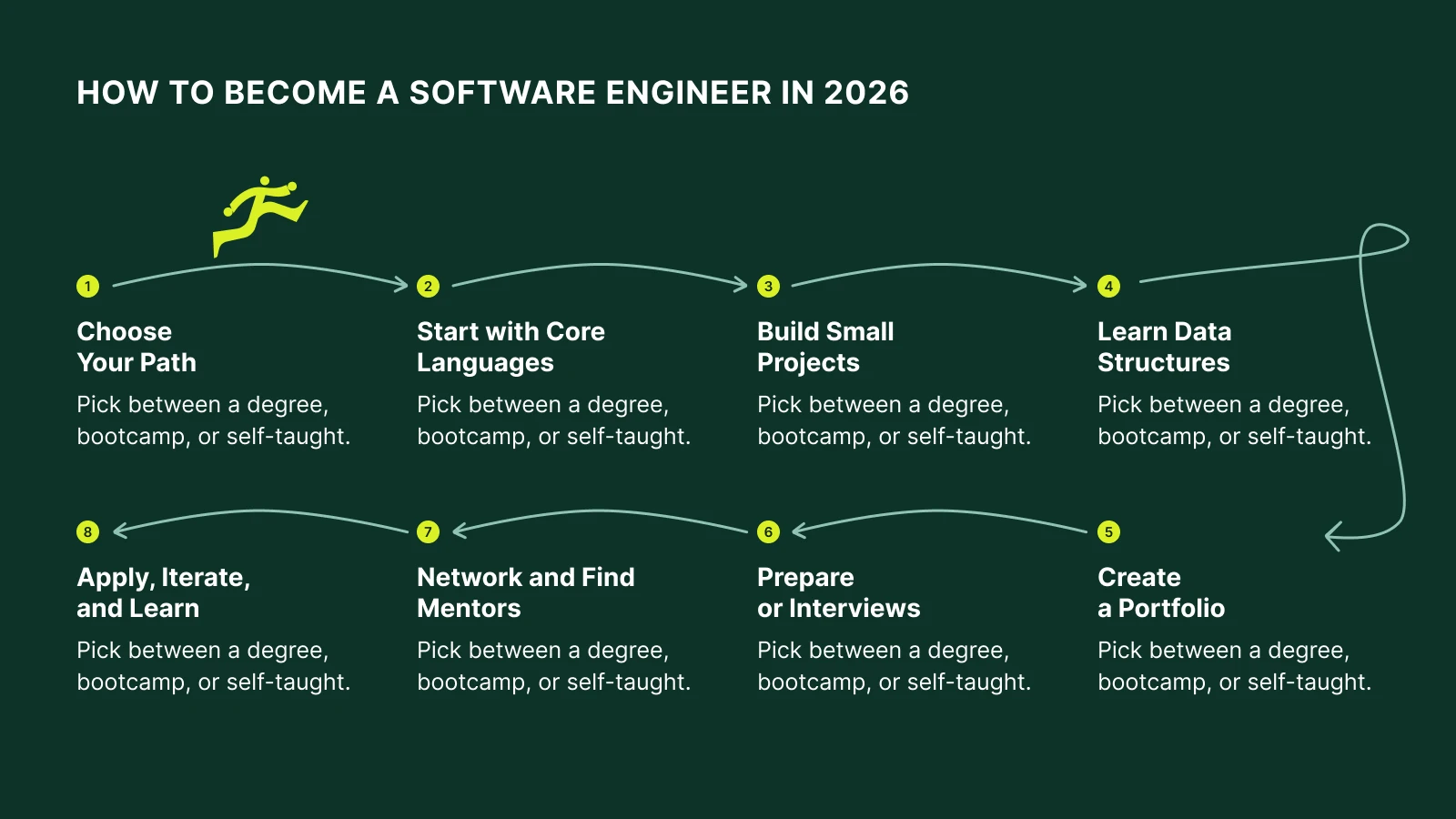
How to become a software engineer in 2026: Step-by-step guide
1. Choose your path
Pick one: computer science degree, coding bootcamp, or self-taught. Stop debating for months, as each of these variants works. You just need one that fits your lifestyle the most. Lean toward enrolling in universities or colleges if you're ready to commit for 4–6 years, but if you're short on money and want quick solutions, opt for self-training.
2. Start with foundation languages
There is no need to learn five programming languages at once; pick one:
Python: The easiest for beginners, used everywhere (web development, data science, machine learning, and back-end)
JavaScript: It runs the web, is necessary for front-end, and does back-end with Node.js
Java: Whether it's enterprise software, Android, or computer programming courses, they all love it
Once you're decent with these, you can start learning learn HTML and CSS for web management and SQL for database management.
3. Build small projects
Theory means nothing if you don't have projects — they prove you can code. Start basic with a:
Calculator app
To-do list with a database
Weather app using an API
Personal website for your portfolio
These may sound simple, but you'll learn debugging, how APIs work, and how front-end and back-end connect. Real-world learning happens when things break. Also, consider posting everything on GitHub, as recruiters check it before interviews.
4. Learn data structures and algorithms
This step can't be skipped — every technical interview tests it. Arrays, linked lists, stacks, queues, trees, graphs, and hash tables. Sorting, searching, recursion, and dynamic programming. Self-taught programmers and bootcamp grads might struggle here because they skip computer science fundamentals.
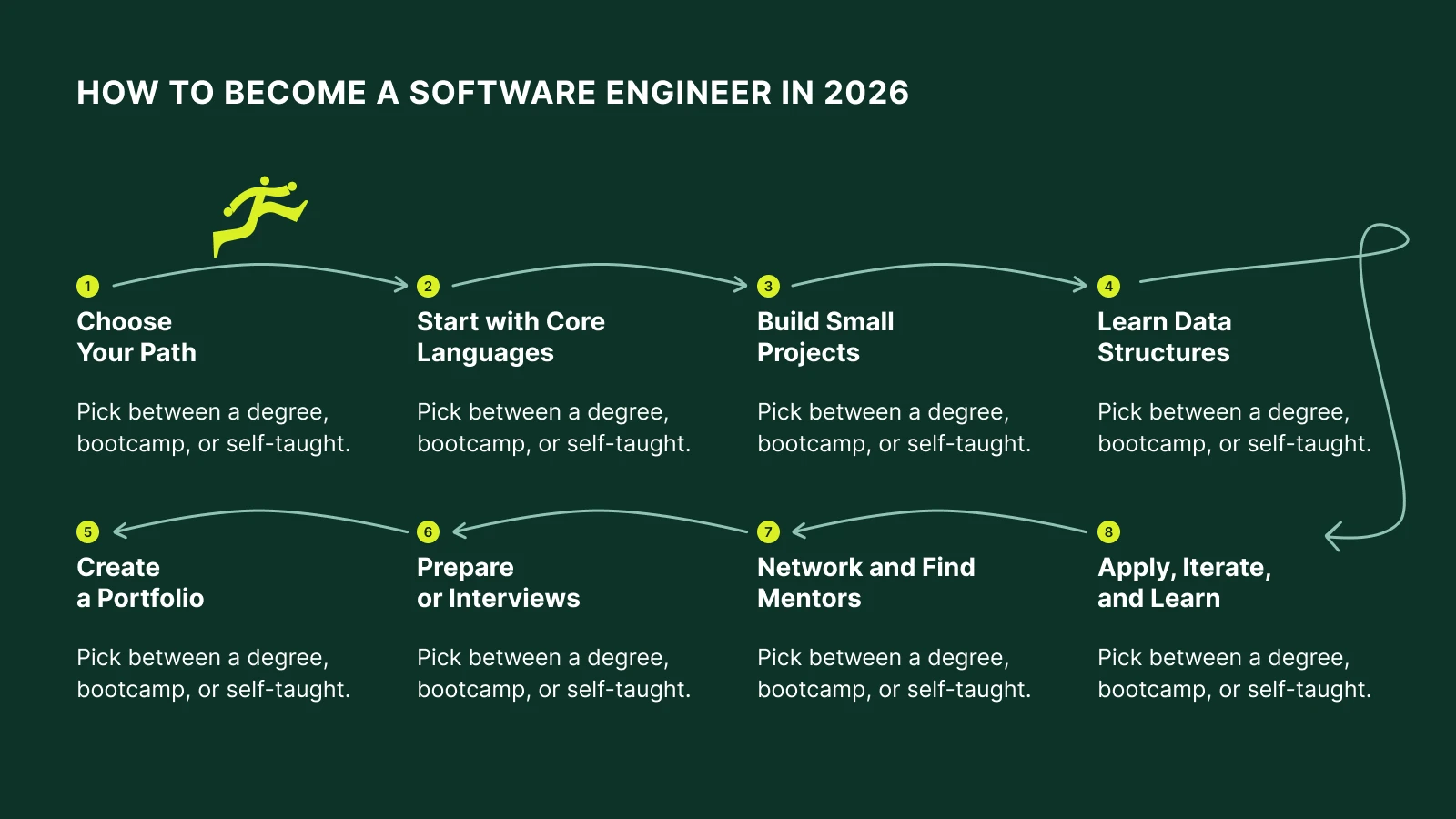
5. Create a portfolio
Your portfolio proves you can build software. Include 3–5 solid personal projects:
Full-stack web app (front-end and back-end developer work)
Something using APIs or SQL
Mobile app or open-source contribution on GitHub
Project in an area you want (machine learning, cybersecurity, and healthcare)
Write quick case studies for each: what problem it solves, what programming languages you used, and the challenges you hit. Recruiters want to see thinking, not just code.
6. Prepare for technical interviews
Software engineering jobs require surviving technical interviews. They're rough if you're unprepared.
Practice:
Coding challenges (LeetCode medium)
System design basics (how would you build Twitter?)
Behavioral questions (time you debugged something hard)
Explaining code out loud
Study how Amazon and Microsoft interview — their process is documented. Practice their style even if you're applying to startups.
📘 A quick insight: Junior software engineers leave over $10K on the table because they take the first offer without negotiating. Headway gives you summaries on salary negotiation and knowing your worth — get the app before your first job offer.
7. Networking and mentorship
When it comes to finding entry-level jobs, many folks lean on their connections rather than just cold applications. So why not jump into local software development meetups, hit up some hackathons, and get your hands dirty with open-source projects? The people you meet can become invaluable contacts.
And let's not forget LinkedIn — it's a fantastic place to connect with software engineers at companies you're eyeing. Engage with their posts, show off your work, but keep in mind, it's not about pleading for jobs; it's about being visible and making your presence felt.
Also, don't underestimate the power of having a mentor. Seek out someone who's a step ahead of you — someone who can take a look at your code, steer you toward the skills you need to hone, and even put in a good word for you when software engineering roles come up. Most engineers are more than happy to lend a hand to newcomers if you reach out respectfully.
8. Apply, iterate, and keep learning
When you're planning to apply for jobs, make sure you have about 3–5 projects showcased in your portfolio, and keep working on those LeetCode Medium problems regularly. Don't hold off until you feel completely "ready." Jump in and start applying for entry-level positions, junior roles, and any jobs that ask for 0–2 years of experience.
Check out opportunities at startups, mid-sized companies, and major tech firms. And don't forget to tailor your resume to highlight the frameworks and programming languages that are relevant to each position.
Be ready for some rejections — it's totally normal for folks to send out 50–100 applications before landing a job. Each rejection is a valuable lesson that can help you figure out what you might need to improve.
Even after you land your first job, keep pushing yourself to learn, because the software development landscape is always changing. New frameworks, languages, DevOps tools, and AI libraries are popping up all the time.
Portfolio and projects that get you hired
Your portfolio matters more than your resume for entry-level software engineering jobs. Recruiters want proof you can code.
Strong project ideas:
Web development: E-commerce site, social media clone, and blog with user login
Mobile: Fitness tracker, budget app with SQL
Machine learning and AI: Chatbot, image classifier using Python
Other: Cybersecurity tool, healthcare app, and open-source contributions on GitHub
How to present them:
Post everything on GitHub with clean README files. For each project, write a quick case study:
Problem you solved
Programming languages and frameworks used (JavaScript, Python, HTML, CSS, SQL)
Challenges you hit and fixed
Screenshots or live demo link
This method proves you think like a software engineer, not just copy code. Hiring managers want problem-solving skills and debugging ability.
📘 A quick insight: Recruiters spot tutorial clone portfolios instantly and pass. Headway's growth plans, like "Develop your career," teach you how to build stuff that actually gets noticed — try the app instead of making your fifth to-do list.
Software engineer interview prep tips
Technical interviews decide whether you land a software engineering job, as mentioned before — they can feel brutal if you're unprepared.
Practice platforms:
LeetCode — a massive library of coding problems, exactly what interviews ask
HackerRank — similar, some recruiters use it for screening
Pramp — free mock interviews with other learners
CodeSignal — pre-screen tests that companies send
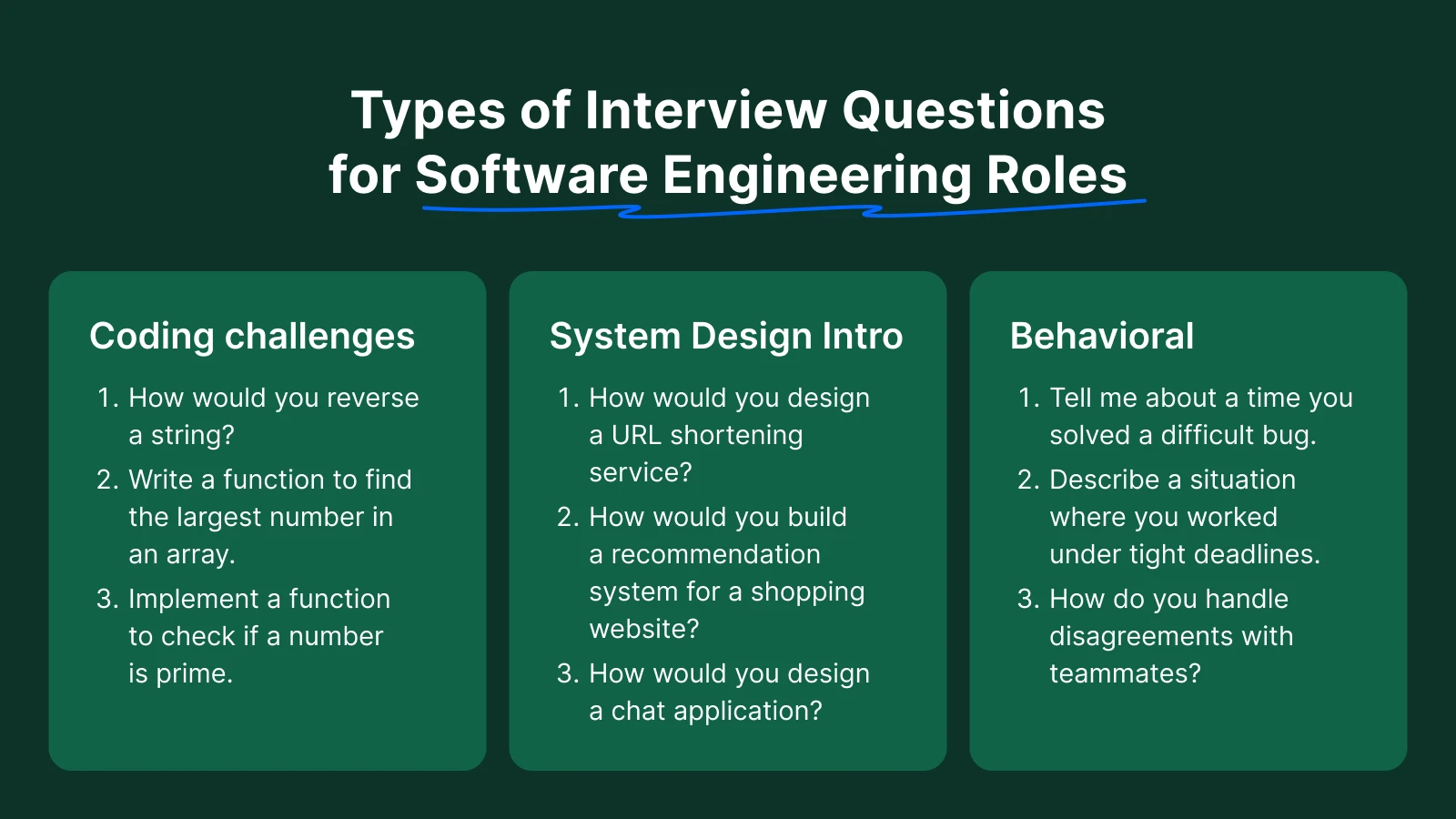
Question types:
Coding challenges: Write functions solving specific problems. Arrays, strings, data structures, algorithms. You code live while explaining your thinking.
System design intro: "How would you build Instagram?" Not expected to master this as a beginner, but show you understand databases, APIs, and how systems connect. More common for full-stack or back-end developer roles.
Behavioral: "Tell me about debugging something hard." Checking soft skills and team fit.
Tips that matter:
Talk through your approach before coding. Clarify the problem first — ask about edge cases. Test your code with examples before saying you're done. Study what specific companies ask on Glassdoor. Explain why you picked Python vs JavaScript, how you handled SQL, and what you'd change now.
Start practicing months before applying. By interview time, LeetCode mediums should feel doable.
Software engineering: Career growth and future outlook
Landing your first job is just the start. Where you go depends on what you want.
Most software engineers start with entry-level writing code and fixing bugs. After 2–3 years, you're mid-level, designing features, and reviewing code. Senior software engineering roles involve leading projects, mentoring, and making architectural decisions.
Hot areas right now:
Artificial intelligence and machine learning — high demand for engineers building AI products, especially using Python
Cloud and DevOps — AWS, Azure skills pay well
Cybersecurity — attacks keep growing, and healthcare especially needs security engineers
Data science — overlaps with software development
Keep in mind that soft skills matter more as you advance. Junior engineers are hired based on their technical skills, but senior engineers get promoted based on communication, leadership, and mentoring.
Start your software engineering career with Headway!
You know what software engineers do now: the paths, the technical skills, how long it takes, what separates people who get software engineering jobs from people who give up. Know that your first code will not be great. Every software engineer started confused, Googling basic stuff, wondering if they'd figure it out.
Reading full books on computer programming and algorithms takes forever. The Headway app gives you 15-minute summaries of many books, including system design fundamentals, problem-solving strategies, and career advice from people who've been there.
📘 Download Headway and start learning what takes most beginners months to piece together!
FAQs about how to become a software engineer
What is required to become a software engineer?
You need programming skills in languages like Python or JavaScript, plus an understanding of data structures and algorithms, and a portfolio with real projects you built. A computer science degree helps, but plenty of people break in through coding bootcamps or teaching themselves. What actually matters is proving you can write code that solves problems and survive the technical interviews recruiters throw at you.
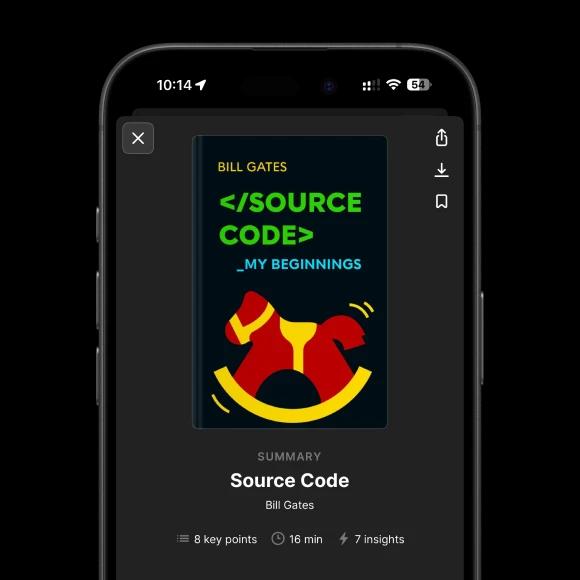
Does Bill Gates do coding?
Not anymore. Gates coded heavily when Microsoft started, writing chunks of BASIC and DOS himself back then. Once the company grew, he moved into running the business side of things. He's said he still reads code sometimes and weighs in on technical decisions, but he's not sitting down writing software like he did in the 1970s and 80s when he was younger.
Is 30 too late to become a software developer?
Plenty of people switch to software engineering in their 30s, 40s, or even later than that. Bootcamps and self-taught paths work at any age if you put in the hours. Your previous career often helps because project management experience, domain knowledge in healthcare or finance, or just knowing how to communicate with teams all transfer over and matter to employers looking to hire.
Which is the No. 1 programming language?
Depends on what you're measuring and what kind of work you want to do. Python dominates data science, machine learning, and a lot of back-end work. JavaScript runs the entire web and shows up in almost every project. Java powers enterprise software and Android apps. For beginners, Python or JavaScript makes the most sense because both have huge job markets and let you build actual projects fast.