Self-growth
 Apps & Digital Tools
 Business & Career
 Success
 Growth Tools
 Psychology
 Communication
 Relationships

You haven't missed a deadline in months. Your calendar's full, your inbox is clean by six, and everyone at work still thinks you've got this handled. So why does getting out of bed feel like the hardest part of your day?
That gap between how put-together you look and how depleted you feel has a name: high-functioning burnout. You keep performing and showing up, while your energy and health quietly drain out the back door, often for months before anyone notices, including you. It can hit any person juggling long hours, high expectations, or the fear of letting someone down, whether that's in a demanding job, a caregiving role, or both.
This guide covers what high-functioning burnout looks like, how it differs from depression, and how to recover without blowing up your career.
📘 Answer a few quick questions, and Headway will map out a recovery plan built around your specific stressors — get your burnout recovery plan.

Quick answer: Signs of high-functioning burnout
High-functioning burnout is chronic stress that hides behind strong performance. A few signs it might be what you're dealing with:
| Sign | What it looks like |
|---|---|
Deadlines, not energy | You're still hitting deadlines, but everything costs more energy than it used to. |
Rest that doesn't restore | You wake up tired even after a full night's sleep. |
Emotional flatness | You feel numb or irritable more often than you feel much of anything else. |
Ignored body signals | Headaches, tension, and stomach trouble keep showing up, and you keep pushing through them. |
Lost sense of "want to" | You can't remember the last time you did something just because you wanted to. |
If several of these sound familiar, you're not imagining it, and you're not alone. Some people call it silent burnout; others call it hidden burnout. The label matters less than the pattern underneath it.
What is high-functioning burnout, really?
Ordinary burnout tends to announce itself. Performance drops, people notice, and eventually something gives. High-functioning burnout skips that announcement. You can work through a full list of burnout symptoms and check off half of them — the fatigue, the irritability, the sleep trouble — while your output barely dips. That's the defining feature: the suffering is real, but the functioning hasn't caught up to it yet.
This isn't a milder form of burnout. If anything, it's often worse, because high-functioning burnout gets rewarded. Pushing through becomes the thing that gets you promoted, praised, and relied on, which makes it even harder to admit you're running on reserves you don't have.
High-functioning burnout at work tends to look like reliability, not distress, which is exactly why managers and even close friends miss it.
None of this is a weakness. It's often the opposite: a workplace or a business that quietly rewards overwork can turn a genuinely successful career into a slow-motion health problem, long before anyone calls it that.
Eight signs of high-functioning burnout hiding behind your competence
Most lists of high-functioning burnout symptoms open with fatigue and close with brain fog, but the pattern underneath is more specific than a generic checklist:
You've stopped feeling much about your work, good or bad. Not sadness, just flatness.
Your body is talking, and you're not listening. If your brain feels foggy by two in the afternoon no matter how much coffee you drink, that's worth a closer look — mental exhaustion and high-functioning burnout tend to travel together.
You're productive, but numb to the outcome. Finishing a project feels like relief, not satisfaction.
Sleep doesn't fix it. You can get eight hours and still wake up depleted.
You've quietly stopped doing things you used to enjoy outside of work, and your relationships are running on autopilot too.
Your patience has a hair trigger, and small annoyances land harder than they should.
You feel guilty the moment you're not doing something productive.
You're already telling yourself "just get through this month" — and have been for several months running.
Underneath most of these signs sit the same two things: a harder time keeping focus on anything that doesn't feel urgent, and a quiet inability to feel real motivation for things that used to pull you in without effort.
Why high achievers and perfectionists burn out without noticing
Burnout in high achievers tends to look nothing like the textbook version. If you've ever read up on compassion fatigue vs. burnout, you already know that caring too much and working too hard can produce strikingly similar exhaustion. High achievers often carry both at once: a drive to perform and a reflex to take care of everyone around them, usually at their own expense.
Perfectionism makes it worse. The link between burnout and perfectionism is well documented, and Brené Brown's 'The Gifts of Imperfection' makes the case that perfectionism isn't really about raising the bar — it's about managing how you're seen.
That distinction matters here. High-functioning burnout often isn't about the actual size of the workload. It's about the fear of what happens if you slow down and people notice you're not quite as unstoppable as they thought.
People-pleasing shows up here too. Saying no feels like a risk to your reputation, so you keep saying yes, and the stress compounds quietly while your calendar looks like proof that you're thriving.
High performers rarely think of themselves as burned out, because the job still gets done and the results still look successful. But what you achieve starts to matter more than how you feel achieving it, and the kind of deep work that once felt energizing starts to feel like a grind. Real success rarely requires running on empty to get there.

Everything's fine, but you're running empty
Headway offers growth plans on topics like stress and energy.
Read about stressHigh-functioning burnout vs depression and chronic stress
The World Health Organization formally classifies burnout as a syndrome resulting from chronic workplace stress that hasn't been successfully managed — not a medical condition in its own right, but an official enough pattern that it's worth taking seriously rather than brushing off.
Burnout and chronic stress get confused with depression often enough to trip up anyone trying to self-diagnose from a search bar at midnight.
Chronic stress is the fuel: an ongoing mismatch between what's demanded of you and what you have left to give. Burnout is what happens when that mismatch runs long enough to exhaust your emotional, physical, and mental reserves. Depression is a distinct clinical condition that can look similar on the surface — low energy, flat mood, trouble concentrating — but isn't caused by your workload alone and doesn't reliably lift once the workload does.
One rough way to tell high-functioning burnout vs. depression apart: burnout tends to ease, at least somewhat, when the external pressure lifts — a real vacation, a lighter quarter, a boundary that finally sticks.
Depression doesn't respond to a lighter schedule the same way. If stepping back from work changes nothing about how you feel, that's worth bringing to a doctor or therapist rather than trying to fix it with a few extra hours of sleep, since burnout treatment and depression treatment aren't interchangeable.
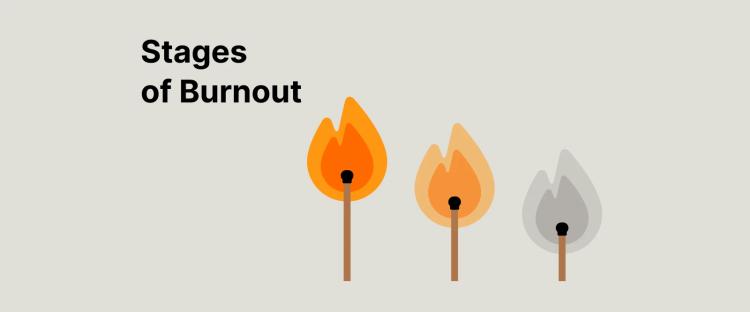
High-functioning burnout can also be a stop on the way to something worse. The widely cited 12 stages of burnout model tracks exactly this progression — how quiet overfunctioning in the early stages can escalate into full shutdown if nothing changes. Catching it while you're still high-functioning is the best shot you'll get at interrupting that slide before it gets harder to reverse.
How much control you still feel over your own schedule is often the clearest early warning sign, and it's usually easier to cope with pressure you can predict than pressure that keeps shifting under you. Left unmanaged, that kind of pressure can eventually lead to full collapse rather than staying at the high-functioning stage.
How to recover from high-functioning burnout without quitting your job
High-functioning burnout recovery looks different from the dramatic reset people picture when they hear the word burnout. Most people can't torch their career to fix their nervous system, and they shouldn't have to. What helps tends to be smaller and more specific than people expect:
Name it before you try to fix it. You can't set boundaries around a problem you're still calling "just a busy season." Most burnout recovery stages start with acknowledging what's happening, not with a new productivity system.
Give your nervous system an actual off switch. Slow breathing, time outdoors, or ten minutes of doing nothing sounds small, but it's how your body learns the emergency has passed.
Pick one boundary you can hold. Not five. One. Setting boundaries at work might mean leaving notifications off after seven, or saying no to a project that was never yours to carry.
Protect your sleep like it's a meeting you can't cancel. High-functioning burnout and poor sleep feed each other in a loop that's hard to break any other way.
Let rest be boring. Recovery isn't a retreat or a reinvention. It's naps, short walks, and evenings that don't end with your laptop open again.
Say the quiet part out loud to someone. A partner, a friend, a therapist — someone who can tell you when "I'm fine" doesn't match what they're seeing.
If sticking to even one boundary feels harder than it should, James Clear's 'Atomic Habits' makes a useful case for identity-level change — deciding who you are rather than just what you'll do — as something that sticks better than willpower ever does.
None of this works as a single fix. It's closer to preventing burnout from reloading once you've taken the pressure off, which is a different, ongoing project from putting out today's fire. If you'd rather skip some of the guesswork, a short burnout questionnaire can help point you toward which of these matters most for you right now.
Simple coping strategies tend to beat complicated ones: taking time for a short pause before moving straight to the next thing, a few minutes of meditation or slow breathing to feel calm again, and learning to seek support instead of waiting until you hit a wall. None of it looks dramatic, but it's often the first step that works to reduce stress built up over a long stretch of overwork.


Real people pulling themselves out of high-functioning burnout
None of this is theoretical. Across Headway's reader community, the pattern of high-functioning burnout, and the slow climb back out of it, shows up again and again, just with different job titles attached.
After years of putting out fires reactively at work, one reader built a twenty-minute daily habit around book insights instead of adding one more task to an already overloaded schedule. His account of how 20 minutes with Headway daily transformed him from a reactive manager into a strategic leader describes exactly the kind of shift that interrupts high-functioning burnout before it reaches collapse.
A leadership coach facing her own version of overextension found a similar fix in small, consistent input rather than one more overhaul. Her story of how daily micro-learning transformed her leadership coaching practice reads less like a productivity hack and more like proof that recovery doesn't require a full life redesign.
And for readers juggling several demanding roles at once, a developer, triathlete, and parent of three shared exactly how he fits learning into days that are already stretched thin — proof that even a packed schedule has room for the kind of small recovery habit that keeps burnout from building back up.
High-functioning burnout isn't only a personal problem. It shapes the whole team and workplace environment around a person who's running on empty, whether that's inside a small business or a large one, which is exactly why the signs are worth learning to spot in colleagues too, not only in yourself.

Build your burnout recovery plan with Headway
High-functioning burnout doesn't go away because you're good at hiding it. It goes away when something in the pattern changes: your boundaries, your rest, your relationship with your own warning signs.
Headway's library lets you explore dozens of book summaries built around exactly this — stress, burnout, perfectionism, and the slow work of rebuilding a sustainable pace, broken into pieces short enough to fit into a day that's already full. A few short questions about your sleep, your workload, and what's weighing on you most are all it takes for Headway to build a recovery plan shaped around your specific situation, not a one-size-fits-all checklist.
📘 Start your burnout recovery plan and find out what's driving yours.
FAQs on high-functioning burnout
What triggers high-functioning burnout?
Usually a stack of ordinary things rather than one dramatic event: long hours, unclear expectations, caregiving on top of a demanding job, or years of being the reliable one. The common thread is a mismatch between how much you're carrying and how much control or recovery time you get. Recognizing the trigger early is one of the simplest ways to prevent burnout from going further.
What's the difference between high-functioning burnout and depression?
Burnout is tied to chronic stress, usually from work or caregiving, and tends to ease somewhat when that pressure lifts. Depression is a clinical condition that doesn't reliably improve with a lighter schedule and often includes persistent low mood unrelated to any single stressor. If rest and a reduced workload don't shift how you feel at all, a doctor or therapist can help sort out which one you're dealing with.
Can high-functioning burnout cause physical health problems?
Yes. Long before physical illness shows up, most people notice emotional exhaustion and mental fog creeping in, followed by headaches, stomach trouble, frequent colds, and disrupted sleep. Left unaddressed long enough, chronic stress can affect your immune system, your heart health, and your broader mental health, not just your mood at work.
What are the first signs of high-functioning burnout at work?
Early signs tend to be quiet: needing more coffee or willpower to do the same job, feeling irritable over small things, losing interest in parts of work you used to enjoy, and noticing that rest doesn't restore you the way it used to. None of these stop you from performing. They just make performing cost more than it used to.
Does taking time off actually help with burnout recovery?
It can, but only if it's a real pause rather than a change of scenery with your inbox still open. A week away does little if you come back to the exact same pace with no boundaries in place. Taking time off helps most when it's paired with an actual change to your workload or habits afterward.
How long does high-functioning burnout recovery take?
It depends on how long the burnout built up and how much you're able to change about your workload and routines. Mild cases can shift in a matter of weeks with consistent boundaries and rest. More entrenched burnout, especially if you keep working the same unsustainable pace, can take months. Recovery isn't linear, and a few good weeks don't mean you're finished.
Does perfectionism make burnout worse?
Often, yes. Perfectionism ties your sense of worth to performance, which makes it harder to slow down even when your body is clearly asking you to. It also makes asking for help feel like admitting failure, which keeps people stuck in high-functioning burnout longer than they'd otherwise need to be.
Is this burnout, or am I just tired?
Ordinary tiredness usually lifts after a weekend or a decent night's sleep. Burnout doesn't. If you've rested and still feel flat, foggy, or disconnected from work you normally care about, that's a sign of something deeper than short-term tiredness — and worth taking seriously rather than waiting it out.
Can high-functioning burnout spread through a team?
It can. When one person on a team quietly overworks and still delivers, it resets what looks normal for everyone else, and a workplace environment that rewards that pattern makes it harder for anyone to admit they need help. Addressing it usually works better as a team and business issue, not just an individual one.
Can high performers protect their mental health without losing their edge?
Yes, the two aren't actually in competition the way it can feel. Real success rarely depends on running at full capacity every single day. Short recovery habits, clear boundaries, and basic coping strategies tend to protect performance over the long run, while constant overwork just borrows energy from next month to spend this week.