Self-growth
 Business & Career
 Success
 Communication
 Healing
 Relationships
 Psychology
 Happiness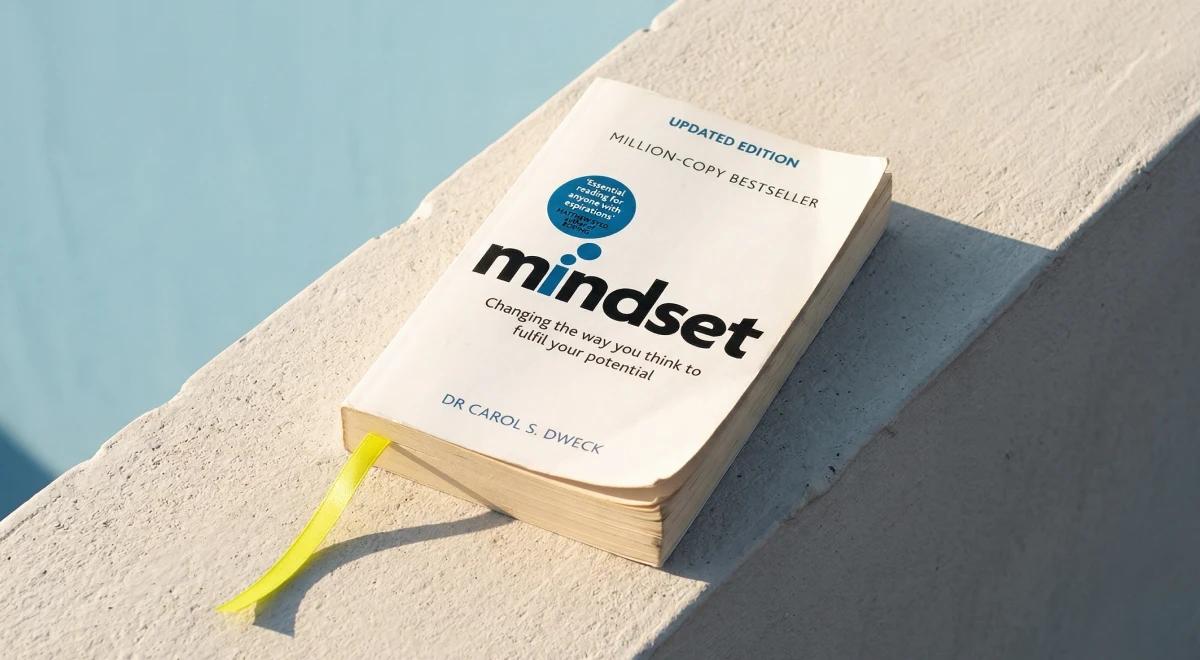
Ever assume that high achievers are just born lucky? It is easy to believe success is written in your DNA, but the reality is much simpler. It comes down to mindset. The growth mindset book category has changed millions of lives by proving that intelligence is something you can build through hard work.
In this guide, you'll learn the science behind Carol Dweck's 'Mindset' with Headway — a self-growth app that summarizes bestsellers into bite-sized insights — as our main instrument. We've curated a roadmap of the best books to help you achieve personal growth and turn setbacks into fuel for progress.
➡️ What is Headway and how does it work?
★★★★★ 172K+ reviews
Empower yourself with the best insights and ideas!
Get the #1 most downloaded daily growth app.
Get startedQuick answer: What is the growth mindset book by Carol Dweck about?
Dr. Carol Dweck's 'Mindset: The New Psychology of Success' introduces a powerful idea. After its 2006 release, it quickly climbed the New York Times bestseller list and stayed there for over a decade. It's since become a cornerstone of the self-improvement world. The book explains that success is dramatically influenced by how we think about our talents.
At its heart, 'Mindset' argues that we generally fall into one of two categories:
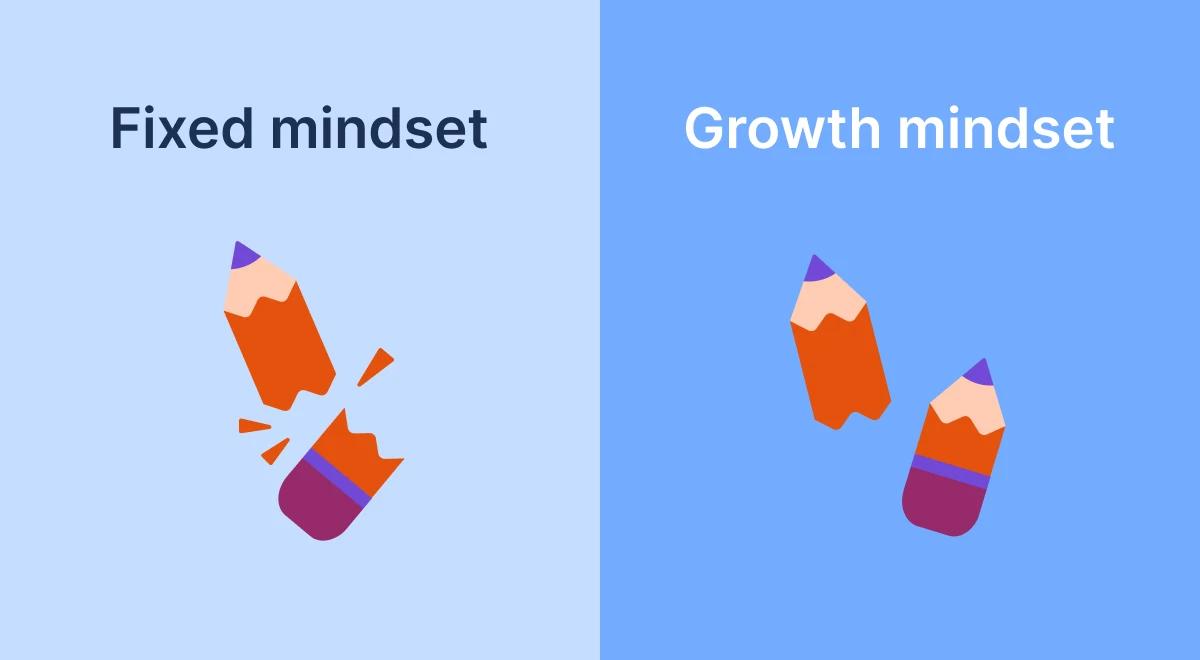
Fixed mindset: The belief that your intelligence, personality, and creative ability are static. In this view, you can't change your traits in any meaningful way. Success is simply an affirmation of inherent intelligence.
Growth mindset: The belief that your basic qualities are things you can cultivate. You can grow through your efforts, strategies, and help from others. This idea doesn't mean anyone can be Einstein, but it does mean anyone can get smarter if they work at it.
Dweck's growth mindset book changed the conversation by introducing the power of "Yet." Shift your internal dialogue from "I'm not good at this" to "I'm not good at this yet." That one word opens a world of possibilities. It reframes failures as stepping stones rather than evidence of unintelligence. This approach is backed by neuroplasticity — the concept that our brains are like muscles that get stronger the more we use them.
📘 Build a growth mindset with Headway.
Why 'Mindset' by Carol Dweck is a bestseller for entrepreneurs
In business, the ability to adapt is everything. For an entrepreneur, a fixed mindset is a death sentence. It leads to a fear of failure and a resistance to feedback. Carol Dweck's research in social psychology shows that when leaders adopt a growth mindset, they foster innovation. These leaders build more resilient teams.
When you're running a startup, you're constantly faced with new things you don't know how to do. This Carol Dweck mindset book teaches you that these gaps aren't weaknesses. Instead, they are opportunities to acquire new skills. By focusing on hard work and effective strategies rather than innate genius, business owners navigate market setbacks without losing their self-esteem.
'Mindset' is a great book that is often paired with titles like 'Atomic Habits' by James Clear. Both authors emphasize the importance of systems and consistent effort over overnight success. While James Clear focuses on the how of habit formation, Dr. Carol Dweck provides the why — the psychological foundation that makes those habits possible. Without a growth mindset, even the best habits eventually crumble under self-doubt.
Fixed mindset vs growth mindset: Key differences
Start reading summaries on how to build a growth mindset in just 15 minutes.
Understanding the difference between these two mindsets is the first step toward a transformation in your personal development journey. The following table highlights how each mindset responds to common life situations.
| Aspect | Fixed mindset | Growth mindset |
|---|---|---|
Challenges | Avoids them to stay "safe" and look smart | Embraces them as chances to learn and evolve |
Obstacles | Gives up easily; sees setbacks as a sign of lack of talent | Persists in the face of setbacks; tries new strategies |
Effort | Sees effort as fruitless or a sign of weakness | Sees effort as the primary path to mastery |
Criticism | Ignores useful feedback; feels personally attacked | Learns from criticism and adapts behavior |
Success of others | Feels threatened; views life as a zero-sum game | Finds lessons and inspiration in others' wins |
The fixed vs growth mindset comparison shows that a fixed mindset leads to a plateau. It causes a tendency to fall short of your full potential. Conversely, a growth mindset leads to higher achievement. It gives you a sense of free will over your own intelligence and future.
📘 Shift thinking for success with Headway.


The science of the brain: Why change is possible
One reason why 'Mindset: The New Psychology of Success' is considered an essential guide is its grounding in developmental psychology. For years, scientists believed the adult brain was "fixed." They thought that once you hit a certain age, your mental capacity was set in stone.
But modern research into neuroplasticity has debunked this. Every time you push yourself out of your comfort zone, the neurons in your brain form new, stronger connections. Over time, these pathways become more efficient. That's why a book on a growth mindset is so empowering. It tells you that you're literally the architect of your own brain.
When you tell yourself, "I'm just not a social person," you're essentially telling your brain to stop building those connections. But when you approach an event with the intent to learn, you give your biology permission to grow. That's why mentoring and seeking help matter so much. They provide the "nutrients" for these new neural pathways to flourish.
How to use Headway as your growth mindset roadmap
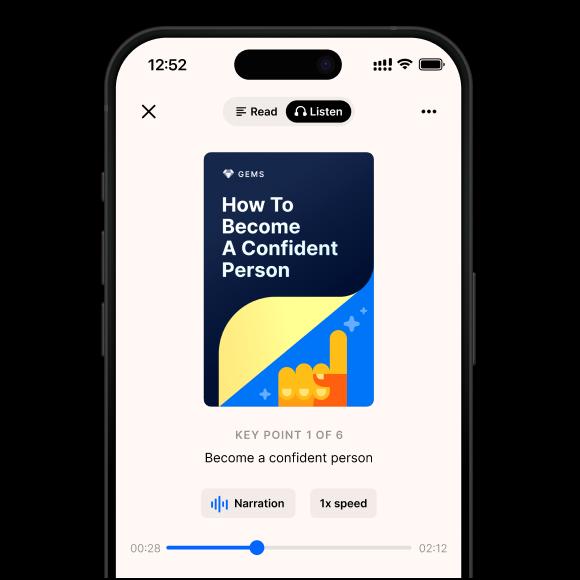
If you're busy juggling a career and family, finding the right time to read a 300-page non-fiction book can feel impossible. That's where microlearning becomes your best friend. The Headway app is designed for people who want to embrace a growth mindset but need a scannable way to access expert wisdom.
Instead of feeling guilty about the books on your nightstand, listen to a 15-minute summary of Carol Dweck's growth mindset book. You can do this while you're at the gym or commuting. Headway provides:
Bite-sized insights: Get the core ideas from the world's best books in a fraction of the time.
Daily reminders: Build a consistent learning habit that keeps your mind sharp and your motivation high.
Visual growth levels: Track your progress as you master new skills and categories, such as emotional intelligence or wealth.
Audiobook summaries: Perfect for busy learners who prefer to absorb information via a podcast-style format on the go.
By using Headway, you're not just reading summaries. You're building an endless source of creative ideas and reinforcing the belief that you can always improve. It's the essential guide for anyone who wants to stay ahead of the curve in 2026. You can even find a summary of 'Atomic Habits' to help you build the routine required to maintain your learning journey.
Beyond Dweck: Top six must-read growth mindset books for 2026
While 'Mindset' is the foundation, several other authors have expanded on these ideas with real-life examples. If you're looking for the best books to support your growth, consider these titles:
'Limitless Mind: Learn, Lead, and Live Without Barriers' by Jo Boaler
This book is a direct attack on the myths we often pick up in high school. Jo Boaler, a Stanford professor, draws on her deep knowledge of education to show that there's no such thing as a "math brain" or a "creative type." She explains how your biology is designed to change throughout your entire life. If you have ever felt held back by a label someone gave you years ago, here's your chance to break free.
Boaler provides six keys to unlocking a growth mindset that apply to learning, leading, and everyday life. She highlights the importance of making mistakes. Instead of seeing errors as failures, she shows how they're the exact moments your brain grows the most. This approach is an incredible tool for anyone who wants to lead a team or help a young adult navigate the pressures of modern education.
'Personality Isn't Permanent' by Benjamin Hardy
Benjamin Hardy takes a sledgehammer to the idea that your personality is a fixed trait you were born with. He argues that popular personality tests often trap us in boxes. They make us believe "that's just how I am." Instead, Hardy suggests that your personality should be a tool you use to reach your goals. It's a flexible part of your identity that changes as your future intentions change.
By focusing on your "future self," you can start making decisions today that align with the person you want to become. This book provides a clear roadmap for rewriting your life's story. It's perfect for those who feel stuck in old habits. It teaches you how to cultivate a growth mindset by consciously choosing your traits rather than letting your past define you.
'Bounce: Mozart, Federer, Picasso, Beckham, and the Science of Success' by Matthew Syed
Matthew Syed dives into the lives of some of the most successful people in history to debunk the myth of innate talent. He shows that legends like Mozart and David Beckham weren't just born "great." Instead, they benefited from an intense growth mindset and thousands of hours of purposeful practice. Syed explains how our obsession with natural talent actually holds us back from putting in the work required to win.
This book is a great story of human achievement that relies on data rather than magic. It shows how the right environment and consistent effort can lead to mastery. If you're struggling with a difficult task, Syed's insights will give you the resilience to keep going. It's a powerful reminder that "prodigies" are usually just people who started their journey earlier and worked harder than everyone else.
'Think Again: The Power of Knowing What You Don't Know' by Adam Grant
In a world full of people shouting their opinions on social media, Adam Grant offers a refreshing alternative: the power of rethinking. This book teaches you how to embrace a growth mindset by remaining humble about your knowledge. Grant argues that we often get stuck in "preacher" or "prosecutor" modes. We spend all our time defending our own views or attacking others. Instead, we should think like scientists.
Thinking like a scientist means looking for reasons why you might be wrong. It involves constantly reevaluating your beliefs in the face of new evidence. This is a vital skill for both your career and your mental health. By learning to "unthink" outdated ideas, you stay open to new skills and opportunities. It is the perfect guide for anyone who wants to remain intellectually sharp in 2026.
'Unlearn: Let Go of Past Success to Achieve Extraordinary Results' by Barry O'Reilly
Barry O'Reilly focuses on the specific growth mindset required to survive in a rapidly changing world. He argues that our past successes can often become our biggest obstacles. We get comfortable with what worked before, even when the world around us has shifted. O'Reilly introduces the "Unlearn" cycle. This process helps you identify outdated beliefs, let them go, and make room for innovative strategies.
It's a must-read for any entrepreneur or leader who feels their team has hit a plateau. It provides a practical framework for adapting to new circumstances. By focusing on unlearning, you ensure that you don't get left behind. It's about the courage to start over and the discipline to keep evolving, no matter how much you have already achieved.
'Fostering Grit: How Do I Prepare My Students for the Real World?' by Thomas R. Hoerr
While many mindset books focus on adults, Thomas R. Hoerr looks at how we can prepare the next generation. This book is an essential resource for parents and educators who want to build resilience in their kids. Hoerr explains that grades aren't the only thing that matters. We must also teach students how to fail well. He provides strategies for cultivating grit and perseverance in a classroom setting.
The goal is to raise a young adult who sees obstacles as a normal part of life. Hoerr shows how to move beyond a fixed mindset that fears mistakes. He provides a practical roadmap for building an environment where growth is valued more than perfection. If you're a mentor or a parent, these insights will help you give your children the emotional tools they need to thrive.
📘 Expand your mindset toolkit with Headway.
The "False Growth Mindset" trap
As the concept of the growth mindset became a global phenomenon, Dr. Carol Dweck noticed a concerning trend: the "False Growth Mindset." Many people began praising effort alone, without focusing on the learning that should come from it.
If a student works hard but fails, simply saying "Great job for trying!" isn't enough. A true growth mindset approach requires looking at why the effort didn't work. You must find a new strategy. It's about progress, not just activity. To avoid this trap, we must focus on:
Process over praise: Celebrate the specific strategies used, not just the fact that someone worked long hours.
Outcome-linked effort: Ensure that the effort is actually moving the needle toward a goal.
Vulnerability: Admitting when a current approach isn't working is a hallmark of a growth mindset.
Real-life applications: From the classroom to the boardroom
The beauty of a growth mindset is that it applies to every stage of life. In high school, a student might use these principles to overcome a fear of math. They stop saying "I'm just not a numbers person." Instead, they ask, "What part of this equation don't I understand yet?"
For a young adult entering the workforce, it might mean seeking out mentoring. It involves viewing "entry-level" tasks as a necessary part of their roadmap to success. Instead of being frustrated by a lack of immediate promotion, they focus on the new skills that they're acquiring every day.
In the parenting world, using a picture book to explain these concepts can change a child's entire life trajectory. When we teach children that their "brain is like a muscle," we give them the gift of resilience. We move away from praising them for being "smart" and start praising them for their focus.
Even in our everyday life, this mindset helps. When a relationship hits a rocky patch, a fixed mindset might conclude that "We're just not compatible." A growth mindset asks, "What can we learn from this conflict to make our connection stronger?" Here's where emotional intelligence meets mindset work.
📘 Apply growth thinking daily with Headway.
Avoiding the "I can't do that" mindset
We all have that inner critic that whispers, "I'm too old," "I'm not tech-savvy," or "I can't do that." These are all symptoms of a fixed mindset. The first step to silencing that voice is awareness. When you catch yourself making a definitive statement about your abilities, add the word "yet" to the end of it.
"I don't know how to code... yet."
"I'm not a confident public speaker... yet."
"I don't understand how to invest... yet."
This simple linguistic trick shifts the focus from your current limitations to your future potential. It aligns perfectly with the principles found in Covey's 'The 7 Habits of Highly Effective People,' specifically the habit of being proactive. You aren't a victim of your circumstances. You are the driver. Check it yourself now!
Commit to your roadmap of continuous personal growth on Headway
The most important takeaway from any growth mindset book is that you are in control of your own development. You don't have to wait for the "right time" to start — the right time is now. By shifting your perspective, you can break free from the "I can't do that" mentality. Start embracing the challenges that will ultimately lead to your greatest achievements.
Remember that personal growth isn't a destination; it's a lifelong roadmap. There will be days when you slip back into a fixed mindset, and that's okay. The key is to notice it, offer yourself some compassion, and then ask, "What can I learn from this?"
Ready to start your own roadmap to success? Download the Headway app today and explore summaries of the best books on mindset, psychology, and personal growth. Whether you want to dive into the Dweck growth mindset book or explore the latest from Adam Grant, we have the tools to help you become the best version of yourself. Your future self will thank you for the effort you put in today.
📘 Take control of growth with Headway.
Frequently asked questions about the growth mindset books
Is there a growth mindset book PDF available?
While many sites offer a growth mindset book PDF for download, it's always recommended to purchase the book. Alternatively, use a legal book summary service like Headway. This care ensures you're getting accurate, up-to-date information while supporting the authors.
How does developmental psychology explain the growth mindset vs. fixed mindset book concepts?
Developmental psychology shows that children praised for their effort develop more resilience than those praised for their intelligence. The growth vs fixed mindset book research by Dr. Carol Dweck proves that these early influences shape how we handle challenges as adults.
What is the best growth mindset book for high school or young adults?
Aside from the original 'Mindset' by Carol Dweck, books like 'Grit' by Angela Duckworth or 'The Absolutely True Diary of a Part-Time Indian' are excellent choices. To expand your library, consider 'The 7 Habits of Highly Effective Teens,' by Sean Covey. This book translates timeless principles into a language that resonates with students.
For those looking for a clear action plan, 'The Success Principles for Teens,' by Jack Canfield, is also a powerful tool. These titles help a younger audience navigate identity, academic pressure, and resilience.
Fixed mindset vs growth mindset: which one is better for mental health?
Adopting a growth mindset is significantly better for mental health. A fixed mindset creates a constant need for validation. In contrast, a growth mindset reduces the pressure to be perfect and encourages self-compassion. This stance leads to higher self-esteem and reduced anxiety.
What are some growth mindset books that focus on habits?
'Atomic Habits' by James Clear is the most popular companion. It focuses on how tiny, 1% improvements compound over time. Another essential read is 'Tiny Habits' by BJ Fogg. He explains how to start with behaviors so small they require no willpower. Finally, 'The Power of Habit' by Charles Duhigg explores the "cue-routine-reward" loop. It'll help you understand how to rewire existing brain patterns.
Who is Dr. Carol Dweck?
Dr. Carol Dweck is a leading researcher in motivation. She holds the Lewis and Virginia Eaton Professorship of Psychology at Stanford University, where her research bridges developmental, social, and personality psychology to explore self-conceptions, motivation, and achievement. She's best known for her work on mindsets and her bestseller 'Mindset: The New Psychology of Success.'
Where can I find an audiobook version?
You can find a growth mindset audiobook on most major platforms, such as Audible or YouTube. If you're short on time, Headway offers high-quality audiobook summaries you can listen to on the go. These distill the key points into a 15-minute experience, which is essentially like a concentrated podcast.
What defines a book: growth mindset?
People often search for the Carol Dweck mindset book (growth mindset) or the mindset by Carol Dweck (growth mindset), but both refer to her flagship work. Whether you use the term fixed mindset vs growth mindset or fixed vs. growth mindset, the core concept remains the same: your brain is a muscle that grows through effort.