Self-growth
 Apps & Digital Tools
 Business & Career
 Success
 Growth Tools
 Psychology
 Communication
 Relationships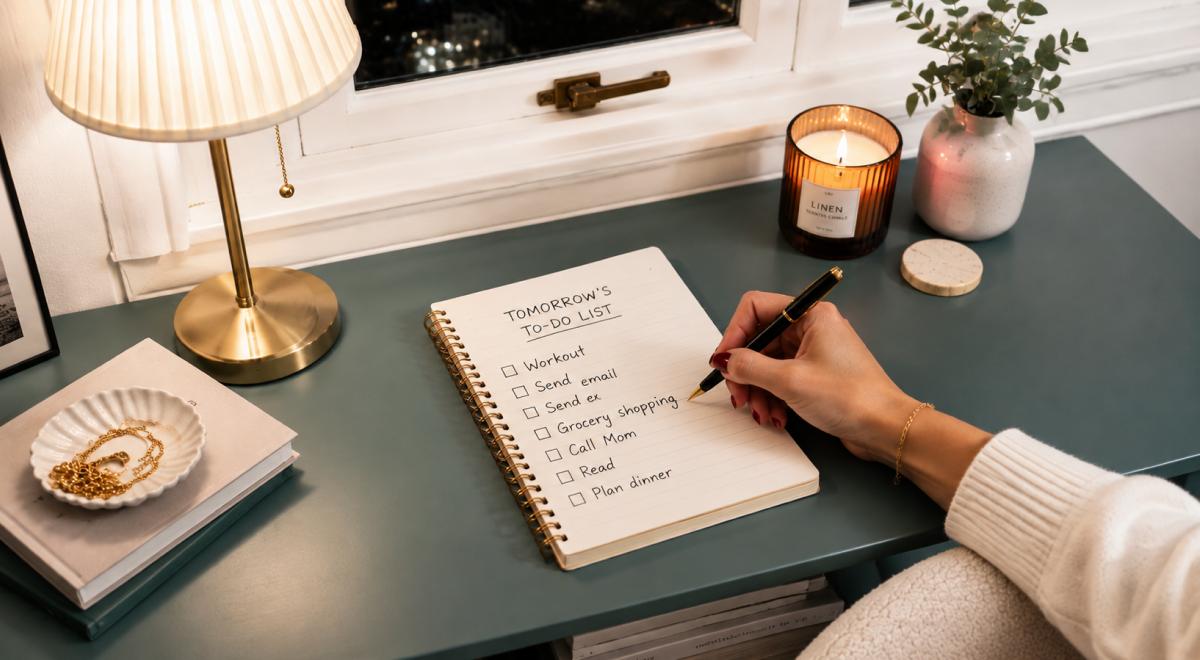

Nobody plans to spend 45 minutes watching a stranger reorganize their spice rack at 11:48 p.m. And yet here we are.
After researching how people close out their days — the schedules of neuroscientists, the confessions of reformed doomscrollers, the sleep studies — one thing became obvious: most adults have a morning routine they're proud of and an evening routine they'd rather not describe out loud. The evening routine is the neglected sibling of the productivity world, and it might matter more. Your morning sets the tone for the day. Your evening decides whether tomorrow gets a fair shot at all.
The good news is that a wind-down doesn't require as much discipline as a decent plan. The habits below are drawn from sleep science and from people who fixed their nights without turning bedtime into a second job.
Want a plan that matches how you recharge? Take Headway's quick quiz — answer a few questions and get a personalized growth plan built around your habits.
Quick answer: A simple evening routine checklist
If you only skim one section, make it this one. Here's the short version of a nighttime routine that works for most adults:
Pick a consistent "day is over" time and defend it.
Write tomorrow's to-do list so your brain can stop rehearsing it.
Tidy up for 10 minutes — future you will say thanks.
Cut screens 30–60 minutes before bed to limit blue light.
Swap the scroll for reading a book, journaling, or an evening stretching/skincare routine.
Keep the bedroom cool and dark, then hit lights out at the same time nightly.
Keep reading for the why behind each step, plus a realistic timeline you can adapt.
📘 Build the healthy habits behind better evenings with insights from top nonfiction books on Headway.

Why an evening routine works when willpower doesn't
Your body already runs on a schedule. Circadian rhythms — the internal clock that governs when you feel alert and when you feel sleepy — respond to cues like light, temperature, and repetition. Give the clock consistent signals, and it rewards you with easier falling asleep and better sleep quality. Give it bright screens at midnight and a different bedtime every night, and it retaliates.
The other player is your nervous system. After a demanding day, your body can stay stuck in go-mode: elevated heart rate, busy mind, shoulders somewhere near your ears. A wind-down routine is essentially a series of signals that tell your nervous system the threat level has dropped. Dim light lets melatonin — the hormone that makes you drowsy — rise on schedule. Slow movement and warm water lower your core temperature afterward, which is one of the body's strongest sleep cues.
None of this requires heroics. It requires repetition, which is a much lower bar.
What quietly ruins most evenings (and how to spot it in yours)
Before adding habits, it's worth naming the ones already running the show.
The obvious culprit is screen time. Blue light from phones and laptops suppresses melatonin, and the content does its own damage — doomscrolling keeps your brain in alert mode long after you've put the phone down. If your last hour awake is spent absorbing bad news and other people's highlight reels, your mind will keep chewing on it in the dark. Many people find themselves overthinking at night precisely because the day never got a proper ending.
Caffeine is the sneakier one. It has a half-life of around five to six hours, which means the 4 p.m. coffee is still in your system at 10 p.m., quietly blocking the sleepiness you're waiting to feel.
And then there's the unfinished-business problem. Open loops — the email you didn't send, the awkward conversation you're replaying — behave like browser tabs your brain refuses to close. If racing thoughts are your main obstacle, learning how to quiet your mind is half the battle, and there are specific techniques for quieting your mind to sleep when the lights are already off.
📘 Trade ten minutes of scrolling for one big idea from a bestselling book on Headway.
Curious how much you can learn in 15 minutes?
Get actionable insights from your very first summary — and keep going from there.
Get the plan10 evening routine ideas that don't feel like homework
A quick note before the list: you don't need all ten. A good evening routine for adults is more buffet than boot camp — pick three or four ideas, run them for two weeks, and keep what sticks.
1. Set a shutdown time and say it out loud
Decide when the workday ends, then mark it with a small ritual: close the laptop, write down where you left off, push in the chair. It sounds ceremonial because it is. The ritual tells your brain the productive part of the day is complete, which makes the rest of the evening feel earned instead of stolen.
2. Write tomorrow's to-do list tonight
Two minutes, pen and paper. Capturing tomorrow's tasks does more for your sleep than it does for your productivity — once the list exists somewhere outside your head, your brain stops rehearsing it at 1 a.m. You prepare for the next day and quiet the mental noise in one move.
3. Tidy up for 10 minutes
Not deep cleaning. Just resetting the kitchen, clearing the couch, putting the day's debris away. Waking up to a tidy space is a small gift with an outsized effect on your morning mood, and ten minutes is short enough that you'll do it even when you're beat.
4. Take a hot bath or shower
The trick here is counterintuitive: warm water raises your skin temperature, and the cooldown afterward drops your core temperature — the exact signal your body reads as "time to sleep." Aim to finish about an hour before bed. Bonus: it's the rare self-care habit that requires zero motivation.
5. Try an evening stretching routine
You don't need flexibility or a mat with a mantra printed on it. An evening stretch routine of five to ten minutes — neck rolls, a forward fold, hips, lower back — releases the physical tension the day deposited. If your body feels wired even when your mind is done, this guide on how to quiet your body to sleep pairs well with it.
6. Or go one step further with evening yoga
A slow yoga evening routine — legs up the wall, child's pose, a few cat-cows — shifts your nervous system from "fight or flight" toward "rest and digest." The difference from a workout matters: an evening yoga routine should feel closer to a sigh than a session. Ten minutes counts.
7. Journal for five minutes
Journaling before bed isn't about writing anything profound. Three lines about what happened and one about what's bugging you is plenty. If your entries keep circling things outside your influence, it may help to read up on how to stop worrying about things you can't control — some worries deserve a plan, and the rest deserve a page and a period.
8. Meditate, or just breathe like you mean it
Meditation has a reputation problem — people assume it requires an empty mind, which nobody has. In practice, five minutes of slow breathing (try a four-count inhale, six-count exhale) measurably calms the nervous system. If unwanted thoughts barge in, that's normal; knowing the difference between intrusive thoughts vs impulsive thoughts makes them far less alarming.
9. Read a book instead of a feed
Reading a book before bed is the classic for a reason: it occupies your attention without spiking it. Fiction, nonfiction, a 15-minute book summary — whatever keeps you off the phone. If your eyes are done for the day, bedtime audiobooks and sleep stories for adults do the same job with the lights already off.
10. Lights out at the same time, even on Fridays
Consistency is the least glamorous and most effective item on this list. Your circadian rhythm doesn't know it's the weekend. A steady bedtime — give or take 30 minutes — does more for sleep quality than any single hack above it. Boring works.
Build your own evening routine checklist
The bridge from ideas to habits is a schedule loose enough to survive real life. Here's a sample evening routine checklist for someone aiming for an 11 p.m. bedtime — shift everything to match yours:
Time | What you're doing | What it's for |
8:30 p.m. | Shutdown ritual + tomorrow's to-do list | Closes open loops |
9:00 p.m. | Ten-minute tidy-up | Resets your space and your head |
9:15 p.m. | Hot bath or shower | Triggers the temperature-drop sleep cue |
9:45 p.m. | Evening stretching routine or gentle yoga | Releases physical tension |
10:00 p.m. | Screens off; dim the lights | Protects melatonin from blue light |
10:05 p.m. | Reading a book, journaling, or a summary | Calm attention, no feed |
10:45 p.m. | Five minutes of breathing or meditation | Downshifts the nervous system |
11:00 p.m. | Lights out | Same time nightly, weekends included |
Treat it as a draft. If the bath happens twice a week and the to-do list happens daily, you're doing it right. For nights when you want variety, this list of relaxing activities has plenty of substitutes.
The routine you'll keep is the one that feels like a reward, not a curfew.



How real people fit learning into their wind-down
One pattern kept showing up in Headway user stories: the evening is where the habit lives, because it's the one part of the day nobody else has claimed.
Rahaf Sobh, a university student, used Headway for two months and made summaries her daily fix — with morning coffee or at night before bed. Her advice cuts against the productivity grain: stop making learning another item on your to-do list. The summary of 'Atomic Habits' reshaped how she thinks about routines in the first place.
Herbert S. Burt read more books in a year than he thought possible by using Headway daily for nearly a year — he missed exactly two days. His takeaway is the quiet kind: small daily disciplines compound, and a 15-minute evening habit beats an ambitious plan you abandon by Thursday.
And Jessica Teitelbaum, a remote professional, stacks her Headway session onto habits she already has — pairing a summary with routines that were happening anyway. That's the trick worth stealing for your evenings: attach the new habit to the bath, the stretch, or the couch you were headed to regardless.
📘 See which books match your goals — answer a few questions here and get your personalized plan.
Three books worth adding to your nighttime routine
If you want the science and the psychology behind all of this, three titles cover most of the territory, and all three are summarized on Headway:
'Why We Sleep' by Matthew Walker explains what happens in your brain overnight and why sleep hygiene isn't optional. Fair warning: after reading it, you will never brag about running on five hours again.
'Atomic Habits' by James Clear is the manual for making any routine stick — habit stacking, friction removal, and why your environment beats your willpower.
'The Power of Habit' by Charles Duhigg breaks down the cue-routine-reward loop, which is exactly the machinery an evening routine runs on.
For nights when stress is the main event, this roundup of the best books for stress relief goes deeper. And if the thing keeping you up is a grudge or a replayed argument, how to let go of things that bother you is the companion read.
Give your evenings a better ending — wind down with Headway
An evening routine isn't a performance. It's the 60 or 90 minutes where you stop being productive and start being restored — a wind-down that protects your sleep, your mood, and honestly, tomorrow's version of you.
Start small. Pick a bedtime, write the to-do list, put the phone across the room, and read something worth your attention. The rest of the checklist can arrive one habit at a time.
Headway makes the last part easy. The app condenses 2,500+ bestselling books into 15-minute summaries you can read or listen to — a bedtime routine upgrade that fits between the bath and lights out. It's how 55M+ users in 170 countries fit growth into the corners of the day, and the evening corner happens to be the roomiest one.
📘 Take Headway's quick quiz — answer a few questions about your habits and goals, and get a personalized plan for calmer, smarter evenings.
FAQs about building an evening routine
What is a good evening routine for adults?
A good evening routine for adults includes a consistent shutdown time, a short to-do list for tomorrow, reduced screen time in the last hour, and one calming activity such as reading, stretching, or journaling. The specifics matter less than the repetition. Done nightly, these steps cue your circadian rhythm and nervous system to prepare for sleep, which improves both how fast you fall asleep and how rested you feel.
How long should an evening routine take?
Anywhere from 20 to 90 minutes works. A minimal version — to-do list, screens off, ten minutes of reading — takes about half an hour. A fuller wind-down with a bath, an evening stretch routine, and journaling runs closer to 90. Start with the short version and expand only if it feels good. A routine you complete nightly beats an elaborate one you skip.
What time should I start winding down?
Begin your wind down 60–90 minutes before your target bedtime. That window gives melatonin time to rise once the lights dim and lets your body temperature drop after a warm bath or shower. If you aim for an 11 p.m. lights out, start closing the day around 9:30. Consistency matters more than the exact hour, so pick a time you can hold on weekdays and weekends alike.
Why should I avoid screens before bed?
Two reasons. First, blue light from phones and laptops suppresses melatonin, the hormone that makes you sleepy, delaying your body's natural drift toward rest. Second, the content itself — news, feeds, doomscrolling — keeps your brain alert and emotionally engaged. Swapping the phone for a book, an audiobook, or a paper journal removes both problems at once and usually shortens the time it takes to fall asleep.
Is an evening yoga routine better than regular exercise at night?
For the hour before bed, yes. Intense workouts raise your heart rate and core temperature, which can delay sleep. A gentle evening yoga routine or evening stretching routine does the opposite: slow poses and deep breathing activate the rest-and-digest branch of your nervous system. Save the hard training for earlier in the day and keep nighttime movement at the intensity of a long exhale.
What should I do if I can't stop thinking at night?
Move the thoughts out of your head and onto paper. A quick brain dump or tomorrow's to-do list closes the open loops your mind keeps rehearsing. Slow breathing with a longer exhale helps too. If racing thoughts persist most nights, it's worth reading targeted strategies for quieting your mind to sleep — and remember that occasional restless nights are normal, not a personal failure.
How is a bedtime routine different from an evening routine?
An evening routine covers the whole stretch after work: dinner, tidying up, preparing for the next day, and leisure. A bedtime routine is the final 20–30 minutes — the same few actions done in the same order right before lights out, like washing up, stretching, and reading. The bedtime routine sits inside the evening routine, and it's the part your brain learns to associate directly with sleep.
How long does it take for an evening routine to become a habit?
Give it two to four weeks of honest repetition. The first few nights feel like effort; by the second week, the sequence starts running on autopilot, especially if you stack new habits onto existing ones — a summary after the bath, stretches before lights out. Miss a night? Just resume the next one. One skipped evening doesn't break a habit; quitting over one skipped evening does.