Self-growth
 Apps & Digital Tools
 Business & Career
 Success
 Growth Tools
 Psychology
 Communication
 Relationships

No toddler on Earth wants to go to bed, and yet millions of them are out cold by 8 p.m. sharp. The trick was never discipline. It's the routine — bath, pajamas, story, lights out, in the same order every single night — until sleep starts arriving on cue, whatever the toddler thinks about it.
Then, somewhere between childhood and your first job, you dropped the routine and kept the expectation. You still assume sleep will show up on demand; you just stopped sending the signals that summon it. A night routine brings the machinery back, adult edition.
When the same few steps precede bed nightly, your brain learns that the warm shower, the dim lights, and ten pages of a book mean the day is officially over. Sleep scientists call this conditioning. Parents call it the only leverage they have.
Below is a seven-step night routine built on sleep research, plus fixes for the nights when it doesn't cooperate and a look at how real people use the last hour of the day.
Want habits matched to how you rest and recharge? Take Headway's quick quiz — a few questions about your habits, and you'll get a personalized growth plan.
Quick answer: The night routine checklist
Here are the night routine steps at a glance — the full walkthrough follows:
Set a digital sunset 60 minutes before bed and dim the lights.
Take a warm bath or shower to trigger the body-temperature drop.
Do your skincare routine slowly, as a wind-down cue, not a chore.
Set the scene: cool room, pajamas, white noise or an essential oil diffuser.
Brain dump into a journal or tomorrow's to-do list.
Read a book or listen to something calm — no feeds.
Downshift with deep breathing or progressive muscle relaxation, then lights out.
📘 Make the reading step effortless with 15-minute book summaries on Headway.

What is a good night routine — and how is it different from an evening routine?
A good night routine is a fixed sequence of calming actions in the final 60–90 minutes before bed, repeated nightly, that prepares your body and mind for sleep. The keyword is sequence: the order matters more than the ingredients, because repetition is what turns a set of habits into a sleep cue.
It's worth separating this from the broader evening routine — the stretch right after work when you close the laptop, tidy up, make dinner, and reclaim your leisure time. That part of the day is about ending work well. The night routine picks up where it leaves off: everything from the first dimmed light to the moment you fall asleep. You can have a great evening and still sabotage your night in the last 40 minutes; plenty of people do it with a phone and a couch.
One more distinction: a bedtime routine usually means the final 15–20 minutes — brushing teeth, skincare, lights out. The bedtime night routine sits inside the nightly routine like the last nested doll. This article covers the whole set.
Why a nightly routine works: You're not relaxing, you're training
The magic behind a daily night routine is boring old conditioning. Your brain is an association machine — it links cues to outcomes and then runs the pattern automatically. When the same actions precede sleep every night, each step starts triggering drowsiness on its own.
Two systems do the heavy lifting. Your circadian rhythm expects darkness at night; give it bright screens instead, and it delays melatonin, the hormone that dials down wakefulness. And your body temperature naturally falls as sleep approaches — a drop you can deliberately trigger (more on the warm-bath trick below). Work with these systems and quality sleep gets dramatically easier. Work against them, and you're relying on exhaustion, which is a lousy sleep strategy with a 12:40 a.m. failure mode.
The payoff compounds, too. Better sleep quality at night means less caffeine dependence in the morning, steadier mood, and a morning routine that doesn't start with negotiating against the snooze button.
7 night routine steps, in the order your body wants them
A note before step one: the sequence below runs roughly 60–90 minutes, but a simple night routine of even three steps — done in the same order nightly — beats an elaborate one you abandon by Thursday. Start small and add.
1. Declare a digital sunset
Pick a time about an hour before bed when screens go off, and treat it like a border, not a suggestion. Blue light suppresses melatonin, but the sneakier problem is the content — one more email or one more video keeps your mind in daytime mode. Dim the lights in the whole apartment at the same time. Low light is the oldest sleep signal there is, and it costs nothing.
2. Take a warm bath or shower
Counterintuitive but well documented: warm water pulls blood to your skin, and when you step out, your core body temperature drops — the exact internal signal your brain reads as bedtime. Aim to finish 60–90 minutes before lights out. On lazy nights, even washing your face with warm water gets a milder version of the effect.
3. Slow down your skincare routine
Here's an underrated trick: your skincare routine is already a nightly ritual, so let it double as a sleep cue. Cleanser, toner, moisturizer — done slowly and mindfully instead of at daytime speed, it becomes two quiet minutes where the day officially washes off. A hydrating layer with hyaluronic acid works overnight while you sleep; save the exfoliator for two or three nights a week so you're not trading calm for irritation. Self-care that piggybacks on a habit you already have is the cheapest kind to maintain.
If you have ongoing skin concerns, though, treat online skincare advice as general guidance and speak with a dermatologist about what’s right for your skin.
4. Set the scene for sleep
Your bedroom should feel different from every other room after 10 p.m. Keep it cool — somewhere around 65–68°F suits most sleepers. Change into actual pajamas; the costume change is itself a cue. If noise leaks in, white noise flattens it into something your brain can ignore. And if scent helps you settle, a diffuser with a lavender essential oil is a pleasant piece of aromatherapy — a supporting actor, not the star, but sets have moods for a reason.
5. Empty your head onto paper
Two minutes with a journal or tomorrow's to-do list moves the mental clutter somewhere it can wait until morning. This is the single best defense against the brain's favorite bedtime hobby: rehearsing unfinished business. If your entries keep circling the same worries, it helps to sort what's yours to solve from what isn't — this guide on how to stop worrying about things you can't control draws that line well, and if a specific grievance keeps you company at night, so does how to let go of things that bother you.
6. Read a book or listen to something calm
Reading a book is the classic answer to "what to do before bed," and it earns the reputation: it holds your attention at a low simmer instead of a boil. Ten pages or one 15-minute book summary both work. If your eyes are done for the day, bedtime audiobooks or sleep stories for adults do the same job in the dark. Listening to music works too, if the playlist is slow and familiar — novelty is stimulating, and stimulation is the enemy after step one.
7. Downshift the body, then lights out
Finish with five minutes of deep breathing — a slow four-count in, six-count out — or progressive muscle relaxation: tense each muscle group for a few seconds, then release, working from your feet up. Both flip your nervous system from alert to at-ease. A short meditation does the same if you prefer guidance. Then lights out at the same time every night, weekends included. Consistency is the least exciting step and the one doing most of the work.
📘 Swap ten minutes of late-night scrolling for one idea worth sleeping on — get your plan on Headway.



Relaxing, productive, or self-care: Pick the night routine that fits you
The seven steps are the spine. How you flesh them out depends on what your nights are for — and the honest answer varies by person and by season of life.
The relaxing night routine. Bath, tea, low lamps, a novel, early lights out. Built for people whose days run hot and who need the night to run cold. If you want more options for the unwinding hour, this list of relaxing activities is a good menu to steal from.
The productive night routine. Contradiction in terms? Not quite. Productive here doesn't mean answering email at 11 p.m. — it means using 20 calm minutes on something that compounds: a book summary, a language lesson, journaling toward a goal, laying out tomorrow's clothes and priorities. The rule that keeps it healthy: nothing with a deadline, nothing with a feed.
The self-care night routine. The full ritual: shower, extended skincare, aromatherapy, stretching, journaling. It runs longer, so it doesn't have to be nightly — many people run the full version two or three times a week and the simple night routine the rest.
Whichever style you pick, the ideal night routine shares one trait across all three: it ends at the same time. The style is negotiable. The lights-out hour isn't.
When the routine isn't enough: Insomnia, racing thoughts, and broken sleep schedules
Some nights the checklist does its job, and your brain still won't sign off. That doesn't mean the night routine failed; it means you need the troubleshooting layer.
If your mind races the moment the lights go off, don't lie there negotiating with it. There are specific techniques for quieting your mind to sleep, and the daytime skill of how to quiet your mind in general makes the nighttime version easier.
If the thoughts are the sticky, unwanted kind, knowing the difference between intrusive thoughts vs impulsive thoughts takes away most of their alarm value. And if late-night rumination is your signature move, this guide to stopping overthinking at night goes deeper than any single tip here.
If your body won't settle — restless legs, tense shoulders, that wired-but-tired hum — progressive muscle relaxation from step seven is the first tool, and how to quiet your body to sleep covers the rest.
If you're awake for more than 20 minutes, get up. Sit somewhere dim, read something boring, and return to bed when drowsy. It feels backward, but staying in bed awake teaches your brain that bed is a place for lying awake, and that's precisely the association a night routine exists to prevent.
If your sleep schedule has drifted — hello, vacation, night shifts, or one too many 2 a.m. weekends — the reset runs through the morning, oddly enough. Fix your wake time first, hold it every day, get bright light immediately after waking, and shift bedtime earlier in 15–30 minute increments. The night routine then holds the new schedule in place. A word of caution on melatonin supplements: they can help with timing shifts, but they're a nudge, not a sedative, and a consistent routine outperforms them for ordinary sleeplessness.
If nothing helps for weeks, and insomnia is affecting your days, talk to a doctor. A nightly routine is a strong tool, but chronic insomnia deserves professional attention, not just better habits.
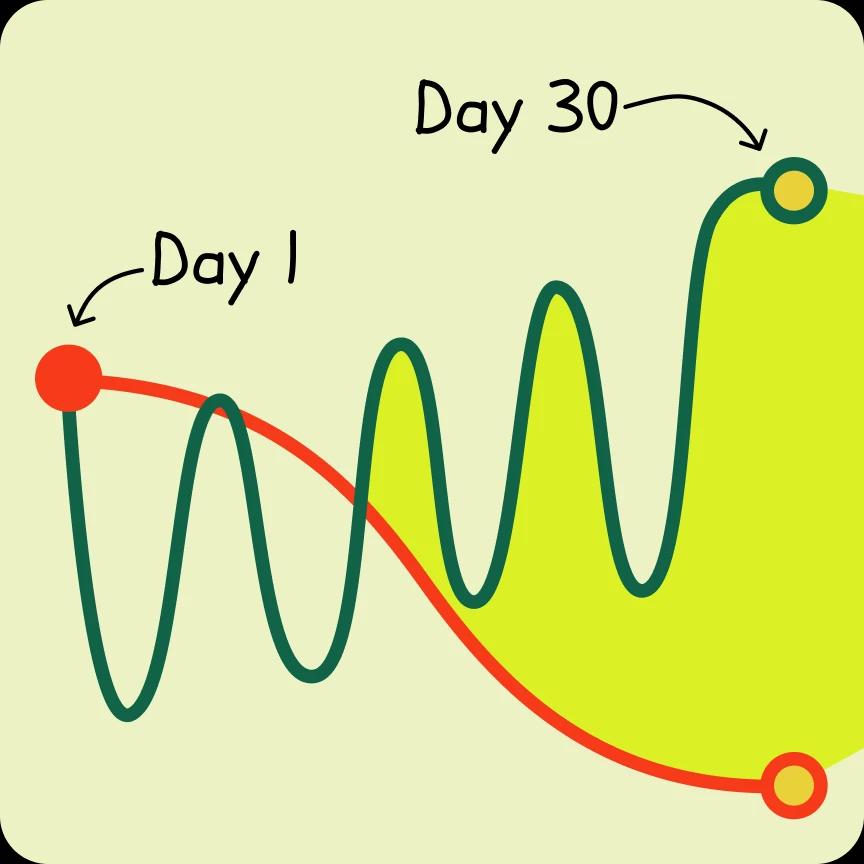
Curious how much you can learn in 15 minutes?
Get actionable insights from your very first summary — and keep going from there.
Get the planHow three Headway users spend the last hour of the day
While researching this piece, a pattern kept surfacing in Headway user stories: the people who stick with learning don't schedule it into some imaginary free hour. They attach it to a pocket of the day nobody else claims — and for many, that pocket is night.
One marketing professional read 20 business books in three months without giving up his evenings. His obstacle wasn't time so much as the weight of starting: a full book sits there demanding hours, so it never gets opened. Summaries removed the entry fee — he tests an idea in 20 minutes, keeps what works, and his nights stay his own.
A busy writer and editor spent six months replacing social feeds with microlearning and admits the swap felt like fighting nature at first — Instagram, Facebook, and X don't surrender the last hour of the day without a fight. Small, repeated actions won out, which is the entire thesis of a night routine in one sentence.
And Ivan Karačić, a software developer, triathlete, and dad of three, put it best: curiosity without time is just frustration. His fix was a 15-minute daily habit that added up to more than 120 summaries in four months. He anchors his to the morning — proof that the principle travels: claim the scrap of the day that's genuinely yours, whichever end of it that is.
Three books that will upgrade your night routine habits
All three are available as 15-minute summaries on Headway, which conveniently fits step six:
'Why We Sleep' by Matthew Walker is the definitive case for taking sleep seriously — what deep sleep does for memory, mood, and health, and what skipping it quietly costs you.
'Own the Day, Own Your Life' by Aubrey Marcus treats the day as one connected system, with the night as its foundation — useful if you want your night routine and morning routine talking to each other.
'The Miracle Morning' by Hal Elrod is technically about mornings, which is exactly why it belongs here: every great morning is manufactured the night before.
For nights when stress is the real villain, this roundup of the best books for stress relief adds several more titles worth queueing up.
Close every day well — end your nights with Headway
A night routine for better sleep isn't complicated. Dim the lights, warm the body, cool the room, empty the head, read a little, breathe, lights out — the same order, night after night, until your brain does most of it for you. That's the whole trick: you're not chasing sleep anymore; you've built a runway it lands on.
Headway makes the calmest step the easiest one. The app turns 2,500+ bestselling books into 15-minute summaries you can read in low light or listen to with your eyes closed — a fit for the reading step that ends the day with an idea instead of a feed. It's how 55M+ users across 170 countries turn spare minutes into growth, and the last hour before sleep is one of the best minutes-sources you own.
📘 Answer a few questions in Headway's quiz and get a personalized plan for nights that end on time — and days that start better because of it.
FAQs about building a night routine
What is a good night routine?
A good night routine is a consistent sequence of calming actions in the last 60–90 minutes before bed: screens off, dim lights, a warm shower, skincare, a brain dump into a journal, some reading, and a few minutes of deep breathing before lights out. The specific steps matter less than repeating them in the same order nightly, because repetition is what teaches your brain to treat the sequence as a sleep signal.
What should my night routine be if I only have 20 minutes?
Keep three steps: screens off and lights dimmed, two minutes writing tomorrow's to-do list, then ten minutes of reading or slow breathing in bed. That compact version covers the essentials — less stimulation, an emptied head, and a calm cue — without demanding an elaborate ritual. A simple night routine you complete every night beats a luxurious one you skip whenever the day runs long.
How do I start a night routine and make it stick?
Start with one anchor habit attached to something you already do — a page of reading right after brushing your teeth, for example. Hold that for a week, then add a second step. Habit stacking works better than overhauling your whole night at once, and consistency matters more than completeness. Expect the sequence to feel like effort for about two weeks before it starts running mostly on autopilot.
What is the best night routine for better sleep?
The best night routine for sleep quality follows your biology: dim lights an hour out to protect melatonin, a warm bath or shower to trigger the body-temperature drop, a cool dark bedroom, a short brain dump, calm reading, and slow breathing at lights out — the same bedtime every night. No single step is magic. The combination, repeated nightly, is what shortens the time it takes to fall asleep.
How can I fall asleep faster at night?
Front-load the work before you get into bed: screens off an hour early, a warm shower, a cool room, and a written to-do list so your mind has nothing to rehearse. In bed, try a longer exhale than inhale for a few minutes. If you're still awake after about 20 minutes, get up, read something dull in dim light, and return when drowsy — lying awake in bed trains the wrong association.
What helps with a night routine for insomnia?
Keep the routine, but add stricter rules: a fixed wake time even after bad nights, no clock-watching, and getting out of bed whenever wakefulness stretches past 20 minutes. Techniques like progressive muscle relaxation and slow breathing address the physical side of sleeplessness. If insomnia persists for several weeks and affects your days, see a doctor — chronic insomnia is treatable, and habits alone aren't always the full answer.
How do I reset my sleep schedule?
Fix the morning first. Choose a wake time, hold it seven days a week, and get bright light within an hour of waking — that anchors your circadian rhythm faster than forcing an early bedtime. Then move bedtime earlier in 15–30 minute steps every few nights, letting your night routine mark each new lights-out time. Most drifted schedules straighten out within one to two weeks of consistent anchoring.
Is a skincare routine really part of a healthy night routine?
It can be, and not only for your skin. A slow nightly sequence of cleanser, toner, and moisturizer doubles as a wind-down ritual — two mindful minutes that signal the day is over. Overnight is also when skin repairs itself, so hydrating ingredients like hyaluronic acid earn their keep while you sleep. Just keep exfoliators to a few nights a week to avoid trading relaxation for irritation.