Self-growth
 Apps & Digital Tools
 Business & Career
 Success
 Growth Tools
 Psychology
 Communication
 Relationships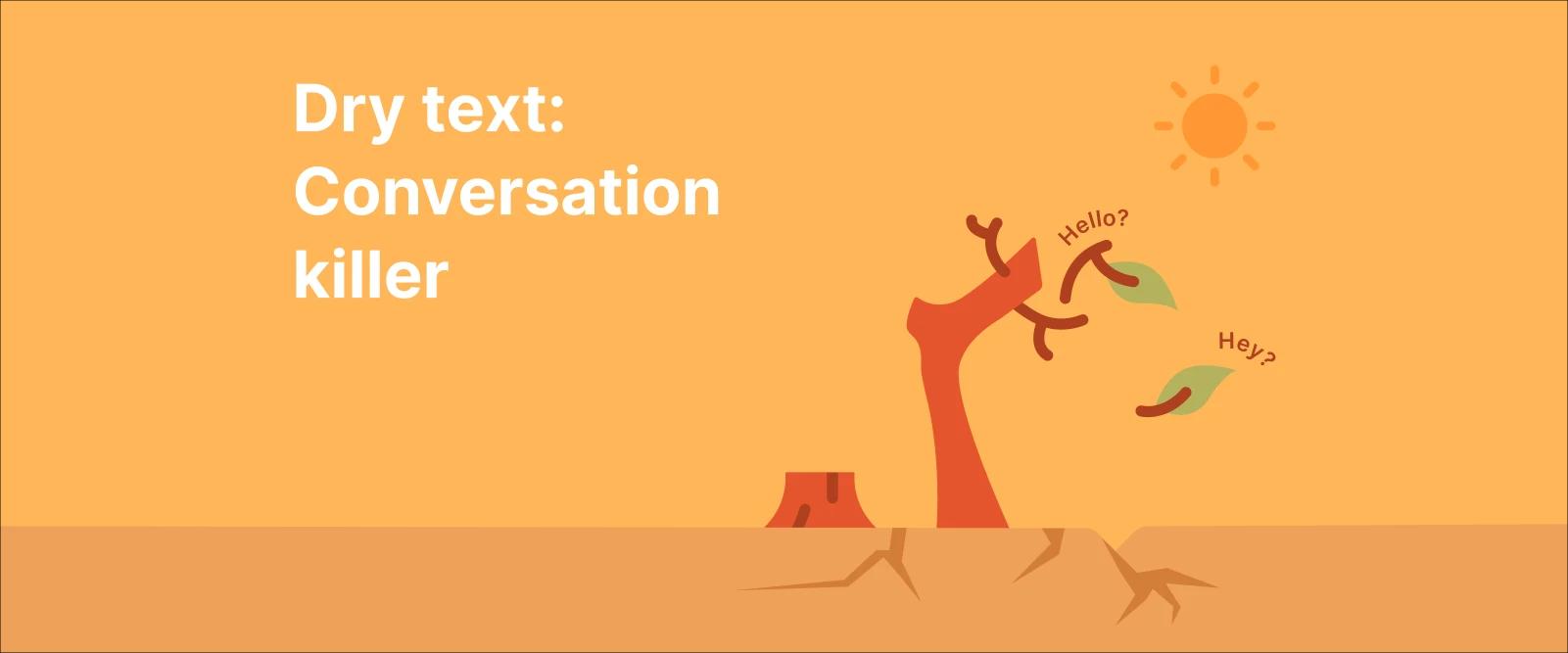

Surely you've been there. You send a funny or heartfelt message… and get back a single "K" or "Sure." No emoji, no follow-up, just a digital thud.
That, my friend, is a dry text — brief, minimal-effort replies that feel flat and disengaged.
Sometimes, dry texting is harmless. Other times, it can quietly erode a connection, making you or the other person feel ignored or unimportant. In relationships, whether romantic, friendly, or professional, the tone of communication matters as much as the words themselves.
As a somatic practitioner and relationship coach, I’ve spent over a decade helping people improve their relationships — both in person and online.
I've noticed how even subtle changes in texting style can dramatically reshape the tone of a conversation.
A short, flat message can be the digital equivalent of breaking eye contact mid-conversation. The nervous system may even register it as withdrawal.
Here's the thing: Dry texting isn't who you are. It's just a habit — and habits can change.
Let's start by discovering if you might be dry texting without realizing it.
Quick quiz: Are you dry texting?
Answer yes or no to each of these questions:
Dry text — Quick definition and signs
Let’s slow down and define what dry texting actually means. Dry text means sending short, low-effort messages that leave little room for the other person to respond. Think of replies like "K," "Ok," "Lol," "Yep," or "Sure" with no follow-up. These messages might be quick to type, but they often leave the conversation stuck or dying out.
Signs of dry texting:
One-word replies ("K," "Yep," "Sure")
No follow-up questions to keep the conversation going
Minimal punctuation or tone markers (no emojis, no warmth)
Abrupt topic changes or endings
Using fillers like "Lol" or "Haha" without adding substance
Why do we send dry texts? Four reasons
Dry texting doesn't always mean you've lost interest; sometimes it's a mix of habits, comfort zones, and circumstances.
For some, texting is just a way to pass along quick facts, so replies become short and stripped of emotion. In new relationships, that style can be misread as distance.
Another common reason is relying on autopilot phrases. If "Ok," "Haha," or "Yeah" make up most of your texts, you might not notice how little material they give the other person to respond to. Over time, this pattern can feel like trying to converse with someone who answers with a nod.
If you're an introvert, sending many messages may feel draining. Your nervous system might need more time between replies, which is fine, but adding warmth can prevent misunderstandings when you do answer. Even adding a simple “lol” to a brief, one-word reply can instantly make it feel warmer and less abrupt.
1. Nervousness or lack of confidence
When you're anxious about saying the wrong thing, your instinct might be to keep it short. This is your body's way of staying safe — the texting equivalent of folding your arms in person.
Example: In early dating, someone might respond with "Ok" instead of "Ok, I'm excited!" simply because they fear sounding too eager.

In 'The Emotional Life of Your Brain,' Richard J. Davidson explains how "resilience styles" shape social risk-taking. If your emotional baseline leans toward caution, you might naturally filter your replies down to the safest minimum, which can result in short responses that feel colder than intended.
Quick tip: If you're feeling stuck, imagine what you'd say if you were talking in person — then type that.
2. Busy schedules or distractions
If you text while multitasking, you might default to bare-minimum replies. This efficiency is fine in emergencies, but it can make others feel like an afterthought over time.
Example: A coworker texts, "Can you send that file?" and you reply, "Yep." It works for logistics, but if a friend checks in, the same reply may appear dismissive.
3. Lack of interest or low conversation skills
Sometimes dry messages are exactly what they seem: You're not invested in the conversation. Other times, it's a lack of skill — no one teaches "digital conversation flow" in school.
From a trauma-informed lens, low-energy one-word responses may also signal shutdown (freeze mode) in your nervous system, where connection feels like too much effort in the moment.
4. Cultural or generational habits
In some cultures, brief replies are respectful — “I don’t want to waste your time.”
In others, they read as dismissive.
Generationally, expectations differ. Gen Z often blends emojis, memes, and GIFs with brevity, while Millennials might see it as cold.
In Japan, brevity can signal efficiency and respect. In the US, it might suggest you’re disengaged.
Knowing the norms of your audience is key. This matters even more in text-based conversations that strip away body language and tone.
How does dry texting affect different relationships?
Dry texting doesn't impact all connections equally. The same “K” can mean very different things in different contexts. Let's take a closer look:
Romantic relationships
Consistent dryness can stir attachment insecurities. A partner might read minimal replies as fading interest. Even secure couples benefit from small warmth cues — they keep the nervous system in a "safe and connected" state.Friendships
Dry replies can slowly erode the rhythm of connection. Without emotional investment — like sharing jokes, TikToks, or small stories — friends may stop reaching out over time.Professional connections
In work settings, overly brief replies can feel curt. Efficiency matters, but clarity and politeness build trust. "Got it — I’ll send it by noon" reads warmer than a bare "Ok."
That same principle applies when sharing bigger ideas or proposals — structure and tone go hand in hand. For example, our guide on how to write a business plan shows you how to organize thoughts persuasively, a skill that strengthens both professional and personal conversations.
The impact of dry texting
When your messages are consistently short or flat, they can:
Trigger misinterpretation: "Did I say something wrong?"
Feel emotionally cold: "They're not interested in me."
Cause conversations to fizzle: No clear next step keeps things stagnant.
Create distance: Repeated brevity can train the other person to match your energy — making both sides less engaged.
From another perspective, dry text conversations can be perceived as micro-withdrawals.
Even if you mean nothing negative, the other person's nervous system may sense a social threat, leading them to pull back — especially if they're receiving those clipped text messages.
Examples: Dry text vs. engaging text
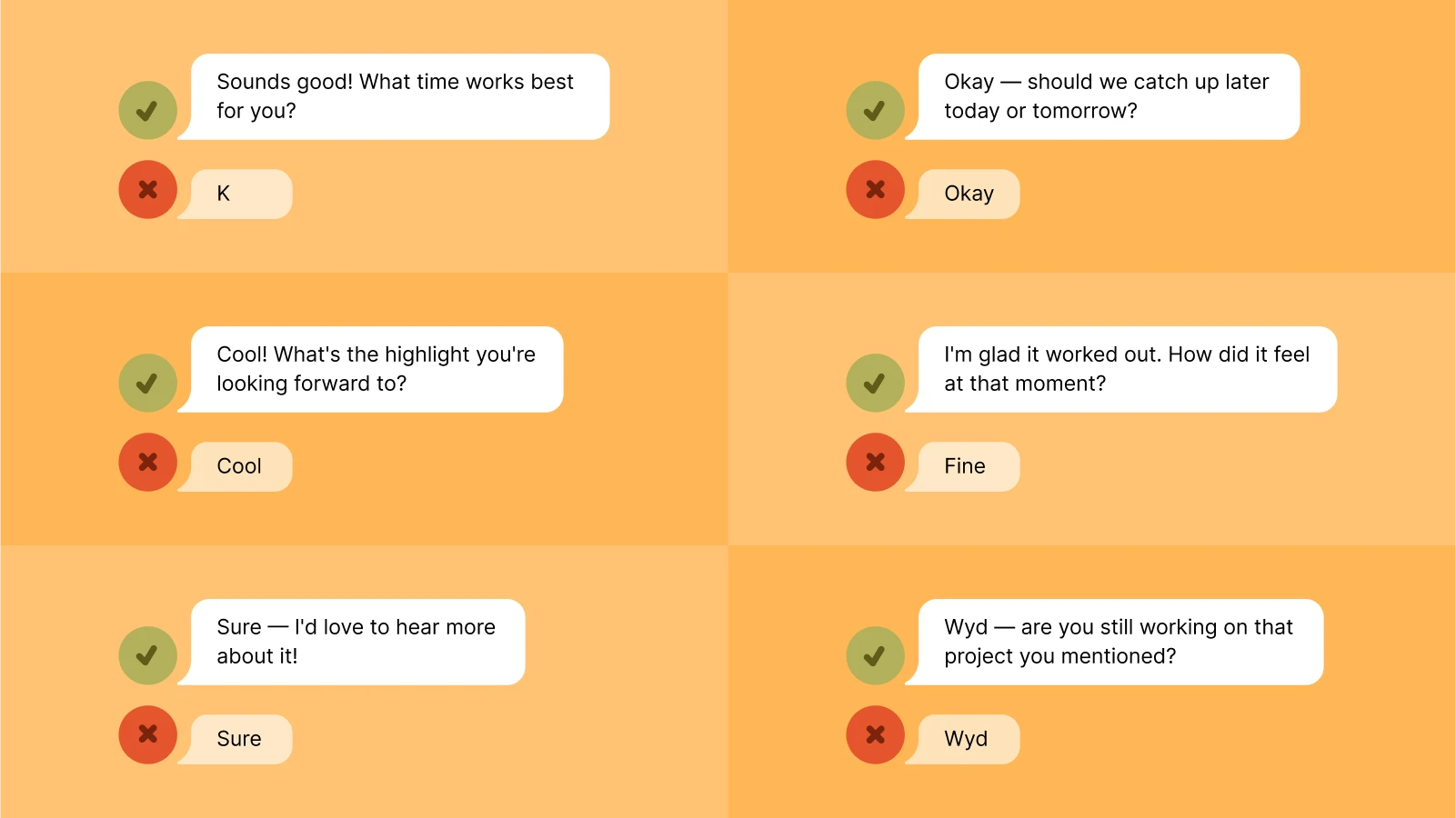
| Dry text | Engaging text |
|---|
"K" | "Sounds good! What time works best for you?" |
"Okay" | "Okay — should we catch up later today or tomorrow?" |
"Cool" | "Cool! What's the highlight you're looking forward to?" |
"Fine" | "I'm glad it worked out. How did it feel at that moment?" |
"Sure" | "Sure — I'd love to hear more about it!" |
"Wyd" | "Wyd — are you still working on that project you mentioned?" |
As you can see, engaging replies acknowledge what was said, add tone, and invite the other person to keep the convo alive.
Four ways to improve your texting style
If you want to avoid sounding dry, give replies the other person can build on.
Try the “plus one” rule: answer their question, then add one extra detail, thought, or question.
You can also break the one-word habit by adding 3–5 extra words. Instead of “Good,” say, “Good — just got back from the gym.” Instead of “Lol,” try “Lol, you always send me the funniest stuff.”
If you’re unsure what to add, treat conversation like a muscle. The more you train it, the easier it flows.
Stockpile prompts, fun facts, or ideas in advance. Our picks for the best learning apps offer bite-sized inspiration to keep your messages fresh.
If you're stuck, don't overthink it. Sometimes the best move is sending a quick GIF, a meme, or a link to something that made you laugh. It's a low-effort gesture that breaks the silence and keeps the conversation from sliding back into one-word territory.
1. Add open-ended questions
Closed answers stop conversations; open-ended ones keep them alive. Instead of "Nice," try: "Nice — how did it go?"
As Steve Harvey puts it in 'Straight Talk, No Chaser,' "If you want to keep a conversation going, you've got to ask questions — otherwise you're just giving speeches." This applies just as much to texting as to talking face-to-face.
2. Use tone markers, media, and emojis
Texts can feel flat without facial expressions. A smiley, exclamation mark, or "Haha" adds emotional texture. You can also drop in a relevant meme, a looping GIF, or even a short TikTok clip to match the vibe.
Example: "That's great news 😄." vs. "That's great news."
3. Reference shared context
Call back to something you both know: "This reminds me of that time we got lost in Rome 😂." In 'On Writing,' Stephen King notes the power of "shared vocabulary" — a shorthand only the two of you understand makes the exchange more intimate. You can explore more communication insights like this in our writing topic collection.
4. Mirror their style, then lead
If they text briefly, match their tone but add one more element to invite depth.
Them: "Just got home."
You: "Just got home — did you beat the traffic today?"
Pro tip: Before you text back, send yourself the message first. If it sounds flat, add one more layer of warmth or curiosity.
Somatic micro-practice before you reply
If you're someone who tends to go dry when you're stressed, try this 10-second reset before replying:
Put your phone down and take one slow breath.
Let your shoulders drop.
Picture the person's face in real life.
Notice sensations in your body.
Then type your reply.
These steps help your nervous system shift from "task mode" into "connection mode," so your tone naturally feels warmer.
For more on building small habits that stick, even in stressful situations, see our 'Self-Discipline in Difficult Times' summary. It's packed with strategies to help you stay consistent in how you show up, whether in person or digitally. You can also explore our list of the best apps for self-improvement for tools that help you build better communication habits day by day.
10 engaging text templates for any situation
Responding to good news: "That's amazing! How did it happen? Lol I'm grinning like I was there."
Checking in after a tough day: "Just thinking of you. How's your evening going?"
Making plans: "Free on Thursday? What about…"
Following up: "How did your meeting go? I'm curious!!"
Continuing a story: "Wait, what happened after that? LMAO."
Sending encouragement: "You've got this — keep me posted!"
Sharing joy: "This made me think of you 🐶" + meme.
Playful teasing: "So… are you always this mysterious? 😉"
Showing appreciation: "Thanks for telling me — I love hearing your updates."
Bridging silence: "Hey, haven't heard from you — how's life?"
An extra insight most people miss: The nervous system
It isn't just in your head — it's in your biology. When you talk to someone face-to-face, your brain uses eye contact and tone of voice to feel safe. Texting takes all of that away. Without those cues, your nervous system has to guess what the other person is actually thinking.
You start looking for meaning in the smallest details, like how many hours passed before they replied or why they didn't use a single emoji. If you're feeling even slightly insecure, a short "Sure" can feel like a digital cold shoulder. It's your brain trying to protect you from rejection by over-analyzing the silence where a warm connection used to be.
From books to better texting
Some of the best insights on warm, effective communication come from books in the Headway library:
'On Writing' by Stephen King — Even short messages benefit from clarity and voice.
'Straight Talk, No Chaser' by Steve Harvey — Directness doesn't mean dryness.
'The Emotional Life of Your Brain' by Richard J. Davidson — Understand your emotional "style" so you can adjust your texting tone for better connections.
Also, check our blogs for more skill-building:
Turn dry texts into deeper connections with Headway
Dry texts don’t define you — they’re just habits. With small tweaks like adding curiosity, tone, and presence, you can turn your digital conversations into bridges instead of roadblocks.
That’s exactly where Headway helps. Each 15-minute book summary gives you practical micro-shifts you can apply the same day — from asking better questions (How to Win Friends and Influence People) to showing authentic warmth (Captivate).
👉 Instead of overthinking every text, use Headway to practice one skill at a time. Whether it’s in a group chat, on social media, or face-to-face, the way you connect in small details is what shapes big relationships.
Ready to go deeper? Download the Headway app to explore quick, powerful summaries of the best communication and relationship books. Your future self will thank you!
Frequently asked questions about dry texting
What does dry text mean?
Dry texting is when someone sends flat, one-word replies like "K," "Cool," or "Yeah." It feels like a digital dead end. While the words themselves are fine, the lack of effort — no questions, no emojis, no detail — makes the other person feel like they’re carrying the entire conversation alone.
Why is someone dry-texting me?
It isn't always a sign they’re bored with you. They might be mid-meeting, exhausted, or just someone who views texting as a tool for logistics rather than a way to bond. Habits vary; some people are great talkers but "dry" typists. Look for patterns in how they treat you in person before assuming the worst.
Is dry texting a red flag?
Not on its own, but it can be a "yellow flag." If you’ve expressed that you value engaging chats and they still put in zero effort, it might show a lack of investment. However, if they are warm on calls and reliable in real life, their dry texting is likely just a personality quirk rather than a sign of a bad relationship.
How do you respond to a dry text?
Don't play the "who can care less" game by sending a dry text back. Instead, try to pivot. If they send a one-word answer, give it one more shot with an open-ended question like, "That’s fair — so what was the highlight of your day then?" If they stay dry after two or three attempts to spark a conversation, it’s okay to let the chat pause.
Can books improve my texting style?
Texting is just a condensed form of communication. Reading books about social psychology helps you understand how to trigger curiosity and warmth. Summaries like 'The Emotional Life of Your Brain' show you how to read between the lines, while 'How to Win Friends and Influence People' offers timeless tips on making others feel important — even through a screen.
Is it okay to use AI to "fix" my dry texting?
By 2026, using AI "rewrite" tools for personal texts has become common, but use them sparingly. While an AI can help you sound more engaging, relying on it too much can make your messages feel "uncanny" or robotic. Use it for inspiration, but make sure the final send still sounds like your actual voice.
What is "ghost-synching," and is it dry texting?
Ghost-synching is a 2026 trend where people leave messages on "read" for hours to match the other person's response time. While it’s meant to create balance, it often results in dry, delayed conversations. If you want a real connection, ignore the "timing games" and reply when you’re actually ready to engage.
How do I handle "video-note" dryness?
As video and voice notes replace text, "dryness" now includes low-energy video replies. If someone sends you a 5-second video where they look distracted, it's the new "K." If this happens, try moving the conversation to a different perspective or suggest a quick sync to see if the situation will change for the better.