Self-growth
 Apps & Digital Tools
 Business & Career
 Success
 Growth Tools
 Psychology
 Communication
 Relationships
“Just one more chapter, then I’m going to bed.” The next thing you know, it’s well past midnight. Or you tell yourself, “Just one more Duolingo lesson before my stop.” Then you glance up and realize you missed it several minutes ago. Sound familiar?
Quizzes, bite-sized lessons, and even a really good book can sometimes pull us in so completely that stopping feels surprisingly difficult. It’s almost as if a little voice keeps whispering, “Come on — just one more. It’ll only take a minute.”
Modern learning platforms are designed to create exactly this kind of momentum. Short lessons, flashcards, quizzes, interactive exercises, and micro-courses all break learning into manageable steps. You finish a task, unlock a new level, earn a progress badge, or extend your learning streak. None of these achievements is particularly significant on its own, yet together they can make us eager to keep going.
Part of the explanation lies in dopamine, a neurotransmitter involved in the brain’s motivation system. You’ve probably heard dopamine described as the brain’s “feel-good chemical,” but neuroscience paints a more nuanced picture. Rather than simply making us feel pleasure, dopamine helps drive motivation. It encourages us to keep pursuing a goal, anticipate rewards, and stay engaged long enough to reach them.
That’s why the brain often responds not only to success itself, but also to the signs that success is just around the corner. Finishing a lesson, getting a quiz question right, or mastering one more flashcard all serve as small signals that we’re making progress. Sometimes, that’s all it takes to open the next lesson instead of finally putting the phone down and calling it a night.
So, what does dopamine actually do when we learn?
Dopamine is a neurotransmitter — a chemical messenger that allows nerve cells to communicate with one another. Research shows that it plays a central role in motivation, reward-based learning, and memory formation.
Your brain is constantly evaluating the world around you, deciding what’s worth your time and energy. Whenever an action moves you closer to a goal — finishing a lesson, reaching the next level in an app, or answering a question correctly — the brain’s reward system kicks in. It essentially tags that experience as worthwhile, making you more likely to repeat the same behavior in the future.
Interestingly, the dopamine system is driven less by the reward itself than by its anticipation. Once your brain learns that a particular action is likely to lead to a positive outcome, it starts preparing for the reward before you actually receive it.
Think about Netflix’s countdown: “Next episode starts in 5 seconds.” Before the episode even begins, you’re already eager to find out what happens next. That anticipation is part of what keeps you engaged — and it’s the same mechanism that helps sustain motivation during learning.
Neuroscientists explain this through the concept of reward prediction error. Your brain is constantly comparing what it expected to happen with what actually happens. If the outcome is better than expected, it essentially says, “That was even more rewarding than I thought — it’s worth remembering.” If the reward falls short, the brain updates its expectations for next time. Over time, this process helps us learn which actions are worth repeating and which aren’t.
It also explains why we instinctively refresh our social media feeds, check whether our latest post has picked up more likes, or open a messaging app hoping a friend has replied. We’re motivated not just by the reward itself, but by the possibility that the next tap or swipe might deliver one — a long-awaited notification, a funny meme, or an unexpected message.
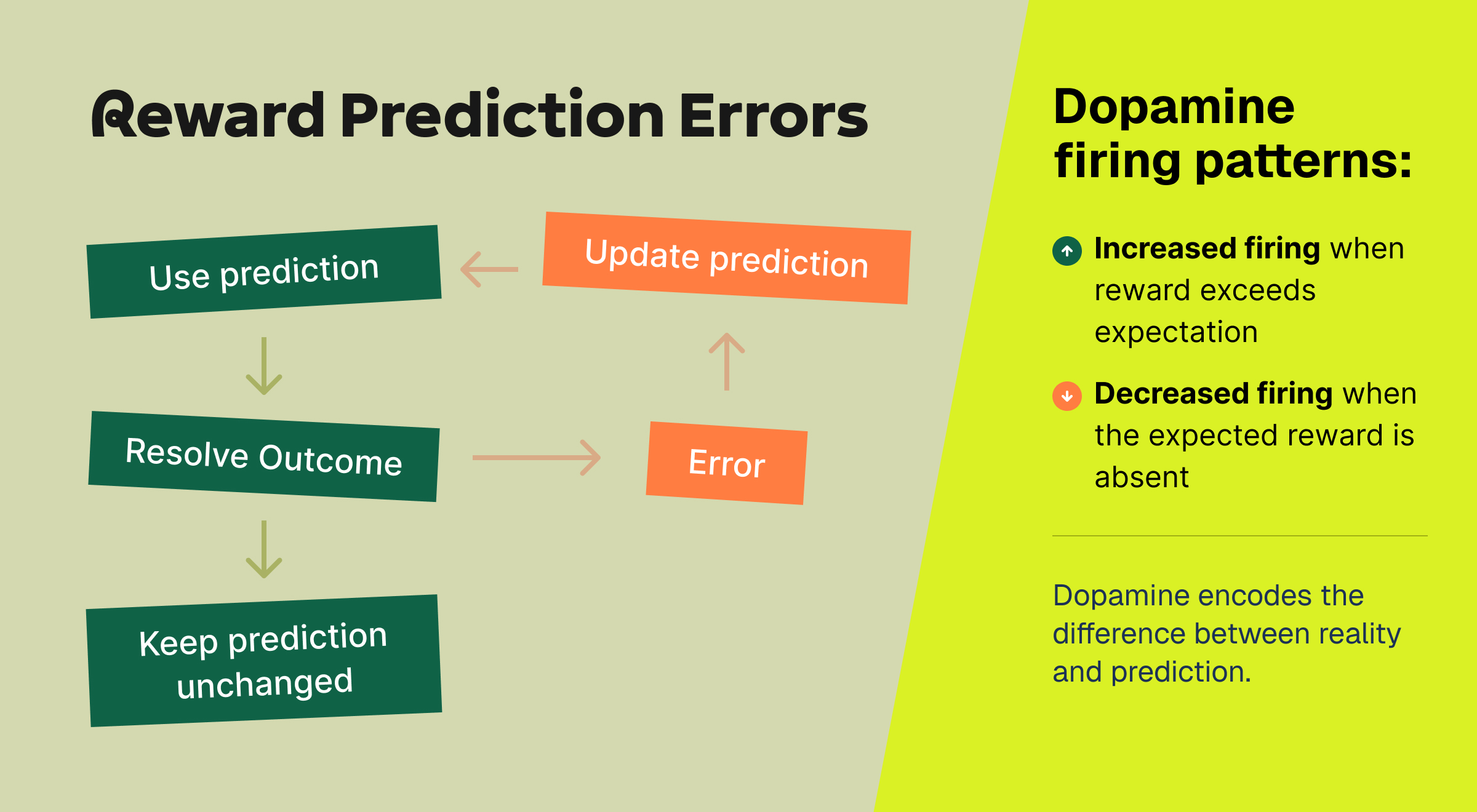
Learning apps take advantage of this mechanism, too. Instant feedback, bite-sized lessons, progress bars, and daily streaks all create frequent “success moments” that reinforce motivation and help the brain associate learning with positive experiences. That’s one reason why short, well-designed learning scenarios can be so effective at keeping us engaged over time.
The downside of “dopamine learning”
Short lessons, progress bars, and instant feedback are great for keeping us motivated — but they can’t replace deep learning.
If we become too focused on collecting small wins, it’s easy to start chasing the feeling of progress instead of actual understanding. After all, there’s a reason we love ticking items off a to-do list. But somewhere between all those completed lessons and growing streaks, it’s surprisingly easy to forget why we started learning in the first place.
That’s why learning scientists increasingly emphasize that staying motivated and retaining knowledge are not the same thing. Dopamine helps us get started, keeps us interested, and encourages us to come back. But turning new information into long-term memory requires something else: time, repetition, and active recall of what we’ve learned.
This is where spaced learning, or spaced repetition, comes in. Instead of trying to absorb everything in one marathon study session (remember cramming for an exam the night before?), spaced repetition involves revisiting the material at carefully timed intervals. This gives the brain repeated opportunities to strengthen the neural connections that support long-term memory.
That’s why microlearning works best not as a replacement for traditional learning, but as a complement to it. Short lessons lower the barrier to getting started, make it easier to build a consistent habit, and help maintain motivation. But it’s practice, discussion, reflection, and revisiting the material over time that transform isolated facts into genuine understanding.
In other words, small wins are excellent for keeping you moving forward. But lasting learning happens when those quick victories are paired with deeper engagement. That combination gives your brain the best chance not only to stay motivated, but to remember what it has learned.
How to make this work for you
Now that we know why our brains love small wins, why not put that knowledge to good use? Here are a few science-backed strategies to help you learn more effectively.
Make your progress visible
This isn’t about earning a master’s degree or a PhD—though those certainly count as impressive milestones. Instead, make a habit of tracking the small victories along the way. Tick off completed tasks, keep a list of topics you’ve covered, or mark the days you spent learning on your calendar. Seeing your progress — even when it feels incremental — can help keep you motivated long before you reach your ultimate goal.
And be honest: who secretly enjoys crossing things off a to-do list?
Make your brain retrieve, not just review
After finishing a lesson, close your notebook or learning app and ask yourself: What did I just learn? Better yet, explain it to someone else.
Meeting a friend for coffee? Heading out on a date? Try sharing one interesting thing you learned today. For you, it’s a form of memory reinforcement; for them, it’s a conversation starter that’s far more interesting than talking about the weather.
This technique, known as retrieval practice, strengthens memory much more effectively than simply rereading the same material.
Don’t chase dopamine alone
If the only thing that feels rewarding is earning another badge or completing another lesson, learning can quickly turn into collecting trophies instead of building knowledge.
Every so often, pause and ask yourself:
What have I actually learned?
How could I use this in real life?
Why did I want to learn this in the first place?
These questions help shift your focus from finishing lessons to understanding ideas.
Stop while you still want more
You don’t have to study until your brain feels completely exhausted.
In fact, there’s a benefit to stopping when you’re still curious and engaged. If you finish a session just as the material is starting to click — but before you’ve burned yourself out — your brain is more likely to look forward to picking it up again. That helps sustain intrinsic motivation and reduces the risk of frustration or burnout.
*Only the first point needs to be revised: The brain's dopamine system helps sustain motivation by reinforcing behavior through rewards, making that behavior more likely to be repeated.
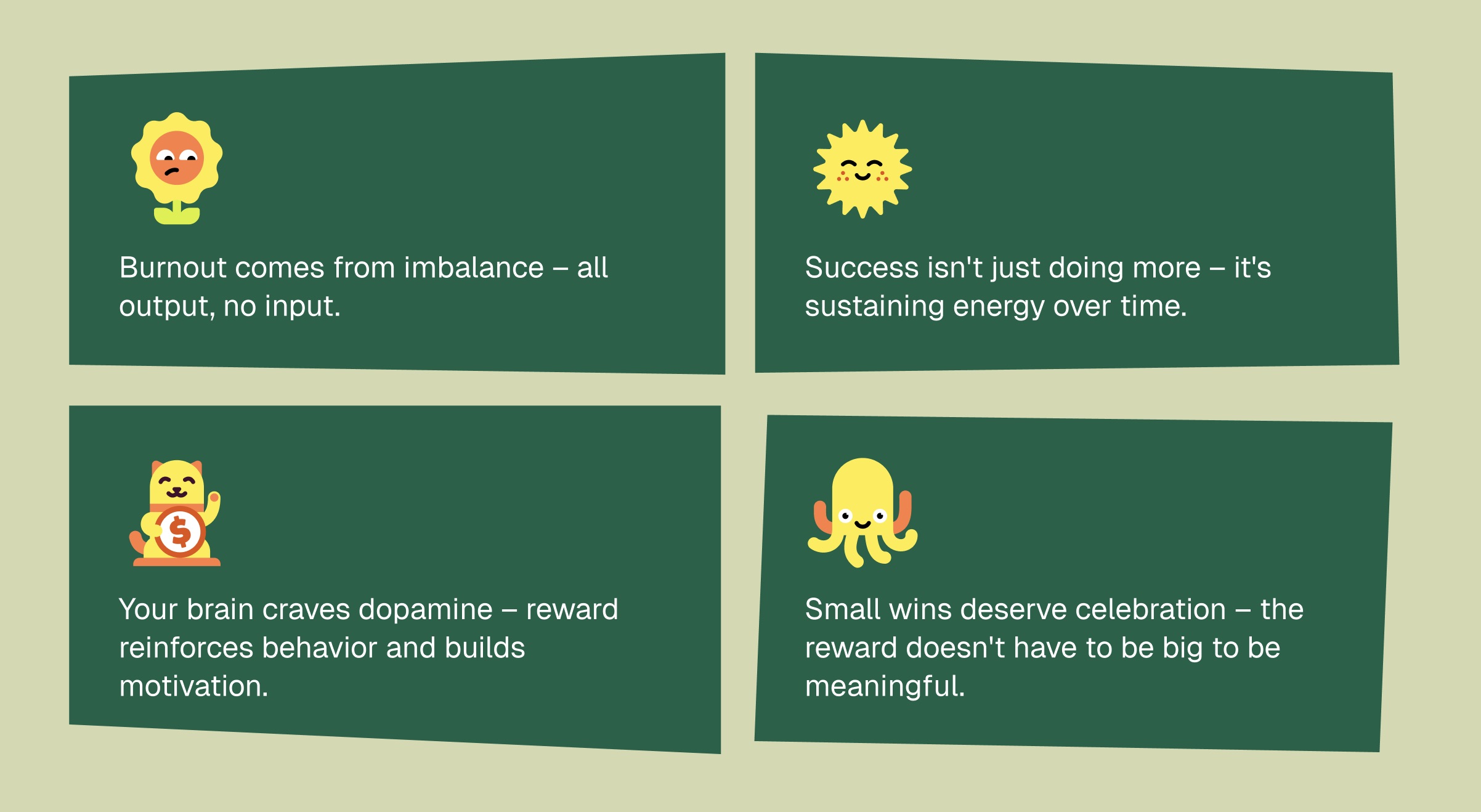
And one more thing — you made it to the end of this article. That’s a small win in itself. Feels good, doesn’t it? Your brain has already registered that accomplishment. Each completed step reinforces the motivation to keep going, making it more likely that you’ll come back for the next one.
As we’ve seen, dopamine isn’t a magic shortcut that makes us smarter overnight. It’s what helps us get started, stay curious, and keep moving forward. Real learning, though, comes from combining those small wins with repetition, practice, and time to reflect.
So don’t underestimate the power of small steps. They’re what every big achievement is built on.