Self-growth
 Business & Career
 Success
 Communication
 Healing
 Relationships
 Psychology
 Happiness
With more than 55 million users on Headway, and most of them choose audiobooks, one question keeps popping up among book lovers: Do audiobooks really count as reading?
The debate follows listeners everywhere, from browsing Libby to book clubs and Reddit discussions, social media threads, and even opinion pieces in major publications like The New York Times.
Truth be told, audiobooks aren't cheating. And they aren't the lazy option either. In fact, they might be the smartest way for busy people to keep learning.
Whether you're listening to a 10-hour saga on Audible or a 15-minute Headway summary, your brain is doing serious work. The written word and the spoken word activate nearly identical comprehension pathways. So let's put this debate to rest by showing you how to make your listening count even more.
➡️ Before we begin, read what Headway is and how we turn any book into actionable knowledge you'll actually use.
The short answer: Do audiobooks count as reading?
Yes, audiobooks absolutely count as reading. According to neuroscientists, the brain processes semantic information — the meaning — of a story nearly identically, whether it is consumed in text or audio. While physical books involve decoding symbols on a page, audiobooks focus purely on language comprehension. And both lead to the same destination, namely, understanding.
The science: Your brain on audio vs text
Let's talk about what actually happens in your brain when you listen versus read.
A 2024 study published in 'Communications Biology' (part of the Nature portfolio) used high-field fMRI (functional magnetic resonance imaging) to measure brain activity while participants listened to audiobooks. The researchers, led by Lars Hausfeld at Maastricht University, found that listening activated key regions of the speech comprehension network. This finding includes Heschl's gyrus (the primary auditory cortex), the superior temporal gyrus, and the middle superior temporal sulcus (mSTS).
But here's where it gets interesting. The mSTS showed speaker-specific patterns during listening, and the strength of this tracking correlated directly with comprehension scores. In other words, when participants paid attention and followed the relevant speaker, their brains showed it, and they understood more. The study confirms that your brain actively processes audiobook content, not just passively receives it.
But what about comparing reading and listening head-to-head? Do audiobooks count when it comes to actual retention?
Beth Rogowsky, an associate professor of education at Bloomsburg University, tackled this exact question in a 2016 study. She divided participants into three groups: one read sections of 'Unbroken' by Laura Hillenbrand on a Kindle, one listened to the audiobook, and one did both simultaneously. After testing their reading comprehension, she found no significant difference among the groups, either immediately or two weeks later.
"We found no significant differences in comprehension between reading, listening, or reading and listening simultaneously," Rogowsky reported.
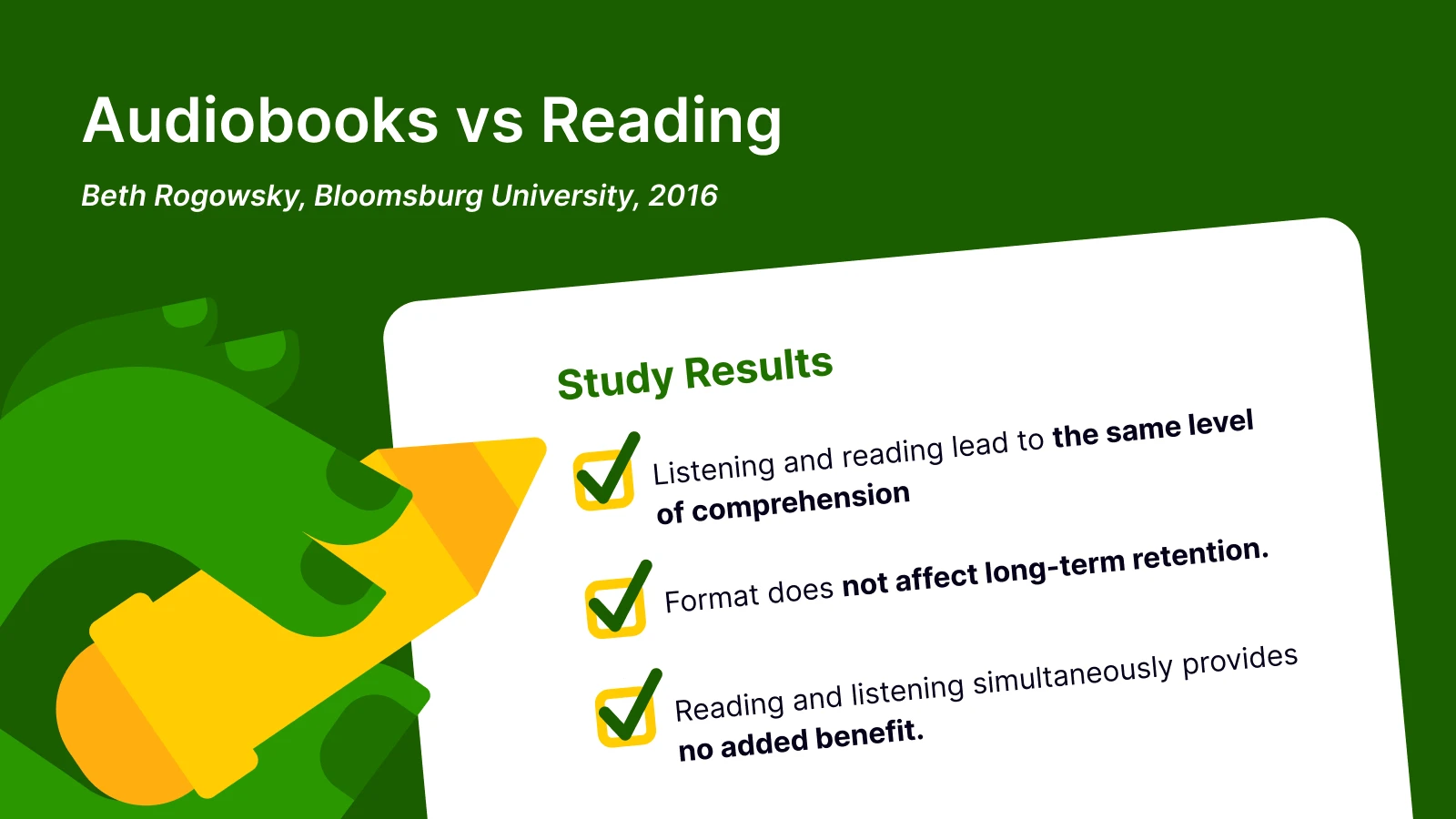
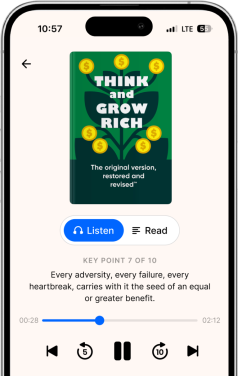
So what's the bottom line? Your brain doesn't care whether words enter through your eyes or ears. It cares about meaning. And that's exactly what apps like Headway deliver through key insights in audio format that your brain processes just as effectively as reading books in print.
Why we feel like it's "cheating" (and why it's not)
So if the science is clear, why do so many people still feel that listening "doesn't count"?
Blame it on what you might call the "Protestant Work Ethic" view of reading. There's a cultural belief that real reading requires effort by sitting quietly, decoding text, and struggling through dense paragraphs. Anything easier feels like cutting corners. This same logic would suggest that a podcast can't teach you anything because you didn't read a textbook.
But harder doesn't mean better. If you understand and retain the information, the medium is secondary. Nobody asks whether you "really" learned to cook because you watched a video instead of reading a recipe. The result matters. The reading experience you have — whether visual or auditory — leads to the same knowledge.
And let's be honest: for many people, the choice isn't between print books and audiobooks. It's between audiobooks and nothing. If listening means that you actually finish that book instead of letting it collect dust, that's a win. Audiobooks are a legitimate form of reading that fits modern life.
When audiobooks are actually superior
Sometimes listening isn't just equal to reading — it's better.
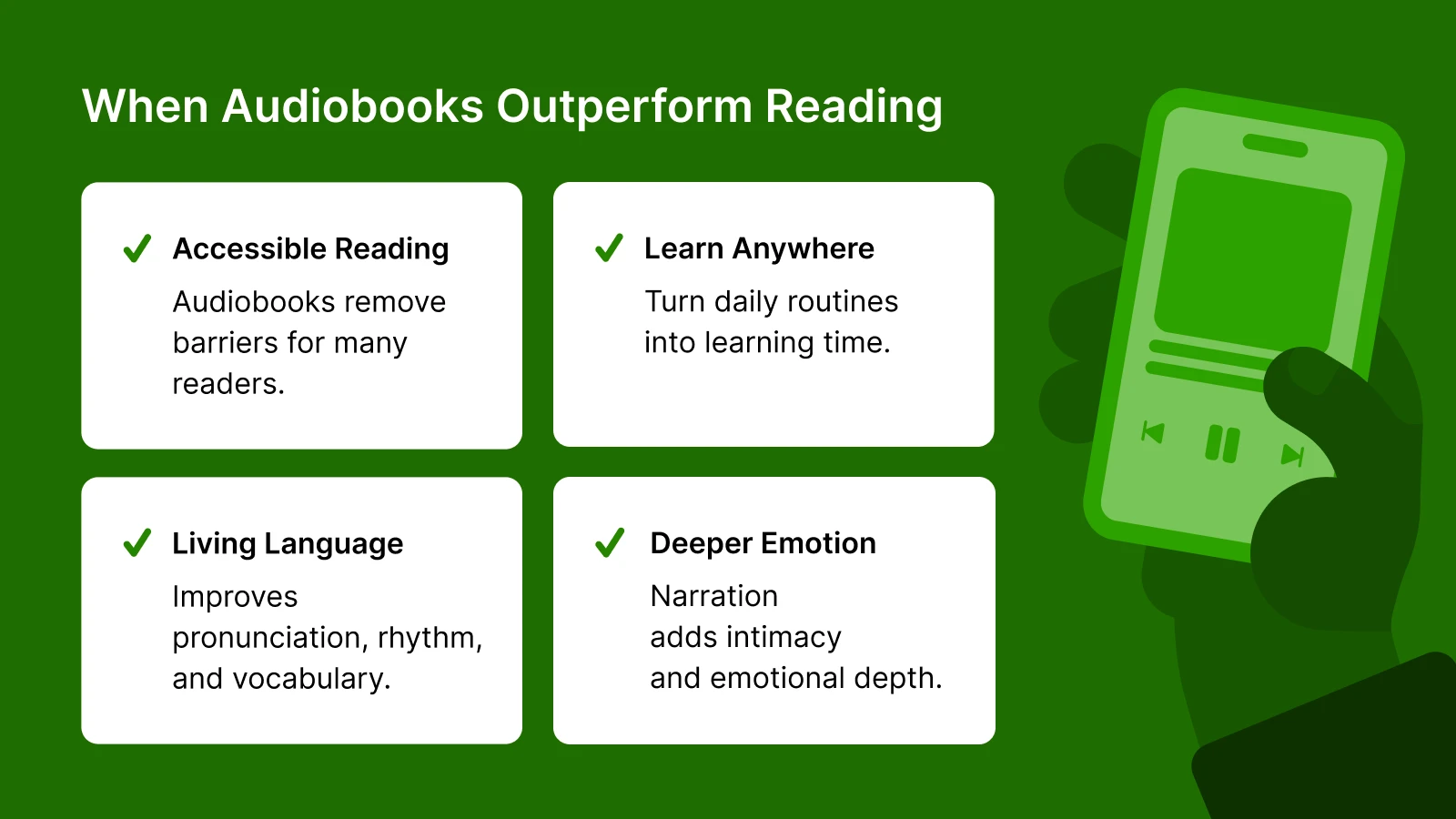
Accessibility matters: For people with dyslexia, visual impairments, or conditions that make holding a book difficult, audiobooks open up entire libraries. Braille remains important for every blind person who uses it, but audiobooks offer another powerful option. Reading books shouldn't require perfect eyesight or a specific learning style. The audio format removes barriers that physical books create.
Multitasking becomes possible: You can't read a physical book while driving, cooking, or exercising. But you can listen. Audiobooks turn dead time into learning time. You know that long commute? Now it's a classroom. Add your favorite titles to a playlist, and your daily routine becomes productive.
Pronunciation and vocabulary improve: How many words have you "read" but never actually heard? Listening teaches you inflection, rhythm, and how words actually sound. This angle is especially valuable for language learners or anyone who wants to use new vocabulary in conversation. A skilled narrator brings nuance that text alone can't provide.
Emotional connection deepens: A great narrator adds layers to a story. Think about how different a graphic novel feels compared to prose — the visual element adds meaning. Similarly, the audio version of a memoir read by the author creates intimacy that print can't match.
➡️ If you want to learn more about when listening to a book is better than reading one, read this article.
📘 Tired of reading? Listen to bestselling authors on Headway. Let this app help you find audiobooks that support your growth and fit your goals.

The "zone out" danger (and how to fix it)
Audiobooks do have one weakness. It's easy to zone out.
Your mind wanders. Twenty minutes pass, and you realize that you have no idea what just happened. Unlike a print book, where your eyes stop moving when attention drifts, audio keeps playing whether you're listening or not. That is the real challenge with the audio format, as passive listening can easily slip into background noise.
Here's where microlearning changes the game.
It's harder to focus for 10 hours than for 15 minutes. This factor is why apps like Headway work so well. By condensing key insights into short summaries, they keep your brain in "active learning" mode without the burnout. You get the core ideas from the world's best nonfiction books without the attention fatigue.
Think of it like this: a podcast episode or a social media scroll can eat 15 minutes without giving you much. Within that time, a Headway book summary gives you actionable knowledge that you'll actually remember. Your book count goes up, and so does your actual learning.
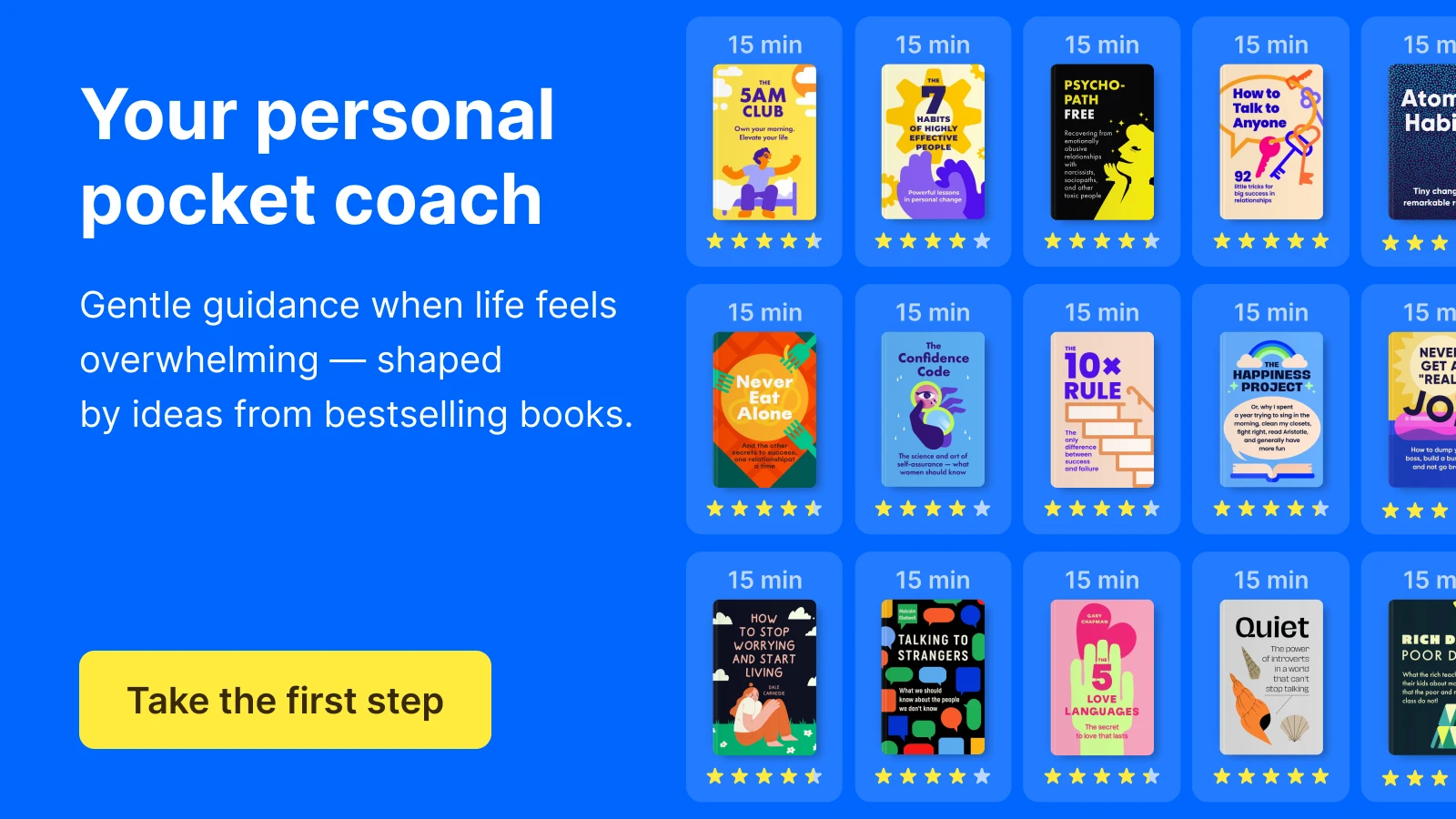
📘 Headway helps you discover books that align with what you're working on right now — from money and career growth to habits, psychology, relationships, and personal healing.
How to retain more from what you listen to
Want to make audiobooks work harder for you? Try these strategies:
Speed it up: Listening at 1.25x or 1.5x speed can actually increase focus. It forces your brain to keep up, reducing the chance of zoning out. Most audiobook apps make this easy to adjust.
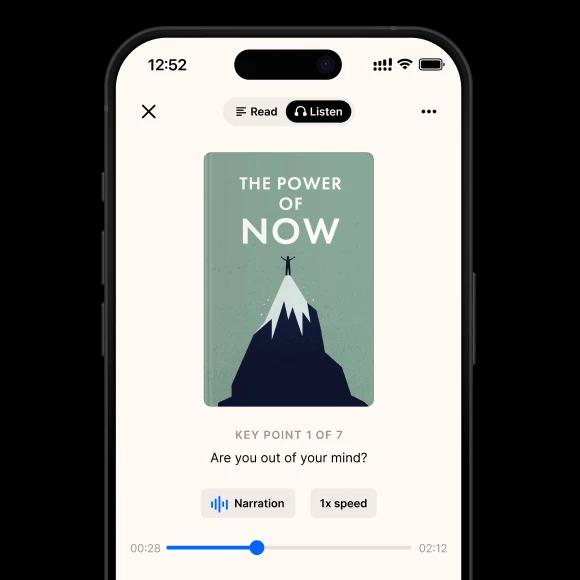
Combine audio and text: Reading along while listening activates multiple pathways simultaneously. Headway's read-along feature lets you do exactly this — see the text while you hear it. Research suggests that this dual modality approach can boost retention.
Use spaced repetition: Don't just listen once and forget. Review key concepts later. Headway's highlight and spaced repetition features help you revisit important ideas, turning passive listening into active learning.
➡️ Ready to make listening to books more exciting? Try a 20-in-20 challenge.
Comparison: Physical books vs audiobooks vs book summaries
| Format | Time required | Retention strategy | Best for |
|---|
Physical books | High | High focus and active reading | Deep dive into complex topics |
Audiobooks | Medium | Active listening and multitasking | Storytelling and long narratives |
Headway book summaries | Low (learning sessions start from 3 minutes) | Active learning, spaced repetition, highlights, quizzes, skill islands, and challenges | Self-growth, habit building, and busy schedules |
Stop gatekeeping your own literacy with Headway
Reading isn't about the format. It's about what you learn and how it changes you.
Whether that happens through a Kindle, a printed book, an Audible download, or a bestselling title on Headway during your coffee break, it still counts as reading. You're growing. You're doing something that millions of people never make time for.
Here are some great audiobook summaries to explore in the Headway library for free:
'Sapiens: A Brief History of Humankind' by Yuval Noah Harari
'Bad Blood: Secrets and Lies in a Silicon Valley Startup' by John Carreyrou
'Born a Crime: Stories from a South African Childhood' by Trevor Noah
'Quiet: The Power of Introverts in a World That Can't Stop Talking' by Susan Cain
'The Alchemist' by Paulo Coelho
Ready to start, but not sure which title is right for you? Take a quick quiz and discover your next favorite book.
📘Want to make your listening count even more? Join 55 million users on Headway.
Get the key insights from the world's best books in just 5–15 minutes a day — because it's not about how you consume the book, it's about what you do with the knowledge.
Frequently asked questions about whether audiobooks count as reading
Do audiobooks count as reading?
Yes, audiobooks count as reading. Research shows that your brain processes meaning the same way whether you read text or listen to audio. A 2016 study by Beth Rogowsky found no significant difference in comprehension between reading on a Kindle, listening to audiobooks, or doing both simultaneously. The format doesn't change what you learn.
Is listening to an audiobook as effective as reading?
For most purposes, listening is just as effective as reading. Brain imaging studies show that comprehension regions activate similarly for both formats. However, reading may offer slight advantages for complex technical material where you need to pause and re-read. For narrative content and general learning, audiobooks work equally well.
Do audiobooks count towards a reading goal?
Absolutely. Platforms like Goodreads allow you to log audiobooks alongside print books. You're absorbing the same content, characters, and ideas. Whether your goal is personal growth, finishing a certain number of books, or simply learning something new, audiobooks help you get there just as legitimately as physical books.
Are audiobooks as good for your brain as print books?
Audiobooks engage similar language comprehension networks as reading. Listening activates your auditory cortex and speech processing regions, which then feed into the same meaning-making systems used for text. Both formats build vocabulary, improve focus, and expose you to new ideas. Neither is inherently "better" for brain health.
What are the downsides of audiobooks?
The main downside is passive listening. Your mind can wander while audio continues playing, unlike reading, where your eyes stop when attention drifts. Audiobooks also make it harder to quickly flip back and review sections. For dense technical content, print often works better because you control the pace completely.
What are some disadvantages of reading books?
Physical books require dedicated time and focused attention, which busy schedules don't always allow. You can't read while driving, exercising, or doing chores. Print books also present barriers for people with dyslexia, visual impairments, or motor difficulties. Audiobooks solve these accessibility challenges while delivering the same content.