Self-growth
 Apps & Digital Tools
 Business & Career
 Success
 Growth Tools
 Psychology
 Communication
 Relationships

If you are trying to learn a new skill or keep up with business books on your own, looking up how to compare microlearning vs spaced repetition tools usually leaves you more confused than when you started.
Most guides online are written for corporate HR managers buying software for compliance training, completely ignoring the independent learner.
You are left wondering if you should pick a platform that serves up fast, five-minute chapters or one that forces you to review digital flashcards on a strict calendar. It feels like an either-or choice, but the reality is quite different.
📘 Want to see how these two methods work together? Try Headway to read bite-sized book summaries and lock in the facts with built-in memory tools.

Quick answer: Microlearning vs spaced repetition (TL;DR)
Microlearning and spaced repetition aren't competing tools. Microlearning is how content is delivered, in short lessons. Spaced repetition is when you review it at growing intervals. The most effective tools use both.
You do not need to choose between a short format and a smart schedule; the best approach is to use a microlearning format to absorb information quickly, then use a spaced repetition tool to keep from forgetting it.
What is microlearning?
What is microlearning? Put simply, it is an approach to education that breaks down complex topics into small, highly focused study units that you can finish in a single sitting.
Instead of forcing yourself to read a massive three-hundred-page textbook or sit through a grueling two-hour video lecture, you digest the information in tiny, manageable pieces. It is designed to fit right into the natural gaps in your daily schedule.
Here are three common examples of how this looks in the real world:
A fifteen-minute text summary of a popular business book.
A short, single-topic interactive quiz on your phone during lunch.
A three-minute video explaining a specific coding concept.
What is spaced repetition?
What is spaced repetition? It is a study method where you review specific pieces of information at calculated, expanding intervals over time. The system relies entirely on the spaced repetition forgetting curve, a psychological discovery showing that humans forget roughly 70% of new data within 24 hours without review.
Instead of cramming for hours the night before a big presentation and forgetting everything by morning, you review a concept right before your brain is about to drop it.
For example, if you learn a new Spanish vocabulary word today, a spaced repetition app for studying will quiz you on it tomorrow, then four days later, then two weeks later, fixing that word securely into your long-term memory.
📘Start learning with Headway: short summaries, smart reviews, real retention.
Compare microlearning vs spaced repetition tools: The real difference
Understanding the exact difference between microlearning and spaced repetition comes down to looking at your daily study habits. One concept focuses entirely on how your educational material is chopped up, while the other manages the literal calendar of when you look at it.
Here is how to compare microlearning vs spaced repetition tools side by side:
| Feature | Microlearning | Spaced repetition |
|---|---|---|
Core definition | Bite-sized lesson format | Smart review schedule |
What it controls | Content length and size | Time between study sessions |
Problem it solves | Heavy text burnout | Rapidly forgetting facts |
Example software | Blinkist, Headway | Anki, Quizlet |
Best for | Learning fresh concepts | Long-term memory lock |
When you look closely at microlearning vs spaced repetition, it becomes obvious that they handle completely different parts of the learning pipeline. One gets the data into your head without overwhelming you, and the other locks it in so it stays there.
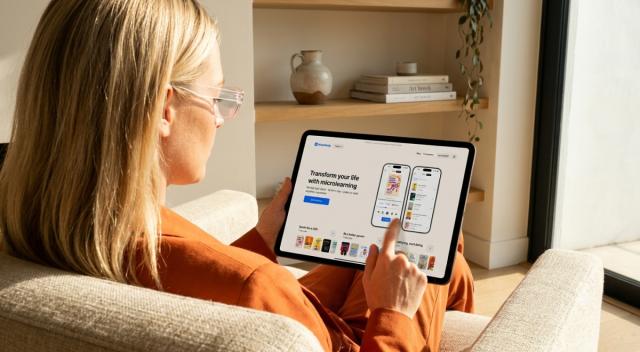


Spaced repetition vs microlearning: Which one do you actually need?
Bouncing between choices like Anki vs Blinkist or Headway vs Anki makes it seem like you have to pick a single winner, but using either method entirely alone usually backfires.
If you rely solely on the best microlearning apps, you will love the quick daily insights but still struggle with how to remember what you read a month down the road.
On the flip side, opening a raw spaced repetition app for studying without any pre-made content means you waste hours manually typing text into dry virtual index cards.
You can map your needs using these simple rules:
If you want to wrap your head around broad business topics during short work breaks, you need the best microlearning apps to filter out the fluff.
If you have hard vocabulary terms, math formulas, or legal dates to memorize for a test, you need the best spaced repetition apps.
But can you combine microlearning and spaced repetition to get the best of both worlds? Doing this is exactly how you answer the big question: Does microlearning improve retention?
Short modules work infinitely better when you back them up with a smart review system like Quizlet spaced repetition setups, or unified learning platforms.

Microlearning vs spaced repetition tools: Headway is the best option that combines both
When you compare microlearning vs spaced repetition tools for your own routine, the smartest move is picking a hybrid platform. You need bite-sized content to actually stay motivated, plus a strict review calendar so you don't forget the material by tomorrow morning.
Especially if you are hunting for microlearning apps for professional development, building your own flashcards from scratch is just a massive waste of your free time.
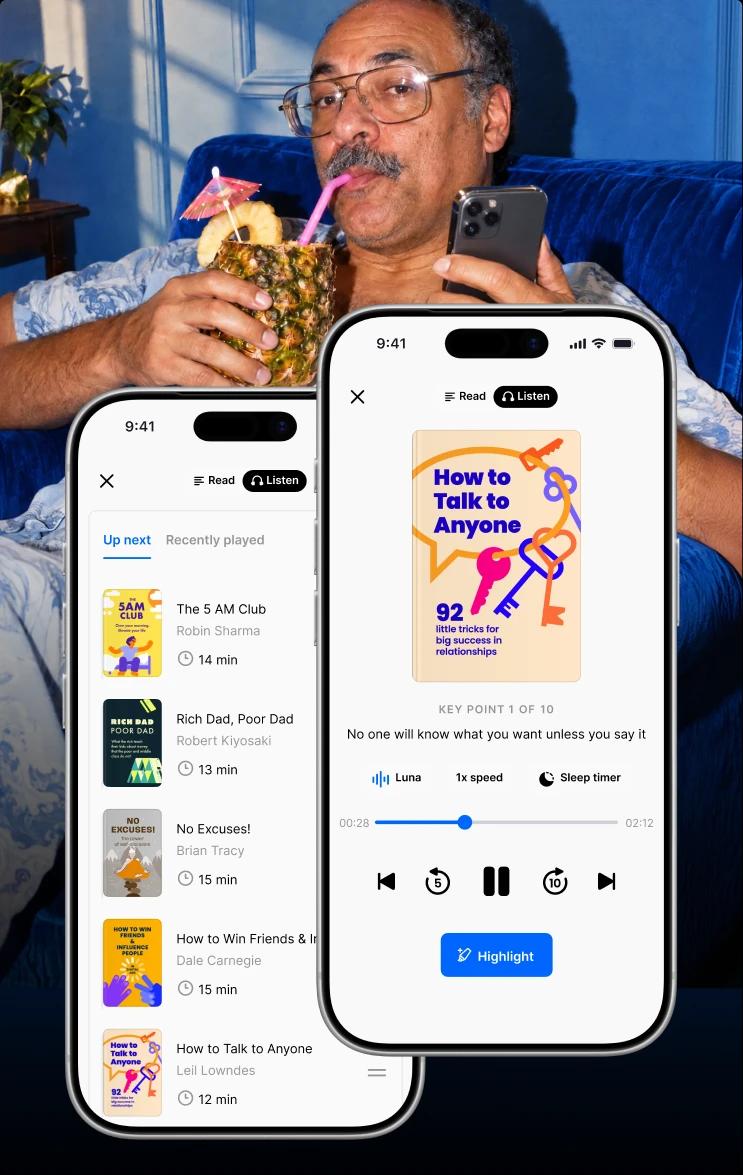
That is exactly why Headway rolled both methods into a single interface. It easily ranks as the best app to retain what you read because it hands you 15-minute nonfiction book summaries, then actively quizzes you on those exact takeaways days later.
You get fast, punchy lessons and a permanent memory lock without paying for two separate subscriptions.
📘 Try Headway today to build a learning habit that actually sticks!
FAQs about the microlearning vs spaced repetition
Can I use microlearning without spaced repetition?
You can totally read a five-minute summary and move on. The problem is your brain naturally dumps that new information within a few days. Short lessons give you the core idea right away. But without pulling those notes back up later that week to test yourself, you will forget almost all of it.
How long should a spaced repetition study session be?
Stop after ten or fifteen minutes. Staring at digital flashcards for an hour usually leads straight to boredom, which makes you quit the routine entirely. The system actually works best through short, targeted check-ins. Just open your app, run through the specific terms scheduled for that morning, and close the window immediately.
Are there any free spaced repetition tools available?
Anki runs completely free on desktop and stays incredibly popular with medical students. You build custom decks while the background algorithm handles your review calendar. The catch is that the initial setup takes hours.
Does microlearning work for complex subjects?
Short lessons do a great job explaining the basic logic of a new coding language or a tough math formula. They give you the big picture without the usual intimidation factor. Just remember that watching a three-minute video won't make you an expert. You still have to sit down and solve actual practice problems.