Self-growth
 Business & Career
 Success
 Communication
 Healing
 Relationships
 Psychology
 Happiness

Anxiety can make life feel smaller than it really is. It narrows your attention, pulls your body toward danger, and makes presence and calm feel like something other people luck into. But building a non-anxious life is not about becoming emotionless, endlessly positive, or perfectly zen. As a somatic practitioner, let me tell you: it's about making daily choices that support your nervous system, protect your mental health, and help you feel safer, steadier, and more present.
As someone who works with people's nervous systems, I have to tell you that this kind of change does not begin with a single dramatic breakthrough. Nervous system regulation is built over time: with one timely pause, one more honest thought, one easier routine, one body-based reset, or one boundary that gives your system more room to breathe. When life throws stress, overstimulation, grief, deadlines, relationship uncertainty, or even something as practical as credit card stress at you, those smaller choices matter even more.
If you want practical support you can use daily, Headway helps turn self-help ideas into action with short, useful summaries built for real life. A great book can shift your perspective, but real change happens when one insight lands inside your own personal experience and becomes something you can actually practice.
Download Headway and start building your non-anxious life today.
Quick summary: Five key ideas on building a non-anxious life
Building a non-anxious life means creating daily conditions that reduce avoidable stress and support mental well-being.
Your nervous system responds to what you repeat on a daily basis, not just what you understand intellectually.
Sleep, boundaries, connection, self-talk, and sensory overload all affect how safe or activated your body feels.
A more peaceful life is about reducing how often anxiety takes over.
Small, practical steps support long-term wellness, self-improvement, and personal growth more effectively than all-or-nothing change.
Take this quiz: How non-anxious is your daily life right now?
Answer honestly. The goal is not to judge yourself. It's worth noting where your system may need more support.
Make six daily choices that build a non-anxious life
1. Choose reality instead of catastrophic storytelling
Anxiety often grows in the gap between what is happening now and what your mind and body predict will happen next. As a way to protect you from it, it rushes to the worst-case scenario, then hands it to your body as if it were already true. One of the first steps in building a non-anxious life is learning to separate present reality from future fear.

Get powerful insights to calm your mind through daily self-reflection.
Try this simple life inventory:
What is actually true right now?
What am I assuming?
What evidence do I have?
What is one more balanced interpretation?
If your thoughts move fast, make sure to ground your body, then write the answers down instead of trying to hold them all in your head. Most of my clients, who tend to get overwhelmed, stuck in loops, or pulled into mental overdrive, find this quite helpful.
This is where 'Frames of Mind' by Howard Gardner becomes useful. Its core idea is that people process life in different ways, which can be surprisingly freeing when anxiety tries to convince you there's only one correct way to think, cope, or function. Sometimes, one life-changing shift is simply realizing that flexibility matters more than perfection.
2. Choose connection instead of isolated coping.
Anxiety gets louder in isolation because we are social creatures. We are wired for co-regulation, before we learned (or not) self-regulation. When everything stays trapped inside our heads, fear tends to echo. A safe connection doesn't solve every problem, but it can help your nervous system come down from a state of high alert.
Fear not, introverts, none of these suggestions means you need to become more social than you really are. However, you should consider choosing the right kind of support:
One honest conversation
One person who doesn't intensify your fear
One place where you don't have to perform
One relationship where you can be real
Sometimes, connection can look like vulnerability. Sometimes it looks like saying, "I'm overwhelmed, and I don't need fixing, just steadiness." Sometimes it looks like hearing your own personal experience reflected to you through a therapist, a trusted friend, a podcast, or a summary that helps you feel less alone.
This is one reason people often connect with Dr. John Delony's work. Whether through the John Delony Show, a wider podcast conversation, or a book-based mental health discussion, his appeal comes from making struggle speakable. You don't need one specific voice, of course. But many people begin building steadiness when they finally hear someone name what they have been carrying in silence.



3. Choose freedom through boundaries, not through control
When anxiety takes over, control can feel like the thing that can bring you safety. You may try to manage the schedule, the outcome, the other person's mood, your future, your productivity, or how you're perceived. The problem is that control is exhausting, and life remains deeply committed to being inconvenient.
Real freedom comes from boundaries, not from trying to control every variable. Ask yourself:
What is mine to manage?
What is not mine?
Where am I overfunctioning because uncertainty scares me?
What would get easier if I stopped treating everything like an emergency?
This is where '13 Things Mentally Strong People Don't Do' by Amy Morin becomes especially helpful. It offers practical reminders that strength is not about white-knuckling your way through stress. It's about not feeding the habits that keep you stuck.
If you're the kind of person who reads every book review, compares all the bestsellers, and waits for the perfect system before trying anything, this is your reminder that change usually comes from practice, not from perfect research. You don't need a new book every week. You need one grounded idea that you actually use.
4. Choose health and healing because a regulated body supports a regulated mind.
A non-anxious life isn't built through thoughts alone. It's built through your body too. If you're under-rested, underfed, overstimulated, dehydrated, overloaded, or running on caffeine and urgency, your mind will have a much harder time staying steady.
Support your system with basics that may sound boring, but work:
Regular meals or easy snacks
Movement that discharges tension
More consistent sleep
Fewer abrupt transitions when possible
Less doom-scrolling when you're already wired
More sensory recovery after overstimulating days
One of the greatest understandings that my clients gain is that stress is not just emotional. If anything, it's physical: body activation that we usually only notice on a mental level. And sometimes what looks like "I'm failing" is really "my system is flooded."
Note: If you're neurodivergent, this part matters even more. A routine doesn't need to be rigid to be supportive. It can be flexible, low-demand, visual, simplified, or broken into smaller steps. A regulating routine that works in your actual life is more useful than an ideal routine you can't sustain.
Sleep deserves special attention. Anxiety and poor sleep can amplify each other in a loop, making regulation harder the next day. That affects not just your mood, but your focus, patience, body tension, and overall wellness.
Explore Headway's resources on how to sleep better with anxiety and how to reduce stress and anxiety.
5. Choose mindfulness so your attention returns to the present
Mindfulness isn't about becoming serene on command. It's the practice of returning your attention to what is happening now rather than becoming completely fused with what your mind predicts will happen next.
Take the quiz — discover simple habits to stay grounded every day.
Anxiety often feels future-focused. Your body reacts not only to what is happening, but to what your brain thinks might happen. Mindfulness and somatic grounding help interrupt that loop.
Helpful anchors include:
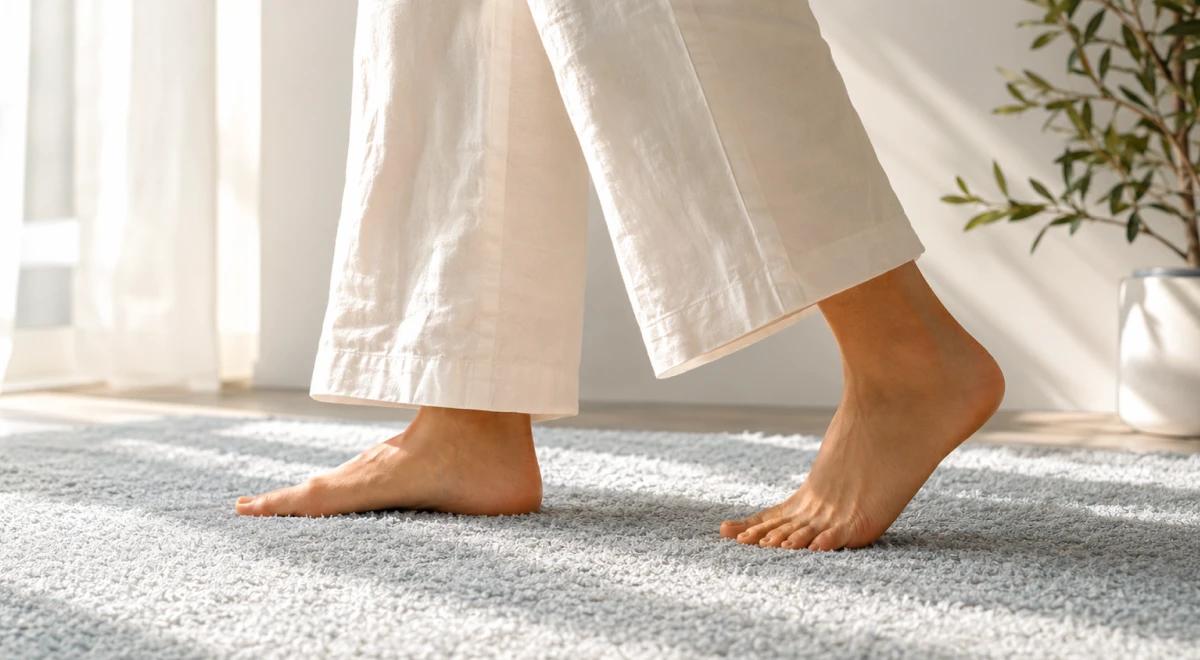
Feeling your feet on the floor
Naming five things you can see
Lengthening your exhale
Pressing your back into the chair
Noticing tension without treating it like a failure
Orienting to sounds in the room
Mindfulness doesn't have to mean sitting still in silence for 20 minutes while your nervous system stages a revolt; in fact, it's a very common misconception. For many people, especially neurodivergent people, it works better through movement, stretching, walking, rocking, humming, or using external anchors. Regulation isn't a performance. It's a relationship with your body.
Read Headway's guide to practicing mindfulness for anxiety.
6. Choose belief, meaning, and perspective
You can have all the tools in the world, but if your life feels emotionally empty, chaotic, or disconnected from meaning, your nervous system will still struggle. A regulated life isn't built by technique alone. It's also built on purpose, perspective, and the belief that your pain is not the whole story.
Belief can mean faith, values, community, purpose, or a wider perspective. It can sound like:
I can survive discomfort.
Not every alarm means danger.
This feeling is real, but it's not forever.
I do not need to earn rest.
Slowness is not failure.
Support counts even when it looks small.
Your body does not only need skills. Truly, what's even the point in "coping" if there isn't a greater meaning to it all? I believe every human needs reasons to trust that life can hold more than fear and is worth regulating for.
Practice five short exercises that support a more regulated life
Try a three-minute cognitive shift from 'Frames of Mind'
What it helps with: getting trapped in one anxious interpretation
How to do it:
Name the situation that's stressing you out.
List three ways of understanding it: logical, emotional, relational, or creative.
Ask which interpretation is most useful, not just most familiar.
Why it works: Anxiety narrows perception. This practice widens it and helps your mind become less rigid.
Use a five-minute habit reset from 'How to Change'
What it helps with: anxiety, habits you repeat automatically
Katy Milkman's 'How to Change' is useful because anxiety is not only emotional (or instinctual). It's behavioral too. You rehearse it through routines.
How to do it:
Pick one anxiety-fueling habit, such as checking messages compulsively.
Identify the cue, the routine, and the reward.
Replace the routine with a more present action.
Example:
Cue: waiting for a reply
Old routine: checking your phone every two minutes
New routine: putting your phone down, stretching your shoulders, and checking again in 15 minutes
Why it works: Habit change becomes more doable when you work with your nervous system instead of shaming it.
Stop one anxiety-feeding pattern with '13 Things Mentally Strong People Don't Do'
What it helps with: mental habits that quietly keep stress alive
Pick one habit that reliably worsens your anxiety:
Ruminating
Comparing yourself
Trying to please everyone
Treating discomfort like danger
Reading ten opinions before trusting your own sense
Now finish this sentence: Today, I will stop feeding anxiety by not ______.
Then choose one replacement action.
Example:"Today, I will stop feeding anxiety by not rereading that message thread ten times. Instead, I will step outside for five minutes."
Why it works: A regulated life is built by reducing the loops that keep your body in an activated state.
Do a three-step emotional check-in with 'Emotional Intelligence 2.0'
What it helps with: emotional overwhelm and reactivity
Emotional intelligence isn't about being composed all the time. It has so much more to do with the ability to notice — what is it you feel? What are sensations or feelings in your body?
How to do it:
Ask: What emotion is here? (you might or might not be able to name exactly)
Ask: Where in my body do I feel it?
Ask: What does this emotion need from me right now?
That need could be reassurance, movement, food, clarity, quiet, a boundary, or rest.
Why it works: Emotional awareness helps you stop confusing activation with truth.
Reframe one inner attack with 'Negative Self-Talk and How to Change It'
What it helps with: harsh self-talk that turns anxiety into identity
Negative self-talk can make temporary stress feel like a permanent flaw. You know how it goes with an inner critic… Give him anything, and instead of "I feel anxious," it becomes "I am weak," "I ruin everything," or "I will never get better."
How to do it:
Write down the harsh thoughts.
Ask whether it's fully true.
Replace it with a kinder, yet still believable, statement.
Example: Old thought: "I am always a mess."
New thought: "I am overwhelmed right now, and I can still take one useful step."
Why it works: Your inner language can amplify anxiety or help settle it.
Add simple tools that make a regulated life easier to maintain
Practice basic mindfulness when your mind starts racing
Mindfulness doesn't need to be elaborate to help. Practicing 30-minute meditations isn't a solution for a jeopardized nervous system. One minute of orienting to the room, slowing your breath, or noticing what your body is touching can interrupt the surge much better. Interventions must be simple enough so you remember to use them under pressure.
Use a CBT-style thought check
Ask yourself:
What am I predicting?
How likely is it?
What else could be true?
What would I tell a friend in this situation?
This framework helps move anxiety from an unquestioned and scary truth to something you can reexamine. Consider doing this once your body is grounded.
Build self-care around prevention, not collapse
Don't wait until your system crashes to care for yourself. Believe me, I've seen this a dozen times in my clients, unfortunately. Supportive routines can include:

Find your plan to build supportive routines and prevent burnout.
Eating before you get shaky or irritable
Using reminders if you lose track of time
Taking short breaks before overload peaks
Reducing sensory input when your system gets flooded
Creating transition rituals between work and rest
More often than not, stress management isn't only emotional. Think about it logistically, that's where it really begins. A packed schedule, ongoing money stress, an overdue bill, or credit card debt can keep your body on high alert in the background. Presence and regulation are easier to access when daily life is a little less threatening.
Use positive psychology without forcing fake positivity
You don't need to gaslight yourself into joy. You just need to widen your attention enough to notice what is also true.
Try asking:
What went okay today?
What helped, even a little?
What am I handling better than I used to?
What support do I need tomorrow, not just today?
This kind of reflection supports personal development without denying difficulty.
See how far consistent learning can take you
Get actionable insights from your very first 15-minute summary.
Get the planUnderstand what anxiety is and why it happens.
Anxiety is your body's alarm system responding to perceived threat. Sometimes that threat is real and immediate. Sometimes it's anticipated, symbolic, or shaped by experience. In either case, your nervous system may react with tension, shallow breathing, racing thoughts, irritability, shutdown, or an urge to avoid.
This is why building a non-anxious life isn't just a mindset project. It's also a project for the nervous system. Your body is constantly asking, "Am I safe enough?" If the answer keeps landing on "not really," anxiety can start to feel less like a signal and more like a way of living.For some people, chronic anxiety is also shaped by trauma. PTSD and cPTSD can keep the nervous system stuck in patterns of hypervigilance, shutdown, emotional overwhelm, or chronic dysregulation long after the original danger has passed. If that is part of your story, anxiety may not be "just stress." It may be your body trying to protect you in ways that once made sense.
It also helps to make one important distinction. Anxiety itself is a normal human response. It isn't always a sign of mental illness. But when anxiety becomes chronic, disruptive, and impairing, it can affect your mental health, your relationships, your focus, your sleep, and your sense of safety in everyday life.
Research suggests that anxiety can meaningfully lower your quality of life, not just your mood. In a 2024 study of university students in Slovakia, students experiencing anxiety and depression reported lower quality-of-life scores than the overall student sample, with effects touching daily functioning, well-being, health, and relationships. In other words, chronic anxiety rarely stays in one corner of life. It tends to spread into focus, rest, connection, and self-trust.
If anxiety is affecting your daily functioning for a long time, professional support may be important. Self-help can be powerful, but there are moments when extra care matters more than trying to muscle through on your own.
Compare daily habits that support regulation with triggers that fuel anxiety
| Daily habits that support a non-anxious life | Common habits that fuel anxiety |
|---|---|
Eating regular meals | Skipping meals and running on caffeine |
Going to bed at a consistent time | Doom-scrolling late into the night |
Naming emotions clearly | Stuffing them down until you explode |
Taking breaks between tasks | Staying in constant stimulation mode |
Breathing and grounding before reacting | Sending texts or making decisions while activated |
Setting boundaries early | Overcommitting and resenting it later |
Practicing balanced self-talk | Rehearsing shame and worst-case scenarios |
Reaching out to safe people | Isolating and assuming no one gets it |
Rewire your days and feel steadier with Headway
Building a non-anxious life is not one grand transformation. Let's look at it as a series of repeatable choices. Commit to them, truly. I always tell my clients that self-regulation is a commitment that never stops giving. See, when you're building a life that supports nervous system resilience, you're also investing in your long-term wellness. At first, you notice your breath as you're spiraling, and… you pause. Next thing you know, you choose boundaries over control. You fall behind in seeing your sleep, food, movement, and mindfulness as daily forms of care rather than emergency measures.
If you want practical advice for self-help and everyday mental health, Headway gives you the core ideas fast. Whether you usually listen to an audiobook, hear ideas on a podcast, browse Amazon, or look for a new book by a national bestselling author, the goal is the same: find guidance you can actually use. You don't need to chase every trend, compare endless bestsellers, or disappear into book review rabbit holes before you begin. Sometimes one great book changes your perspective. More often, one applied insight changes your day.
Start with these Headway summaries:
'Frames of Mind'
'How to Change'
'13 Things Mentally Strong People Don't Do'
'Emotional Intelligence 2.0'
'Negative Self-Talk and How to Change It'
Start where your anxiety shows up most often, and build from there.
FAQs
What does building a non-anxious life really mean for me?
It means creating habits, thoughts, and environments that lower your baseline stress and help your nervous system feel safer. You aren't trying to erase every anxious feeling. You're learning how to live with greater steadiness, greater choice, and greater self-trust.
Why do I live in constant anxiety?
You may be living with chronic stress, unresolved fear patterns, sensory overload, poor recovery habits, or a nervous system that learned to stay on high alert. This does not mean you're broken. It means your body may need more safety, support, and structure than it currently has.
Can I become 100% anxiety-free?
Probably not, and that isn't the goal. Anxiety is part of being human. It's a way we process life and its stressors. What you can do is reduce how often it takes over, how intense it is, and how long it takes to return to balance.
How long does it take me to build a less anxious mindset?
It depends on your stress load, your history, and how consistently you practice supportive habits. Some people feel relief quickly. A bigger change usually takes repetition over time. The goal is not perfection. It's building a steadier baseline.
What daily routine helps me feel regulated for the long term?
A helpful routine usually includes sleep, regular meals, movement, lower screen stimulation, emotional check-ins, and a few grounding rituals. The best routine is one you can return to, even in a smaller version, when life gets busy, noisy, or overwhelming.