Self-growth
 Apps & Digital Tools
 Business & Career
 Success
 Growth Tools
 Psychology
 Communication
 Relationships

Have you ever been the life of the party, making everyone laugh, only to go home and spend three hours replaying every single word you said? It feels like a glitch in the matrix. You crave the energy of a crowd, yet your brain treats a simple "hello" like a high-stakes interrogation.
If this sounds familiar, you aren't broken. You're likely an extrovert with social anxiety. This specific personality paradox is more common than you think, but it comes with a unique set of challenges that traditional advice often misses.
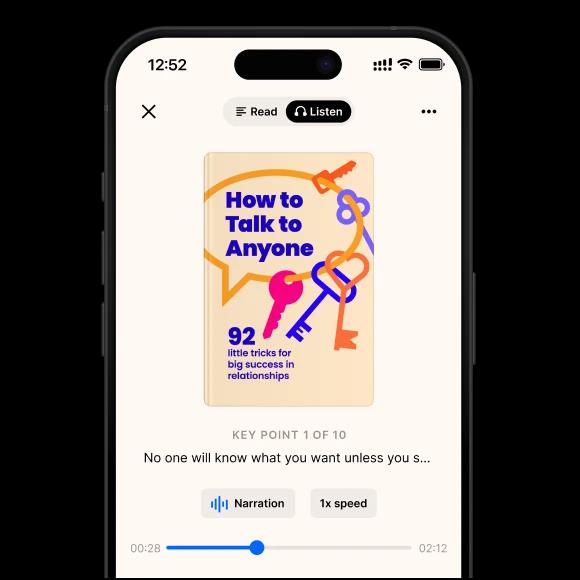
To help you bridge the gap between your outgoing nature and your internal fears, you can turn to the Headway app. If you're new to Headway, it's a tool that provides 15-minute summaries of the world's best self-development and psychology books.
Instead of spending weeks reading a dense textbook, you can listen to or read the key ideas from expert researchers wherever you are. It's designed to give you actionable tools to stop treating social events like a performance and start enjoying them.
➡️ How exactly does Headway work?
Quick answer: What is an extrovert with social anxiety?
An extrovert with social anxiety is someone who feels energized by others but simultaneously fears their judgment. This dynamic creates a deep internal conflict where you feel a drive to be social, yet you experience intense anxiety before, during, or after interactions.
The symptoms of social anxiety often manifest as overthinking, a racing heart rate, and a social hangover where you replay conversations through a critical lens long after the event is over. You might hear this described as being an outgoing person with social anxiety — someone who reads as confident on the outside while navigating real internal chaos.
While introversion is often confused with this state, the two aren't the same.
Fortunately, managing this condition involves a mix of cognitive behavioral therapy (CBT), intentional rest, and building social confidence through tools like Headway book summaries.
📘 Build confident social energy with Headway.
9 signs you're an extrovert with social anxiety
Recognizing that you fit this profile is the first step toward healing. Many people assume that being an extrovert means you're naturally confident, but personality type and mental health are two very different things.
Here are the specific ways this duality shows up in your daily life:
The social hangover: You feel energized immediately after an event, but spend the next day in a spiral of anxious thoughts and self-doubt. This trait is the hallmark of the socially anxious extrovert. While you enjoyed the energy of the room, your brain's review committee takes over once you're alone, picking apart every joke or comment you made.
The "performance" mask: You often feel like you're playing a character in group settings just to keep the conversation flowing and avoid awkward silences. You aren't being fake; you're just terrified that if you stop performing, the silence will reveal how nervous you actually feel.
Overcompensating with humor: You might use jokes or loud stories to hide the fact that your heart rate is actually through the roof. For you, humor is a shield. If people are laughing, they aren't judging you, or so your brain tells you. This is one of the most frequently missed signs of social anxiety in talkative people — the more words coming out, the more anxiety underneath.
Fearing the spotlight effect: Even though you might end up being the center of attention, you're secretly terrified that everyone is judging your every move. You feel like there is a camera on you at all times, recording every mistake for later analysis.
The on/off switch: You might be incredibly social on Friday, but completely disappear on Saturday because the mental exhaustion of masking your anxiety is too much. This boom-and-bust cycle is common when you're trying to meet your extroversion needs while managing a mental health condition.
Physical symptoms: You experience a shaky voice, sweating, or a racing heart even while you're smiling and nodding in social situations. Your body is in fight or flight mode even though you're just standing by the snack table at a friend's wedding.
Avoiding one-on-one time: If you feel confident in groups but anxious one-on-one, you're not alone. Many socially anxious extroverts prefer large gatherings precisely because there's less pressure to carry the entire conversation. In a crowd, you can hide. In a one-on-one setting, the focus is entirely on you, which can trigger an intense fear of being found boring or awkward.
Post-event rumination: You can't stop overthinking about that one slightly weird thing you said three hours ago. If you're searching for how to stop replaying conversations after socializing, you already know this feeling. You ignore the 99% of the night that went well and zoom in on the 1% that felt slightly off.
Contradictory needs: You feel lonely when you're alone for too long, but you feel self-conscious and drained when you're actually with people. This experience is the loneliest part of being an extrovert with social anxiety. You want the very thing that scares you.
Can you be an extrovert with social anxiety?
The short answer is yes, absolutely. To understand why, it helps to separate personality traits from mental health conditions. Extroversion is about where you get your energy. Social anxiety is about the fear of judgment.
An extroverted person is someone who feels recharged by spending time with others. Without social interaction, they often feel sluggish or bored. On the other hand, introverts find social settings drain their battery, requiring alone time to reset. This behavior is a fundamental difference in how your brain processes dopamine. Extroverts get a larger reward from social interaction, which is why you crave it so much.
Social anxiety disorder, however, is a mental health condition. It's not a choice or a personality quirk. It involves an intense fear that others will watch and judge you. It's driven by the amygdala, the part of the brain that handles fear, overreacting to social cues. When an extrovert has this condition, they're constantly fighting their own nature. They want to be out there, but their brain's alarm system is telling them the situation is dangerous.
This reaction is different from shyness. Shyness is usually a temperament, a tendency to be quiet or reserved. A socially anxious extrovert might not be quiet at all. In fact, they might be the loudest person in the room because they're terrified that if they stop talking, people will realize how nervous they are. This socially anxious extrovert profile is often overlooked because it doesn't look like the stereotypical shy person.
| Shy introvert | Outgoing introvert | Extrovert with social anxiety | |
|---|---|---|---|
Energy source | Alone time | Other people | |
Fears judgment? | Sometimes | Rarely | Yes — intensely |
Group behavior | Quiet, reserved | Selectively engaged | Loud, often performing |
Post-event feeling | Relieved to be home | Calm and recharged | Drained and ruminating |
Craves socializing? | Not particularly | On their own terms | Yes — and dreads it simultaneously |



The unique challenges of the socially anxious extrovert
Being a socially anxious extrovert is like driving a car with one foot on the gas and the other on the brake. You want to move forward, but your anxiety is holding you back. This cycle creates a loop of exhaustion that most people don't understand.
One of the biggest hurdles is overthinking. Because you genuinely enjoy people, you seek out social events. But once you arrive, your negative thoughts take over. You might wonder if you're talking too much, if your outfit is wrong, or if people are just pretending to like you. This mental chatter makes it impossible to actually enjoy the social interaction you worked so hard to get.
Another challenge is what researchers sometimes call high-functioning social anxiety in extroverts. If you have a reputation for being fun and outgoing, you might feel intense pressure to maintain that image. This makes it harder to seek mental health care because, from the outside, you don't look like someone who is struggling.
You might feel like a fraud, which only increases your levels of stress. You worry that if you show your true, anxious self, you'll lose your social relationships.
The key is to realize that your extroversion is a strength, not a weakness. It means you have a natural drive to connect. The goal of therapy, like cognitive behavioral therapy (CBT), isn't to change your personality. It's to quiet the anxious thoughts so you can finally enjoy the social gatherings you crave without agonizing over the post-game analysis.
The approach-avoidance conflict in social settings
Psychologists often refer to this internal struggle as the approach-avoidance conflict. For most extroverts, social activities are a reward. For someone with a mental illness like social anxiety disorder, that reward is guarded by a fire-breathing dragon of self-consciousness.
This leads to a confusing cycle of behavior. You might accept an invitation to a party — or a networking event — with genuine excitement, but as the date approaches, your heart rate spikes and you consider canceling. Social anxiety after networking events is particularly common for this profile, since the stakes feel higher and the interactions are less familiar.
If you do go, you might find yourself over-talking to fill the silence, which then feeds into your anxious thoughts later that night. This conflict is particularly painful because alone time isn't a perfect fix. While an introvert finds peace in solitude, an extrovert with social anxiety often finds it lonely. You crave the connection, but the anxious thoughts make the connection feel dangerous.
Understanding this paradox is essential for anyone trying to support a loved one with this condition. They aren't being difficult or flaky when they cancel at the last minute; they're likely losing a battle with an intense fear that is invisible to the outside world.
Why traditional confidence advice often fails you
Most advice for social anxiety is written with introverts in mind. It tells you to get out more or say one thing in a meeting. But for the extrovert with social anxiety, the problem isn't that you're staying in; it's that you're already out there, but you're suffering while doing it.
Standard "fake it till you make it" advice can actually make things worse for someone with social anxiety masking behaviors. If you're already performing with confidence to cover the fear, pretending to be even more confident just adds another layer to the act.
What you actually need is authenticity. You need to learn that it's okay to be the person in the room who is both outgoing and a little bit nervous.
Understanding your personality traits can work in your favor here. When you stop trying to be the perfect extrovert and start being an honest extrovert, your anxiety loses its power. You can say, "I'm so happy to be here, but I'm also feeling a little socially overwhelmed today." You might be surprised how many people respond with, "Me too."
From masking to connection: Five strategies that actually work
You don't have to live in a cycle of performance and exhaustion. Managing your anxiety while honoring your extroversion requires a mix of professional techniques and lifestyle shifts.
1. Challenge your thought patterns with CBT
Cognitive behavioral therapy is the gold standard for treating social anxiety. It helps you identify the all-or-nothing thinking that makes social situations feel so scary. When you catch yourself thinking, "Everyone thought I was an idiot," stop and ask for evidence. Is it really true, or is that just your anxiety talking? Using CBT helps you dismantle the spotlight effect, where you assume everyone is watching your mistakes.
2. Practice the "present moment" technique
Anxiety usually lives in the future ("What if I say something dumb?") or the past ("Why did I say that?"). If you've ever wondered why you talk too much when you're nervous, this is why — your brain is trying to outrun the fear by filling every silence. When you feel your heart rate climbing during a conversation, use your senses to stay in the present moment instead.
Notice the color of the other person's eyes or the sound of the background music. This redirection pulls your brain away from the internal panic button and helps you focus on the actual social interaction.

Shift your focus to the present moment. Get a personalized growth plan.
3. Use relaxation techniques before you head out
Don't wait until you're already anxious to try to calm down. Before social activities, practice deep breathing or progressive muscle relaxation. This technique signals to your nervous system that you're safe. Think of it as preparing your nervous system for the energy of a crowd without the accompanying fear. You can even find quick focus sounds on the Headway app to help you center yourself before walking through the door.
4. Try exposure therapy in small doses
Instead of jumping into a massive party, try smaller social gatherings first. Set a goal to stay for 30 minutes and talk to two people. Once you realize the world didn't end, your brain starts to unlearn the fear. That's how you build a social battery that doesn't drain so quickly. Exposure therapy is about proving to your brain that social events aren't life-threatening.
5. Schedule your alone time intentionally
Even though you're an extrovert, the mental effort of managing anxiety is tiring. You need recovery time. Schedule an hour of alone time after a big event to just exist without having to be anyone. This method prevents burnout, which leads many to quit social events entirely. It's not about being an introvert; it's about being a human who needs to rest their brain after a high-stakes social setting.
Master social situations with Headway book summaries
If you're a busy extrovert, you probably don't have hours to sit down and read a 400-page psychology textbook. But you still want the tools to improve your life. That's where the Headway app becomes your best friend.
Headway is a self-growth platform that takes the world's most influential books and condenses them into 15-minute key summaries. In 2025, TIME named it one of the world's top EdTech companies — ranking it 4th globally. You can listen to these summaries like a podcast or read them like a quick article. For someone dealing with social anxiety, it can make a real difference. You can get expert advice on thought patterns or negative thoughts while you're getting ready for work or driving to a social gathering.
Books to add to your reading list for social confidence:
'How to Be Yourself' by Ellen Hendriksen: A fantastic resource for the socially anxious. It breaks down why we feel self-conscious and how to quiet your inner critic. It's the perfect pre-game listen before a party.
'The Solution to Social Anxiety' by Dr. Aziz Gazipura: A thorough look at moving from socially awkward to socially confident. He explains how to stop people pleasing and start being your real self.
'Quiet' by Susan Cain: While this book is famous for introverts, it's essential for anyone on the personality type spectrum to understand how different temperaments interact in social situations.
'Daring Greatly' by Brené Brown: Worth reading for anyone learning how to drop the mask and embrace the vulnerability that leads to real social relationships.
'The Charisma Myth' by Olivia Fox Cabane: Learn that charisma is a skill, not a personality trait, which can help lower the pressure you feel to perform in group settings.
What Headway users say about quieting the social noise
You don't have to take our word for it. Enrique García Galán, a software engineer and PhD researcher, found that replacing his daily social media habit with Headway summaries gave him something unexpected: mental quiet.
"My mind is less tired and less overwhelmed by information I don't want," he says. "I can focus on what I actually want to learn."
For someone who knows exactly what it's like to open an app "just for a second" and spiral for half an hour, that shift in control matters.
Jessica Teitelbaum, a Revenue Operations Specialist who works remotely, made a similar switch. She found that reading a Headway summary first thing in the morning set a calmer tone before the workday started.
A summary of 'Make Your Bed' by Admiral William H. McRaven landed with her: the idea that showing up as your best self in tough moments is itself a form of resilience.
"It was a quick read but full of perspective," she says.
For anyone managing both an outgoing nature and internal anxiety, that kind of steady, repeatable input builds confidence that accumulates quietly over time.
When you spend just 15 minutes a day on the Headway app, you can build a library of coping skills that make you feel prepared for any social interaction. Instead of scrolling through social media and feeling worse, you can use that time to learn how to handle your unique challenges.
📘 Master social confidence with Headway.
Embrace your social paradox with Headway
Living as a socially anxious extrovert can feel like a constant tug-of-war. You want to be out there, but your brain keeps pulling you back with anxious thoughts. But once you stop fighting your personality and start managing your anxiety, you'll find a middle ground where you can truly thrive.
Remember that social skills are like a muscle; they get stronger the more you use them. But you don't have to train alone. Offline or online therapy can provide professional guidance and deeper support, while tools like the Headway app can help you build daily habits and new perspectives. Together, they create a strong foundation for growth.
You have a natural gift for connection. Don't let your social anxiety disorder steal it from you. Start small, be kind to yourself during the social hangover, and remember that the most life of the party person in the room is often navigating the same unique challenges you are.
Join the 55 million people on Headway today and start your journey toward authentic, social confidence. Your next social activities don't have to be a performance. They can just be fun.
📘 Expand your social comfort with Headway.
Frequently asked questions to navigate living as an extrovert with social anxiety
Can I be an extrovert with social anxiety even if I love being the center of attention?
Yes, it's entirely possible. Many extroverts use being the center of attention as a defense mechanism to control their social settings. You might feel that, as long as you're performing, people can't see or judge the real you. It's a way of hiding in plain sight while satisfying your extroversion needs.
How do I explain my social anxiety to a loved one who thinks I'm just "outgoing"?
Tell them that your personality (wanting to be around people) is separate from your mental health condition (fearing how people see you). Explain that while you enjoy the social gatherings, you often feel mentally drained afterward and need their support to help you stop overthinking every conversation you had during the party.
Is it possible to be an extrovert with social anxiety and still have a successful career?
Absolutely. Many high-achieving leaders are socially anxious extroverts. They use their extroverted drive to network and lead, while using tools like CBT or relaxation techniques to manage their internal stress. Success comes from learning to manage the anxious thoughts rather than trying to suppress your extroverted person nature.
Can someone with social anxiety be an extrovert, or is that just being a shy introvert?
A shy introvert wants to be alone to recharge. A socially anxious extrovert wants to be with people but is afraid. If you feel lonely when you're alone but self-conscious when you're out, you are likely an extrovert with social anxiety. Shyness is a lack of social desire; social anxiety is a fear of social consequence.
Am I an extrovert with social anxiety if I only feel nervous in certain group settings?
Social anxiety often fluctuates depending on the environment. You might feel great with social relationships you already trust, but experience intense fear at networking or other social events. That doesn't mean you aren't an extrovert; it just means certain social activities trigger your negative thoughts more than others do.
Is it possible to be an extrovert with social anxiety if you still crave connection but feel anxious in social situations?
Yes, this is the core of the experience for an extrovert with social anxiety. You crave the dopamine hit of being around people because that is how you recharge your energy. Still, your brain misinterprets these same social situations as threats. This pattern creates a painful loop where you feel lonely when alone.
Can you be an extrovert with social anxiety if you enjoy being around people but feel overwhelmed or nervous in social interactions?
Absolutely. Enjoying people doesn't exempt you from having a mental health condition like social anxiety disorder. You might love the idea of a party but find the reality of social interactions overwhelming due to physical symptoms, such as a racing heart rate. It simply means your personality type is currently at odds with your anxiety.
Am I an extrovert with social anxiety if I don't like people?
Not exactly. If you genuinely dislike people and prefer solitude to recharge, you might be an introvert or experiencing social exhaustion. An extrovert with social anxiety usually loves people but fears their judgment. If you find that you don't like people at all, it's worth speaking with a mental health professional.